Why Is the Time Allotted for Driver Takeover More Critical When the Intelligent Driving System Disengages?
 10/09 2026
 507
507
Recently, an incident involving the disengagement of an assisted driving system on a highway has garnered significant attention.
According to a report by China Business News on October 5, a vehicle traveling at approximately 120 km/h with navigation-assisted driving engaged experienced a system disengagement. When the vehicle was about 10 meters away from a large truck ahead, the system ceased its assisted driving function and prompted the driver to take over, leading to a subsequent rear-end collision.
At a speed of 120 km/h, the vehicle covers approximately 33 meters per second. A mere 10-meter gap allows the vehicle to continue for only about 0.3 seconds. Even with immediate full braking, the stopping distance at 120 km/h typically requires 50-70 meters; when factoring in the driver's reaction time, the total stopping distance significantly exceeds this.
Drivers require time to notice the system prompt, assess the current traffic situation, and then apply the brakes or steer. Research indicates that drivers take an average of 6-8 seconds to regain situational awareness.
This raises a perennial question: while the intelligent driving system can disengage, does the timing of disengagement provide sufficient time for the driver to take over safely?
01 Intelligent Driving System Disengagement Doesn't Equate to Immediate Driver Takeover
The disengagement of an assisted driving system usually occurs under specific triggering conditions, such as the current road environment exceeding the system's designed operational limits, abnormalities in key sensors or the system itself, or the system determining it can no longer continue the current driving task.
However, the detection of system inoperability and the completion of driver takeover do not occur simultaneously.
Consider a scenario where the vehicle is traveling at high speed, and the system determines that the current situation exceeds its processing capabilities.
If the vehicle is already very close to the impending risk when this determination is made, even if the system issues an immediate prompt, the driver still needs to recognize the prompt, assess the traffic environment, and then take actions such as braking or steering.
The shorter the time left for the driver, the higher the difficulty of completing safe operations. 
Image source: The Forefront of Intelligent Driving
It's also essential to clarify the basic responsibility relationship in L2 assisted driving.
When L2 combined driving assistance is active, the driver retains responsibility for the dynamic driving task, with the system providing lateral and longitudinal driving assistance.
Thus, the system's disengagement doesn't imply that the driver had no driving responsibility beforehand, nor does it mean the driving task is only handed over to the driver after system disengagement.
From a system design perspective, however, the timing of disengagement remains crucial.
System disengagement merely signifies the cessation of assistance functions, whereas the driver's completion of takeover requires an actual operational process.
The driver must confirm the vehicle's current speed, lane position, distance to the vehicle ahead, and the state of surrounding traffic participants before deciding whether to brake, steer, or continue driving.
Therefore, the exit mechanism must consider not only whether the system can continue to operate but also whether the driver has enough time to complete safe operations when disengagement is proposed.
Especially in high-speed scenarios, if the system can issue a prompt before the risk becomes imminent, the driver has more time to observe the road and take actions; conversely, if the vehicle is already close to the dangerous target when the system disengages, the time available for the driver to take effective actions is significantly reduced.
02 Why Must the Takeover Request for an L3 System Last at Least 10 Seconds?
On July 30, 2026, the Safety Requirements for Autonomous Driving Systems of Intelligent Connected Vehicles (GB 44721—2026) were officially released, with implementation scheduled for July 1, 2027.
This standard applies to M- and N-category vehicles equipped with L3 and L4 autonomous driving systems.
In the standard's interpretation, the Ministry of Industry and Information Technology clearly stated that the activation and disengagement processes of autonomous driving systems should be safe; for L3 autonomous driving systems, it also mandates a driver takeover capability monitoring function.
One requirement directly related to takeover is that after an L3 system issues an intervention request, the time from the request being issued to its termination due to the implementation of a minimal risk strategy should be no less than 10 seconds. 
Image source: Standard screenshot
This doesn't mean all intelligent driving systems must have a 10-second countdown before disengaging, nor does it imply the system must turn off assisted driving 10 seconds in advance. This requirement pertains to the human-machine handover process after an L3 autonomous driving system issues an intervention request.
There's a significant distinction between L2 and L3 here.
When L2 combined driving assistance is active, the driver always bears responsibility for the dynamic driving task; for L3 autonomous driving, the system performs the dynamic driving task when design operational conditions are met.
When the L3 system is about to become unable to continue operating, it must issue an intervention request to the driver (fallback user) to resume the driving task.
Thus, the safety issue for L3 isn't just about when the system disengages but also includes when to issue an intervention request, whether the driver has the capability to take over, and what the vehicle should do if the driver fails to complete the takeover. GB 44721—2026 incorporates these aspects into a unified safety mechanism.
The standard requires L3 systems to have driver takeover capability monitoring and imposes requirements on intervention requests and subsequent minimal risk strategies.
If the driver fails to complete the takeover, the system cannot simply cease functioning but must continue to implement safety strategies based on corresponding conditions.
Therefore, the 10-second requirement in the standard is more accurately a minimum time limit for the duration of the L3 system's intervention request process, rather than a uniform countdown for all intelligent driving system disengagements.
03 The Size of the Takeover Window Depends on When the System Detects the Problem
For a vehicle traveling at high speed, the takeover time is closely related to the vehicle's speed, road environment, and the location where the risk appears. Calculated at 120 km/h, the distance traveled in 10 seconds exceeds 330 meters.
This doesn't mean the standard requires the system to detect danger 330 meters in advance, nor can it be interpreted as all L3 scenarios requiring a takeover request to be issued 330 meters away from the dangerous target.
The later the system detects that it can no longer continue driving, the less time the driver has to handle the current situation.
Thus, the system needs to identify its capability boundaries as early as possible while maintaining sufficient safety margins and issue effective takeover requests in a timely manner. 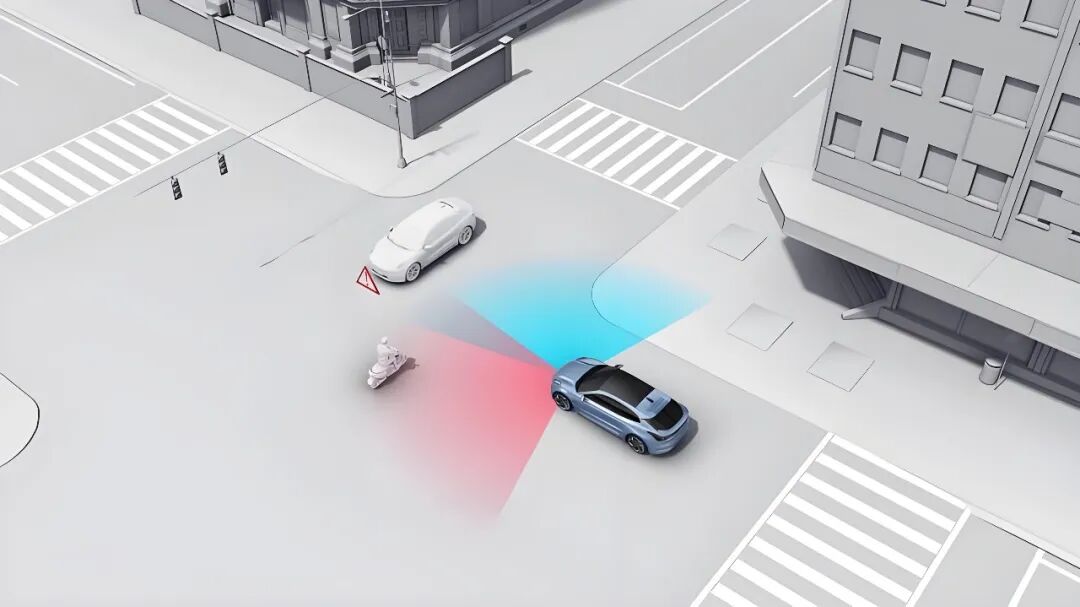
Image source: Internet
For L3 systems, it's equally important to determine whether the driver has the conditions to take over.
GB 44721—2026 already includes driver takeover capability monitoring as a requirement, indicating that the system cannot simply assume the driver can immediately take over the vehicle at any time.
This is what makes L3 autonomous driving more complex than traditional assisted driving. The system must not only know whether it can continue driving but also when to hand over the driving task to humans and whether the driver has the conditions to safely take over the vehicle.
04 Final Thoughts
This L2 assisted driving incident cannot be judged against the 10-second requirement in GB 44721—2026, which has not yet been implemented and is targeted at L3/L4 autonomous driving systems.
The two belong to different levels of autonomous driving and correspond to different safety requirements.
Furthermore, from a system design perspective, the disengagement, issuance of a takeover request, and the driver's completion of the takeover should naturally form a continuous human-machine handover process.
The boundary of intelligent driving capabilities isn't just about when the system can no longer continue operating but also includes whether the system can detect problems before reaching the boundary and leave enough time and safety margins for the driver. #AutonomousDriving #IntelligentDrivingTakeover
-
Domestic Large-Scale AI Models: Evolving into 'Product Cycle Stocks'
-
![]()
FAW, Toyota, and GAC Ink Tripartite Pact: Fostering Integration and Synergy Between Northern and Southern Toyota via Capital Linkage
-
![]()
Silicon Valley AI: Embracing Open Source
-
![]()
AI Interviewer: A Step Too Far for Workers
-
![]()
Musk Spearheads AI Renaming Trend! SpaceXAI Officially Rebrands to SpaceXSI
-
![]()
Aptiv Divests Versigent: Following the Shedding of Wiring Harnesses, the Previously Unwanted Power Business Achieves a 10.8% Growth in Q1
-
![]()
Post-2000s Entrepreneur Builds $67 Billion AI Unicorn, Even Meta Takes Notice
-
![]()
Despite 800V and 6C Capabilities, Why Do We Still Face 5-6 Hour Charging Queues?