Aptiv Divests Versigent: Following the Shedding of Wiring Harnesses, the Previously Unwanted Power Business Achieves a 10.8% Growth in Q1
 10/09 2026
 480
480
What occurred after Aptiv spun off its power distribution business into a standalone entity?
On April 1, 2026, Aptiv executed a split that seemed to be very much in vogue.
Its former power distribution systems division transformed into the independently listed Versigent.
The remaining Aptiv continues to focus on sensing, computing, software, connectors, and other areas, positioning itself as a technology firm dedicated to intelligent systems.
Aptiv retained the 'brain' of the operation, while Versigent took on the 'nerves.' Central computing, assisted driving, and software-defined vehicles certainly exude a sense of glamour; in contrast, wiring harnesses, power distribution, and electrical architectures represent a mature, heavy industry that necessitates the management of numerous factories and a substantial workforce. Investors now appear to be able to value these two businesses independently.
I) The Post-Spin-Off First Quarter Unfolded Differently Than Anticipated
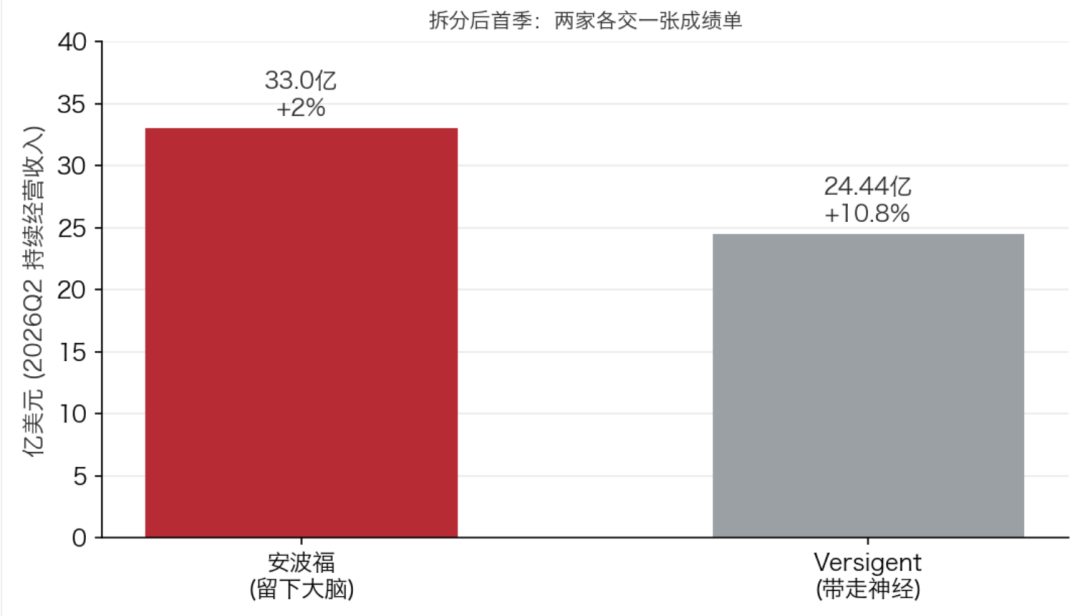
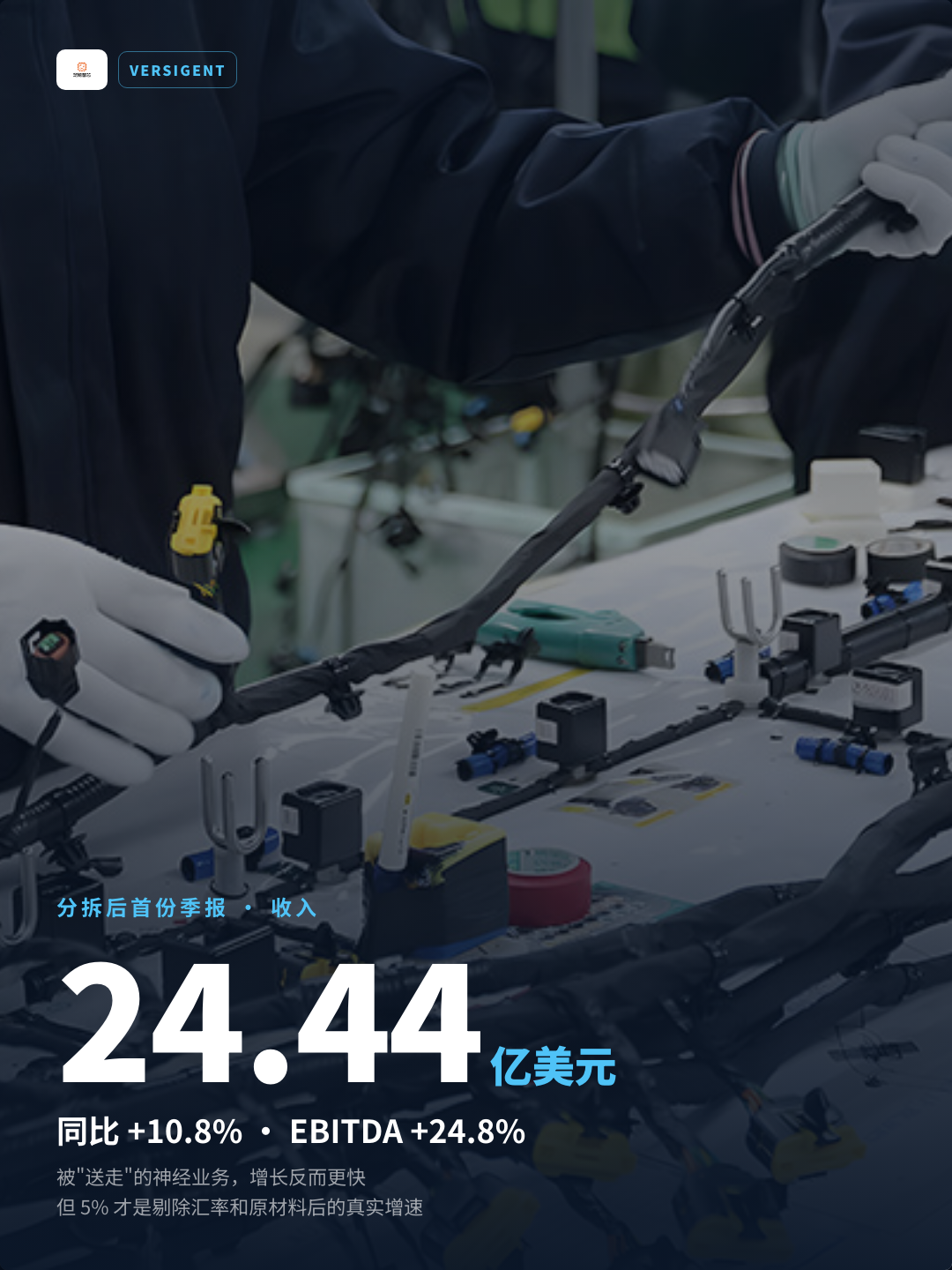
In the second quarter of 2026, Aptiv's ongoing operations generated approximately $3.3 billion in revenue, marking a 2% increase year-over-year, with adjusted EBITDA reaching around $613 million. Versigent reported revenue of $2.444 billion for the same period, a nominal increase of 10.8%; excluding the effects of currency exchange and raw material pass-through, adjusted revenue grew by approximately 5%, with adjusted EBITDA of $272 million, up 24.8% year-over-year.
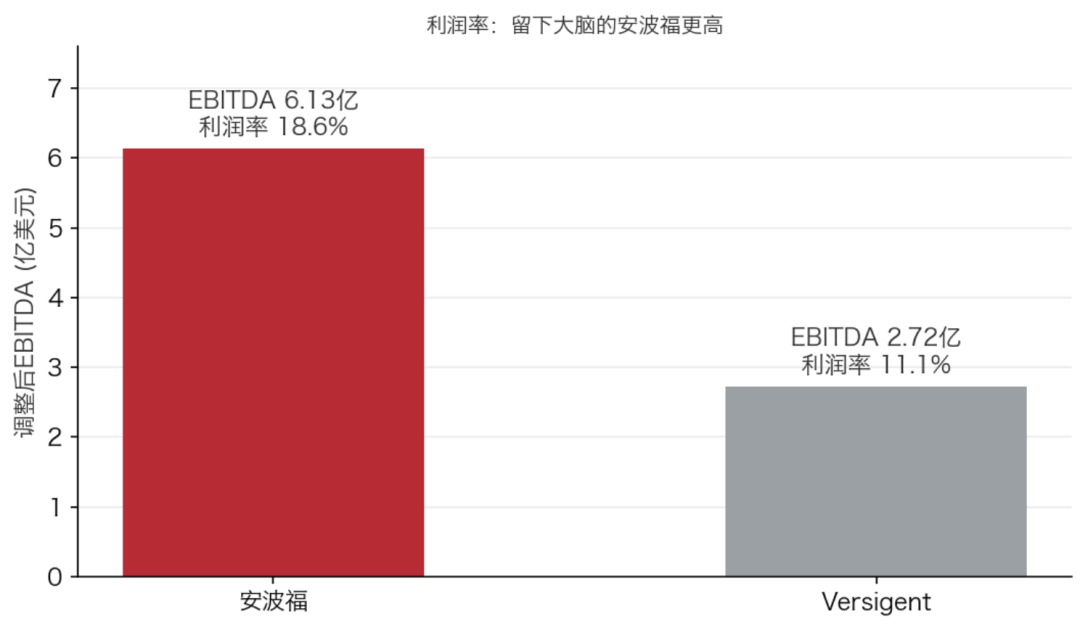
The spun-off business actually experienced faster growth, with Versigent's 10.8% nominal growth encompassing currency and raw material price pass-through effects, translating to an adjusted growth of about 5%. Aptiv's profit margins were notably higher, and the two companies also differ in terms of capital structure, product mix, and customer project cycles.
These two capabilities have now presented their individual reports in the open market: Can the intelligent systems business attract new customers amidst limited automotive market growth? Can the power distribution business enhance profits through architectural sophistication?
During the comparative period, Aptiv treated the former power distribution business as discontinued operations, so the $3.3 billion in post-spin-off revenue cannot be directly compared to past group sales that included wiring harnesses.
Aptiv's strategy is to expand beyond the automotive sector, achieving double-digit growth in non-automotive businesses, with robotics collaborations progressing towards commercialization and securing a project in the drone sector in July. It aims to demonstrate that sensing, computing, and connectivity technologies do not have to be perpetually tied to automotive production volumes.
Meanwhile, Versigent must prove that it is not merely a low-end manufacturing division that has been divested. It hopes to meet the demands for high-voltage systems for electric vehicles, signal and data networks, charging infrastructure, and complex power distribution.
II) Central Computing Reduces Boxes, but Connectivity Remains Essential
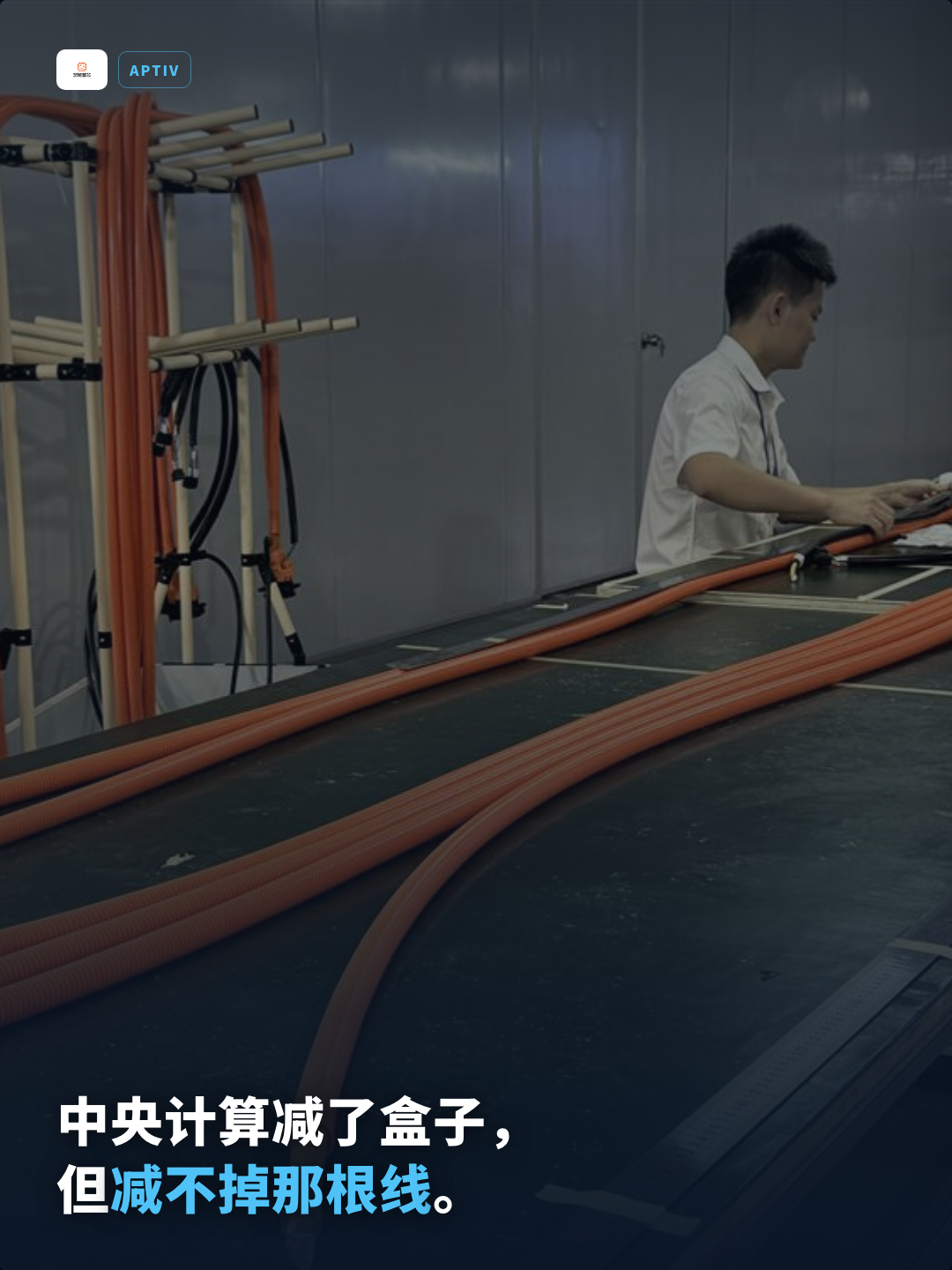
Upgrades to automotive electronic and electrical architectures are often characterized as a process of 'simplification': decentralized controllers are integrated into more powerful central computing platforms, enabling unified software updates and potential reductions in hardware quantities. This trend will undoubtedly reshape the value of supplier products. However, actuators, sensors, screens, lights, thermal management components, and battery systems on vehicles will not vanish simply because computing becomes centralized. Computing results still need to reach the physical world, and power must still be safely delivered to every electrical location.
The key changes lie in how wiring is arranged, what is transmitted, the current capacity, how to reduce weight and assembly time, and how to adapt to automakers' ever-evolving architectures. Traditional wiring harnesses are easily perceived as cost items produced according to blueprints; when high-voltage power supply, high-speed data, and zonal control are incorporated, the design of power and signal distribution commences earlier in vehicle development. This provides Versigent with an opportunity to upgrade but also requires it to assume greater engineering responsibilities.
Aptiv's 'brain' business appears inextricably linked to China, where automakers' in-house software development, rapid iteration of computing platforms, and chip manufacturers' expansion into the system layer have permanently altered supplier positions. Higher technical content necessitates upfront R&D investment, with orders materializing only after vehicle model mass production, and advanced technologies potentially becoming difficult-to-amortize costs.
For both companies, the level of design authority that customers are willing to cede to suppliers is more crucial than the labels assigned by the outside world. Simply producing according to blueprints leaves suppliers vulnerable to annual cost-reduction pressures; being able to collaborate with automakers in deciding electronic and electrical architectures, interface standards, and arrangement methods offers opportunities to secure positions early in new model development. However, deeper design authority also entails heavier engineering costs and delivery responsibilities during project changes.
This spin-off also separates two types of risks: Aptiv bears higher risks in technology development and market expansion, while Versigent shoulders more manufacturing, customer platform, and cost-pass-through risks. Aptiv received approximately $1.9 billion in cash dividends and utilized them for debt repayment, adjusting its balance sheet structure.
Summary:
The automotive industry tends to rank suppliers: software at the pinnacle, hardware at the base; computing in the forefront, wiring harnesses in the rear. However, true value does not necessarily align with the trendiness of these terms.
We can gain insight into this by examining the predicament of domestic automotive electronics companies!
-
![]()
Silicon Valley AI: Embracing Open Source
-
![]()
AI Interviewer: A Step Too Far for Workers
-
![]()
Musk Spearheads AI Renaming Trend! SpaceXAI Officially Rebrands to SpaceXSI
-
![]()
Aptiv Divests Versigent: Following the Shedding of Wiring Harnesses, the Previously Unwanted Power Business Achieves a 10.8% Growth in Q1
-
![]()
Post-2000s Entrepreneur Builds $67 Billion AI Unicorn, Even Meta Takes Notice
-
![]()
Despite 800V and 6C Capabilities, Why Do We Still Face 5-6 Hour Charging Queues?
-
![]()
McLaren’s Market Plummet: From 310 to a Mere 9 Annual Sales!
-
![]()
High-Speed NOA Collision: Blaming the Driver When Only a Sudden 0.2-Second Hard Brake Could Avert Disaster!