Brake Pedal Malfunction Sparks Concern: New Regulatory Measures from Four Departments Unveiled Within 72 Hours
 10/12 2026
 554
554
A brake pedal malfunction has not only alarmed the public but also sent ripples across the automotive industry. In recent days, the news of a brake pedal bracket failure has spread like wildfire within automotive circles.
The sequence of events is quite revealing: On October 9, the China Automotive Technology & Research Center (CATARC) swiftly dispatched a survey questionnaire to major automakers, with a focus on the use of non-metallic materials in brake pedals.
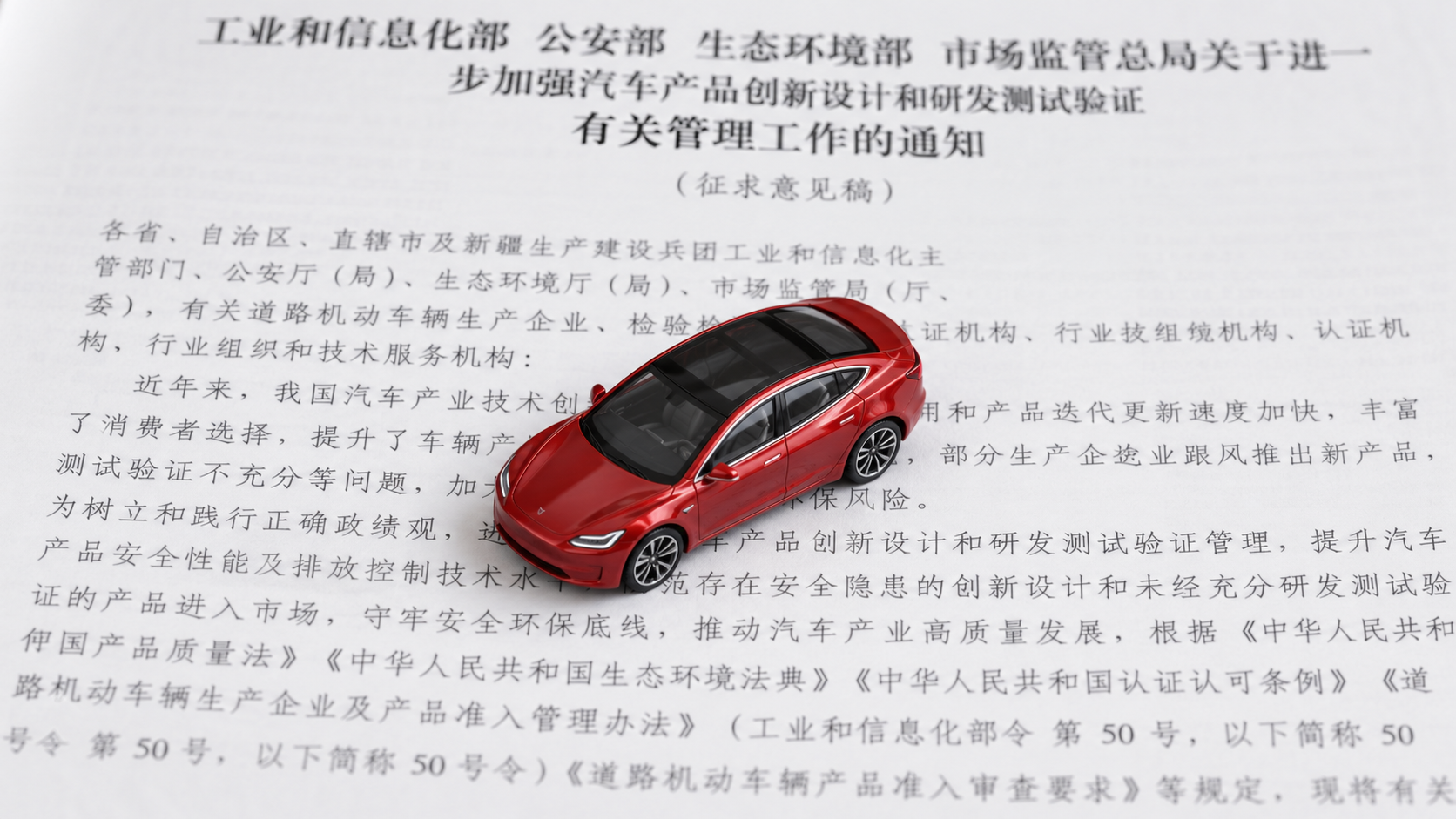
The following day, October 10, the Ministry of Industry and Information Technology (MIIT), the Ministry of Public Security, the Ministry of Ecology and Environment, and the State Administration for Market Regulation jointly issued a draft for public comment—the Notice on Further Strengthening the Management of Innovative Design, Research & Development (R&D), and Testing Verification of Automotive Products.
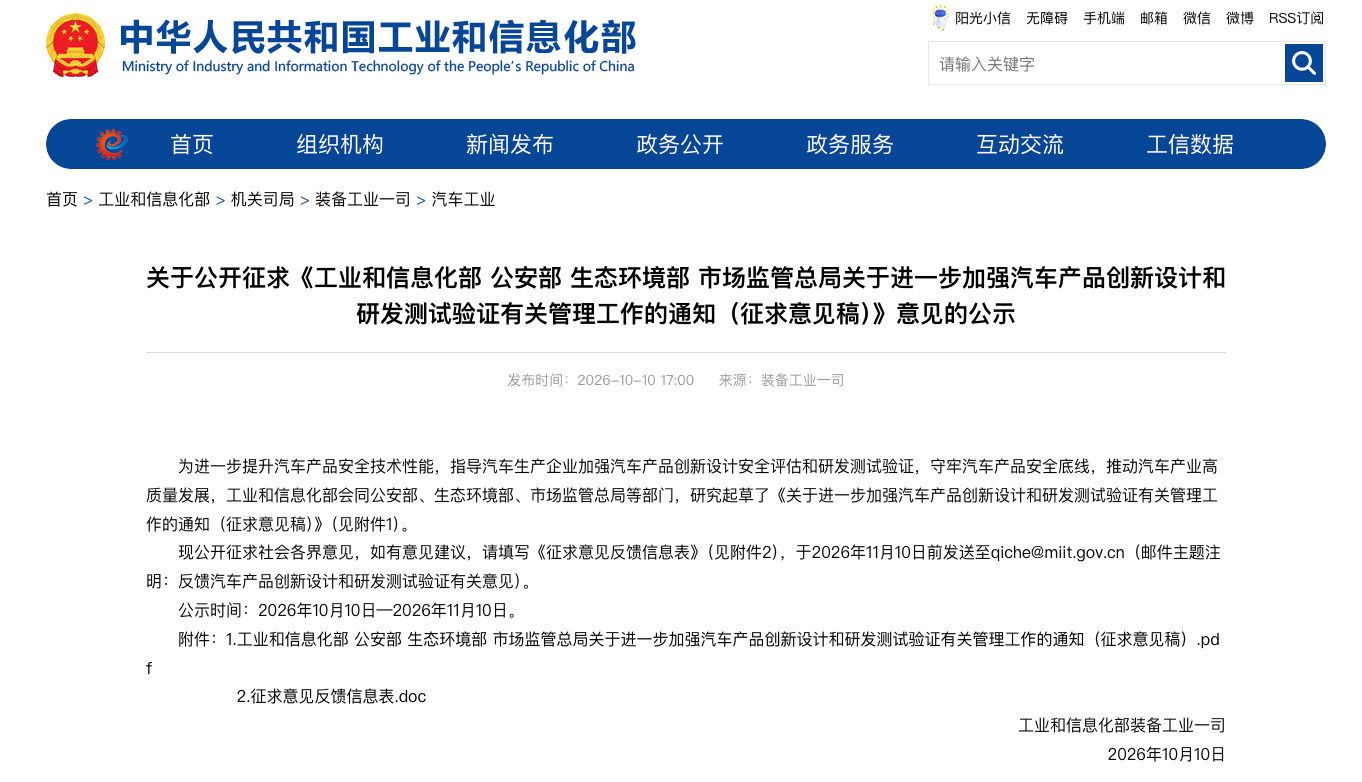
In a mere 72 hours, a questionnaire was followed by new regulations—a swift and efficient response.
What stringent measures does this document outline?
Let's begin with the most attention-grabbing provisions, all of which have a direct bearing on consumers.
The use of fully concealed door handles is now prohibited, with requirements for mechanical redundancy design and adequate hand-operation space. Issues such as doors freezing shut in winter or failing to open during power outages must be addressed at the design stage.
Features like "zero-gravity" seats, rotating seats, and seats that recline into beds must be locked and disabled while the vehicle is in motion. Emergency escape devices, emergency braking systems, and power cut-off mechanisms must have physical controls and prominent labels, rather than being buried in on-screen menus. Central control screens must undergo crash safety assessments and are prohibited from using foldable or flexible displays.
Now, let's examine the procedural constraints. New vehicle models must report 51 additional technical parameters, with compliance required for new models submitted starting January 1, 2027. Models already on sale must submit verification materials by July 1, 2027; those found to have safety hazards after the deadline will face production halts and recall filings. Insufficient testing verification or submission of false materials will result in denial of public listing—meaning no market access.
R&D testing also faces stringent benchmarks: comprehensive reliability and durability tests must cover no less than 30,000 kilometers, while environmental adaptability verification requires "two winters and one summer" of testing, a process spanning over a year.
Targeting the Achilles' Heel of 'Hastily Produced Vehicles'
Why is this considered a significant move? Because it doesn't just regulate individual components but addresses an industry-wide practice of compressed verification timelines and rushed market launches.
How prevalent is this practice? An investigation by the People’s Daily revealed a case where a new energy vehicle (NEV) manufacturer conducted only 2,000 physical tests out of 10,000 door handle tests, relying on simulations for the remaining 8,000. Some automakers perform as little as 20% real-world testing.
Traditional gasoline vehicles typically take 40 to 50 months (3.5 to 4+ years) from project initiation to mass production, adhering to the industry adage of "a new generation every five years, a facelift every three."
Professor Zhu Xichan from Tongji University puts it succinctly: A new vehicle normally requires "two winters and two summers" of road testing, while minor redesigns need "one winter and one summer" plus 30,000 kilometers. Yet some vehicles now reach market launch before completing these trials.
A luxury brand R&D personnel vividly summarized the situation: Design timelines are inflexible, so verification stages are rushed—less daring companies use simulations for secondary components, while bolder ones expand the scope of substitution.
The true power of this document lies in shifting regulatory oversight from "checking the final certification" to "verifying whether R&D processes are thorough." Failure mode analysis is required during R&D, verification materials must be submitted for approval, and production consistency is inspected post-launch.
Automotive industry expert Li Yanwei predicts limited impact on major automakers with robust verification systems, while new brands relying on rapid iteration face significant pressure. The path of "launch first, patch via OTA later" is effectively blocked.
Viewing These Three Moves Together Reveals the Regulatory Strategy
This document is not an isolated action. Looking back: In July, the National Technical Committee on Auto Standardization proposed unifying reliability test mileage for NEVs to no less than 30,000 kilometers—a milestone Cui Dongshu from the China Passenger Car Association called the "coming-of-age ceremony" for NEVs.
In August, the MIIT and other departments launched a year-long campaign to improve production consistency and quality, targeting discrepancies between "test vehicles and mass-produced models." In October, the four departments struck again at the source of innovative design and R&D verification.
July targeted mileage, August targeted consistency, and October targeted R&D sources—forming an increasingly tight regulatory net. All point to the same principle: Innovation and speed can compete, but safety verification cannot be compromised.
Incidentally, the document even regulates marketing: No false or exaggerated claims, no inducing drivers to neglect safety responsibilities. Sales tactics framing assisted driving as autonomous driving are also within its scope.
In my view, this draft comes at the right time. Chinese NEVs have advanced so rapidly that some issues that should have been caught in labs and test tracks are now being discovered by consumers on the road.
Regulators have made it clear: Consumers are not test drivers. For automakers conducting thorough verification, this is positive news—the era of "bad money driving out good" is ending.
Public comments close on November 10. Barring surprises, by 2027, the term "hastily produced vehicles" will fade into history.
-
![]()
Brake Pedal Malfunction Sparks Concern: New Regulatory Measures from Four Departments Unveiled Within 72 Hours
-
Honestly Speaking, Xiaomi’s Stellar Car Sales Success Stems Not Just from Its Own Merits but Also from Comparisons with Competitors!
-
Orders Surpass 10,000, Launch Price Cut by 50,000 Yuan: BAIC Taitan Faces No 'Newcomer Protection Period' in Off-Road Market
-
Trends | Technology Cycle and Data Gap: Anthropic Presents Three Future Scenarios for the AI Economy
-
Jinding Optics: Frequent Equity Shifts, Concentrated Customer Base, and Discrepancies in Purchasing and Sales Data with Yutong Optics
-
Analysis | What Exactly Do Lisa Su and Fei-Fei Li Want with AMD's $8.2 Billion Acquisition of World Labs?
-
![]()
NVIDIA Seeks to Acquire AI Large Model to Rival Chinese Firms
-
Industry丨What Kind of Brutal Challenges Will Edge AI Chips Face?