Paris Motor Show: Leapmotor’s Grand Presence, XPENG’s 600,000-Yuan Pricing
 10/16 2026
 468
468
Source | YuanAuto
Held biennially, the Paris Motor Show stands as the world’s oldest international auto exhibition. Chinese automakers made their debut at this prestigious event in 2006, with Great Wall Motors and JMC Landwind leading the charge as the inaugural exhibitors.
Two decades have elapsed, and while the Paris Motor Show continues to be a major automotive event, Chinese automakers have transitioned from the periphery to the spotlight. Data reveals that at the 91st Paris Motor Show, which commenced on October 12, 2026, over 20 Chinese brands participated, outnumbering the combined total of French and German brands.
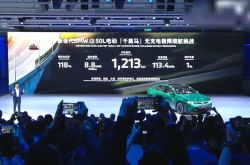
Image sourced from @Cao Li, Leapmotor Technology
Naturally, with overseas expansion increasingly seen as a pivotal strategy by Chinese automakers, ‘securing a presence’ at the Paris Motor Show is a logical step. Interestingly, many Chinese automakers, particularly those in the European market, exhibit distinct characteristics or strategies compared to their domestic counterparts.
Take Leapmotor, renowned for its cost-efficiency, and XPENG, known for its competitive pricing, as examples.
01 The ‘Unconventional’ Leapmotor and XPENG
Leapmotor is widely recognized for its frugality. Even for crucial new car launches, the automaker eschews extravagance, typically hosting events near its headquarters in Jinhua.
“The main reason is to minimize costs. Launch event expenses have soared, with the need for elaborate stages and repeated setups incurring significant costs. Hence, we’ve decided to hold all Leapmotor launch events at the same venue this year to reduce expenses,” explained Zhu Jiangming, Founder, Chairman, and CEO of Leapmotor, during a media interview for the launch of its flagship SUV D19.
However, at this year’s Paris Motor Show, Leapmotor unveiled a historically expansive booth.
According to official information from Leapmotor’s European strategic partner, Stellantis, Leapmotor erected the largest double-deck booth in its brand history at the Paris Motor Show, complete with a VIP area and showcasing nearly 10 models available in the European market, including the flagship SUV D19 and the premium compact car A05, both making their European debut.
Although Leapmotor’s booth is situated within Stellantis’s dedicated pavilion, and Tianyancha APP indicates that Stellantis owns a 19.99% stake in Zhejiang Leapmotor Technology Co., Ltd., it is believed that Leapmotor still invested millions of RMB in participating in the Paris Motor Show. For the typically frugal Leapmotor, this represents a substantial outlay.
Similarly, XPENG also adopted a different approach upon entering the European market.
At the Paris Motor Show, XPENG introduced its newly launched SUV, the G9L, to the domestic market. Unlike its positioning as a five-seat flagship SUV in China, the XPENG G9L in France offers both five-seat and six-seat configurations, starting at approximately 75,000 euros.
Image sourced from @Da Zhangzhang's Toss Report
The reason for labeling XPENG as ‘unconventional’ is the starting price of the XPENG G9L, which equates to around 560,000 RMB. Without comparing domestic prices, 75,000 euros in France can purchase vehicles like the Range Rover Velar or the plug-in hybrid BMW X3, and potentially even more.
Despite the XPENG G9L being significantly larger than its competitors, the Range Rover Velar and BMW X3 are no small vehicles either. Considering the strong appeal of established luxury automakers in Europe, which far surpasses that in China, XPENG’s confidence in competing at similar price points is noteworthy.
02 China’s ‘Dynamic’ Players, Global Newcomers
It is clear that both Leapmotor and XPENG have gained confidence in Europe, daring to invest and aiming for premium pricing. This confidence stems from the growing influence and actual sales of Chinese brand cars, particularly new energy vehicles.
Data indicates that in the second quarter of 2026, Chinese brands accounted for 10.7% of the overall passenger car market in Europe, nearly doubling from 5.7% in the same period in 2025. In April 2026, Chinese brands’ market share in the European pure electric vehicle segment surpassed 15% for the first time, setting a new record, while their share in the plug-in hybrid segment approached 29%.
Meanwhile, in the first half of 2026, the new energy vehicle penetration rate in the European passenger car market reached 30.5%, with pure electric vehicle sales increasing by 35% year-on-year and plug-in hybrid vehicle sales increasing by 24.8% year-on-year.
Various indicators suggest that the European passenger car market is rapidly transitioning from internal combustion engines to electric vehicles, and Chinese automakers are poised to reap significant benefits. Among them, the leading players, having ‘fiercely competed’ in the domestic market, are naturally more appealing to European consumers.
Image sourced from @Thomas Electric Train
Taking Leapmotor and XPENG as examples, although both compete on cost-effectiveness in China, their strong domestic sales and superior intelligent experiences compared to European, Japanese, and Korean automakers enable them to sell models that struggle in China as bestsellers in Europe.
For reference, the Leapmotor T03, which has ‘zero’ sales in China, sold over 20,000 units in Europe in the first half of this year. The XPENG G6 sold less than 3,000 units in China in the third quarter of this year but over 6,000 units in Europe during the same period. Notably, the XPENG G6 is not inexpensive in Europe, starting at around 320,000 RMB and already achieving local assembly of semi-knocked-down kits in Austria.
Of course, Leapmotor and XPENG’s rapid growth in Europe cannot be separated from their strategic partnerships with major European manufacturers. Nevertheless, these two automakers set an example for their domestic competitors still ‘fiercely competing’ in China.
Without the ‘intensity’ of the Chinese auto market, there would be no potential to earn worldwide recognition.
-
![]()
Thousand-Kilometer Range BMW i3, Ioniq V Priced Under RMB 100,000: Chinese Automakers Must Guard Against Joint Venture Encroachment in Global Expansion
-
![]()
Competition Among Cities Enters the Second Half: The Outcome Lies Beneath the Surface
-
![]()
AI-Generated Comic Drama Concept Stocks Surge: Is ByteDance the Sole Profit-Maker?
-
iPhone 18 Pro Series Sees Price Reductions—Apple Can't Afford to Stay Idle During Double 11
-
![]()
A Whopping 550 Million Yuan Investment! Fanchuangwei’s High-Transparency Optical AR Lens Project Takes Root in Taizhou
-
![]()
Domestic Triumph in Glass Substrate Lithography! Optical Firm Lands Major Orders
-
![]()
AI-Powered Alternatives Offer Free Substitutes, Posing Threat to Adobe's 'All-in-One' Suite
-
![]()
McKinsey Report: AI Inference to Account for 60% of Computing Power by 2030