Germany Turns to Giant Thyssenkrupp, Brings Chinese Electric Drive Inovance Automotive Onboard for Steer-by-Wire!
 10/16 2026
 351
351
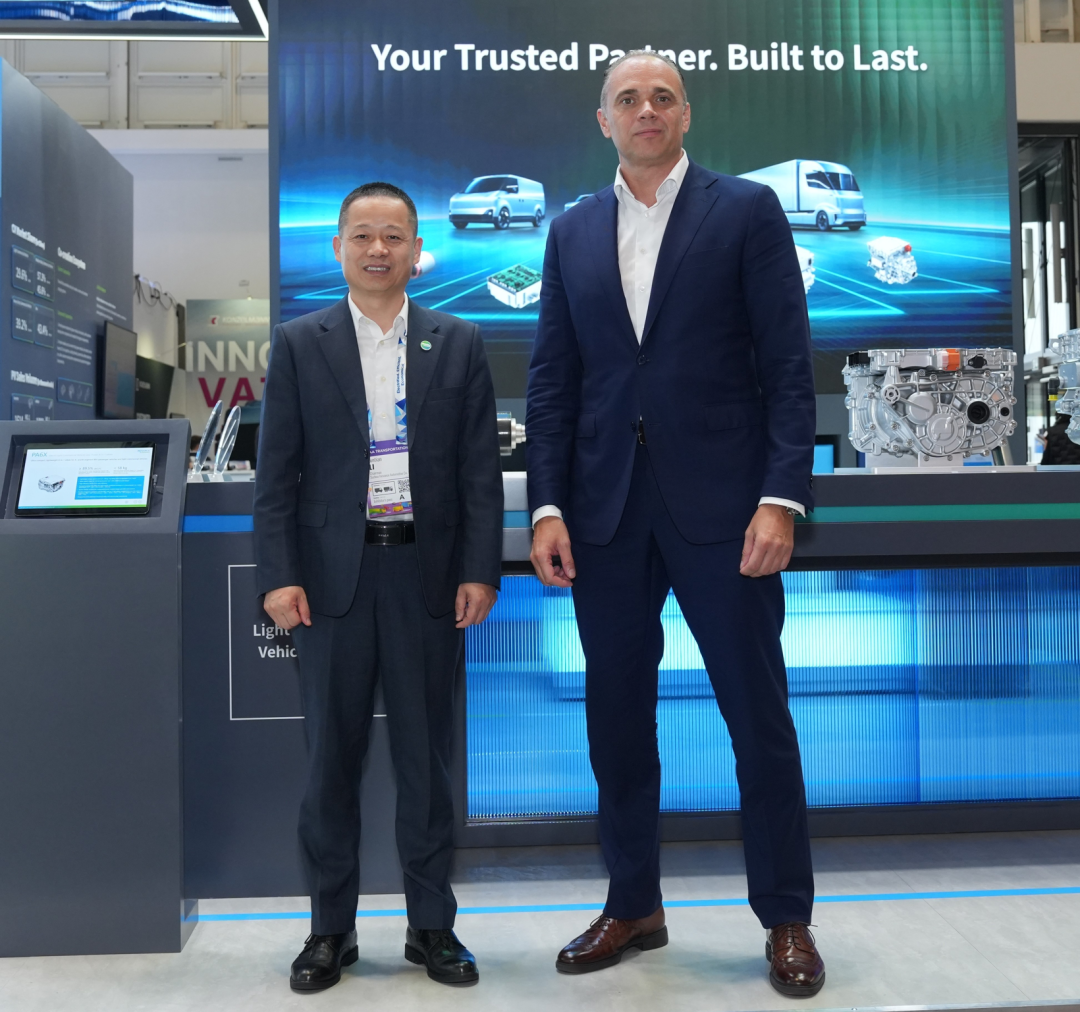
On October 14, thyssenkrupp Automotive Technology and Inovance Automotive signed a memorandum of understanding to launch a strategic collaboration centered on Steer-by-Wire (SBW) technology.
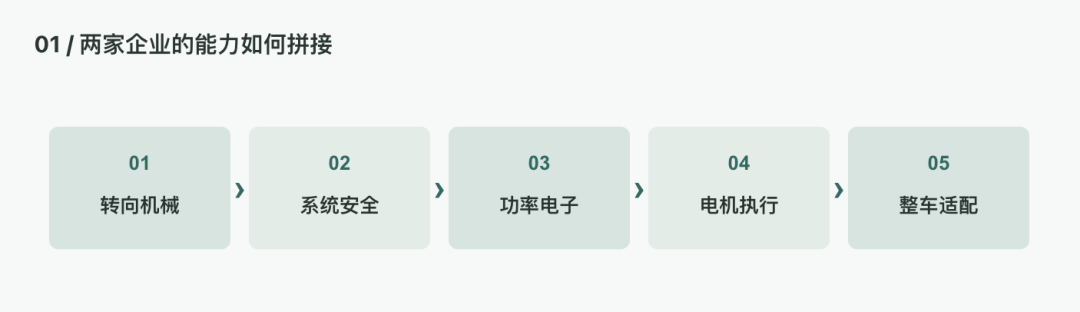
The division of labor is clear: thyssenkrupp contributes steering systems, mechanical design, system integration, and functional safety, while Inovance Automotive provides electronics, electric drive, actuators, software, and China-based R&D, manufacturing, and industrialization capabilities.
The collaboration will initially focus on the Chinese market before expanding internationally, with both parties also identifying other intelligent chassis products as potential areas for future cooperation.
Steering is a field in Tier 1 suppliers where experience counts the most, with mechanical structures, vehicle dynamics matching, durability testing, and OEM certification built up over decades.
For a German steering giant to entrust a Chinese electric drive company with collaboration on a high-safety product like Steer-by-Wire signals a real shift in the power dynamics of the chassis supply chain.
01
The Strengths of Both Sides:
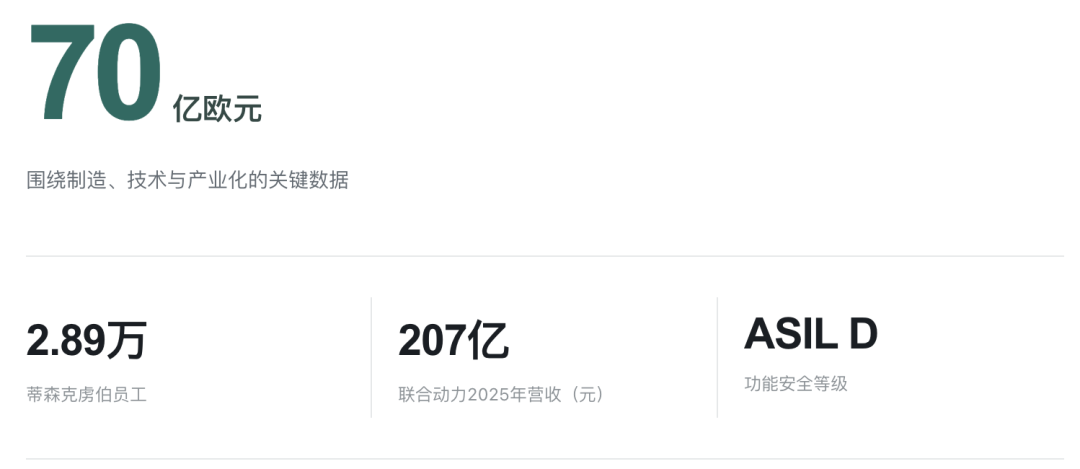
€7 Billion vs. ¥20.7 Billion
thyssenkrupp Automotive Technology operates across four business units—chassis, components, aftermarket, and forging—with products including steering systems, damping technologies, and axle and system assemblies. In fiscal 2024/2025, the division generated €7 billion in sales and employed approximately 28,900 people.
Inovance Automotive, founded in Suzhou in 2016, listed on the ChiNext board as a spin-off from INOVANCE Technology on September 25, 2025.
In 2025, it reported revenue of ¥20.697 billion, up 27.94% year-on-year, with net profit attributable to shareholders of ¥1.133 billion and approximately 9,400 employees. Its manufacturing bases are located in China, Hungary, and Thailand, with an additional R&D center in Stuttgart, Germany.
Revenue breakdown:
◎ Electric drive systems contributed ¥18.106 billion, nearly 90% of total revenue, with annual sales of 4.66 million units/sets;
◎ Overseas revenue reached ¥1.171 billion, up 52.32% year-on-year, with nine new overseas customer designations secured during the year, including Volkswagen, Volvo, and Stellantis.
◎ Domestic customers include Li Auto, Xiaomi, Chery, and GAC, having supplied power systems for over 170 models across more than 40 OEMs.
The chassis business represents Inovance Automotive's second growth curve.
◎ Products now span three major actuators—active suspension, Steer-by-Wire, and brake-by-wire—along with chassis domain controllers;
◎ Active suspension hydraulic pumps and active stabilizer bars have secured OEM designations, with mass production of a 7.5 kW active hydraulic pump featuring 800V SiC power electronics scheduled for the first half of 2026.
One side brings mechanical expertise and functional safety, the other power electronics and scalable manufacturing. Steer-by-Wire sits precisely at the intersection of these capabilities—the underlying logic of this partnership.
The evolution of steering systems is clear:
◎ Early mechanical steering relied on a steering column, intermediate shaft, and steering gear to transmit steering input to the wheels;
◎ Hydraulic power assistance reduced operating effort but retained mechanical linkages;
◎ EPS (Electric Power Steering) introduced a motor to provide assistive torque based on driver input, with ECU-controlled assistance characteristics—though the steering wheel and wheels remained mechanically connected.
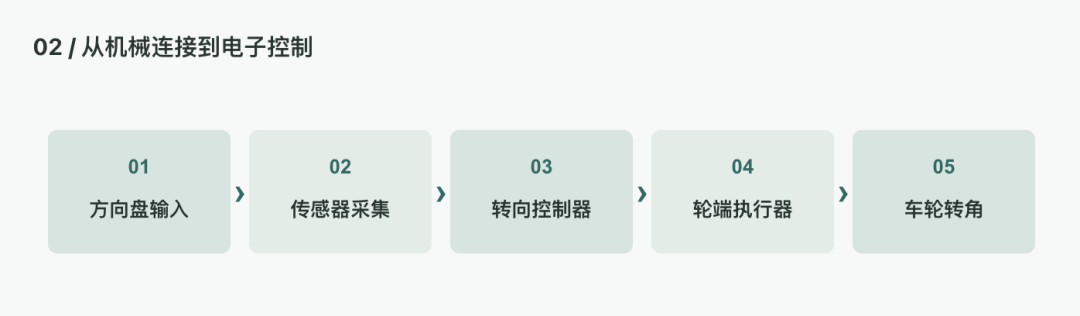
Steer-by-Wire eliminates this physical connection.
◎ Sensors at the steering wheel capture angle, torque, and speed; the controller calculates the desired steering behavior and sends commands via a communication link to electric actuators at the wheels, which execute the steering angle;
◎ A separate feedback motor at the steering wheel simulates road resistance, return-to-center torque, and steering feel.
The entire system must simultaneously manage two actuators, communicating solely via electronic signals.
The benefits are immediate: steering ratio can dynamically adjust based on vehicle speed and driving environment. At low speeds (e.g., parking), a small steering wheel angle translates to a large wheel angle; at high speeds, responsiveness is reduced to enhance stability.
In 2014, the Infiniti Q50 became the first vehicle to feature Steer-by-Wire, retaining a mechanical backup.
The 2025 NIO ET9 uses ZF's Steer-by-Wire system, with ZF responsible for the steering wheel actuator, redundant steering actuators, and software, while steering feel is jointly developed. The Tesla Cybertruck also eliminates mechanical linkages.
In October 2026, Mercedes-Benz announced the global debut of its next-generation EQS, offering Steer-by-Wire as an option.
On April 26, Nexteer announced mass production of its first Steer-by-Wire project, supplying a leading Chinese new energy vehicle OEM and enabling the world's first production passenger car with a "fully integrated" all-by-wire chassis.
With the technical validation phase complete, competition now shifts to product cost, production scale, and multi-platform adaptability—areas where industry leaders are positioning themselves.
02
The Challenge Lies Not in Two MCUs,
But in the Entire Safety Architecture
From mechanical steering to EPS, the electric motor only assisted steering; if electrical systems failed, drivers could still control direction via the retained mechanical link.
With mechanical linkages removed, steering commands rely entirely on electronic systems and actuators, placing Steer-by-Wire among products with the highest safety requirements.
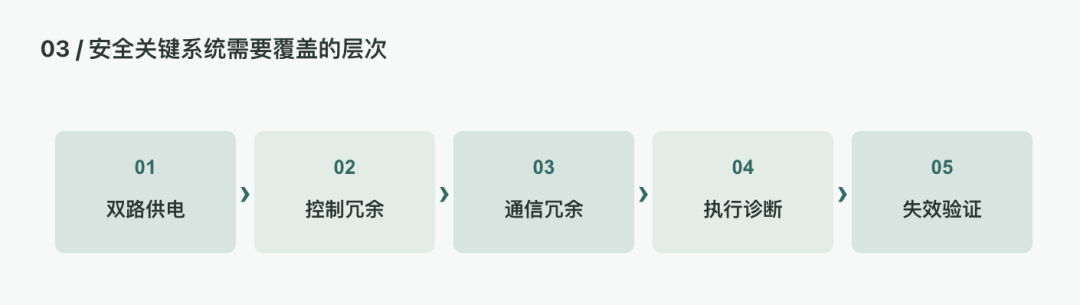
◎ Redundancy is the first hurdle.
By late 2025, Nexteer obtained ASIL D functional safety certification from Germany's DAkkS—the highest automotive safety integrity level and a global first for Steer-by-Wire.
Its solution features dual controllers, dual power supplies, multiple communication links, and dual actuation paths. Under a single fault, backup links take over within milliseconds, ensuring uninterrupted steering function.
The challenge isn't simply adding two MCUs but designing the entire safety architecture: sensor common-cause failures, power supply fault propagation, software anomalies, communication delays, and actuator sticking must all be accounted for in design and rigorously verified through fault injection, hardware-in-the-loop testing, bench durability trials, and vehicle testing.
◎ The second challenge is control precision.
Steering response is influenced by vehicle speed, tire lateral forces, road friction, suspension movement, and road impacts. The controller must maintain responsiveness, stability, and driver feel in complex environments.
Sensor errors, algorithmic lag, or inconsistent actuator response can cause abnormal steering feedback and affect vehicle trajectory.
◎ The third challenge is the mechanical actuator.
Eliminating mechanical linkages doesn't mean removing mechanical components in the wheel steering mechanism. Rack-and-pinion systems, ball screws, bearings, housings, and connectors still endure steering loads and road impacts, while the steering motor must reliably operate under varying temperatures, power supplies, and continuous duty cycles.
Decades of mechanical durability and vehicle integration expertise—Thyssenkrupp's core strength—combined with Inovance Automotive's power electronics, actuator control, and manufacturing capabilities, create a complete solution.
China's new energy vehicle industry has nurtured an electric drive supply chain whose foundational capabilities overlap significantly with steering actuators:
◎ Power device selection, inverter design, current control, thermal management, and scalable manufacturing are core strengths of electric drive companies;
◎ Steering actuators require the same expertise: efficient motors, high-reliability controllers, current sensing, rotor position detection, fault diagnosis, and multi-channel power management.
Chinese automakers are rapidly upgrading their electronic-electrical architectures, with rear-wheel steering, active suspension, brake-by-wire, and Steer-by-Wire being implemented in quick succession. Short vehicle development cycles demand faster supplier hardware and software (hardware and software) iteration, cost competitiveness, and local engineering support—requirements traditional overseas Tier 1 suppliers struggle to meet.
This partnership accelerates time-to-market for both sides:
◎ Inovance Automotive gains experience in developing and validating high-safety-level systems, building reliability records demanded by global OEMs;
◎ Thyssenkrupp enhances responsiveness to align with China's procurement and production systems.
Electric drive capabilities do not directly equate to steering expertise.
Full accountability for Steer-by-Wire rests on system functional safety, mechanical durability, vehicle driving experience, product consistency, and after-sales fault handling—spanning multiple disciplines. Suppliers must develop system-level engineering capabilities to qualify for global vehicle programs.
This is the commercial value of Inovance Automotive's partnership with Thyssenkrupp and the threshold for all Chinese electric drive companies entering the chassis domain.
The global steering market remains dominated by ZF, Bosch, Nexteer, JTEKT, and Thyssenkrupp, each with decades of accumulation.
As chassis control shifts from mechanical to electronic, professional divisions are reshaping: software, controllers, power electronics, actuators, and vehicle motion control are becoming increasingly intertwined. Suppliers traditionally focused on powertrains are now expanding into chassis systems.
On October 14, Thyssenkrupp chose joint development to leverage existing power electronics capabilities for product expansion. A week before signing, Luxshare Precision completed its 100% acquisition of Jingxi Intelligent Driving, using capital to acquire mature assets.
Jingxi Intelligent Driving, formerly Jingxi Heavy Industries, acquired Delphi's global chassis suspension and braking business in 2009. It is the world's only company with both R&D and mass production capabilities for MagneRide magnetorheological suspension, holding over 140 global patents and capable of 1,000 damping adjustments per second.
Its products cover suspension, braking (iDBC, EMB), and steering, with EMB scheduled for mass production in the first half of 2027 (annual capacity: 480,000 units).
Post-acquisition, Luxshare's chassis R&D and manufacturing network spans China, Europe, North America, and South America, with eight R&D centers, seven production bases, and two test tracks.
Automaker demands are also evolving.
Software interfaces between chassis systems, central computing platforms, and intelligent driving controllers are gaining importance. Suppliers must deliver not only safe and reliable actuators but also support OEMs in developing vehicle motion control strategies.
The value of steering systems comprises three layers:
◎ The foundation: mechanical components, motors, sensors, and power electronics;
◎ The middle layer: steering controllers, functional safety, and fault management;
◎ The top layer: vehicle motion control, driving experience, and integration with intelligent driving.
Traditional mechanical suppliers must strengthen their electronics and software capabilities, while Chinese electric drive and electronics companies must transition from component development to safety-critical system integration.
The collaboration between Thyssenkrupp and Inovance Automotive sits precisely at this intersection.
Summary
Technological realignment in automotive chassis systems will continue for years. Steering, braking, and suspension are progressively being electrified and integrated into unified vehicle motion control, transforming formerly independent mechanical systems into execution layers for vehicle intelligence.
Chinese electric drive suppliers have already established global scale in the electrification supply chain. The next frontier is capturing growth in steering, braking, and suspension. As more chassis functions are executed by motors and coordinated by software, collaborations between German chassis giants and Chinese electric drive companies are unlikely to remain isolated cases.
-
![]()
A Whopping 550 Million Yuan Investment! Fanchuangwei’s High-Transparency Optical AR Lens Project Takes Root in Taizhou
-
![]()
Domestic Triumph in Glass Substrate Lithography! Optical Firm Lands Major Orders
-
![]()
AI-Powered Alternatives Offer Free Substitutes, Posing Threat to Adobe's 'All-in-One' Suite
-
![]()
McKinsey Report: AI Inference to Account for 60% of Computing Power by 2030
-
Meitu, Shifting to Token-Based Charging, Remains an Internet Company
-
![]()
Muse Takes the Lead, Tech Giants Adapt, the Eve of Personal AI Agent Battle
-
Car Companies Compete for Influence with Self-Developed Batteries
-
![]()
Ultrafast Nonlinear Optics Technologies: 103rd Update on Optical Parametric Multi-Pass Cell Amplifier