Can Beijing Hyundai's Ioniq V Disrupt the New Energy Vehicle Market?
 10/19 2026
 547
Lead | Introduction
Priced from 99,900 yuan, the Beijing Hyundai Ioniq V stands out in the 100,000-yuan pure electric sedan market with its impressive features: CATL batteries, Momenta intelligent driving technology, a 2,900mm wheelbase, a 650km driving range, nine airbags, and a lifetime warranty. However, as of now, no official sales or order figures have been disclosed for the Ioniq V. Compared to domestic competitors, Beijing Hyundai's brand presence in the new energy vehicle (NEV) sector remains relatively weak. Can the Ioniq V break the cycle of joint-venture EVs offering strong products but struggling in sales?
Produced by | This article is produced by Heyan Yueche Studio
Written by | Cai Yan
Edited by | He Zi
Full text: 1,991 characters
Reading time: 3 minutes
A B+ class pure electric coupe, equipped with CATL batteries and Momenta intelligent driving, priced at 99,900 yuan—this seems like a bold move reminiscent of a price war declaration typically associated with domestic brands. However, this time, the price comes from Beijing Hyundai.
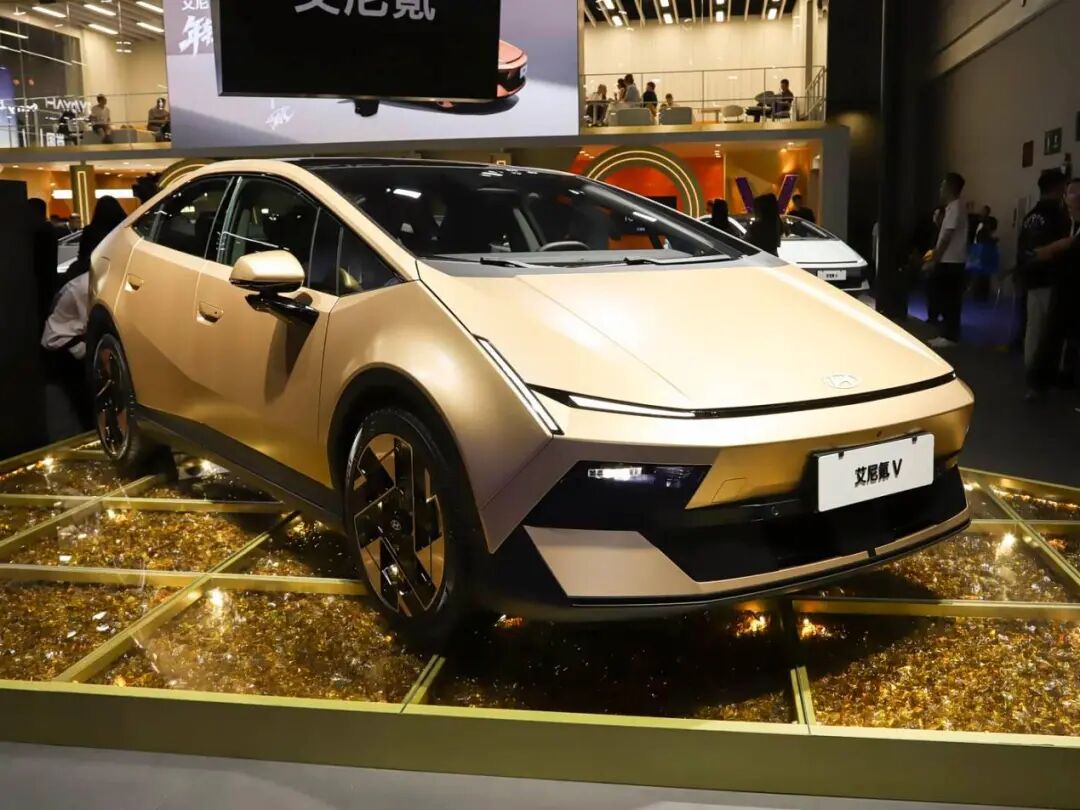
△ The Modern Ioniq V is launched at a starting price of 99,900 yuan
Product Leapfrogging, Brand Disconnect
The Ioniq V's pricing strategy is almost revolutionary. With a starting price of 99,900 yuan, it directly competes in the core price bands of the BYD Qin PLUS EV and XPENG MONA M03, while offering a larger body size—4,900mm in length and a 2,900mm wheelbase, surpassing the MONA M03 by 115mm and the Qin PLUS EV by approximately 135mm. In terms of configuration, it leaves no stone unturned: standard CATL NP3.0 batteries, 800V architecture, a Qualcomm 8295P chip, a 27-inch 4K central display, and Momenta's advanced driving assistance available from the 119,900-yuan Max+ version, supporting highway and urban memory navigation. Launch benefits address the top three concerns of EV users—a lifetime warranty (including three-electric systems) for first non-commercial owners, battery replacement (if decay exceeds 30% within 8 years or 160,000km), and compensation for battery fires.
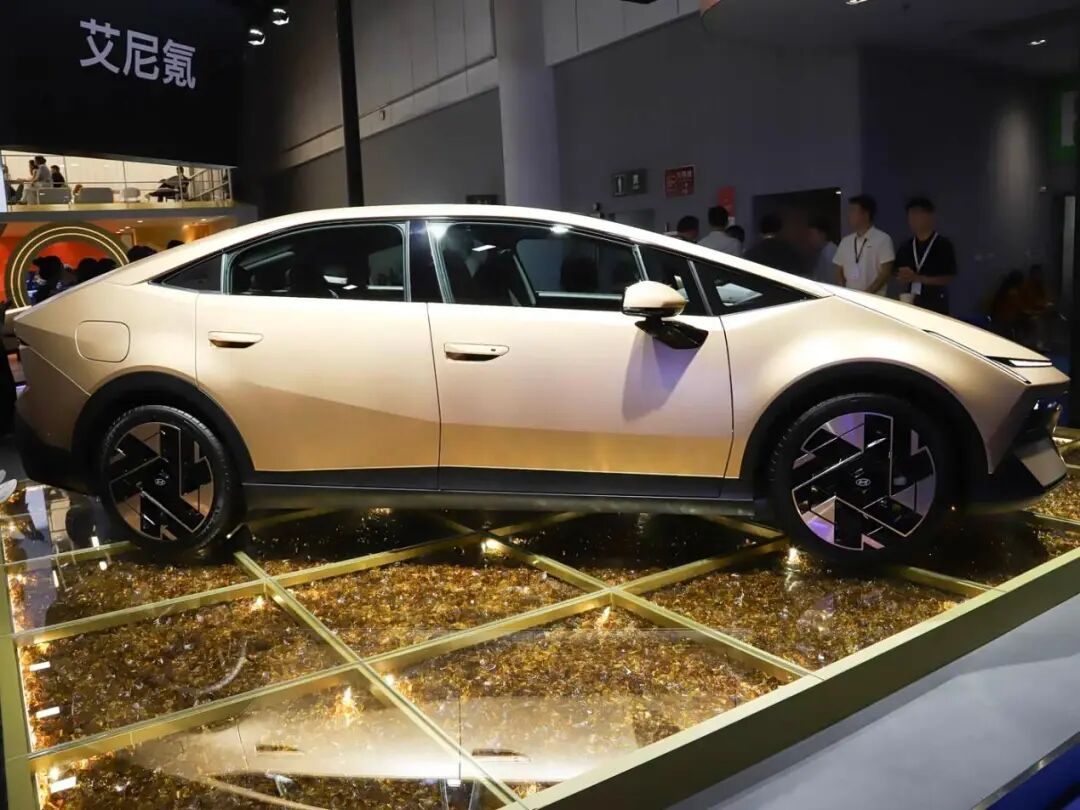
△ The Ioniq V's body size offers a clear advantage
However, the vehicle has one significant drawback that cannot be overlooked: Beijing Hyundai's relatively weak brand strength in the NEV sector. From January to August 2026, cumulative sales of Beijing Hyundai's pure electric model, the EO Yio, reached only about 578 units. While the Ioniq brand has accumulated over 1 million global sales, its recognition in the Chinese market remains limited, with consumer perceptions of "Hyundai" still firmly rooted in traditional fuel-powered joint-venture vehicles. More critically, Beijing Hyundai's overall sales in August 2026 fell 37% year-on-year to 4,830 units, indicating a sustained brand decline. Launching a highly capable product under a nearly "invisible" NEV brand represents a significant challenge in terms of consumer perception.
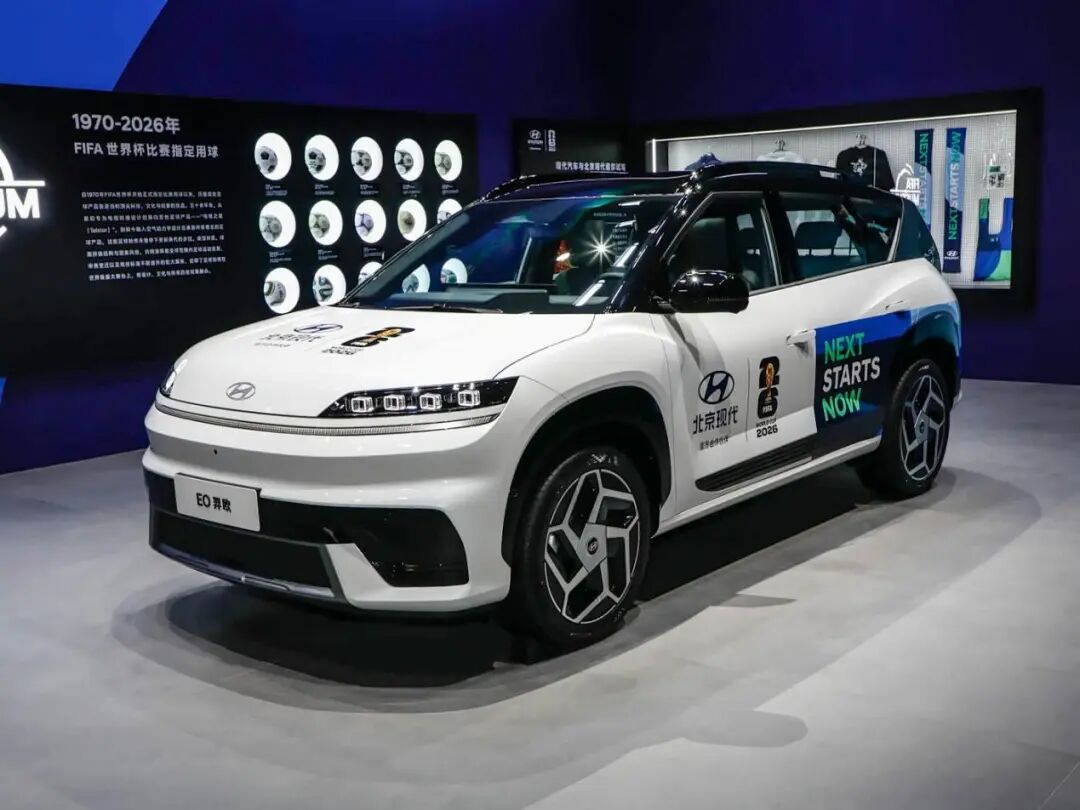
△ Poor sales of Beijing Hyundai's EO Yio pure electric model
A review of joint-venture brands' attempts in the 100,000–150,000-yuan pure electric sedan market reveals a consistent pattern of "initial hype followed by rapid decline." Dongfeng Nissan's N7 entered the market at 119,900 yuan in 2025, briefly exceeding 11,000 monthly sales before collapsing to four-digit figures by early 2026. Mercedes-Benz's pure electric CLA, despite significant investment, sold only 627 units in the first half of 2026. Ford's Mustang Mach-E recorded just 35 units in 2025, with no subsequent public sales data. In June 2026, the NEV penetration rate among mainstream joint-venture brands stood at approximately 11.9%, compared to over 60% for the overall market. These cases highlight a clear trend: joint-venture brands lack the brand momentum in the NEV sector to sustain product premiums, and without continuous iteration capabilities, products fade into irrelevance post-hype. While the Ioniq V demonstrates stronger competitiveness than its predecessors, it faces an even harsher competitive landscape—the XPENG MONA M03 offers XNGP full-scenario intelligent driving in some 120,000-yuan variants, while certain BYD Qin PLUS EV models feature rear multi-link independent suspensions.
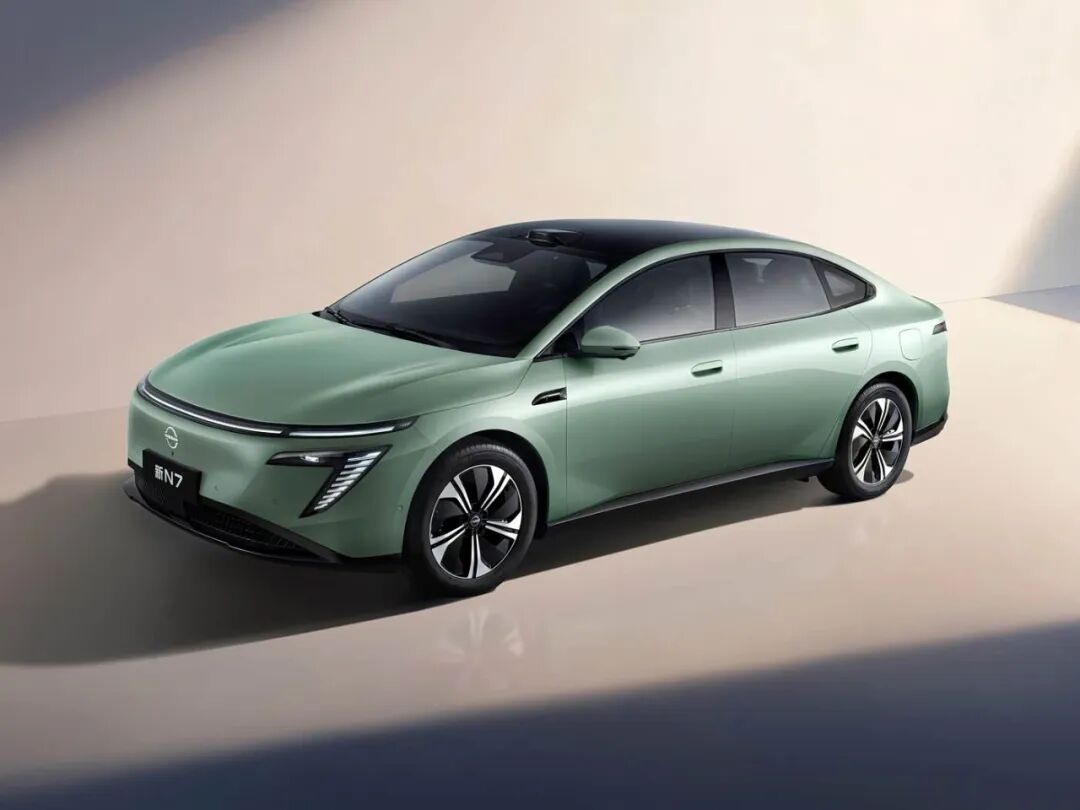
△ Joint-venture brands struggle to penetrate China's pure electric sedan market
Beyond the Gamble: Can the Model Succeed?
The true intrigue of the Ioniq V lies not in its specifications but in its underlying strategic shift. Traditionally, joint-venture brands followed a "overseas definition, China sales" model, with product definition controlled by Korean or Japanese headquarters and Chinese teams handling adaptation and channels. The Ioniq V reverses this approach—developed by Hyundai China Design Center with over 1,500 local personnel, integrating CATL batteries, Momenta intelligent driving, and dual AI models (Baidu's Wenxin Yiyan and ByteDance's Doubao) into a single vehicle. Hyundai Motor CEO Jaehoon Mu stated bluntly: "Global competitiveness requires competitiveness in the Chinese market." BAIC and Hyundai have jointly invested 8 billion yuan, planning to launch 20 new models in China over five years and target 500,000 units in production and sales by 2030. The Ioniq V serves as the first piece of this ambitious puzzle, but Beijing Hyundai's current scale—monthly sales below 5,000 units, approximately 95,000 units in the first half of the year, and sustained losses—means the 8 billion yuan investment functions more as temporary support than sustained R&D funding.
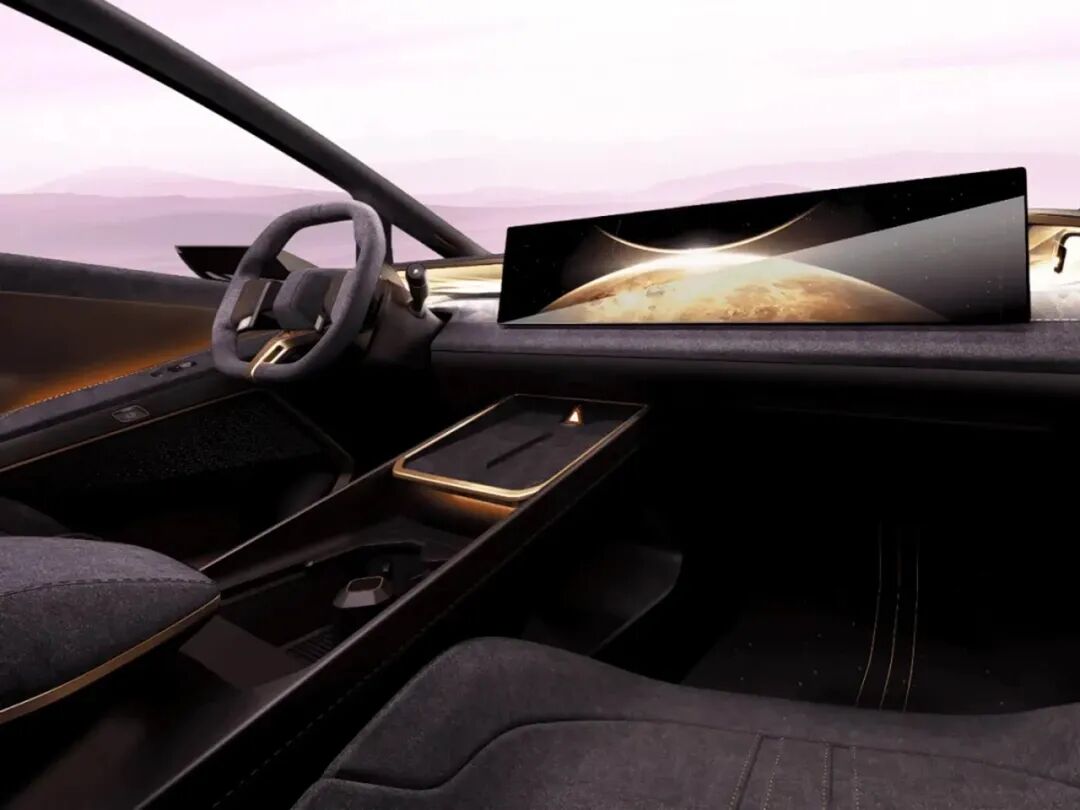
△ The Ioniq V integrates Wenxin Yiyan and Doubao dual AI models
From an industry perspective, a single model cannot save a brand, but it can validate a strategic approach. The Ioniq V's configuration reveals a telling detail: 800V architecture, typically found in models above 150,000 yuan, is standard across all variants, while the suspension uses a front MacPherson and rear torsion beam setup—rare for a B-class vehicle. Capital allocation prioritizes charging and intelligence over chassis upgrades, reflecting a typical "Chinese-style product definition" approach that allocates limited costs to dimensions with the strongest user perception rather than adhering to traditional global platform priorities. Whether this strategy succeeds remains to be seen, but at least Beijing Hyundai is not remaining passive.
In a market where joint-venture NEV penetration hovers around 12%, a joint-venture automaker willing to cede product definition and pricing authority to Chinese teams represents a break from inertia. The Ioniq V's short-term sales are unlikely to disappoint—a B+ class pure electric coupe at 99,900 yuan, with CATL batteries, Momenta intelligent driving, and a lifetime warranty for first non-commercial owners, punches through competitive defenses in the 100,000-yuan segment. However, its true test lies not in the first month but the twelfth. When the "inverted V-shaped curve" of Nissan N7 sales repeats, will Beijing Hyundai have the product iteration pace and channel service capabilities to retain second- and third-wave users? The answer to this question matters far more than initial sales figures.
Commentary
The Ioniq V's product strength justifies self-deprecating praise as "flawless except for abstraction," with no obvious weaknesses on its specification sheet and an even more aggressive price than domestic brands. However, its challenge lies not in competing against specific rivals but in overcoming Chinese consumers' conditioned indifference toward the "Hyundai" brand. While a single model can shift perceptions, sustained consolidation requires follow-up vehicles.
(This article is original to Heyan Yueche and may not be reproduced without authorization.)
-
Is Xiaomi to Blame? Porsche, the Dream Car for Chinese Consumers, Lays Off 30% of Staff and Faces Crisis!
-
![]()
Algorithmic Addiction: Meta Faces $1.4 Trillion Trial
-
![]()
Can Landspace Be China's SpaceX in Commercial Spaceflight?
-
Price Hikes Still Lingering, Price Cuts Suddenly Sweep In! The 50-Day Price Battle in the Smartphone Industry
-
![]()
Why Is Apple So Steadfast in Levying a 30% 'Apple Tax'?
-
Tech Titans Clash in AI Office Realm: Personal Agents or AI Hardware – Which Holds the Key?
-
![]()
Why build another training ground in Hong Kong when over 100 have already been established on the mainland?
-
Urban NCA as a Standard Feature: Will the 2027 Chang'an Qiyuan Q07 Tianshu Pilot Edition See a Price Drop?