What? The Audi A8 is Set to Be Manufactured in China, in Partnership with Huawei
 10/23 2026
 386
Audi Just Welcomed Its First Chinese CEO
"
Author|Wang Lei
Editor|Qin Zhangyong
In the automotive landscape of 2026, expect the unexpected.
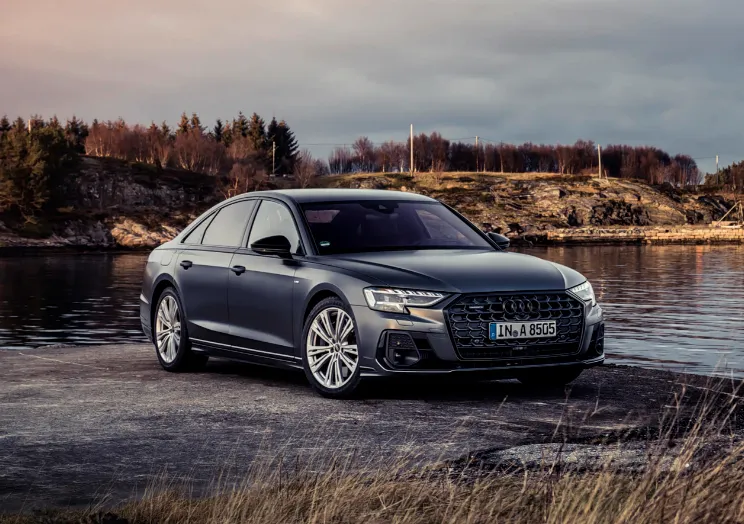
The Audi A8L, famed for its promise of '6 horizontals and 12 verticals, fulfilling your first love dream,' is now potentially set for co-development with Huawei.
This news comes from a report by German media outlet Manager Magazin, which can be succinctly summarized as follows:
Led by Audi's global CEO Gernot Döllner, Audi is in negotiations with Huawei. The next-generation Audi A8L will feature a Chinese variant, produced domestically, with core technological development entrusted to Huawei. The first batch of vehicles is slated for manufacture by the end of 2028.
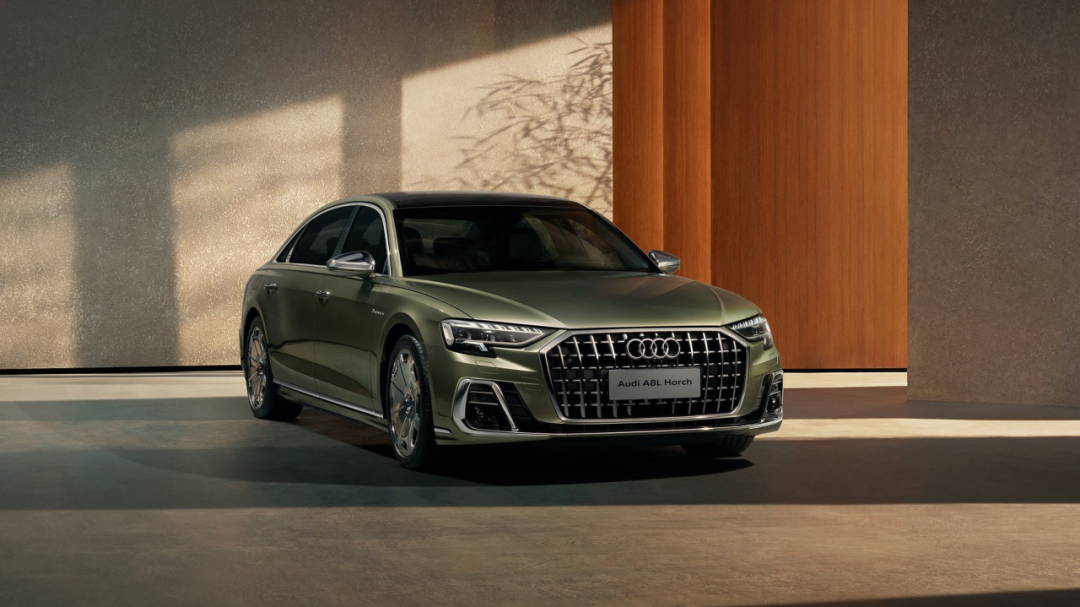
Meanwhile, the original global version will chart a different course, switching to the MSB platform shared with the Porsche Panamera and manufactured at the Porsche Leipzig plant.
Of course, the report also notes that this plan is not yet finalized, and neither Audi nor Huawei has confirmed the news. It is rumored that Döllner may not have even informed the group's top leadership about this plan yet...
Amidst this news, Audi China has also undergone a leadership transition. Effective November 1, 2026, Zhang Jun will succeed Johannes Roscheck as President of Audi China, marking the first time a Chinese national has held this position since Audi's inception in China.
The flagship model being developed in collaboration with Huawei and the appointment of the first Chinese CEO make for a compelling narrative.
01 Huawei-Collaborated Audi A8
The report from Germany's Manager Magazin is quite direct:
"Der A8 soll nicht mehr aus einem deutschen Werk nach China exportiert, sondern in einer eigenen Variante direkt in China gebaut werden. Und zwar im Kern entwickelt vom unheimlichen Techriesen Huawei."
In translation: The A8 will no longer be exported from a German factory to China but will instead be directly produced in China with a unique approach. Its core development will be undertaken by the formidable tech giant Huawei.
The core information is sparse but significant, described by Manager Magazin as "Audi executives' Chinese adventure plan."
Firstly, the Audi A8 will be produced in China, most likely at the Audi PPE plant in Changchun. As an Audi-FAW new energy vehicle factory, it has invested 2.6 billion euros, boasting an annual production capacity of about 150,000 vehicles. However, sales of PPE platform heavyweights like the Audi Q6L e-tron and Audi A6L e-tron have been lackluster, clearly unable to reach full production.
According to multiple sources, Audi's global CEO, Gernot Döllner, hopes that collaboration with Huawei will provide new product support for the Changchun PPE plant.
Meanwhile, the original global version will no longer be produced at the Neckarsulm plant, which has been manufacturing the Audi A8 for 34 years. Instead, it will move to Porsche's Leipzig plant and adopt the MSB61W longitudinal high-end platform, sharing its origins with the Panamera. Notably, this platform supports both pure fuel and plug-in hybrid powertrains, suggesting that the next-generation A8 will likely follow suit.
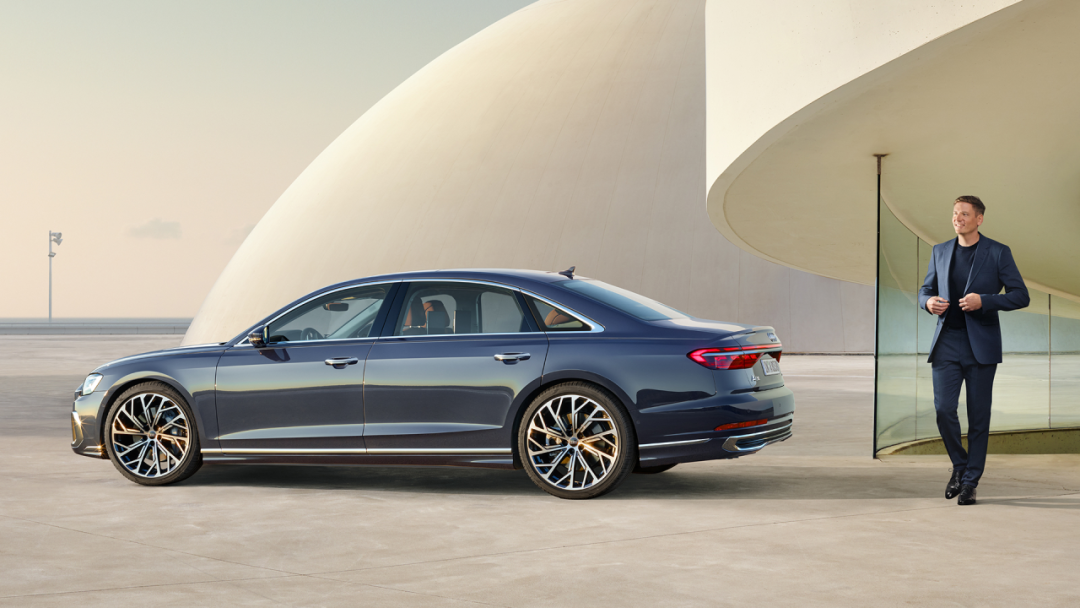
Although this plan has sparked internal controversy, there are traces to follow. According to the largest-ever restructuring plan disclosed by its parent company, Volkswagen Group, in early September, the Neckarsulm plant is one of four German factories that may be closed.
Another key piece of information is that core research and development will be provided by Huawei.
It should be noted that the German report uses the term "Kern entwickelt" (core development), not the entire vehicle platform. However, some domestic media reports have incorrectly stated "Huawei's entire vehicle technology platform support," which is misleading.
The so-called "core technologies of research and development" likely refer to technical support based on a series of intelligent solutions, such as the HarmonyOS cockpit and Huawei's intelligent driving.
This is not Audi's first foray into such collaborations. As the earliest German luxury car brand to partner with Huawei, many Audi models already feature Huawei's intelligent driving technology. Audi has already incorporated the HarmonyOS cockpit and Huawei's intelligent driving into new PPE platform models like the A6L e-tron and Q6L e-tron. The mainstay oil-powered models, the new Q5L and A6L, also offer Huawei technology as an option.
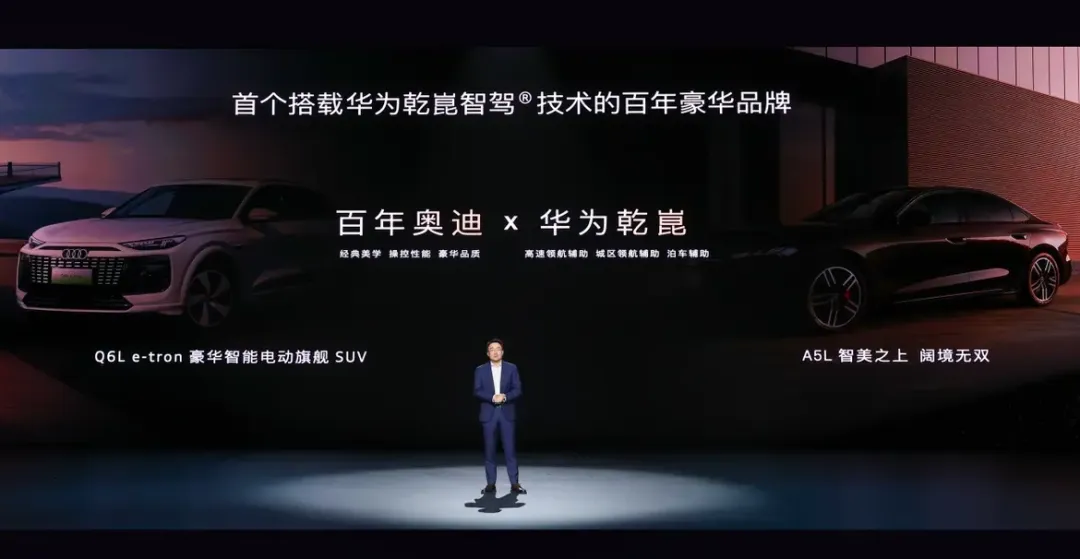
Moreover, the path has already been paved. Huawei has also collaborated with ZEEKR and SERES to create several high-end products priced above 600,000 yuan, which is the traditional market price range for luxury D-segment cars. Now, it is understandable why Audi would choose Huawei's platform and technology for its flagship product.
The market impact, however, is significant.
This move has also caused a "minor stir" within Audi. Manager Magazin points out that internal resistance is considerable, with not only Audi employees questioning but also the group's management and supervisory board raising doubts with Döllner.
In the coming November, Döllner may present the A8 transformation plan at a group management meeting.
02 Urgent Need for a Breakthrough
Against this backdrop, another major event within Audi at the same juncture gains context.
On October 22, Audi's global official website announced a personnel appointment. Effective November 1, Zhang Jun will become President of Audi China, succeeding Johannes Roscheck, who is expected to conclude his more than two-year tenure at the end of this month and return to Germany.
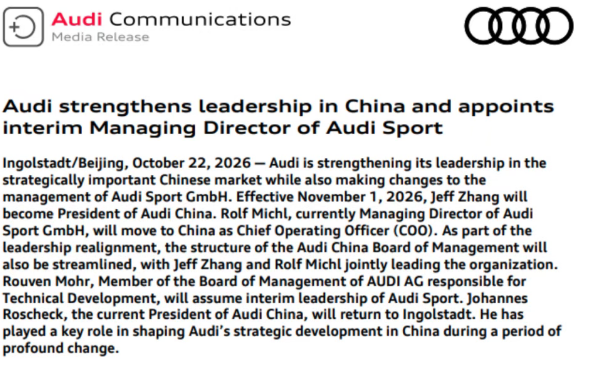
At first glance, it seems like a routine personnel change, but upon closer inspection, it's entirely different—this is the first time in Audi's history in China that a Chinese national has been appointed to this position, making Zhang Jun Audi China's first Chinese CEO.
Besides the focus on Zhang Jun becoming Audi China's first Chinese president, Audi China also appointed Rolf Michl, currently Managing Director of Audi Sport GmbH, as Chief Operating Officer. The two will form the smallest management board in Audi China's history.
According to Audi CEO Gernot Döllner, this adjustment aims to integrate international perspectives with knowledge of the Chinese local market and respond more swiftly to consumer demands.
In fact, Zhang Jun's name has not been in the public eye for long, and his appointment to this unprecedented position at Audi is based on "fit" and "past achievements."
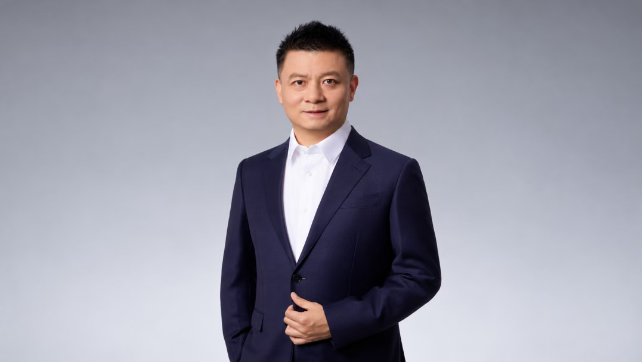
He is an Audi veteran himself. From 2018 to 2020, he held senior management positions within Audi, personally establishing the sales organization for SAIC Audi and also involved in strategic projects for FAW-Audi. Subsequently, he successively oversaw Alfa Romeo and DS Automobiles' China businesses at the Stellantis Group.
However, what truly impressed Audi's headquarters was perhaps his experience at Chery.
Before rejoining Audi, his most recent position was Vice President of Chery International and CEO of the Chery brand, leading Chery's overseas expansion, primarily targeting the European market. Consider Chery's current performance in Europe: from January to September 2026, Chery sold nearly 300,000 vehicles in 24 European countries, a year-on-year increase of 182%; the penetration rate of new energy vehicles exceeded 50%.
This powerful "breakthrough" capability is precisely what Audi needs now.
After all, Audi's current situation in China is evident to all. In the first half of this year, Audi Group's total deliveries in China were 233,000 vehicles, a year-on-year decline of 19.3%. Wilson Terminal data shows that in the third quarter of this year, Audi's sales in China were approximately 94,600 vehicles, a year-on-year decrease of about 24.5%.
The German media outlet Manager Magazin also mentions that due to poor performance in the world's most profitable market, Audi has issued internal warnings, predicting that its sales in China in 2026 will only exceed 420,000 vehicles, a decrease of about 30% compared to 2025. Audi even faces the risk of its first loss since entering the Chinese market.
There are also reports that in the first half of 2026, Audi's business profit in China fell from 279 million euros to 73 million euros, a reduction of about 70%. Combined with Audi's sales of 233,000 vehicles in the first half of 2026, a year-on-year decline of 19.3%, these rumors are not unfounded.
Therefore, choosing a leader who understands the standard processes of foreign luxury brands, is well-versed in the strategies of Chinese independent brands going overseas, is familiar with the operational logic of the Chinese local market, understands the changes in Chinese consumers' demands for intelligent configurations and price sensitivity, and has experience within the Audi system in both northern and southern China to handle the Chinese market is both logically sound and practically necessary.
Although appointing a Chinese president does not mean that Audi China can independently decide on technological routes.
Product development and major investments still require coordination at the group level. The Audi AG board of directors still holds the final decision-making power over platform iteration rhythms, global vehicle planning, R&D budgets, and technological routes.
There is currently no reliable evidence of a direct connection between Zhang Jun's appointment and the rumors of Huawei's platform. However, it is at least better than continuing to send a foreigner from Ingolstadt. Having someone who understands China in charge means faster reactions and quicker decisions, which is progress.
Changing the leadership to streamline decision-making processes, shifting the core of A8's R&D from Ingolstadt to Huawei, and taking the step of localization to the D-segment sedan level, which has never been touched before.
The rest depends on how much "firepower" Audi's headquarters will allocate to the Chinese market.
-
iPhone Duo Sees Just 900 Yuan Price Hike, Scalpers in Frenzied Resale Race
-
![]()
Focus | Warburg Pincus Considers Selling Chinese Parking Operator Yangguang Haitian, Valuation May Reach US$300 Million
-
![]()
What? The Audi A8 is Set to Be Manufactured in China, in Partnership with Huawei
-
![]()
AUMOVIO’s Latest MTXN3 Automotive Remote Key: Powered by NXP NCF29A1/A2 Chip, Supporting 125kHz, 433MHz, and UWB Frequencies!
-
![]()
Bosch to Split Its Automotive Business: Why Restructure Despite €55.8 Billion in Annual Sales?
-
![]()
Securing a Massive 1.114 Billion Yuan Order: Guangzhi Technology's Strategic Leap in Qingdao
-
Phase I Project Pours 20 Million Yuan into Investment! Chenhui New Material's Polarizer Project Kicks Off Operations
-
"Chinese Can Fly" Video Sparks Interest; Insta360 Clarifies: Support for Creator Unrelated to Hoverboard Ventures