Focus | Warburg Pincus Considers Selling Chinese Parking Operator Yangguang Haitian, Valuation May Reach US$300 Million
 10/23 2026
 519
Produced by | Ruisi Network
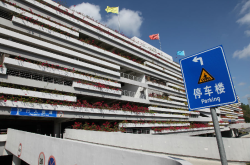
On October 21, Bloomberg, citing sources familiar with the matter, reported that U.S. private equity firm Warburg Pincus is considering selling its Chinese smart parking operator Yangguang Haitian, with the transaction potentially valued at around US$300 million. Warburg Pincus has hired advisors to handle this potential divestiture. Neither Warburg Pincus's spokesperson nor Yangguang Haitian has formally responded to the matter.
A Nine-Year Investment
In November 2017, Warburg Pincus led a financing round for Yangguang Haitian, raising approximately RMB 1.5 billion (about US$225 million at the then-current exchange rate). Other investors in the same round included Red Star Macalline. During those years, commercial real estate was still in an expansion phase, and parking lots were re-evaluated by capital as assets with stable cash flows.
In October 2020, Goldman Sachs' direct investment arm signed an investment agreement with Yangguang Haitian. In January 2021, the company announced the completion of a US$100 million Series B financing round, co-led by Goldman Sachs' direct investment arm and Anchor Equity Partners, with Tenda Capital serving as the exclusive financial advisor. This marked another round of international private equity investment following Warburg Pincus's initial stake.
In 2025, the company established a joint venture platform, "Xincheng Development," with CITIC Urban Development & Operation Co., Ltd., and simultaneously set up a RMB 10 billion parking industry fund to invest in and operate parking assets in domestic cities.
Bloomberg's report did not disclose whether the US$300 million valuation corresponds to a full divestiture or a secondary share transfer. If calculated as a full exit, Warburg Pincus's initial US$225 million investment nine years ago would yield a rough return of about 30%.
A Company Operating in 80 Cities with Nearly One Million Parking Spaces
Founded in August 2006 in Beijing by Yan Liang, Yangguang Haitian started with just four parking lot projects, with the team working out of a basement office. By its 20th anniversary in 2026, the company's official website stated that its business covered more than 80 cities across China, managed nearly one million parking spaces, and had served over 900 high-end projects, including commercial complexes, shopping malls, and Grade A office buildings. Its client list included SCPG, China Overseas Commercial Property, Powerlong Commercial, Wuyue Commercial Management, and Joy City Holdings.
During its expansion, the company made several acquisitions. In 2018, Yangguang Haitian took over parking operations at Meilan and Phoenix airports under HNA Group. In early 2019, it fully acquired Australian parking operator Secure Parking's 100% stake and all operational projects in China, taking over more than 10,000 parking spaces. This marked the first acquisition of a foreign parking operator by a domestic company in China's parking industry. That same year, it partnered with French parking giant Indigo to enter urban-level parking services.
The company independently developed a smart parking platform called AIPP (AI Parking Platform), integrating SaaS for parking lots, AI surveillance, driver services, mobile management, and parking big data. Guangzhou Meilin Tiandi is its most frequently cited case: after taking over, optimization of entry and exit traffic flow increased the maximum weekend parking capacity from 10,000 to 14,000 vehicles per day.
Urban curbside parking has been a focus in recent years. Company President Jiang Qinyuan mentioned in public this year that with slowing growth in new commercial and office projects, urban business represents the greatest opportunity. Currently, Yangguang Haitian operates in areas such as Yubei District, Chongqing; Huadu District, Guangzhou; and Nankai District, Tianjin, managing over 100,000 curbside parking spaces. Internally, the company has identified approximately 600 district-level opportunities in economically developed cities.
Yangguang Haitian also has a sister brand, "Ting Jiandan," co-founded with Haian Parking in late 2014. In October 2016, it secured a Series B investment of several hundred million yuan from Fosun, Red Star Macalline, and China Minsheng Investment. In March 2018, Ant Financial joined as an investor.
On May 29, 2026, the company changed its full name from "Beijing Yangguang Haitian Parking Management Group Co., Ltd." to "Yangguang Haitian Intelligent Technology Group Co., Ltd." At the 20th-anniversary milestone, Yan Liang announced the "1+3" strategy: one main goal of continuing to expand parking space scale, supported by three auxiliary lines focusing on A2A (Autonomous Vehicle-to-Parking Lot) interactions, V2G (Vehicle-to-Grid) integration, and parking ecosystem scenarios.
Why Are PE Firms Exiting Now?
Chairman Yan Liang and President Jiang Qinyuan have explained the valuation logic on various occasions: parking lots feature high demand, strong operational management, low maintenance costs, stable leases, and predictable cash flows, making them natural infrastructure assets. Jiang Qinyuan was more direct, stating that government-owned curbside parking assets "may quickly enter the public REITs channel within the next three to five years." If the company expands to 50-60 cities, its overall asset scale could meet the criteria for issuing standalone REITs. This REITs exit pathway serves as key support for the current valuation.
Bloomberg's report also noted a broader context. Jeffrey Perlman, Global CEO of Warburg Pincus, recently stated in public that despite low interest rates, China's M&A market remains attractive and that exiting China now would be a mistake. However, within Warburg Pincus's portfolio, ESR Group is reducing its exposure to China, and Princeton Digital Group is selling its data center assets in the country.
PE funds operate on fixed exit timelines. While parking operations generate stable cash flows, growth remains modest, making it difficult to pitch high-growth stories in public markets. Selling to strategic buyers or another PE firm represents a more realistic path.
An important background factor is that since completing its US$100 million Series B financing in January 2021, Yangguang Haitian has not secured a new equity financing round in five years, nor has it initiated any public listing applications on the A-share or Hong Kong stock markets. For a 2017 investment, the GP's patience is running thin.
The transaction remains in its early stages. Bloomberg's sources stated that the company has not yet decided whether to proceed with the sale, and both valuation and deal structure remain subject to change.
- END -
-
iPhone Duo Sees Just 900 Yuan Price Hike, Scalpers in Frenzied Resale Race
-
![]()
Focus | Warburg Pincus Considers Selling Chinese Parking Operator Yangguang Haitian, Valuation May Reach US$300 Million
-
![]()
What? The Audi A8 is Set to Be Manufactured in China, in Partnership with Huawei
-
![]()
AUMOVIO’s Latest MTXN3 Automotive Remote Key: Powered by NXP NCF29A1/A2 Chip, Supporting 125kHz, 433MHz, and UWB Frequencies!
-
![]()
Bosch to Split Its Automotive Business: Why Restructure Despite €55.8 Billion in Annual Sales?
-
![]()
Securing a Massive 1.114 Billion Yuan Order: Guangzhi Technology's Strategic Leap in Qingdao
-
Phase I Project Pours 20 Million Yuan into Investment! Chenhui New Material's Polarizer Project Kicks Off Operations
-
"Chinese Can Fly" Video Sparks Interest; Insta360 Clarifies: Support for Creator Unrelated to Hoverboard Ventures