Geely Launches Three Fuel Vehicles in a Single Week: Defensive Move or a Bigger Strategy?
 10/30 2026
 393
In China's 2026 auto market, the balance between fuel and electric is tilting faster than ever. Data from the Passenger Car Association shows that in September, the retail penetration rate of new energy passenger vehicles reached 67.0%, the share of fuel vehicle sales fell below one-third for the first time, and sales of pure fuel vehicles that month dropped by roughly 49% year-on-year; in the first half of the year, domestic sales of traditional fuel passenger vehicles totaled 3.694 million units, down 31.9% year-on-year. Most automakers chose to cut budgets for their fuel vehicle business and slow updates, with some models quietly discontinued.
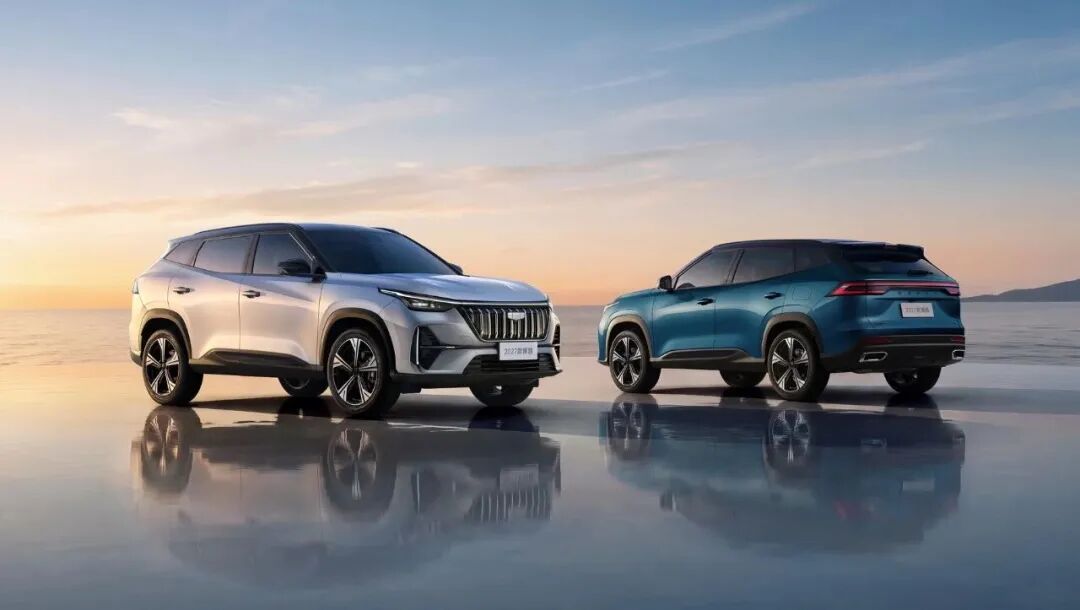
Against this market backdrop, Geely's moves run exactly the opposite direction. In late October, it launched three new fuel vehicles in one week. On the 23rd, the 2027 Boyue went on sale, with a limited-time price of 78,900 to 99,900 yuan; on the 25th, the all-new Emgrand Up series was launched, with a limited-time appreciation price of 59,900 to 73,900 yuan; on the 27th, the 2027 Binyue Super Energy Edition debuted, with an early-bird price of 59,800 to 71,800 yuan. All three new vehicles are built on the BMA global modular architecture, with prices concentrated in the mainstream family segment of 60,000 to 100,000 yuan. At a time when the industry is collectively contracting, Geely's concentrated refresh of three established fuel vehicle models—whether it is defensive bottom-line protection or something else—is worth analyzing.
Three Main Fuel Models Refreshed in the Same Week
First, let's look at the positioning of each of the three new vehicles. The Boyue is a compact SUV, equipped with a 1.5T engine and a 7-speed wet dual-clutch transmission, producing 181 horsepower and 290 Nm. The powertrain continues to use a mature solution, with upgrades focused on the exterior and cabin: a vertical waterfall-style front face, full-width taillights, a 14.6-inch central control screen with FlymeAuto 2.5 infotainment, 540-degree camera coverage as standard across the range, and L2 assisted driving extended to mid- and high-trim models.
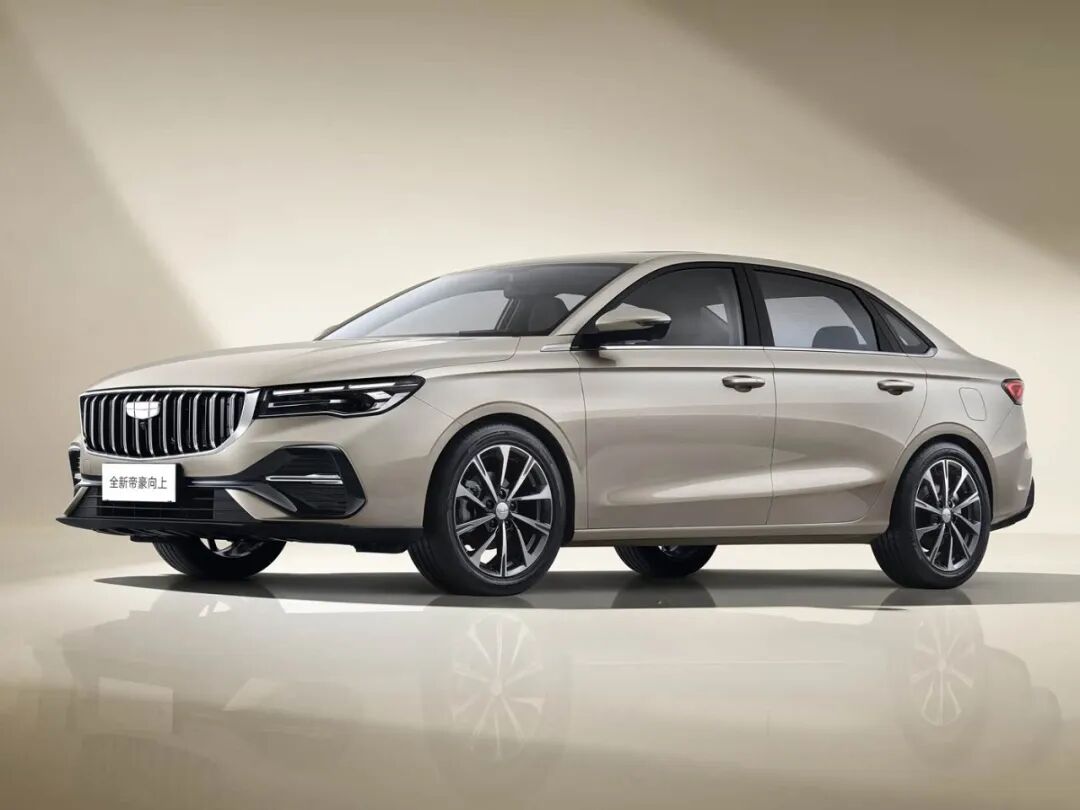
The Emgrand Up series is positioned as an A-class sedan, equipped with a 1.5L naturally aspirated engine producing 120 horsepower, matched with either a 5-speed manual or a simulated 8-speed CVT, with the infotainment upgraded to Galaxy OS. The Binyue Super Energy Edition is positioned as a small SUV, equipped with a 1.5L naturally aspirated engine producing 126 horsepower, a combination of a 14.6-inch central control screen and an 8.8-inch instrument cluster, also equipped with FlymeAuto.
The common approach of the three vehicles is very clear: facelifts rather than full model changes, with a focus on refreshing the cabin and design, and no easy changes to powertrains that have been validated by the market.

What supports this approach is the global foundation of the BMA architecture. According to Geely's official materials, BMA brings together R&D resources from 15 countries around the world, with more than 500 engineers completing forward development over four years, and adaptation and tuning for road conditions, fuel quality, and usage habits in different regions. The three vehicles were developed simultaneously for domestic and overseas markets, so the investment in one facelift can cover the needs of two sets of markets at the same time.
The market position of these three vehicles can support such investment. Data from Geely's official website shows that the Emgrand family has cumulative global sales of more than 4.2 million units, selling well in 30 countries; the Binyue family has cumulative sales of more than 1.1 million units, covering 52 countries; the Boyue celebrated its tenth anniversary in May 2026, with cumulative users of 2.37 million over ten years. Geely's 2026 interim results materials disclose that the Boyue ranks first in sales among all brands in China's fuel and hybrid SUV segment across all classes, the Binyue ranks first in sales among all brands in the fuel and hybrid A0-class SUV segment, and the Geely brand has maintained the top position in sales among Chinese independent brands in fuel and hybrid vehicles for the tenth consecutive year.
For Geely, these three vehicles are not marginal products, but the three most solid pillars of its fuel vehicle base.
Fuel Vehicles Hold the Base, EVs Lead the Offensive for Incremental Growth
To understand this move, one must first see clearly Geely's division of labor between fuel and electric. The new energy segment undertakes the offensive task. In the first nine months of 2026, Galaxy cumulative sales were 877,200 units, with 130,500 units in September alone; Zeekr cumulative sales were 288,400 units, with 37,200 units in September alone, a year-on-year increase of 104%.

Geely's official data shows that in the first three quarters, the group's new energy sales were 1.3264 million units, with a penetration rate of 59.3%. Galaxy, Zeekr, and Lynk & Co jointly undertake the tasks of driving incremental growth and boosting valuation, and are also Geely's main force in competing with rivals such as BYD.
The fuel vehicle segment's task is to hold the base. At the channel level, Geely's dealer network is heavily distributed in third- and fourth-tier cities and county-level markets. The charging conditions, user budgets, and usage habits in these regions determine that fuel vehicles priced at 60,000 to 100,000 yuan still have stable demand, and 4S stores need models with continuous sales volume to maintain operations.

At the export level, Geely exported 106,700 vehicles in September, a year-on-year increase of 162%, exceeding 100,000 units for four consecutive months; cumulative exports in the first nine months were 797,700 units, a year-on-year increase of 169%. Mature fuel models such as the Emgrand and Binyue are the main export force, and demand for fuel vehicles in the Middle East, Central Asia, and Latin America is still being released.
Data from the China Association of Automobile Manufacturers shows that in the first nine months of 2026, China's automobile exports were 8.205 million units, of which traditional fuel vehicle exports were 4.2 million units, still slightly higher in share than new energy; the Boyue series covers more than 60 countries and regions worldwide, with overseas sales approaching half of its total sales. At the overall market level, the annual retail scale of domestic fuel vehicles is still above 10 million units. When some brands voluntarily contract, automakers that maintain product updates may instead have the opportunity to take over the share that flows out.

The pressure facing fuel vehicles is equally real. On the very day the Binyue was launched, BYD's third-generation Qin PLUS DM-i was launched, with a limited-time price starting at 76,900 yuan. Plug-in hybrid models have been pushed below 80,000 yuan, directly overlapping with the price bands of the Emgrand and Binyue. Geely's updating of the cabin and extending features at this point in time is to keep fuel vehicles from falling behind in the perception of intelligence, while retaining traditional advantages in price, maintenance convenience, and reliability.
Geely's choice is not an isolated case. In April 2026, Chery released its China New Fuel Strategy, launching the all-new Tiggo 9 and clearly making fuel vehicles a long-term core business; Great Wall Motor is also continuing to invest in the research and development of diesel engines and large-displacement internal combustion engines. Leading independent brands generally retain both fuel and electric fronts, and the role of fuel vehicles is closer to a strategic continuation before exit, rather than a burden to be abandoned immediately.
Is the Fuel Vehicle Calculation Worth It?
There is also a view in the market that profits from high-volume fuel vehicles are feeding back into new energy R&D, and this judgment needs to be treated with caution.
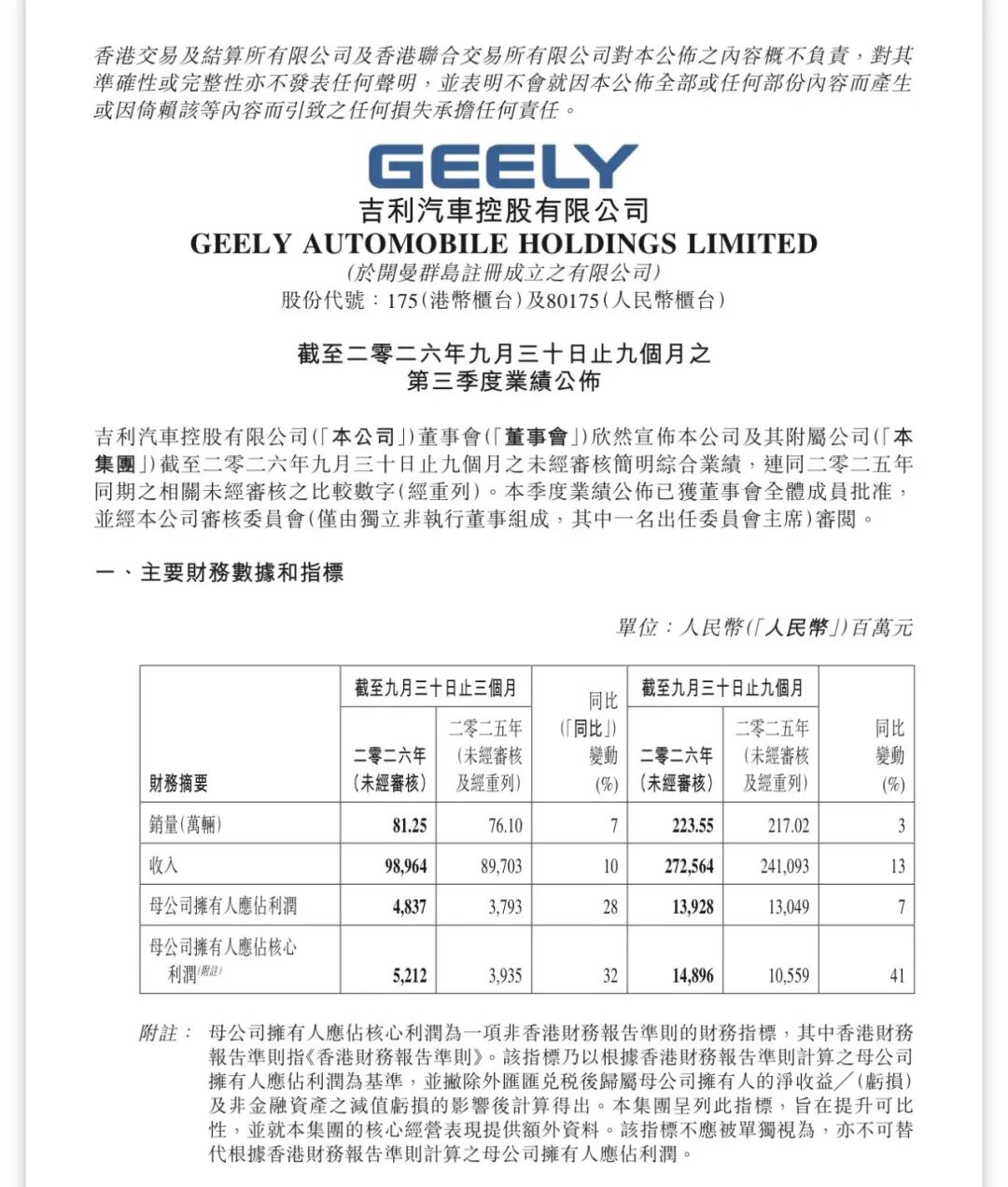
Geely's total revenue in the first three quarters of 2026 was 272.6 billion yuan, a year-on-year increase of 13%, with core net profit attributable to shareholders of 14.9 billion yuan, a year-on-year increase of 41%, and a gross margin of 18%, up 1.5 percentage points year-on-year; of which third-quarter revenue was 99 billion yuan and core net profit attributable to shareholders was 5.21 billion yuan, a year-on-year increase of 32%, with both revenue and core profit reaching new highs for the same period. The group's profitability is indeed steadily strengthening, but Geely's financial reports do not disclose profits separately for fuel and new energy. Therefore, the statement that fuel vehicle profits feed back into new energy cannot, strictly speaking, be directly verified from public data. It is closer to a reasonable inference than a verifiable fact.
By comparison, the path of replacement-driven customer flow is clearer. The three new vehicles all belong to the BMA architecture and share the after-sales system and sales channels. When the Binyue Super Energy Edition was launched, it explicitly offered four benefits: cash, trade-in, warranty, and data; the Emgrand Up series also continued the trade-in subsidy policy. Users who buy entry-level fuel vehicles today, when upgrading and trading in a few years later, will find Galaxy and Zeekr to be the most direct options within the system. Fuel vehicles expand the user base at the front end with low prices and scale, while new energy vehicles capture upgrade demand at the back end. This path is commercially logical.
At the cost level, it is also worth doing the math. Under the BMA architecture, the three models share a large number of mature components, the powertrains have been used for years, and production line and supply chain costs have been fully amortized, so facelift investment is far lower than all-new development. Letting mature fuel vehicles continue to contribute cash flow and production and sales scale, and then concentrating resources on intelligence and electrification, is an arrangement more in line with Geely's overall interests than simply discontinuing production.
Overall, Geely's launch of three new fuel vehicles in succession is neither simply defensive bottom-line protection nor a meticulously designed chess game. It is more like the pragmatic choice of an automaker marching toward annual sales of 3 million units in the deep waters of transformation. Before fuel vehicles exit, they can still hold channels, support exports, and accumulate users, while new energy is responsible for capturing incremental growth and opening up valuation space. The era of fuel vehicles is indeed slowly coming to an end, but the end does not mean the immediate dispersal of the audience. Letting the Emgrand, Boyue, and Binyue continue to stand firm in their segments before exit is precisely about buying time and resources for the transformation.
-
Profit Structure Reshaped as BYD's Q3 Profit Rebounds | Q3 Report
-
Geely Q3 Net Profit Up 28%: Premium Overseas Expansion Drives Earnings Recovery | Q3 Report
-
![]()
Xiaomi Invests 1.7 Billion Yuan in Sunwoda, Becoming Third-Largest Shareholder After Li Auto
-
![]()
Sanhua: Falling Profits—Is the Robot Business Only Worth a Floor Price?
-
![]()
Geely Launches Three Fuel Vehicles in a Single Week: Defensive Move or a Bigger Strategy?
-
![]()
When Every Company Dons the AI "Hat"
-
![]()
Toy Giant ZURU Moves China HQ to Shenzhen's China Resources Tower with 30,000 sqm Lease
-
![]()
SDD Spec-Driven Development Tutorial — The More Features You Add, the More AI Starts "Making Things Up"