Boxy Styling and a 2.0T Plug-In Hybrid: Will the Second-Generation Wey Blue Mountain Start Presales at 280,000 Yuan?
 11/09 2026
 468
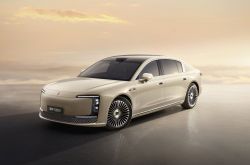
On the evening of November 9, the second-generation Wey Blue Mountain will officially begin presales. As a replacement model, the new vehicle is built on Great Wall's Guiyuan S platform and shares a technical platform with the Great Wall H10. It has been completely transformed from the current urban-style six-seat SUV into a rugged, boxy design, offers both five-seat and six-seat versions, and comes equipped with a 2.0T plug-in hybrid system—making it a highly differentiated product in the 300,000-yuan segment. So what price range can we expect when the presale figures are announced tomorrow evening?
Price Prediction: Presale Price of 280,000–350,000 Yuan
The current Blue Mountain is priced at 299,800–326,800 yuan. Given higher costs from the platform upgrade, the 2.0T powertrain, dual-chamber air suspension, and other factors, the second-generation Blue Mountain's presale price is highly likely to trend upward. We predict the five-seat version will start at around 289,800 yuan, the six-seat version at around 309,800 yuan, and the top trim (six-seat + 64.7 kWh battery + fully equipped smart driving) at around 350,000 yuan.
The cost of the second-generation Wey Blue Mountain's 2.0T engine + dual motors + 4-speed hybrid transmission is significantly higher than that of the current 1.5T system. The second-generation Wey Blue Mountain also features dual-chamber air suspension, rear-wheel steering, a rear axle differential lock, and other chassis hardware—all of which add cost. Finally, the product positioning of boxy styling + rugged equipment justifies a certain premium, but it needs to stay below the Tank 700 (starting at 428,000 yuan) to avoid internal cannibalization, while also creating a price gap with the Li L8 (starting at 359,800 yuan).
Product Highlights: Rugged Styling + Hardcore Chassis + Intelligent Upgrades
In terms of exterior design, the second-generation Blue Mountain adopts an "embracing all rivers" design philosophy, with a large vertical-slat chrome grille paired with an illuminated WEY logo, retro round headlights that are square on the outside and round on the inside, a roof rack integrated with lidar, and a rear-mounted spare tire + side-opening tailgate—maximizing its rugged character. In terms of dimensions, the five-seat version measures 5140×2050×1960 mm, and the six-seat version measures 5300×2050×1960 mm, with a wheelbase of 3010 mm for both. The extra 160 mm of length in the six-seat version is specifically used to optimize third-row space.
Inside, it is equipped with the new-generation Coffee AIOS 4 cockpit, featuring the Qualcomm Snapdragon 8797 cockpit-driving integrated chip (640 TOPS computing power). The large dual-screen setup supports fuzzy semantic recognition, intelligent vehicle control, AI-generated road guides, and other functions. In terms of smart driving, it is equipped with the Coffee Pilot 4 V5 all-terrain assisted driving system, using the NVIDIA Thor-U chip and multiple lidars, supporting all-terrain NOA.
In terms of power, it features a 2.0T engine (182 kW) + front 110 kW/rear 220 kW dual motors, matched with a 4-speed dedicated hybrid transmission, with a combined system power of over 500 kW. The battery offers two versions: 53.6 kWh (WLTC pure electric range 220 km) and 64.7 kWh (WLTC pure electric range 270 km), supporting an 800V high-voltage platform + 6C ultra-fast charging. The chassis is equipped with closed dual-chamber air suspension, EDC continuously variable damping shock absorbers, bidirectional 20° rear-wheel steering (turning radius 5.3 m), and a rear axle mechanical differential lock, balancing urban comfort and light off-road capability.
How Does the Second-Generation Wey Blue Mountain Compare with Competitors in the Same Class?
The second-generation Wey Blue Mountain has many advantages. First, its power form is unique: a 2.0T plug-in hybrid is rare in the 300,000-yuan class, and its power reserve under low battery is superior to the 1.5T range-extender systems of the Li L8 and AITO M7. Second, its chassis configuration is hardcore: the combination of dual-chamber air suspension + rear-wheel steering + differential lock is unique in its class. Third, its styling is differentiated: the boxy design stands out in the 300,000-yuan six-seat SUV market. Fourth, its pure electric range is solid: the 270 km WLTC range meets a week's commuting needs.
The second-generation Wey Blue Mountain also has shortcomings. First, energy consumption is relatively high: the boxy shape creates high wind resistance, and with the 2.0T displacement, the declared fuel consumption is 6.8–6.9 L/100 km, while actual fuel consumption under low battery may exceed 8 L/100 km. Second, brand strength needs to be built: in the 300,000-yuan market, Wey lags behind Li Auto and AITO in recognition and the creation of a premium feel. Third, the dealer network is weak, with insufficient coverage in tier-3 and tier-4 cities. Fourth, the load-bearing body has no ladder frame, so extreme off-road capability is limited—creating differentiation from the Tank series.
Sales Forecast and Purchase Advice for the Second-Generation Wey Blue Mountain
Referring to the current Blue Mountain's monthly sales of 2,000–3,000 units and the Tank 300's monthly sales of over 10,000 units, the second-generation Blue Mountain—with its differentiated label of "boxy styling + 2.0T plug-in hybrid + six seats"—is expected to receive over 5,000 orders during the presale stage and may reach 3,000–5,000 units in its first month on the market. However, whether it can remain a strong seller depends on whether the pricing is surprising enough—if the six-seat version can be kept under 300,000 yuan, it will directly ignite the market; if it exceeds 330,000 yuan, it may repeat the current model's fate of being "praised but not widely bought."
For family users who pursue individuality, need six-seat space, and have light off-road needs, the second-generation Blue Mountain is worth waiting for. However, if you prioritize brand prestige, extreme energy efficiency, or a mature smart driving experience, the Li L8 and AITO M7 remain safer choices. We recommend waiting for the presale price to be announced and then comparing the configuration list before making a decision.
-
![]()
TV Distortion vs. Optical Distortion: How Exactly Do You Convert Between Them?
-
Analysys: China's GEO Service Provider Market Reached Approximately RMB 2.2 Billion in Q3 2026, with Industry Competition Accelerating Toward Comprehensive Service Capabilities
-
![]()
It's Not That Robin Isn't Trying Hard
-
![]()
Analysis of AI Industry Development in Key Cities of the Yangtze River Delta
-
![]()
Media Reports: Maserati to Partner with Zunjie — JAC to Manufacture, Huawei to Provide Tech Support
-
![]()
Can Opponents Hit the Pause Button? Has China's AI Window of Opportunity Opened?
-
![]()
All Models Feature a Rear Screen! Honor 700 Series Delivers Uncompromised Battery Life: 7.96mm Thin with the Largest Battery in Its Class
-
![]()
Thailand Begins to Settle Old Scores with Chinese Automakers