BYD Executive Responds to Maserati Acquisition Rumors: BYD's Cars Are the Fastest in the World
 11/09 2026
 466
On one side, a Chinese supercar has shattered the 500 km/h barrier; on the other, an Italian luxury brand finds itself once again at the center of acquisition rumors.
Li Ke's response tied these two developments together: a few years ago, BYD might have been more interested; now, it is more inclined to follow its own path.
That statement carries both confidence and commercial significance. BYD already has Denza and Yangwang in its portfolio; continuing to buy an overseas luxury brand would require a far more compelling justification.
How much technology can be added, how much the channels are worth, and how much operational pressure must be absorbed—each item needs to be calculated clearly. A badge can be obtained through a transaction. Getting consumers to still be willing to pay for it years later relies on a different set of skills.
Where does the confidence come from?
On November 7, the Swiss newspaper Corriere del Ticino published an interview with BYD Executive Vice President Li Ke, and the related content quickly spread across multiple media outlets.
Regarding the Maserati acquisition rumors, she stated that BYD is developing its own brands, that the group has found a direction suited to itself, and mentioned that the world's fastest car now belongs to them. Supporting these words is the Yangwang U9 Xtreme.
BYD's official announcement on November 6 showed that this car achieved 503.17 km/h in Abu Dhabi on November 1, earning two Guinness World Records—for the fastest one-way speed by a production car and by a battery-electric production car—with the result also recognized by the FIA.
"One-way top speed" is the accurate name for this achievement. Lap times, braking performance, and continuous driving capability each have their own evaluation criteria. This record proves top-speed capability under specific test conditions and gives Yangwang's engineering strength a striking showcase.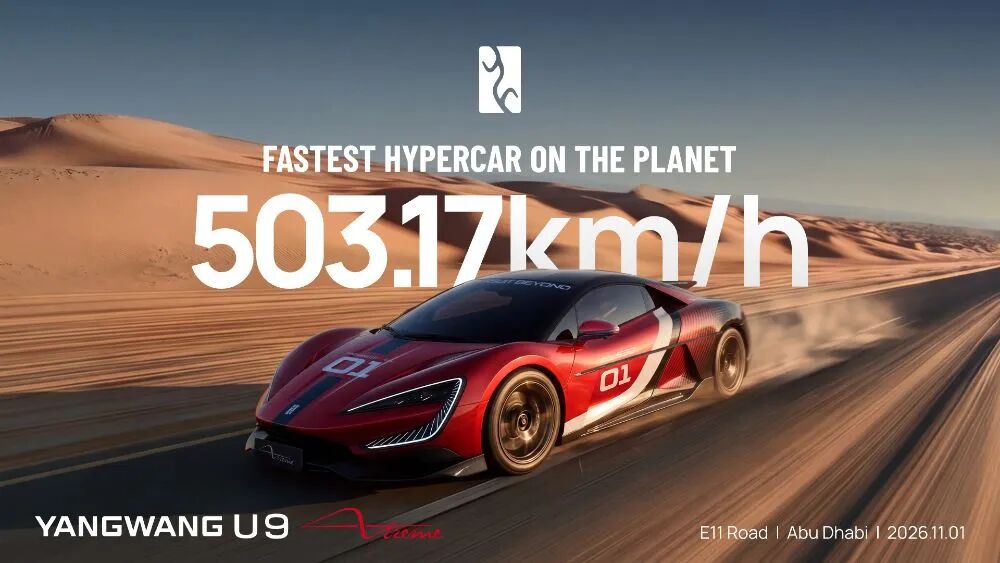
Yangwang U9 Xtreme official promotional image. Image source: BYD Media Center. For a young luxury brand, awareness is the first threshold to cross.
Consumers must first know it, then be willing to learn about it, before a purchase can happen. A world record can push this process forward by a big step. Even more commercially valuable is the subsequent application of the technology.
In the interview, Li Ke mentioned that technologies such as high-voltage architecture have room to be rolled out to other models. If supercar R&D results can be converted into product capabilities that more users can benefit from, this investment will have a longer return cycle.
Therefore, her response can be understood as BYD placing greater emphasis on its own brands at this stage. Public reports have not yet shown that the two sides have signed an acquisition agreement, so the claim that the deal "fell through" lacks a definite premise.
Behind the Trident
The acquisition rumors keep circulating for real-world reasons. BYD is expanding overseas, and Maserati has distinctive design, brand history, and a luxury-car user base. Technology and brand complementing each other sounds attractive. But both sides' public stances have been quite clear.
On May 21, 2026, Phoenix Technology reported that BYD had refuted online rumors that it was considering acquiring Maserati. In June, Stellantis CEO Filosa discussed finding partners for Maserati while denying a sale of the brand.
On October 14, media reported that he once again denied a sale plan. Seeking technical cooperation and selling the entire company involve very different levels of responsibility.
For potential partners, what is most worth studying is how much incremental value they can create and how much subsequent investment they must bear. Maserati's most recent full-year operating data illustrates the difficulty of this problem.
Stellantis disclosed that the brand's 2025 shipments were about 7,900 units, versus 11,300 in 2024; net revenue fell from €1.040 billion to €726 million.
Adjusted operating loss narrowed from €260 million to €198 million, while the adjusted operating margin remained at negative 27.3%. A reduced loss is worth acknowledging.
But revenue is also contracting, and the brand still needs to rebuild stable orders and profitability. The financial report explained that lower R&D expenses and reduced depreciation and amortization on previously impaired assets helped improve operating results; factors such as a narrowed product portfolio and lower sales volumes continued to create pressure.
This means cost tightening can provide some relief, but a real return to growth still depends on products and consumers. Luxury brands must maintain pricing while also sustaining R&D and channel investment—both ends require money.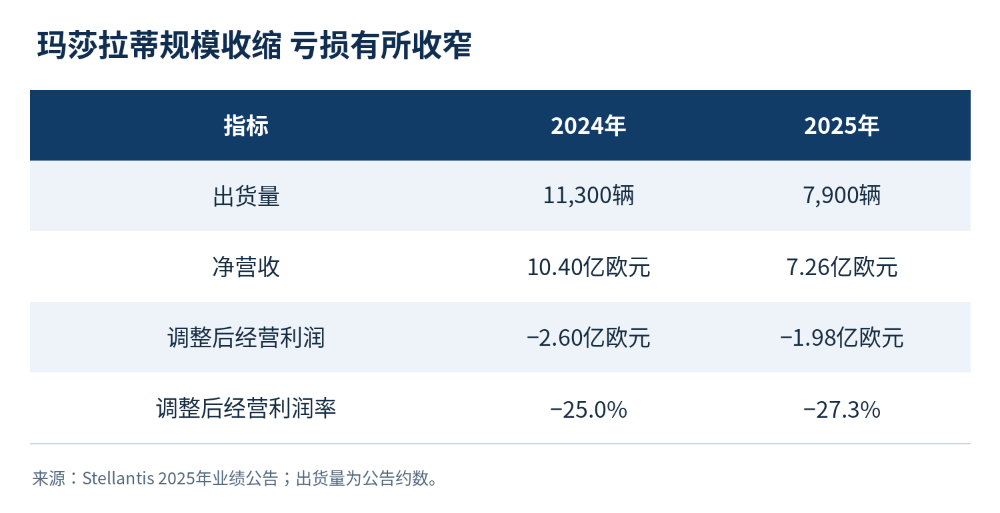 Figure 1: Maserati's most recent full-year operations
Production-side data is also worth a closer look. In the first three quarters of 2026, the Modena plant produced 645 units; the Cassino plant produced 3,670 Maserati Grecale units. Modena's output growth was mainly driven by the transfer of GranTurismo and GranCabrio assembly.
The above data comes from Italian labor unions, was reported by exchange websites, and was cross-verified against the unions' original texts. These are actual production volumes, reflecting scheduling conditions.
Plant designed capacity, utilization rates, and the brand's global sales each require their own supporting data. Cassino also produces models for other brands, and it would be difficult for a buyer to simply take away only the conveniences it wants and complete the continuation of the entire business.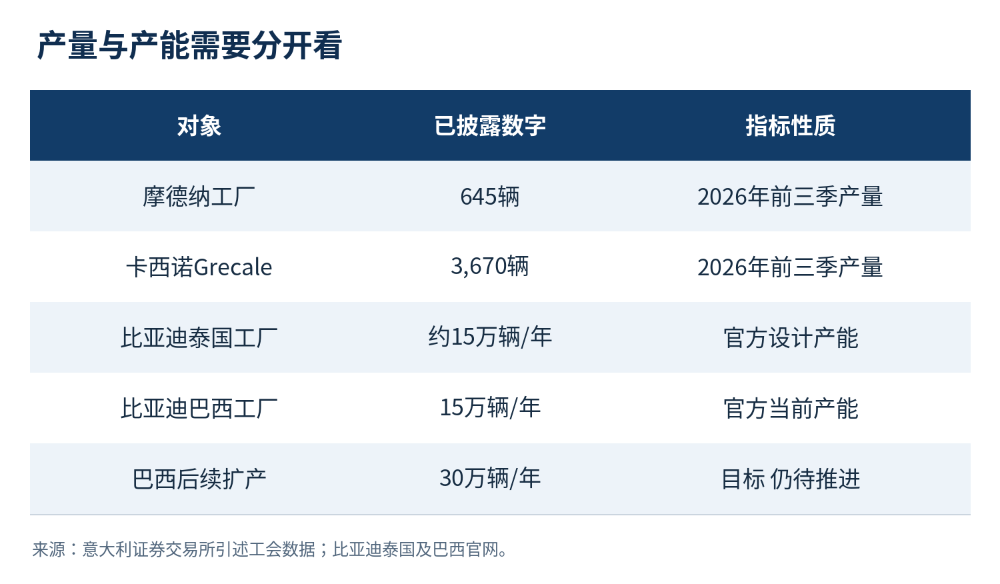
Figure 2: Comparison of output and annual capacity calibers
In addition, starting in 2026, Stellantis ceased reporting Maserati as a separate reporting segment and grouped it by sales region. Therefore, current brand operating analysis should combine full-year 2025 financial data with 2026 production information; group profit cannot be directly treated as Maserati profit.
Once an acquisition occurs, what must also be handled includes model replacements, after-sales responsibilities, dealer confidence, and brand positioning. Buying history is only the starting point; bringing the business back to healthy operations is the long-term task.
BYD also has its own homework
BYD's scale advantage is already solid. October new energy vehicle sales were 490,200 units, up 10.97% year on year; cumulative sales for the first ten months were 3.6217 million units, down 2.16% year on year.
October exports were 170,200 units, about 34.72% of that month's sales. The single-month sales rebound shows the business is recovering; cumulative sales still below the same period last year also remind the company to continue focusing on products and orders.
Exports have expanded market space, and overseas service, spare parts, and channel capabilities must grow along with sales. The powertrain mix has already diverged.
In the first ten months, battery-electric passenger vehicle sales were 1.9357 million units, up 5.86% year on year; plug-in hybrid passenger vehicle sales were 1.6260 million units, down 11.02% year on year. Product updates and demand changes are affecting the sales rhythm of the two model types, and scale leadership still needs to be defended product by product.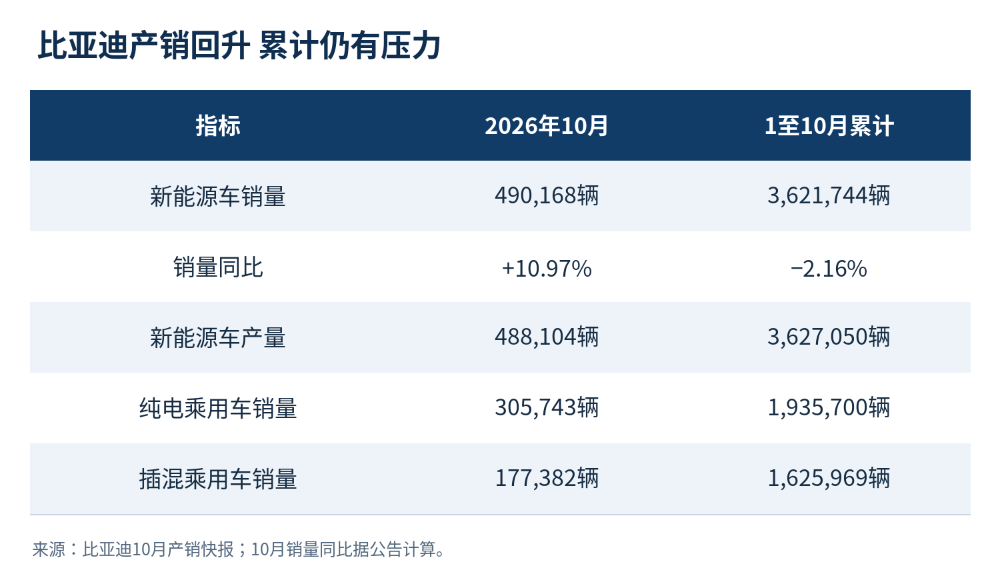
Figure 3: Latest production and sales and powertrain mix
On manufacturing capability, actual October production was 488,100 units, with cumulative production of 3.6271 million units in the first ten months. These figures can illustrate delivery volume. Global plants are at different stages of construction and ramp-up, and a unified total designed capacity should be based on explicit company disclosures.
Overseas capacity construction is advancing. The Thailand plant has a designed annual capacity of 150,000 units; BYD's Brazil website disclosed on October 26 that the local plant currently has an annual capacity of 150,000 units, to be raised to 300,000 units later, with welding and painting processes undergoing testing.
The value of building plants overseas lies in being closer to the market and supply chain. But once a plant is built, manufacturing efficiency must be improved and the procurement system refined so that the added capacity can secure enough orders. Managing these links is already a massive task. The financial report also shows recovery and pressure coexisting.
In the first three quarters, BYD's revenue was 566.304 billion yuan, up 0.01% year on year; net profit attributable to shareholders was 22.345 billion yuan, down 4.24% year on year. Third-quarter revenue was 221.488 billion yuan, up 13.59% year on year; net profit attributable to shareholders was 10.020 billion yuan, up 28.08% year on year.
The single-quarter rebound deserves attention, and profit changes should also be viewed in light of specific line items. In the first three quarters, financial expenses were 7.368 billion yuan, compared with negative 2.936 billion yuan in the same period last year. The company explained this was mainly affected by exchange losses in the current period and exchange gains in the same period last year.
As overseas business expands, currency management will also become part of operating capability. Net operating cash inflow in the same period was 54.470 billion yuan, up 33.36% year on year; the company disclosed the main reason was a decrease in cash paid for goods and services.
R&D expenses were 36.277 billion yuan, compared with 43.748 billion yuan in the same period last year. Cash flow, R&D rhythm, and product results need to be viewed together to judge growth quality.
The group also has businesses such as handset components and assembly, and group profit cannot be directly converted into per-vehicle profit for autos. BYD's leadership has factual support, and the next operating tasks are equally specific: maintain product appeal, improve overseas operating efficiency, and sustain profit recovery.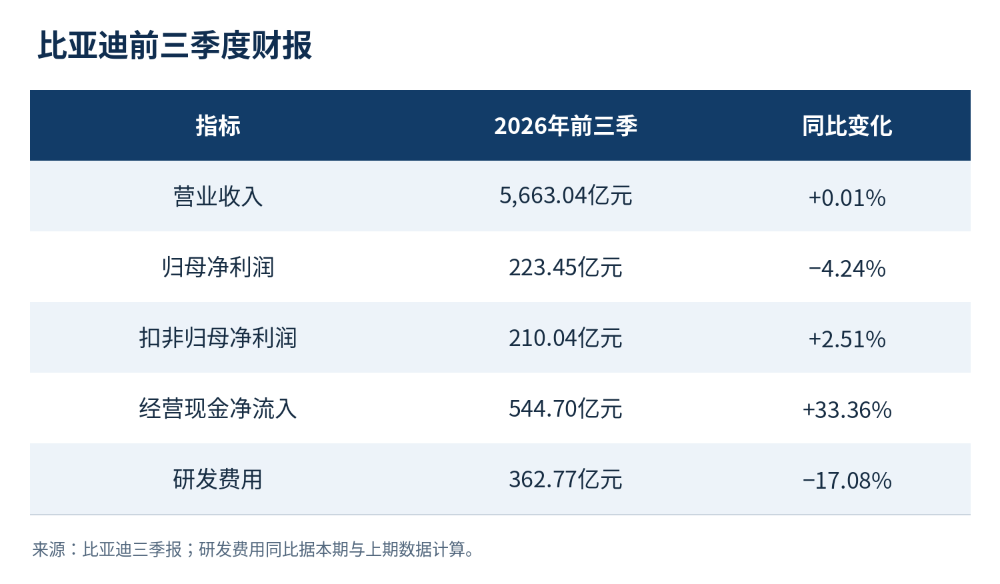 Figure 4: Profit and cash flow performance
True competitive scale can be seen more clearly from unified retail calibers. The China Passenger Car Association's September data, reported by Red Star News, showed domestic new energy passenger vehicle retail sales of 1.084 million units.
Among them, BYD had 246,800 units, Geely 119,700, Leapmotor 78,200, and Tesla China 64,800.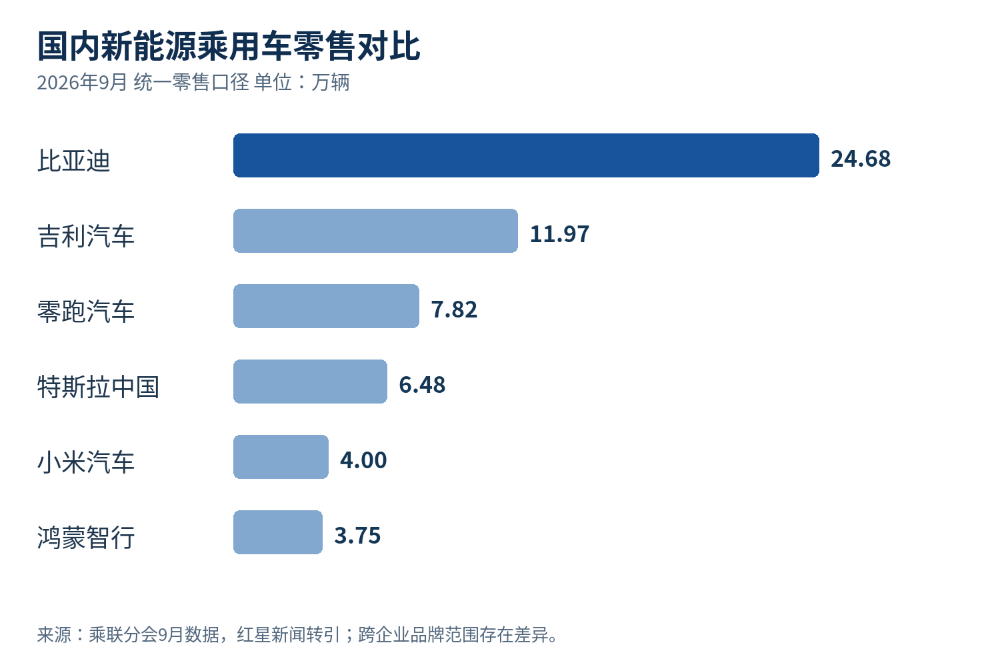
Figure 5: Major participants
BYD leads in domestic retail scale, while competitors are also vying for users in their respective markets. Geely's multiple brands cover multiple price ranges, Leapmotor emphasizes features and price, and participants such as Xiaomi and HIMA strengthen intelligent experience and user operations.
Consumers have more choices than ever, and brands must offer clear reasons to buy. BYD's large-scale manufacturing and broad product layout help spread R&D and procurement costs.
In the luxury car market, users also look at design, service, brand identity, and long-term ownership experience. Engineering records open up awareness; every service interaction after delivery determines how long that awareness lasts.
Maserati's history and design still have value, and BYD already has its own technological path for developing electric high-end models.
At this stage, acquiring Maserati to fill in electrification capabilities is less necessary; acquiring it to obtain brand assets would require proving that returns can cover integration and revival costs.
Denza and Yangwang already carry the upward mission. Adding another luxury brand would require rearranging product positioning, channel investment, and management resources. For BYD, which is expanding overseas business, making the brands already in hand solid is the more realistic choice.
Chinese automobiles are already capable of attracting the world's attention with their own products. Next, the most anticipated result is that after several years of ownership, users are still willing to choose the same brand. Top speed makes the name seen; reliable products and service are what make the name remembered.
Regarding the hot topic of BYD executives responding to the Maserati acquisition, what do you think? We look forward to your civilized and rational comments in the comment section .
Statement: This article is only a financial hot-topic analysis from a professional perspective. Data and materials cite public queries, company announcements, and Tonghuashun iFinD. The views are for reference only and do not constitute any investment or consumption advice.
#FinancialHotTopics #InDepthInterpretation #BusinessFinance #InvestmentBankingCircle #ListedCompanies #PrimaryMarket #IPO #AI #BYD
Thank you for your patience in reading. Feel free to click "Wow".
-
![]()
BYD Executive Responds to Maserati Acquisition Rumors: BYD's Cars Are the Fastest in the World
-
So Embarrassing: Apple Alone Takes 50% of Global Phone Revenue—All Domestic Brands Combined Only 30%!
-
![]()
160 Million Views Earn Just 390,000 Yuan: Who Really Profits from AI Short Dramas?
-
Is Cost-Effectiveness Dead? Average Phone Prices Have Risen by 620 Yuan in a Year—Even Xiaomi Is Up 410 Yuan
-
One Headline, Big Headache: "Buy One Get One Free Across the Entire Lineup" Backfires—SAIC Audi Under Investigation
-
From "Competing on Parameters" to "Getting Things Done": AI Is No Longer Just "Pleasing Itself"
-
With a 5-Fold Hourly Wage Gap, Strike-Driven Pay Raises Are Speeding German Cars Toward Their Own Funeral
-
Global Annual Sales of Just 15,000 Units—Can Moving Production to India Cure Honda's EV Woes?