Next Year, Chinese Auto Exports Must "Change Their Mindset"
 11/16 2026
 335
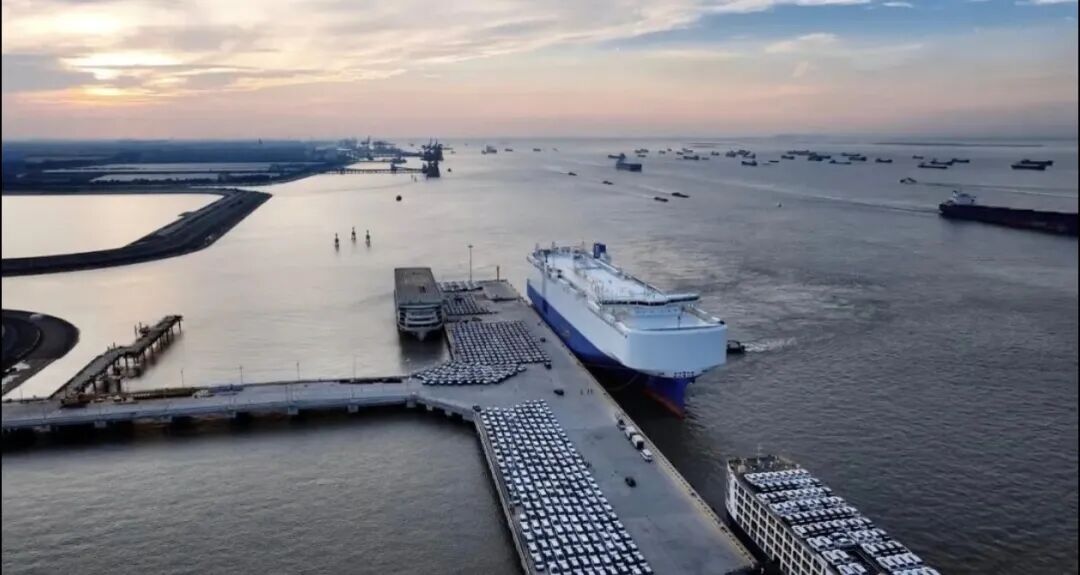
Introduction
"Going global is not about 'harvesting,' but about 'deep cultivation.'"
Recently, the Australian Automotive Dealer Association (AADA), which represents the interests of 3,900 dealers, issued a call for a ban, urging the suspension and restriction of imports of Chinese-brand cars, with a licensing system to be adopted in the future.
The reason is simple: Australian dealers can hardly hold on any longer.
Although new vehicle deliveries in Australia in October exceeded the 103,000 mark, a year-on-year increase of 3.8%, the average net profit margin of new car dealers in the third quarter of this year has dropped to -0.2%, meaning selling cars is no longer profitable. This is the first time since the fourth quarter of 2008—after 18 years—that Australian dealers have once again fallen into losses.
Compared with 2021, Australia's annual sales volume has increased by about 200,000 vehicles, but the number of auto brands has increased by 16, and the market is expected to have 80 auto brands by 2028. Among them, there are 37 Chinese brands—nearly half.
In other words, Chinese automakers treat Australia as an incremental market, but the sales targets they set exceed what Australia's land area can support. The AADA now demands that dealers have the right to refuse additional inventory beyond their capacity, and that their original commercial incentives or rebates must not be canceled.
This is a warning to Chinese brands, and also a situation they must face. What to do? This has become a severe challenge for Chinese automakers in the next stage of going global.
01 A Glimpse Reveals the Whole Picture
Compared with mature markets, Australia's auto brand supply is severely excessive, and Chinese brands have played no small part in this. Australian dealers, having never been trained in the Chinese market, cannot adapt to the new ways of playing the game.
The crowding in the Australian market has reached the level of 54 auto brands per million new vehicle sales. By comparison, the UK has 19.8, Canada 18.9, Germany 16.4, Japan 6.6, and the United States only 1.8.
Under such circumstances, just like in China, a price war is inevitable. And as AADA CEO James Voortman said, dealers are suffering a "catastrophe."
It is not only Australia that has accepted the flood of cars pouring in; now, major markets around the world except the United States have all become targets of Chinese automakers' exports.
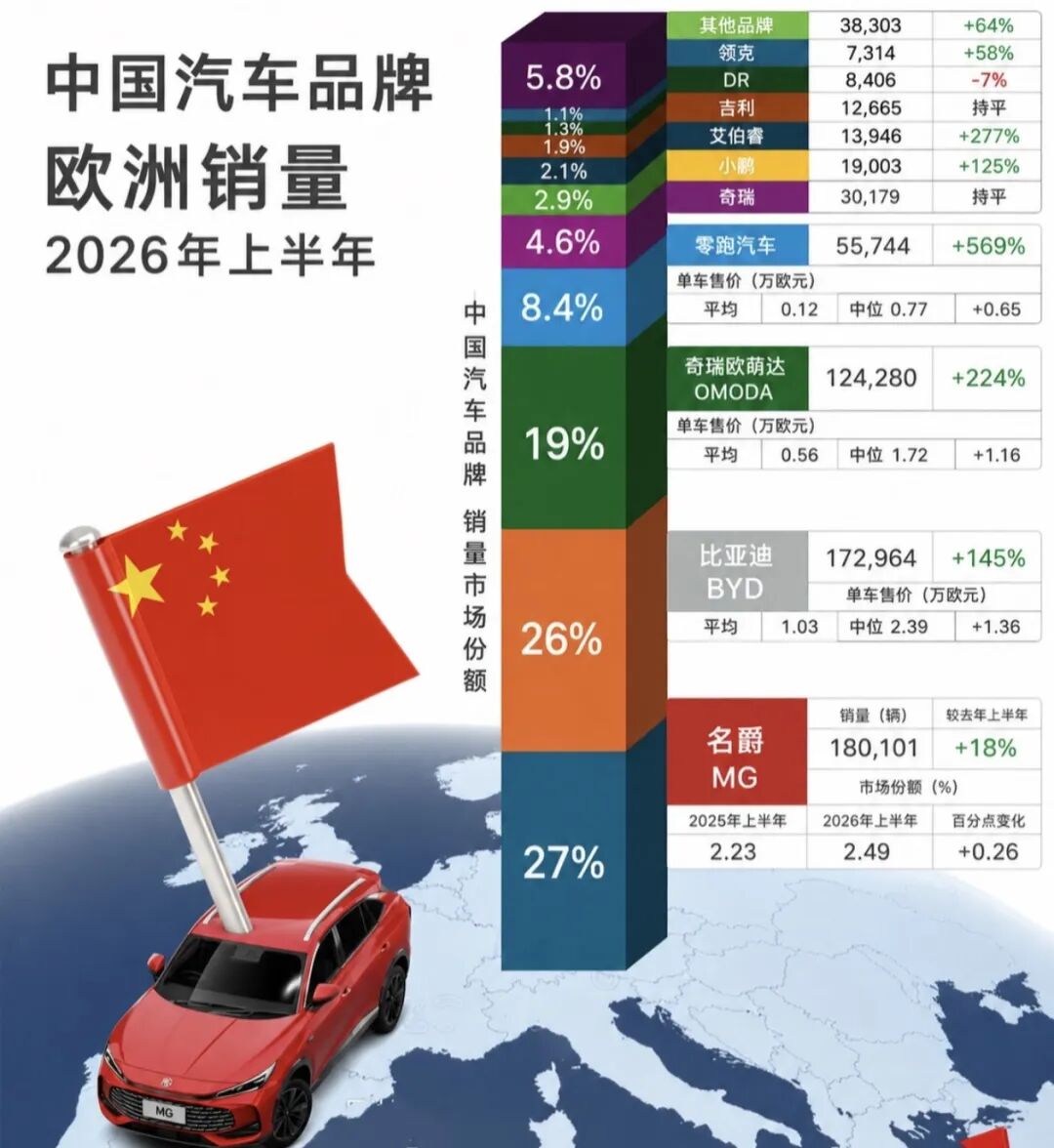
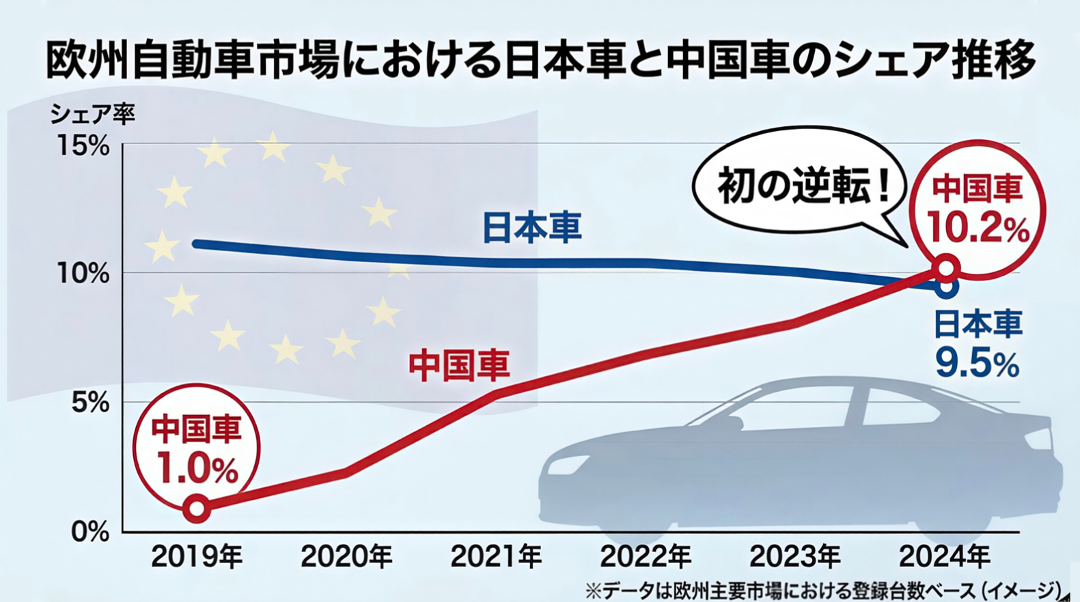
Take the UK as an example; it has already become the bridgehead and top priority for Chinese automakers entering the European market. In October, Chinese brands sold 33,800 vehicles in the UK, up 107.6% year-on-year, exceeding the combined number of Japanese and Korean car series. The market share of Chinese brands also reached 22.1%, up 10.9% year-on-year. Cumulative sales from January to October exceeded 350,000 vehicles, ranking behind European car series and becoming the second-largest camp in that market.
Spain in Southern Europe shows a similar trend to the UK. In 2025, Spain's total passenger car sales were 1.149 million, up 12.9% year-on-year, while Chinese brands sold 116,755 vehicles, surging 140% year-on-year, with market share rising from 6.65% in 2024 to 10.2%, reaching double digits for the first time.
Data from the Spanish automobile dealer association also shows that the market share of Chinese brands in Spain rose to 10.2%, nearly twice the EU average. By the first quarter of 2026, sales of Chinese brands in Spain exceeded 40,000 vehicles, and market share further rose to 13.5%, surpassing Korean cars for the first time.
The situation in Southeast Asia is even more obvious. In the Thai market, the Japanese share was still 87.06% in 2019, while Chinese brands had only 2.86%; by 2025, the Japanese share had dropped to 68.4%, while Chinese brands rose to 22.2%. BYD alone sold 41,180 vehicles in Thailand, already entering the top three in all-brand sales.
And from the perspective of the overall going-global picture, from January to September 2026, China's cumulative automobile exports reached 8.205 million vehicles, up 65.8% year-on-year. Among them, new energy vehicle exports were 4.006 million, up 127.9% year-on-year, meaning one out of every three exported vehicles was a new energy vehicle.
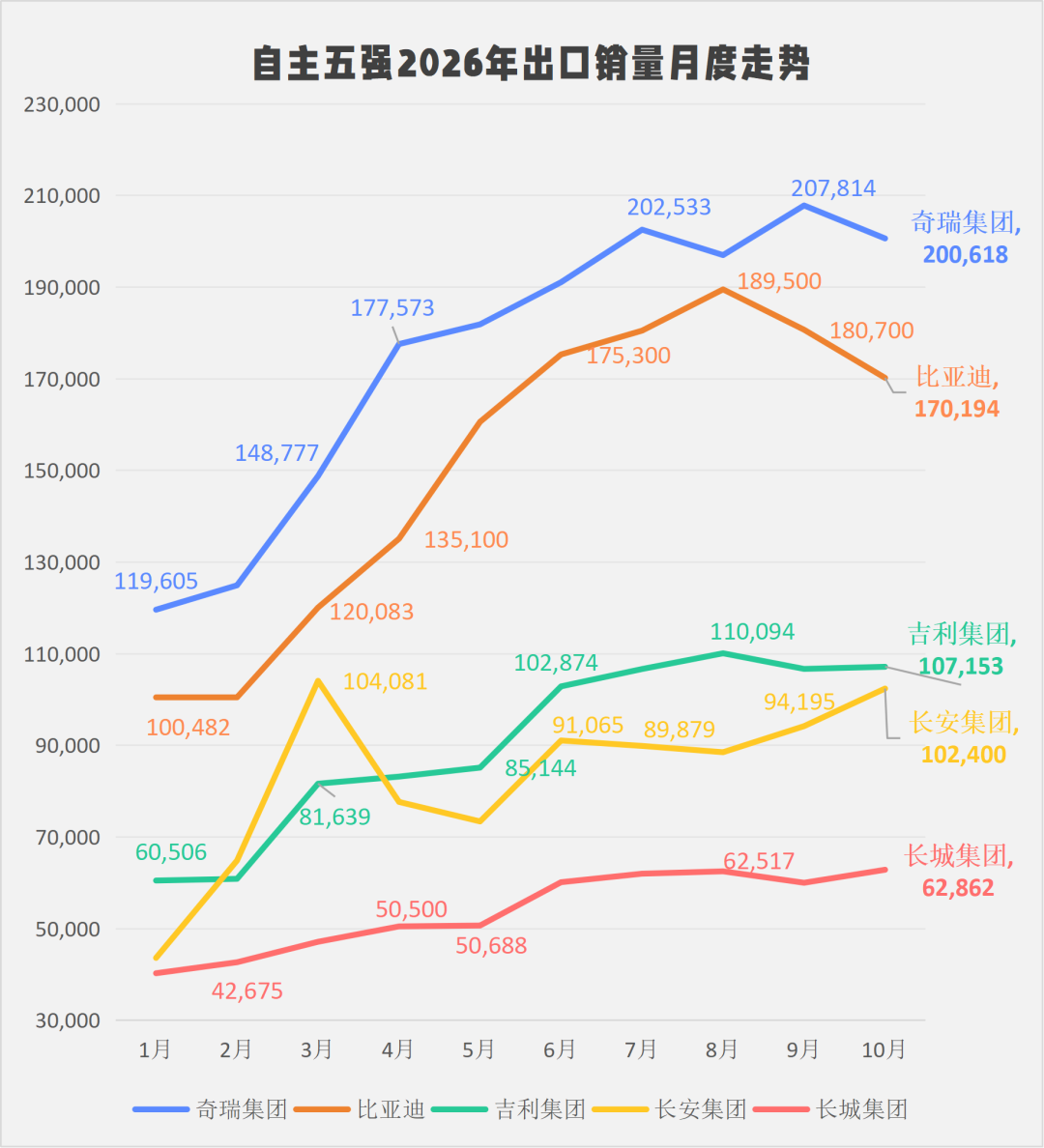
For the whole of October, the top six were Chery, BYD, SAIC, Geely, Changan, and Great Wall, with sales of 200,600, 169,600, 162,500, 107,100, 102,400, and 62,900 vehicles, respectively. Overseas markets have become the sales mainstay for these automakers, with Chery's export share exceeding 70%.
In terms of revenue, based on currently available public financial report data, the overseas revenue of mainstream independent automakers in the first half of 2026 totaled about 454.4 billion yuan for the five leading companies. According to brokerage estimates, the total overseas revenue of all Chinese independent brand complete vehicles in the first half of 2026 was roughly in the range of 520 billion to 560 billion yuan, accounting for about 38% to 42% of the total revenue of all independent automakers. Among them:
BYD's overseas revenue in 26H1 was 181.268 billion yuan, accounting for 52.57% of total revenue, with overseas revenue exceeding domestic for the first time;
Chery Automobile's overseas revenue in 26H1 was 98.968 billion yuan, accounting for 69.1% of total revenue, the highest overseas proportion among independent automakers;
Great Wall Motor's overseas revenue in 26H1 was 56.288 billion yuan, accounting for 55.1% of total revenue;
Changan Automobile's overseas revenue in 26H1 was 21.942 billion yuan, accounting for about 35% of total revenue;
Geely Automobile's overseas revenue in 26H1 was about 96 billion yuan, accounting for about 55% of total revenue.
The reason for this is none other than that the domestic market is too competitive, and everyone is having a hard time, with even the survival of some second-tier automakers under threat, making going global the only hope and expectation. But fundamentally, this massive "dammed lake" generated by insufficient domestic sales and overcapacity spilling outward also makes countries overseas fearful.
Fortunately, the state has also realized this. This year, the export tax rebate for new energy vehicles was lowered from 13% to 9%. This 4-percentage-point gap is real pain for players relying on "low prices for volume," especially in the new energy sector, which relies most on price advantages. Raising the threshold is instead a boost to the quality of going global.
Next, a stable external environment in overseas markets will become very important for Chinese brands. The most common low-price volume-driven model in going global is becoming increasingly difficult to sustain, and the time has come to test the systemic capabilities of Chinese automakers.
02 The Turning Point Has Arrived: Seeking Quality Is the Remedy, Seeking Volume Is Poison
To survive, Chinese automakers have really done their utmost. But against the backdrop of oversupply, while promising domestic industry authorities that they will not engage in vicious involution overseas, they habitually wage fierce price wars abroad.
Another set of macro data points to the same thing: China's trade surplus has exceeded 1 trillion US dollars for the first time, of which the increasingly unbalanced trade relationship with the EU accounts for nearly one-third. And within that one-third, exports of automobiles, especially new energy vehicles, are one of the most directly related items.
The imbalance in the trade ledger will ultimately land on products in the form of policy.
In fact, what overseas markets despise most is the spillover of domestic price wars. Short-term volume grabbing may quickly gain share, but it compresses profits, easily reinforces overseas users' impression of Chinese brands as "low price, low quality," and may also invite anti-dumping and anti-subsidy investigations.
Not long ago, Thailand's cabinet officially approved an adjustment plan for automobile excise tax, to be implemented from January 1, 2027. For brands that have no plan to build factories in Thailand and rely entirely on complete vehicle imports for sales, the tax rate will be raised directly from 10% to 35%. The policy direction is very clear: if you want to do long-term business in this market, you have to move production lines here.
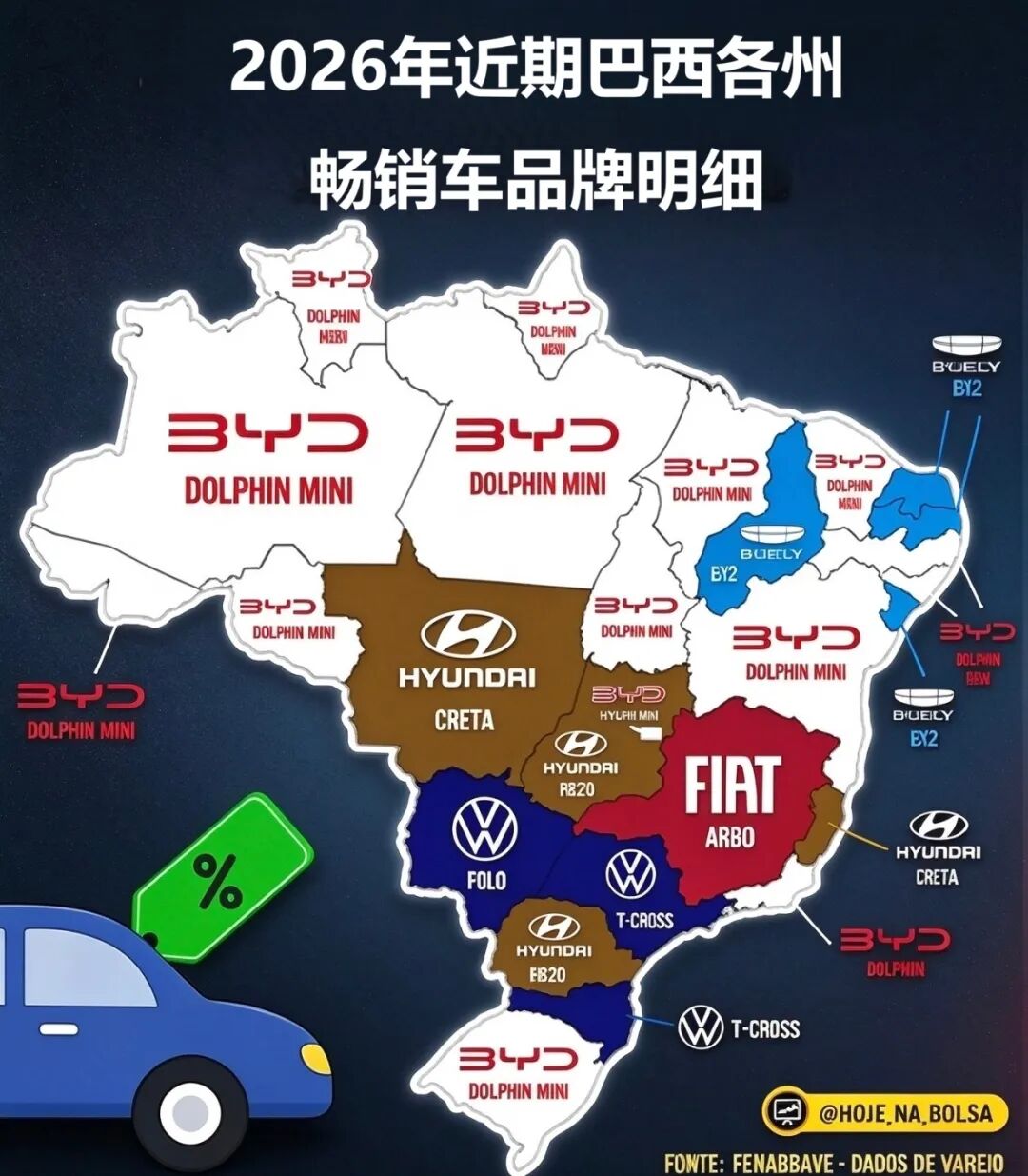
Brazil's logic is almost identical. For brands that have not built factories in Brazil and rely entirely on complete vehicle imports, a temporary surtax is imposed, which has now been raised to 35%, but this is not the ceiling. This round is the result of lobbying by the Brazilian automobile industry association and is still in the compliance research stage, with the earliest possible implementation in the first half of 2027.
The EU is discussing a quota system, rumored to be planned based on 2025 sales of 350,000 vehicles as the benchmark. How much can still be exported to the EU market next year is itself a huge unknown.
From Chinese automobiles entering overseas markets on a large scale to countries around the world setting up barriers one after another, the reaction has been far more intense than previously expected.
The way to break this restrictive situation is difficult but simple: seek quality, not volume. But the short-term cost is huge, and not every Chinese automaker is willing to restrain itself and raise its bottom line.
Therefore, under a high base, the difficulty of exports in 2027 has already been written in advance by several sets of data. There are various opinions in the market about the forecast for 2027, and there are also clear-headed people. Cui Dongshu, secretary-general of the China Passenger Car Association, judges that the growth rate of automobile exports will slow significantly next year, with an expected increase of only about 10%.
But Yin Tongyue, chairman of Chery Automobile, believes that "exports are likely to decline next year. Therefore, our past single-minded pursuit of volume may not be the way out. I think we may still need to truly pursue the brand." In the so-called "volume, price, profit," the foundation of price is actually the brand.
"True internationalization is not the internationalization of what is sold, but the internationalization of being accepted, enabling various markets to accept Chinese cars. You have to take root," Yin Tongyue said.
There is also a symbolic detail: Nissan announced that, starting as early as fiscal 2027, it will open idle production lines at its Sunderland plant in the UK to contract-manufacture for the Chinese brand Chery. For the first time, a mainstream Japanese automaker will build cars for a Chinese automaker in a core European market.
Twenty years ago, Chinese automakers lined up to invite multinational companies to form joint ventures; twenty years later, the script has completely reversed.
However, Chinese automakers should not be overly optimistic. Localized factory construction is far more complex than simple exporting. Although local production can ease tariff pressure, it requires substantial investment and also involves local employment, taxation, suppliers, and cultural differences. In Europe, for example, layoff costs are high and unions are strong, so copying domestic management models can easily trigger labor conflicts.
There is also an important issue: selling so much volume is not the end of the story. More challenging things are still ahead, and after-sales service must also keep up. Local repair networks, parts supply, insurance, roadside assistance, and used-car residual values all affect user reputation. For new energy models, this also includes reliance on charging facilities and professional maintenance personnel. A single recall or long-term difficulty in repairs can damage a brand more than the small volume gained from price promotions.
Exchange rate risk and logistics risk are also big pitfalls. Although selling cars may look profitable at the time, currency settlement may shrink and become "all for nothing." In the first half of 2026, the overseas profits of several independent automakers were affected by exchange rates by more than 20 billion yuan. After all, overseas, automakers' revenues are mostly in foreign currencies, while costs include RMB expenditures, shipping, insurance, and overseas operations. Exchange rate fluctuations, tight ro-ro ship capacity, and transport risks such as the Red Sea can all eat into original gross margins.
Therefore, to judge the quality of an automaker's going-global efforts, three things are important: whether net profit grows in tandem with overseas sales growth; whether the local after-sales network covers the market; and whether pricing can break away from purely low-price competition.
2027 will be the turning point for going global, and also the 3.0 stage of going global. What this stage truly needs to answer is not how many more vehicles can be sold, but whether one can stand firm in a market for the long term, convert tariff costs into local production capacity, convert sales advantages into brand premiums, and convert one-time deliveries into a sustainable service system. If these three points cannot be achieved, then no matter how impressive the export figures are, they are only postponing the risk by a year.
Editor: Shi Jie Editor: He Zengrong

THE END
-
![]()
Robot Vacuum Makers Go Global: After Taking the Top Market Share, Where Did the Money Go?
-
![]()
From "Baidu It" to "Doubao It" — A Change in More Than Method
-
![]()
Huang Steps Down: Nvidia Loses Its Soul—So Why Should Chinese Assets Pay the Price?
-
![]()
Secures Nearly 100 Million Yuan in Financing! How Does This Company Integrate Optics into Packaging?
-
Production Set to Begin Early Next Year: Lanyu Vision's 4.5-Million-Square-Meter New Plant Successfully Capped
-
![]()
It's Almost Over! October China Fuel Vehicle Sales Released: Sales of Numerous Classic Family Sedans Plummet
-
Car Quality Network: Q3 Service Complaints Jump 55.6% QoQ, with Transaction Segment Driving the Surge
-
In the Era of Intelligent Organizations, What Kind of AI Cloud Do Enterprises Need?