Good News: The 60-Day Payment Term Pledge Is Finally More Than Just Lip Service
 11/17 2026
 451

Payment Terms Enter the Annual Review
”
Author | Zaizhou
On November 16, the China Association of Automobile Manufacturers (CAAM) announced that it will conduct a survey and assessment of supplier payment conditions at 17 major automakers.
The Ministry of Industry and Information Technology (MIIT) clarified the same day that assessment results will be published annually. For automakers with large accounts payable, deliberately prolonged payment terms, or a high volume of complaints, joint regulatory talks will be held with relevant departments and rectification will be urged. A relevant official said a systematic survey and assessment will be carried out once a year, with results published—showing the scorecard.
Last year's "60-day payment term pledge," despite its scale, did not provide substantive help to small and medium-sized suppliers.
It is not that automakers have failed to honor it; rather, the number itself has never been defined.
For example, from which day does the clock start? Delivery date, acceptance date, reconciliation date, or the day the invoice is received? What counts as payment? Cash, bank acceptance bills, or commercial acceptance bills? During the three months of year-end price negotiations, goods are still shipped—but will payment be made?
With these questions going back and forth, 60 days can easily become 180 days.
01 A Difference of One or Two Numbers, Threefold
According to a CAAM survey report from February 2026, the average payment term for suppliers of 17 key automakers has been reduced to 54 days, about 10 days shorter year-on-year, with 4 below 50 days.
Another set of figures comes from listed company financial reports. Wind's statistics on accounts payable and notes turnover days for 14 whole-vehicle enterprises: 170 days in the first half of 2025, 164.4 days for full-year 2025, and 187.5 days in the first half of 2026—lengthened by another 23.1 days from the end of 2025, with 13 of the 14 rising quarter-on-quarter.
As of the end of the second quarter, the 14 companies had a total of 782.51 billion yuan in accounts payable and notes, an increase of 17.55 billion yuan from the end of 2025. SAIC: 187.06 billion yuan; BYD: 176.35 billion yuan; Chery: 145.67 billion yuan.
54 days versus 187.5 days—more than a threefold difference.
CAAM's caliber is the time from the starting point of the payment term to completion of payment, with both cash and notes counted as payment. Wind's caliber is 365 days multiplied by accounts payable and notes, divided by operating costs, with notes included in payables and operating costs excluding unsold vehicles.
But what is truly worth looking at is not this difference, but the direction. A year and a half after the pledge, payment terms on the financial caliber have instead become longer. It should also be noted that accounts payable turnover days are a financial observation value, not a compliance determination; it includes non-SME suppliers, includes notes, and includes amounts still within normal payment terms, and cannot be directly equated with "breach of commitment."
So the problem is clear: it is not that automakers have done nothing, but that the term "60 days" can be interpreted in many ways—and companies tend to choose the interpretation most favorable to themselves.
CAAM itself wrote a very polite sentence in its February 2026 report: "Although nominally all are 60-day payment terms, the time from delivery to receipt of payment varies greatly among suppliers."
Translated, that means: under the same 60 days, some pay within two months, while others take half a year.
Looking back at the batch of pledges in June 2025, the problem was buried from the very beginning.
The pledges were voluntary, with no third-party verification, no unified definition, and no consequences. The 17 companies successively made statements within two days, with almost identical wording: "unify supplier payment terms to within 60 days." But who would verify, how to verify, and what to do after verification were not mentioned at all.
02 The Power of Definition Is No Longer in the Hands of Companies
This is not the companies' fault. Under the institutional conditions at the time, making a statement was all they could do. The real change occurred on September 7. After that day, payment terms changed from a commercial clause into a regulatory object with a statutory starting point, acceptance time limit, and payment ratio requirements.
On September 7, MIIT and the State Administration for Market Regulation jointly issued the "Notice on Promoting Automakers to Standardize Supplier Payment and Optimize Payment Term Management"—the first national-level normative document specifically targeting payment term issues in a single industry.
The starting point is calculated from the date when the supplier delivers goods, works, or services and passes acceptance. It is not the delivery date, not the invoice date, but the acceptance date.
Acceptance time limit: for productive materials such as parts, receipt shall be completed in agreed quantities within 1 working day of the agreed delivery time, and acceptance shall be completed within 3 working days after receipt; if acceptance is not completed beyond 3 working days, it shall be deemed accepted; where vehicle installation verification is truly required, vehicle rollout inspection shall be completed within 5 working days after receipt.
This article is the real key. In the past, the most common way to extend payment terms was not refusing to pay, but slowly conducting acceptance: goods arrive and sit there, documents are not signed, and the starting point never comes. Now, if acceptance is not completed within 3 working days, it is automatically deemed accepted—and the clock starts ticking.
Payment methods. Priority is encouraged for cash or bank acceptance bills, and suppliers must not be forced or disguisedly forced to accept non-cash methods such as commercial acceptance bills and supply chain bills. For SMEs, payment within 30 days is encouraged, with a maximum of 60 days, and all-cash payment is encouraged.
Price negotiation period. Year-end price negotiations run from December to March of the following year, and suppliers are still shipping during these months. The document stipulates that for continuous supply, payment shall first be made by reference to the unit price of the most recently effective contract, with a ratio of no less than 90%; for non-continuous supply, payment shall first be made by reference to the industry average price or the development designation unit price, with a ratio of no less than 70%, with final settlement based on actual amounts.
The path of not paying until price negotiations are finished has also been blocked.
CAAM's November 16 notice installs an enforcement body on top of these rules. Four assessment dimensions: institutional safeguards (whether there is a management system and digital system, and whether the supply contract has been in place for a full year), SME payment terms (no more than 60 days, all cash), non-SME payment terms (within 60 days, cash plus bank acceptance bills no less than 80%), and payment during price negotiation (the two lines of 90% and 70%).
The implementation method is "enterprise submission + sample spot checks." Each automaker reports the previous year on January 31 and the half-year on July 31 each year; CAAM randomly selects no fewer than 15 sample suppliers from each company each year and conducts on-site verification of contracts, acceptance forms, reconciliation records, invoices, and payment vouchers; information must not be concealed or falsely provided; enterprises may apply for review within 5 working days if they have objections; a clue collection channel has also been opened, with preliminary judgment within 10 working days and confidentiality for whistleblowers.
Results are publicly announced once a year. The three types of enterprises—those with large accounts payable, those deliberately prolonging payment terms, and those with more complaints—will face joint regulatory talks.
There is another layer of change that is easily overlooked: the subject of verification has changed.
In the past, it was enterprise self-inspection; now CAAM acts as a third-party institution entrusted by MIIT to carry out the work. Corporate self-discipline pledges have become government-entrusted third-party verification. This identity shift determines that results must be made public, and also determines that there is administrative force behind the regulatory talks.
The harshest part of this design is not fines, but public disclosure. Fines can be paid, and regulatory talks can be handled perfunctorily, but having your name posted online once a year is a higher cost for a listed company than money.
03 Payment Terms Are Not a Moral Issue
At this point, a more fundamental question needs to be discussed.
In the same automotive industry chain, payment terms for power battery companies are shortening. For 8 battery companies, accounts payable turnover days were 254.8 days in the first half of 2025, 233.3 days for full-year 2025, and 231.2 days in the first half of 2026—a year-on-year decrease of 23.6 days, with 7 of the 8 declining.
Whole-vehicle companies are the opposite. From January to June 2026, the automotive industry's revenue was 5,189.3 billion yuan, up 1.8% year-on-year; costs were 4,610 billion yuan, up 2.8%; profit was 195.35 billion yuan, down 19.5%, with a profit margin of 3.8%. The average profit margin of the whole-vehicle manufacturing segment in the first half was about 1.5%—the lowest in nearly a decade.
Why can battery plants be faster? Because they are making money.
In the first half of 2026, all 8 except Farasis Energy were profitable, with many doubling net profit; energy storage cell shipments grew significantly; upstream lithium carbonate and lithium hexafluorophosphate prices rose, materials turned from surplus to shortage, and bargaining power reversed—if you want goods, you have to pay quickly in cash.
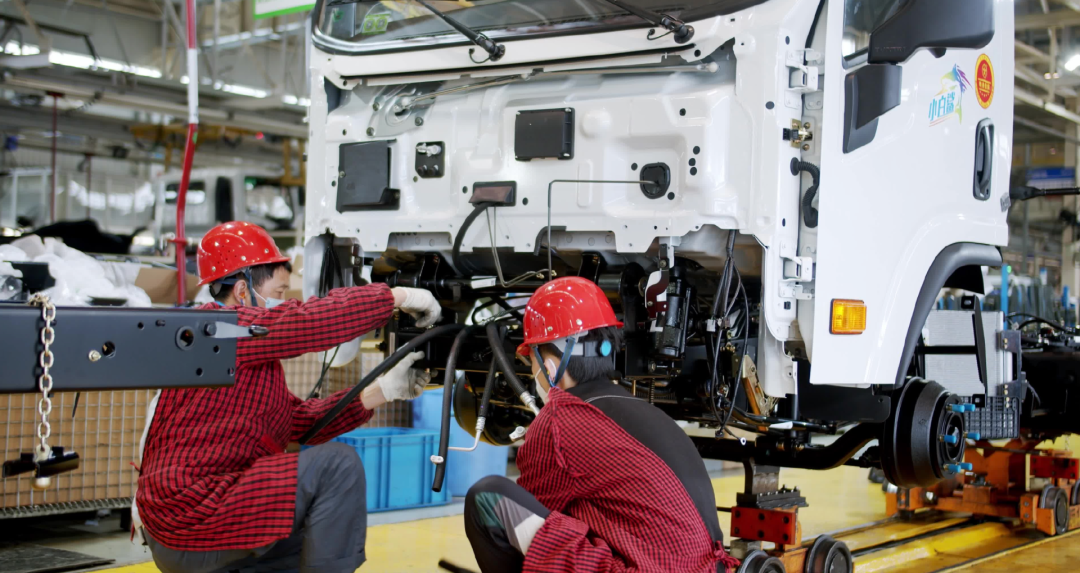
Why are whole-vehicle manufacturers slow? Because profit is thin at 1.5%, occupying suppliers' money becomes the cheapest financing: no interest, no collateral, no approval.
So payment terms have never been a moral issue, but a cash flow issue.
This judgment determines our expectations for this assessment.
Among the 17, six new forces—Seres, Li Auto, NIO, XPeng, Xiaomi, and Leapmotor—are on the list. These companies have seen rapid sales growth in recent years, but most have not yet achieved stable profitability, and payment term management has a more direct impact on cash flow than for traditional groups. In the first half of 2026, Seres was 252.7 days, XPeng 231.4 days, and Leapmotor 214.4 days—all above the 14-company average.
There is also a reality that must be made clear: 15 sampled from each of the 17 companies totals 255. China has tens of thousands of auto parts suppliers. This is deterrence, not a census. It can catch typical cases, but not all.
China's auto industry has run for thirty years. Before, it was an incremental era: the market rose a little each year, OEMs sold more cars, suppliers received more orders, everyone had food to eat, and how long payment terms were dragged out was not a big deal.
Now it has entered a stock-market fierce competition, and price wars have cut to the bone—only then does it think of supporting the supply chain. In fact, the principle has never been complicated: no one can make truly good cars by extracting money from upstream and downstream. If you prevent suppliers from earning reasonable profit, ultimately every car you sell will pay the price in invisible places.
After all, payment terms have never been a private matter between OEMs and suppliers. When cars are delivered to users, the quality problems caused by cutting corners because costs are insufficient will ultimately be paid for in real money by ordinary car buyers.
-
![]()
AR Anti-Reflection Coating: "Reduce Reflection, Increase Transmission" — But the Essence Is Systems Engineering
-
![]()
The Year Computing Power Was Tightest: Baidu's Full-Stack Bet Begins to Pay Off
-
![]()
Metalenz Acquires Israeli Startup PxE Imaging to Advance Optical Metasurface Technology
-
![]()
Business Focus: Optical Giant ams OSRAM Posts €829 Million in Q3 2026 Revenue
-
Jet Fuel Price Surge Inflates Costs, Net Profit Falls Over 20%; Spring Airlines Issues 10 Billion Yuan in Bonds to Fund 27.6 Billion Yuan Aircraft Purchase
-
![]()
A $5 Trillion Foreign Trade Hub Hosts a Landmark Gathering of Chinese and Global Titans
-
Baidu's AI Revenue Tops 50% for the First Time, Yet Shares Hit Record Low—Baidu Is Still Essentially Selling Computing Power
-
![]()
China's 6G Communications Breakthrough: Q/V-Band Experiment Hits 27Gbps, Setting New Domestic Record