Voyah and Luxeed: Building Cars Under Their Own Names — and Owning the Responsibility That Comes With It
 11/19 2026
 379
On November 16, 2026, the Ministry of Industry and Information Technology (MIIT) issued Announcement No. 31 of 2026, releasing the Catalogue of Road Motor Vehicle Manufacturing Enterprises and Products (Batch 412). The announcement approved Dongfeng Group and Chery Group to add member enterprises — Voyah Automobile and Luxeed Automobile — to their respective rosters.
Until then, the complete vehicles from both companies had been filed for declaration under Dongfeng Motor Group and Chery Automobile as the production entities, respectively. Under the Measures for the Administration of Access of Road Motor Vehicle Manufacturing Enterprises and Products, an enterprise must first be included in the list of approved production enterprises before it can apply for product access in its own name and conduct production and business activities in accordance with the law. Voyah Automobile issued a voluntary announcement on the Hong Kong Stock Exchange on November 17, confirming that it had obtained the qualification and describing the approval as recognition of its independent operating capability and standardized operating system.
▍Transfer of Existing Production Capacity Under Group-Based Management
In the automotive industry, qualifications determine three things: whether a model can be declared in its own name, how the manufacturing enterprise is identified on the factory certificate of conformity, and who bears responsibility for production consistency issues. Under the Measures for the Administration of Access of Road Motor Vehicle Manufacturing Enterprises and Products, enterprises applying for access must have production premises, funds and personnel, as well as capabilities in product design and development, production consistency assurance and after-sales service. These conditions assess responsibility capacity — not production capacity scale.
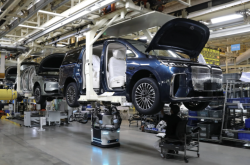
Neither company previously lacked complete vehicle manufacturing capability. For Voyah models such as the Dreamer, Passion, FREE and Taishan, the declaration, announcement and certificate of conformity had long been filed under Dongfeng Motor Group as the entity. Luxeed's S7, R7, V9 and RX likewise listed Chery Automobile as the production entity — a structure that separated brand ownership from production entity responsibility. This arrangement reduced process costs in the early stage, but as production and sales scale expanded, constraints gradually emerged: new vehicle declarations had to follow the group's scheduling, facelift filings had to go through the parent company entity, and product rhythm was not fully controlled by the brand.
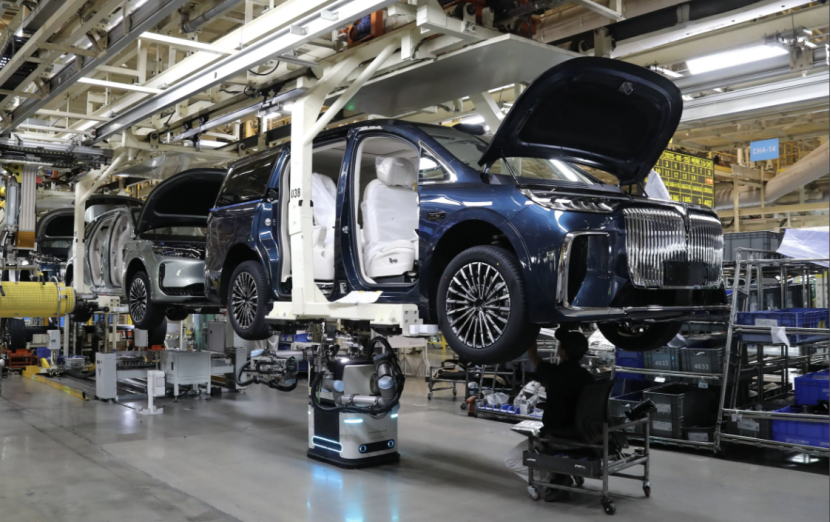
The wording of the catalogue is noteworthy: it uses the phrase "approving Dongfeng Group and Chery Group to add member enterprises," rather than "approving new construction." The MIIT had previously provided an interpretation: promoting group-based management reform, simplifying access review requirements for enterprises under groups, and allowing member enterprises within the same group with the same production qualifications to manufacture on behalf of one another. This arrangement serves internal resource allocation within groups and does not create a separate channel for any single brand. The approvals for Voyah and Luxeed both fall within the scope permitted by this mechanism.
In essence, this is not additional production capacity, but rather the switching of existing production capacity and the re-filing of production entities. That said, the two companies' motivations differ. Voyah is a high-end brand incubated by a central state-owned enterprise, and Dongfeng has complete system capabilities; Voyah needs to clarify the operating boundaries of the listed company so that the capital market, overseas channels and partners can see an independent legal entity. Luxeed was jointly created by an automaker and a technology company, with Chery undertaking manufacturing and Huawei responsible for product definition and sales; it has a greater need to assign the manufacturing entity, announcement entity and quality responsibility to itself.
▍Operational Variables Beyond Qualifications
With identity settled, operational issues come into sharper focus. Voyah listed on the main board of the Hong Kong Stock Exchange on March 19, 2026, becoming the first centrally administered state-owned high-end new energy vehicle company listed in Hong Kong. Its first interim report after listing showed first-half revenue of 18.159 billion yuan, up 42.4% year on year; deliveries of 76,264 units, up 35.9% year on year; gross margin falling to 17.7% from 21.4% in the same period last year; and a net loss of 389 million yuan, compared with net profit of 464 million yuan in the same period last year. The company attributed the gross margin decline to rising prices of raw materials such as lithium carbonate and memory chips.
These figures do not reflect insufficient demand. First-half deliveries grew 35.9% and revenue grew 42.4%, confirming scale expansion; over the same period, gross margin fell 3.7 percentage points, and net profit turned from positive to negative. Sales are still growing. Voyah disclosed deliveries of 13,000 vehicles in October 2026 and cumulative deliveries of 128,500 vehicles from January to October, up 13% year on year. Scale and profit are moving in opposite directions, and sales growth has not covered rising costs — a situation commonly faced by many brands during the price competition stage. The two sets of data show that the constraint is neither production capacity nor qualifications, but price and cost.
On the overseas front, Voyah's interim report showed first-half overseas market revenue of 2.538 billion yuan, up 51.5% year on year, outpacing overall growth. Certification, channels and after-sales are mostly handled through legal entities; once entity ownership is clear, procedures will become simpler.
Luxeed faces a different problem. Chery Automobile's announcement on November 1 showed that Luxeed sold 6,090 vehicles in October, down 52.5% year on year, and 49,713 vehicles from January to October, down 29.6% year on year. Over the same period, HIMA delivered 33,537 vehicles in October, down 50.8% year on year, marking the fourth consecutive month of month-on-month decline.
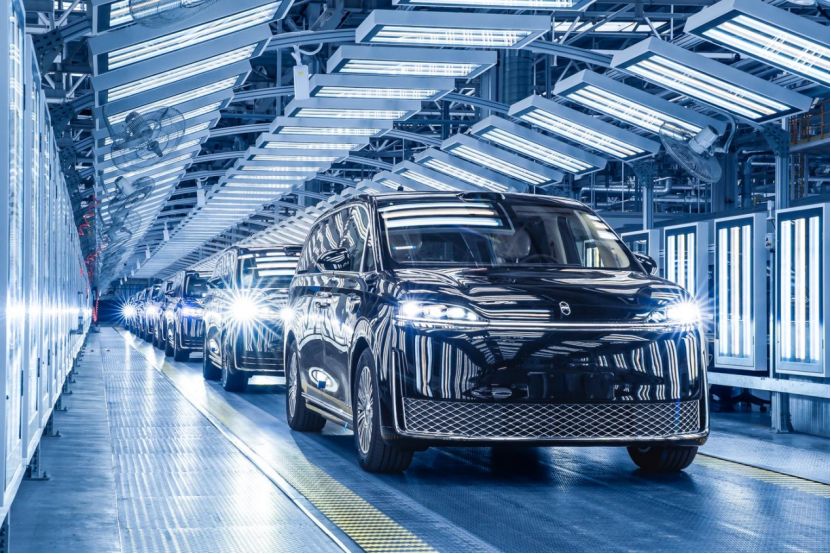
Luxeed's organizational arrangements preceded the implementation of qualifications. On January 23, 2025, Anhui Luxeed New Energy Automobile Co., Ltd. was established in Wuhu with registered capital of 1 billion yuan. On August 7, 2025, Chery and Huawei signed the Luxeed brand strategy 2.0 cooperation agreement, announcing investment of more than 10 billion yuan and expansion of the R&D team to 5,000 people. At the end of June 2026, Luxeed completed industrial and commercial registration changes, with Chery's shareholding reduced from 100% to 85%, while Wuhu Ruiqi and Wuhu Ruilian, two equity investment partnerships, each held 7.5%. Arrangements such as legal entity independence, team shareholding and integration of production, sales and service had already been set in motion well before this, and qualification is one piece of that broader push.
The significance of this qualification for Luxeed plays out in several specific ways: new products can be declared directly in the name of Anhui Luxeed New Energy Automobile Co., Ltd., and facelift filings no longer need to rely on the Chery entity; the name of the manufacturing enterprise on the tail badge and certificate of conformity changes to Luxeed, achieving consistency between brand and manufacturing entity at the document level; and some market observers regard independent qualification as one of the preconditions for subsequent independent capital operations.
Independence also means transfer of responsibility. Previously, quality responsibility was borne by the group entity, backed by the parent company's warranty and recall systems. Now that the entity is independent, those responsibilities rest entirely with the company itself.
The two qualifications took effect on the same day, changing entity ownership: the announcement entity, quality responsibility and capital are now attributed to the same name. Without adding new production capacity, streamlining entities within the group has proven an operable path — offering a reference model for brands incubated by central state-owned enterprises and for brands jointly created by automakers and technology companies. For Voyah and Luxeed, printing their own names on the certificate of conformity is only the first step; how much that name is ultimately worth will still have to be answered by financial statements and order books.
Layout 丨 Yang Shuo Image source: Chery Automobile, Voyah Automobile
-
![]()
Voyah and Luxeed: Building Cars Under Their Own Names — and Owning the Responsibility That Comes With It
-
![]()
Market Value Down 86%, Revenue Up 30%: Can Generative AI Help SenseTime Reclaim Its Peak?
-
![]()
AI Hasn't Produced Fully Automated Ransomware—but It Has Lowered the Barrier to a Single Person
-
![]()
Pony.ai's Q3 Net Loss Doubles, but the Loss Isn't the Real Problem
-
![]()
Tencent Refuses to Settle for Mediocrity
-
![]()
Rumors of Shangjie Leaving HIMA Resurface—Is "Going Solo" Really Necessary for Shangjie? | Mingjing Pro
-
Foxconn Said to Win OpenAI Phone Assembly Order, Mass Production Could Start as Early as First Half of 2027
-
![]()
Three Gates for AI Automated Testing: Verifying Code Correctness