Rumors of Shangjie Leaving HIMA Resurface—Is "Going Solo" Really Necessary for Shangjie? | Mingjing Pro
 11/19 2026
 434
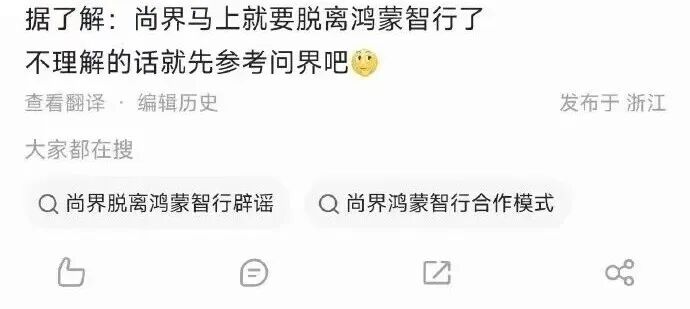
Shangjie has once again found itself swept up in "going solo" rumors. Since November 17, automotive bloggers have repeatedly claimed that Shangjie is about to leave HIMA and strike out on its own. They also hinted that if you don't understand, just look at AITO. This marks the second time in just three months that news of Shangjie going solo has circulated. In response, Mingjing Pro sought verification from Shangjie officials, who denied the reports and stated that "Shangjie remains the same as before, with no changes whatsoever."
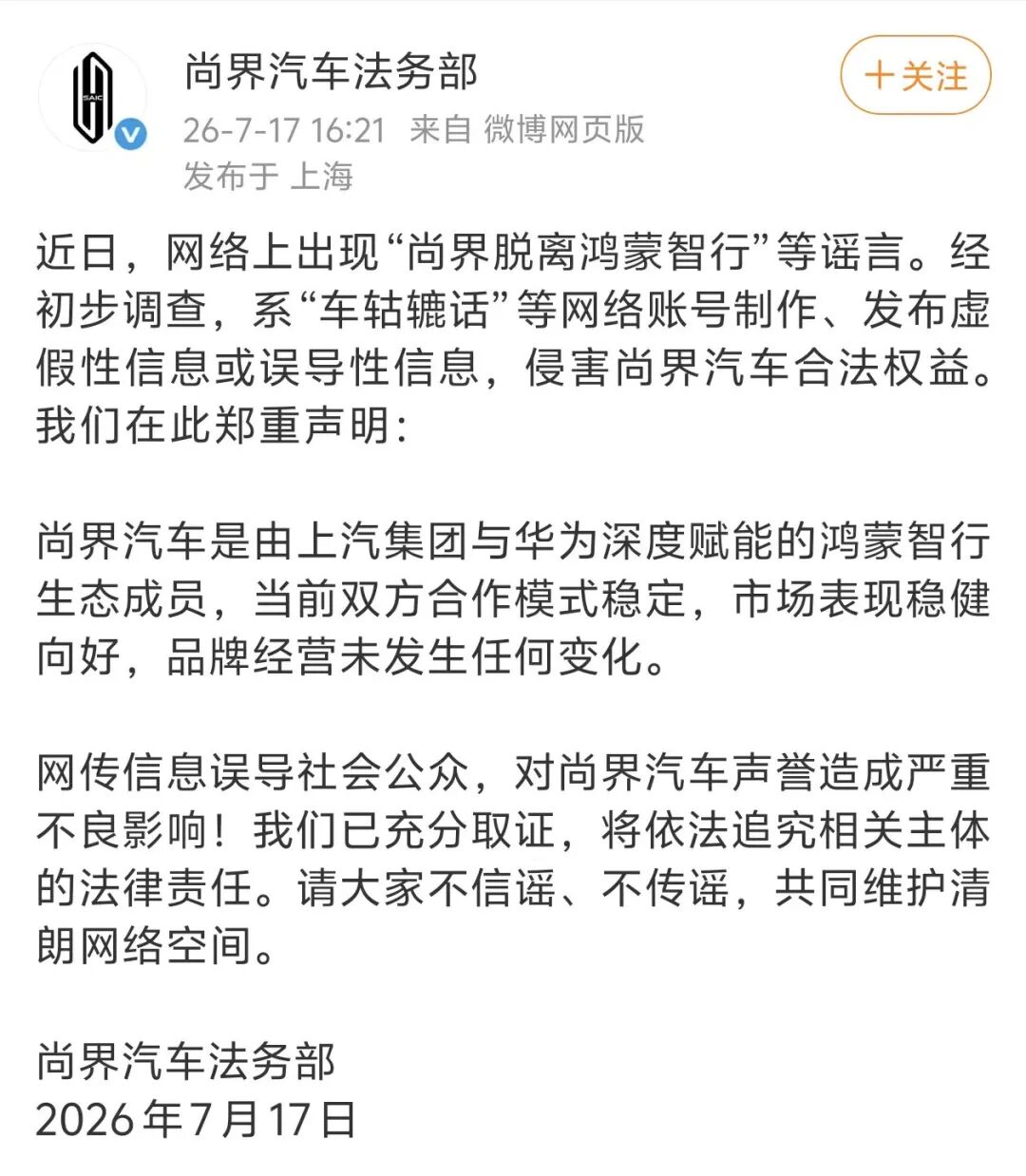
Previously, on July 17, Shangjie Auto's legal department issued a sternly worded statement in response to rumors such as "Shangjie leaving HIMA" that had appeared online. Earlier, Shangjie's response was that "the cooperation model between both parties is stable, market performance is steady and improving, and there has been no change in brand operations." Interestingly, Shangjie is the first of the Five Jie brands to be rumored to be leaving HIMA to "go solo."
But in fact, the first to jump ship and "go solo" was AITO. In September 2026, Seres officially announced an adjustment to its cooperation model with HIMA, shifting to a model where Seres leads operations and Huawei provides technology empowerment. Although officials made it clear that AITO still belongs to HIMA and does not count as leaving the alliance—it was merely an operational model adjustment—observers could plainly see that it had substantively moved toward going solo. Of course, less than half a month after this "breakup," the two sides reconciled again.
On Shangjie's side, on April 16, 2025, SAIC Group and Huawei jointly launched the Shangjie brand, making it the fifth "Jie" of HIMA. Shangjie Auto produces vehicles at SAIC Group's production lines and is responsible for vehicle manufacturing, supply chain management, and cost control, while Huawei provides intelligent driving and cockpit technology. All models are sold through HIMA channels, targeting the mainstream new energy market in the 150,000–250,000 yuan range. Shangjie aims to create hit products in this price band, capture the youth market, and build the capability to compete head-on with Xiaomi Auto.
SAIC and Huawei—one is China's largest automaker group, and the other is the most powerful intelligent solutions provider—this cooperation is still very much worth watching. After the partnership, the two sides launched new vehicles under the Shangjie brand, including the H5, Z7, and Z7T. Judging from final market performance, these products performed well initially but did not escape the "new car valley of death" and have not yet formed sustainable growth capacity. For example, the Shangjie Z7 series initially delivered more than 10,000 units, but currently the combined deliveries of the Shangjie Z7 and Shangjie Z7T are around 4,000 units, with overall monthly sales at around 5,000 units.
On the other hand, another reason for such rumors is the rise of SAIC's own brands. SAIC's own "sons"—MG and Roewe—have produced several hit models this year. Data shows that SAIC Passenger Vehicle's wholesale sales from January to October were 991,400 units, up 43.8% year on year. In October alone, wholesale sales were 123,900 units, up 32.7% year on year. Since April, monthly sales have remained above 100,000 units for seven consecutive months, far outpacing the growth rate of leading industry players. Among them, new energy sales from January to October totaled 491,500 units, soaring 157.6% year on year, with the new energy penetration rate continuing to rise and becoming the core engine of growth.
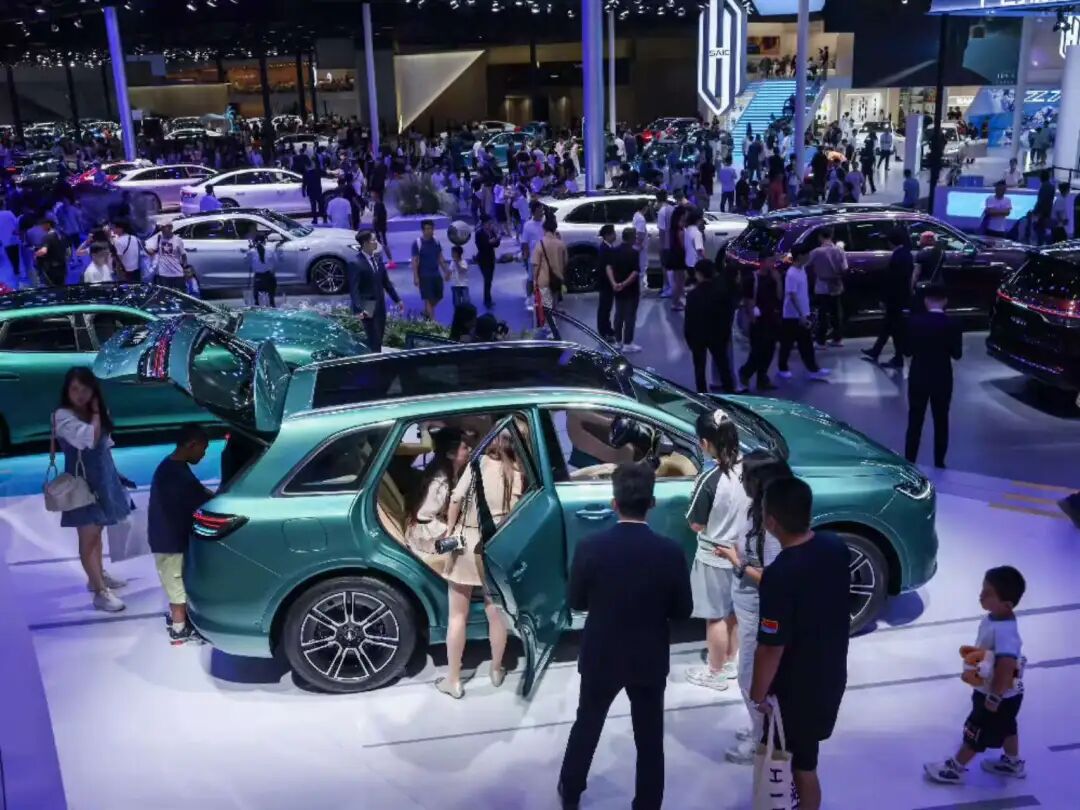
As MG and Roewe orders improve, Shangjie's position is bound to be somewhat affected. This is also the reason behind the rumors of Shangjie leaving HIMA to go solo—the success of Roewe and MG will restore SAIC's confidence in its own operational capabilities, making it more likely that SAIC will seek a greater say in Shangjie. In fact, looking at SAIC's joint ventures, in new energy products SAIC is basically the driving force—for example, SAIC Audi, SAIC Volkswagen, and SAIC General Motors are all currently led by SAIC in R&D and product definition, while the joint venture partners cooperate in developing new energy vehicles. This further deepens such speculation.
But as for HIMA's cooperation model, leaving this alliance would mean losing the value of the brand's existence. Taking AITO and Maextro as examples, these brands have already demonstrated HIMA's capabilities in product creation and brand premium. The fact that Seres and HIMA stood together again after a brief separation is also evidence of this. Now, core links such as AITO's product definition and quality have been handed back to HIMA.
For Shangjie, it faces the same challenge: even a strong brand like AITO could not achieve going solo, let alone Shangjie, which is still in its early stages. Perhaps for this very reason, outsiders judge that the possibility of Shangjie going solo is not high.
However, changes at Shangjie will continue. Shangjie recently completed a senior management reshuffle, and on November 17, a brand-new model, the Shangjie Z9, also sparked outside discussion. This means Shangjie has joined the battle of the "9 series."
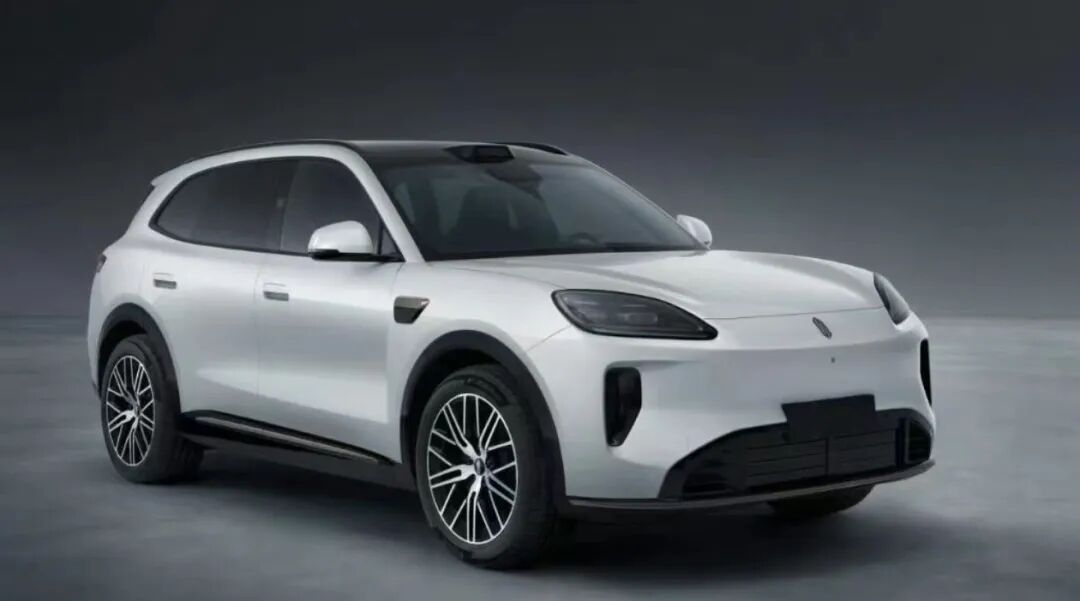
In addition, SAIC's investment in Shangjie is still increasing. Beyond establishing a dedicated team of 5,000 people and an initial investment of 6 billion yuan, this year it added about 1 billion yuan for the construction of the Jinqiao dedicated factory. About four to five future products have entered planning, and there will be new product moves in the fourth quarter of this year. Core official information has been made clear, and officials have also launched the Z7 allroad package model.
In terms of brand development, Shangjie will not be completely confined to the 150,000–300,000 yuan price range. Shangjie executives have clearly stated that if young consumers in the future want technological appeal and youthful styling while also needing higher quality and higher-priced products, Shangjie also hopes to reach them and will not set too many upper limits for itself. Against this backdrop, there will be considerable new room for Shangjie's positioning and development direction going forward.
A previously leaked HIMA 2027 product planning chart also shows this trend. In that plan, Shangjie, originally focused on the 200,000 yuan market, moves directly up into the 300,000–400,000 yuan range through the H8 and H9. The H8 is positioned as a 300,000-yuan-class mid-to-large SUV, while the H9 targets the 400,000-yuan market. Of course, this product plan has not been officially confirmed, but given previous statements by Shangjie executives, it would not be surprising for its product price band to enter the 300,000+ range.
This also means that what Shangjie needs is not only youthfulness but also high-end brand operations—all aspects are about to enter a new stage. At this stage of pushing forward, leaving HIMA is clearly unrealistic, but how to better combine the resources and capabilities of both sides—such internal adjustments may already be imperative.
-
![]()
AI Hasn't Produced Fully Automated Ransomware—but It Has Lowered the Barrier to a Single Person
-
![]()
Pony.ai's Q3 Net Loss Doubles, but the Loss Isn't the Real Problem
-
![]()
Tencent Refuses to Settle for Mediocrity
-
![]()
Rumors of Shangjie Leaving HIMA Resurface—Is "Going Solo" Really Necessary for Shangjie? | Mingjing Pro
-
Foxconn Said to Win OpenAI Phone Assembly Order, Mass Production Could Start as Early as First Half of 2027
-
![]()
Three Gates for AI Automated Testing: Verifying Code Correctness
-
![]()
XPeng's Q3 2026: Service-Fee Tide Recedes as Cars and Overseas Sales Take Over
-
![]()
Waymo Suspended from California Highways: Why Halt Operations Without Any Casualties, and Where Is Tesla's Cybercab?