Robotaxi After 17 Years: The Competition Is No Longer Just About Algorithms
 11/20 2026
 450
This is the 174th original article from Thinking AI Society
The full text is about 1,365 words, with an estimated reading time of 4 minutes
On November 17, the California DMV issued an order to Waymo for a blunt reason: repeated entry into construction zones, and "driverless operations on highways pose an imminent danger to public safety." Waymo announced that same day that it was suspending highway operations across the United States.
In the same week, Pony.ai released its third-quarter report. The most striking figure was not the algorithm but the insurance premiums—after the renewal of its seventh-generation model, per-vehicle premiums fell 19% year over year, roughly 40% of those for human-driven taxis. Pony.ai's net loss doubled in the third quarter, but the loss was not the real issue.
One company was brought to a halt by a ban; the other was calculating insurance discounts. Put these two developments together, and they explain the Robotaxi sector's shift better than any launch event could.
The Algorithm Hurdle Has Already Been Cleared
A Huolong Securities research report published in late October noted: Robotaxi competition has moved past the "algorithm usability" stage and shifted to vehicle utilization, dispatch efficiency, service costs, and fleet management.
Pichai said Waymo's cumulative driverless mileage exceeds 300 million miles, while Tesla's website counter shows about 5.21 million miles—a 58-fold difference.
But in Texas, the two companies' registered vehicle counts were 1,321 versus 1,303, essentially tied—Tesla had only 69 vehicles on June 9.
Technical leadership can differ by 58 times, yet the scale gap can be erased in a single quarter by mass production capability.
The industry has run for 17 years, and no company leads comprehensively in technology, scale, cost, and profitability at the same time—Waymo has density, Tesla has the cost curve, Chinese players have the supply chain, and each leads on only one front.
So "whose algorithm is stronger" no longer has differentiating power. Everyone's cars can drive; the difference is not behind the steering wheel.
Permits and Production Lines Are Harder to Handle Than Algorithms
As of July 2026, 26 cities in China had approved paid Robotaxi operations without safety drivers.
But pace is the key—after an accident in May, new licenses were suspended for a time, and after resumption in July, approvals became slower and stricter.
If approval is delayed by a year, fleet scale, data accumulation, and unit cost reduction are all pushed back by a year. American companies are racking up mileage; Chinese companies are working through procedures—that is what this comes down to.
Every point Pony.ai rolled out this quarter was backed by a permit: a contiguous 1,000 square kilometers in Guangzhou, the first fully driverless operation at a first-tier city airport at Shenzhen Bao'an Airport, Shanghai Pudong, Hangzhou, Chongqing, and Hengqin.
XPeng was approved for all of Guangzhou in October, and WeRide obtained Spain's first L4 license in September.
Waymo's ban also reminds us: permits govern not only "whether you can drive" but also "where you can drive." A single document can reduce the highway business of 4,000 vehicles to zero on the same day.
The vehicle itself matters too. In the modified-vehicle era, you had to buy an off-the-shelf car, take it apart, and rewire it, then mount a large lidar rack on the roof afterward. The cost per vehicle was 1 million to 1.5 million yuan, and rain leaks also reduced uptime.
After front-loaded mass production, it dropped to 200,000 to 300,000 yuan. Pony.ai's seventh-generation complete vehicle costs about $40,000, expected to be $33,000 to $34,000 by year-end, $50,000 to $60,000 lower than Waymo's Ojai; the 2027 version targets a complete vehicle within 230,000 yuan, with BOM down 70%.
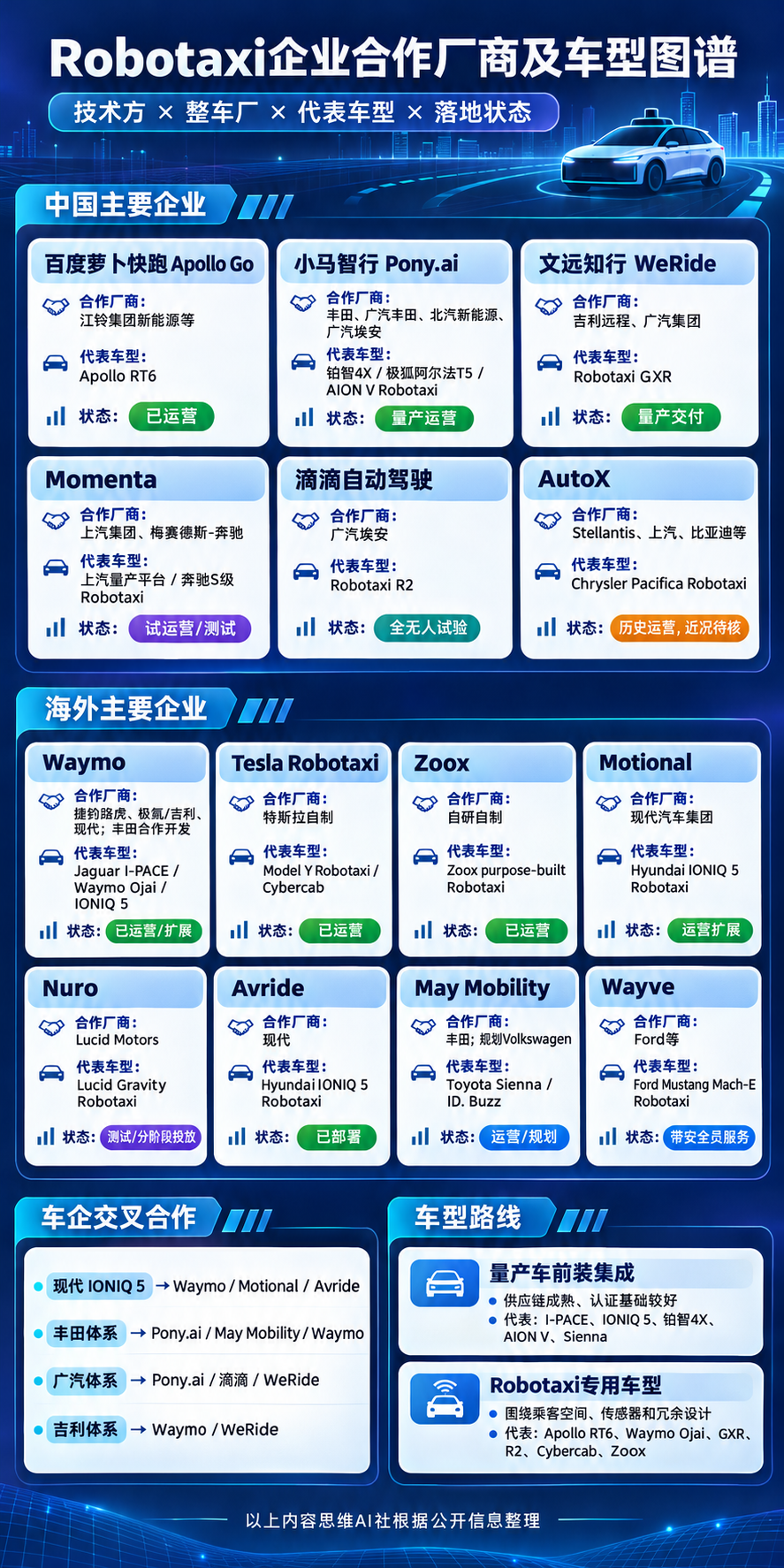
The team doing this is not the algorithm team, but the production line. Zhuifeng Technology, a joint venture among Toyota, GAC Toyota, and Pony.ai, invested more than 1 billion yuan to install redundant chassis and seventh-generation kits on GAC Toyota's production line, so the bZ4X rolls off the line as a finished product.
Do the math for a single vehicle per month: depreciation about 4,500 yuan, remote safety operator about 350 yuan (one person monitors 20 vehicles), charging, maintenance, and insurance about 2,800 yuan, totaling 7,650 yuan; at 25 orders per day, monthly fare revenue is about 12,500 yuan, and monthly gross profit is 4,850 yuan. Turning unit economics positive depends on these few numbers.
Tesla takes the other path. On November 13, Cybercab opened for individual orders at $29,990 plus a $299 monthly subscription fee, and the Texas factory has annual capacity of more than 125,000 vehicles.
The Entry Point Is in Someone Else's Hands
Uber's role is delicate: Waymo's cars run on its app, Lucid supplies 20,000 vehicles and Rivian up to 50,000, Pony.ai and WeRide also take its orders overseas, and Momenta just began trial operations with it in Munich in November.
It does not build cars or write algorithms, but it is the entry point.
Chinese players going overseas almost cannot avoid platforms: Pony.ai and Uber plan to deploy more than 2,000 vehicles in 5 European cities, with reserves of more than 4,000 units; WeRide has at least 1,200 vehicles in Abu Dhabi, Dubai, and Riyadh; Apollo Go is seeking Uber and Lyft in London.
XPeng simply puts it plainly: it positions itself as a technology provider, does not engage in large-scale offline operations, and earns from hardware, technical services, and commissions.
This is the landscape at the end of 2026: algorithms are an admission ticket, not a moat.
Permits determine where you can run, production lines determine how much each vehicle costs, the entry point determines whether there are orders, and operations determine whether a day of running is profitable. None of these four things can be solved by a launch event.
After 17 years, this industry has finally moved from "whether it can drive" to "whether it can survive." The first question has a standard answer; the second does not yet.
All content in the article is compiled from public information and represents only personal views. If interested, you can click the business card to follow
-
![]()
Apple's Unreleased AI Glasses: Chinese Manufacturers Have Already Broken into the Overseas Top 3
-
![]()
Why Are Smart Glasses Offline Experience Stores Struggling to Take Off?
-
![]()
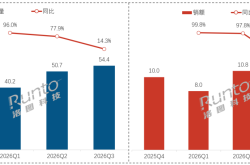
Quarterly Report | 2026 Q3 China Smart Glasses Market Misses Expectations: Sales Growth Slows to 14.3%, Revenue Falls 4.3%; Full-Year Sales Growth Forecast Cut to Below 50%
-
[Focus] Demand for Deep-Ultraviolet Fluoride Optical Crystals Continues to Rise, with Broad Space for Domestic Substitution in China
-
![]()
AI Has Its Sights on Your Wallet | Juchao
-
![]()
LOTU Ranking | October 2026 Global TOP TV ODM Factory Shipments
-
![]()
Between Trade-offs: XPeng's High-Stakes Gamble
-
![]()
Alibaba: A Chinese Version of the "Google" Dream Shattered by the Chip Crisis?