Between Trade-offs: XPeng's High-Stakes Gamble
 11/20 2026
 467
Written by | Xu Zhi
Edited by | Wang Pan
On November 16, XPeng Group released its Q3 2026 financial report—once again a mixed bag.
In the quarter, XPeng's revenue grew 19.1% year-over-year, with deliveries of 118,400 units, both hitting record quarterly highs. Automotive gross margin and cash reserves also improved quarter-over-quarter.
Less ideal was that XPeng's net loss for the quarter reached 870 million yuan, expanding over 120% year-over-year. Continued growth in R&D investment was one of the key reasons, up 17.5% year-over-year.
On one hand, the automotive business is steady with slight growth; on the other, the overall picture of rising revenue without rising profit stems from the all-around "blood-draining" of the Physical AI business.
From the company positioning upgrade at the end of last year to the company rename in April this year, there were already signs that XPeng's "engine" was switching from automobiles to Physical AI. On the conference call the evening of the financial report release, XPeng Group CEO He Xiaopeng once again made the final call: the company's short-to-medium-term goal is to achieve positive cash flow and profitability in the automotive business, thereby providing a guarantee for long-term strategic investment in Physical AI.
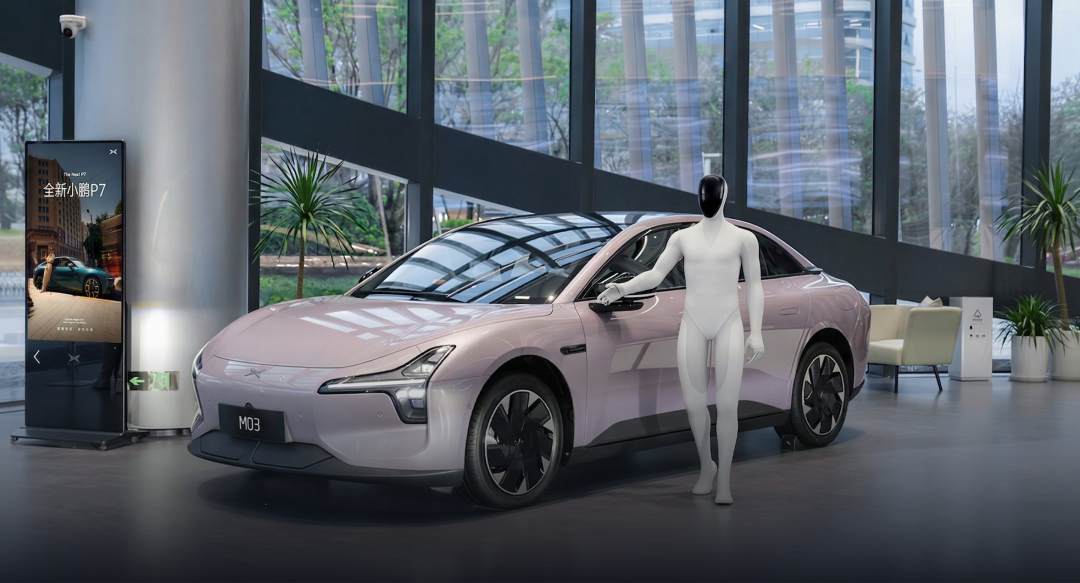
Just as in its early years of relentless pursuit of intelligent driving technology, at a time when automakers are increasingly crossing over into Physical AI, XPeng is likewise the most aggressive. Especially in the embodied intelligence track, compared to NIO's conservatism and Li Auto's wavering, XPeng can be described as having All-in momentum.
But the new bet is far from being revealed, and Physical AI is destined to be unable to pull XPeng's big cart in the short term, while the automotive business also has certain hidden ailments.
For XPeng, the biggest challenge lies in how to balance the time gap—that is, to make the self-blood-generating speed of new businesses catch up with the outward blood-transfusion speed of the automotive business as soon as possible.
The Cost of a Longer "Health Bar"
XPeng's main automotive business "health bar" is significantly lengthening.
Although judging solely from the growth rates of revenue and deliveries, XPeng's speed can no longer be mentioned in the same breath as its previous high-growth period, if placed in the current extremely weak and involuted environment, XPeng's results can already be called passing.
The ramp-up in overseas markets—especially gaining a firm foothold in Europe—became the biggest contributor.
In Q3 this year, XPeng's total deliveries grew 2.1% year-over-year and 14.6% quarter-over-quarter, while overseas deliveries reached approximately 27,900 units, surging over 150% year-over-year and accounting for over 20% of total deliveries. In October, XPeng's overseas deliveries exceeded 13,000 units, up 166% year-over-year.
Looking at the automotive business alone, overseas likewise has a trend of taking over from domestic to become the main engine. He Xiaopeng's goal is for overseas sales to exceed 100,000 units this year and double next year, with the corresponding support being the expansion of overseas stores to over 1,000.
For comparison, as of September 30 this year, XPeng's domestic store count was 731. This means that as early as next year, XPeng's overseas store count will exceed domestic.
Overseas market sales are the visible support, and the more important hidden value is the boost to profits. XPeng management revealed that export gross margin is more than twice that of the domestic business.
We have made comparisons many times before: the prices of many of XPeng's global models in the European market typically reach about 2.5 times the domestic price. Driven by high vehicle prices, even excluding taxes, localization costs, and other expenses, per-vehicle profit is far more considerable than domestically.
And XPeng's guidance for Q4 this year is still growing, with an expected delivery range of 169,000–174,000 units, surging about 45% year-over-year and quarter-over-quarter, while revenue is expected to grow 36.61%–42.9% year-over-year.
Of course, the lengthening of the "health bar" also has short-term irreversible negative costs.
First is the fully rolled-out low-price strategy, which severely limits brand power and the gross margin ceiling in the domestic market. The intuitive manifestation of declining brand power is that mid-to-high-end models are increasingly difficult to sell; currently the MONA series has become XPeng's absolute sales mainstay, with cumulative deliveries exceeding 350,000 units over two years.
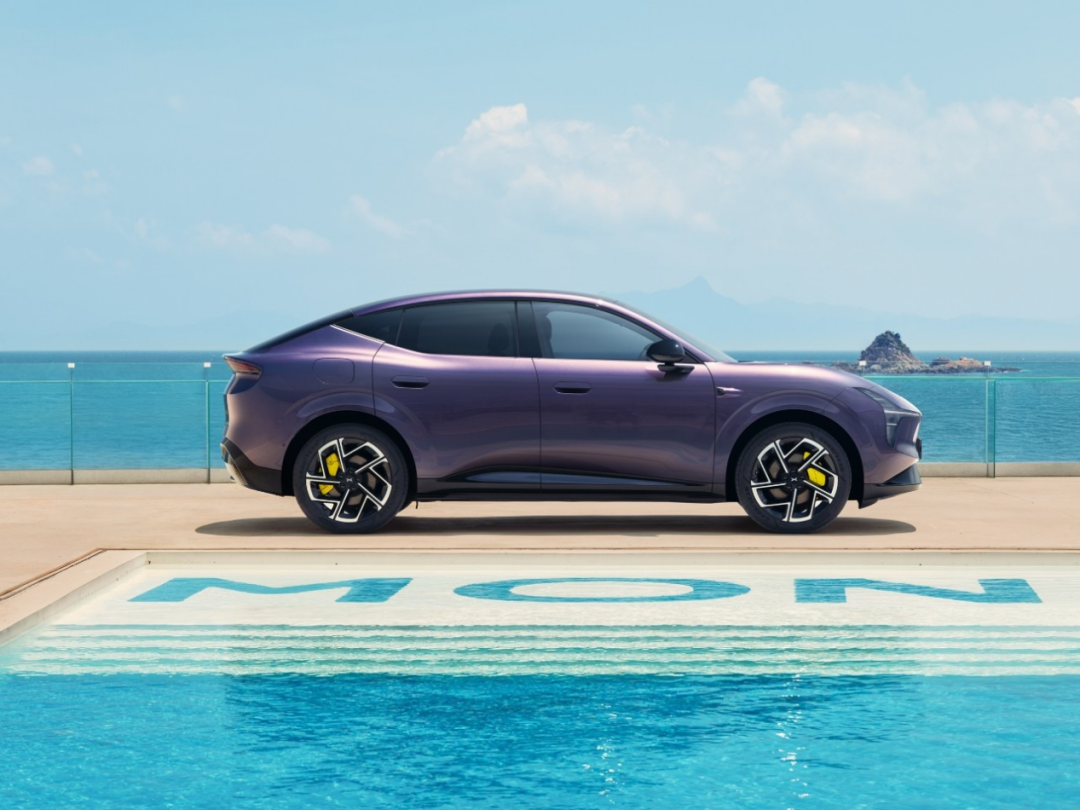
Management also stated on the financial report conference call that as the sales proportion of MONA L05 increases, XPeng's average price will further decline in Q4, and gross margin may also slightly retreat.
Second, an important support for the sales curve comes from the high-frequency launch of new models. In other words, this growth is to some extent also built on consuming the vitality of old models.
XPeng's foundation is still automobiles, but its positioning has been changed to supplying blood for the Physical AI business, so it cannot use contraction to fight the winter like other automakers. XPeng management made clear that R&D investment related to Physical AI this year will be significantly increased to 7 billion yuan, and will continue to grow substantially afterward.
Engine Switch
In April this year, when XPeng officially changed its name to XPeng Group, He Xiaopeng posted on WeChat Moments: "Starting from the journey of intelligent electric vehicles, to flying cars, Turing AI chips, VLA autonomous driving models, humanoid robot IRON, Robotaxi, and more, we are on the global journey of Physical AI, turning dreams into reality step by step."
It can be said that XPeng's view of itself has long ceased to be that of an automobile company.
Changes in organizational structure are the most intuitive manifestation. At the beginning of this year, XPeng's Autonomous Driving Center and Smart Cockpit Center merged into the General Intelligence Center, overseen by Liu Xianming, positioned as an AI organization rather than a smart driving department, while also newly establishing a separate Robotaxi business department.
In June this year, He Xiaopeng personally took on the role of CEO of the robotics business, handing the automotive business to Wang Fengying, conveying from top to bottom the determination to mobilize the entire group's strength to escort robot mass production.
The deep-seated reason for switching the engine from automobiles to Physical AI comes from judgment about future competition. He Xiaopeng believes that Physical AI is a business opportunity with higher gross margins and stronger barriers. Robots are the most typical representative: "In terms of business model, I am optimistic that the sales potential and gross margin scale of XPeng IRON are expected to significantly surpass the most popular high-end models on the market."
This is an active choice. XPeng has always been a rather aggressive "geek" among automakers, evidenced not only by its heavy bet on intelligent driving but also by its comprehensive technical and business benchmarking against Tesla.
The technological accumulation of the automotive foundation has laid certain groundwork for XPeng's Physical AI business. The direct support is software and hardware capabilities such as the second-generation VLA and Turing AI chips, while the indirect support is the reuse of engineering and supply chain capabilities, as well as data and scenario support.
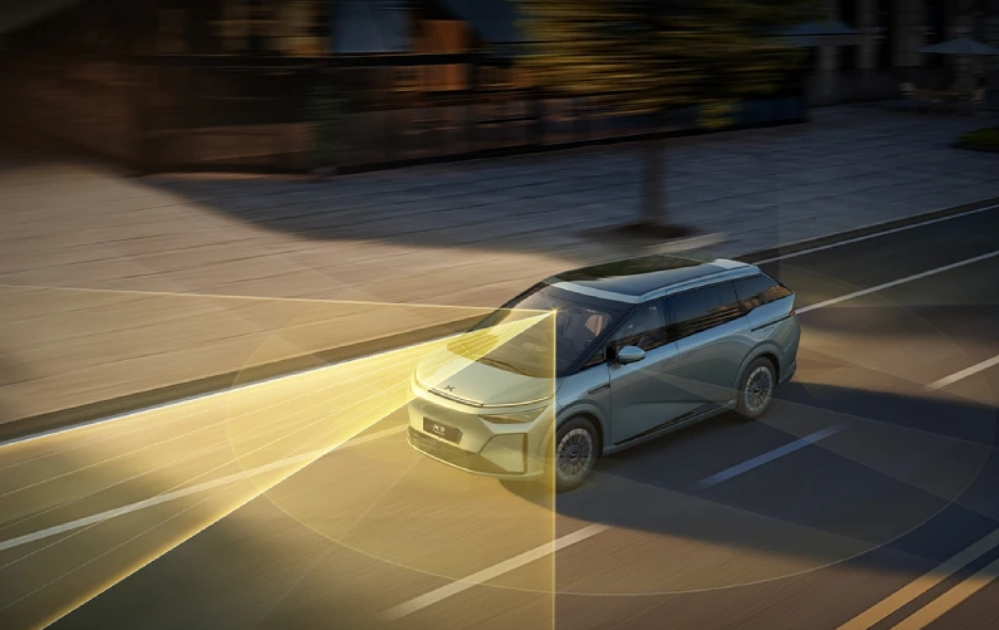
From this perspective, the value of the automotive business is not only blood transfusion at the capital level but also paving the way and serving as a testing ground for the Physical AI business, bringing capability improvements in cost control, efficiency, and other aspects to the latter.
To give a few simple examples, XPeng IRON and Robotaxi use the same second-generation VLA and foundation models as automobiles; over 85% of IRON's supply chain partners overlap with the automotive system; and XPeng's own store network will also be the first stop for IRON's official onboarding.
Software and hardware technology foundations, engineering capabilities, and store application scenarios are XPeng's greatest characteristics compared to other embodied intelligence players, which is why He Xiaopeng could propose that "the foundation and core of Physical AI should be physics, not AI."
This narrative has also been recognized by the capital market. In August this year, XPeng's robotics business completed its first round of equity financing, exceeding $900 million, setting a record for a single-round private financing in China's embodied intelligence industry, with a post-investment valuation exceeding $6.3 billion.
For comparison, XPeng Group's market value is currently around $9.5 billion. The situation where the valuation of a spun-off unlisted business segment is catching up with the market value of the listed segment has appeared at Kuaishou.
Sitting Down at a High-Stakes Table
The road to the stars and sea is not a smooth one; He Xiaopeng previously described it: "The difficulty of making robots is 20 times that of making cars."
The high valuation of XPeng's robotics business is largely thanks to the capital boom in the domestic embodied industry this year, and is not a reflection of its true combat power.
Thanks to the support of the automotive business, XPeng chose the opening with the highest difficulty coefficient; it can also be said that XPeng has sat down at a high-stakes table requiring continuous cash flow supply, with the bets taking far longer to pay off than automobiles.
First is embodied intelligence: XPeng chose the general-purpose path with the longest monetization path. IRON was defined from the start as a high-order general-purpose robot; it did not lower itself to make a vertical robot that can quickly do work, but rather, like Tesla, directly anchors to the endgame.
In terms of scenarios, IRON directly targets commercial and household. Although industrial scenarios are the first choice of the vast majority of players today, with business models concentrated in to B or customization for large clients, XPeng does not want to take this path; it pursues standardized products that are "out-of-the-box ready" for small and medium-sized enterprises and household customers.
The reason likewise comes from the "begin with the end in mind" judgment: industrial robots have lower requirements for safety redundancy but extremely stringent requirements for performance indicators and cost control; from China to the world, commercial services and households are the best scenarios.
He Xiaopeng believes that the core advantage of XPeng robots is high-order intelligence and scenario generalization capability. This is a path that is difficult first and easy later; in the early stage there is no certainty of large-client orders as a backstop, and the business model needs to be explored on its own, but once standardized products are proven, the ceiling will also be far higher than most players.
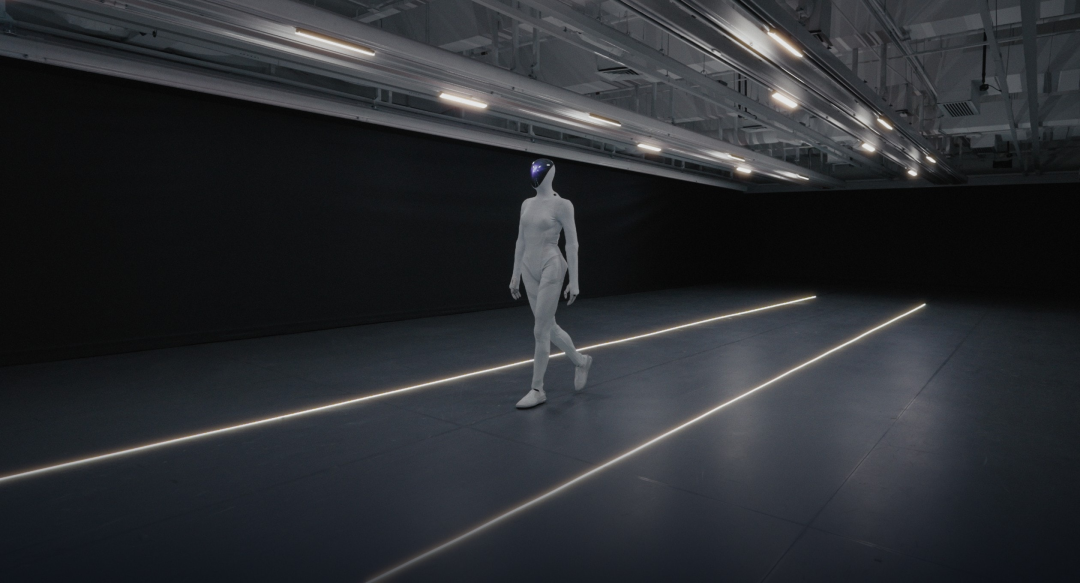
Judging from the current pace, XPeng IRON has already reached the eve of mass production. In September this year, the first automated production line was activated; by the end of the year, hardware mass production preparation will be completed; in Q1 next year it will enter XPeng stores, and in Q2 it will be released to external commercial customers.
By then, XPeng robots will truly face market scrutiny and direct comparison with competitors' products. If the current valuation of XPeng robots can still be supported by vision, the real war begins after mass production and delivery.
Flying cars are another marathon. Although XPeng's "Land Aircraft Carrier" already has more than 7,000 orders in hand, the Guangzhou factory is planned with an annual capacity of 10,000 units, and early deliveries will begin at the end of this year, it will still be difficult to see the dawn of commercial operations for at least two to three years.
The unknown comes from regulatory policy, which is also the key to determining whether it can cross the "experience" stage and become a true means of transportation. XPeng AeroHT CEO Zhao Deli previously stated that the next decade will usher in a period of rapid development for flying cars globally. This can be understood as: for ordinary consumers to own or use a flying car like calling a taxi, even under the most optimistic view, it will take at least 5–8 years.
By comparison, Robotaxi may be the fastest-running of the three Physical AI business lines. XPeng recently obtained the L4-level demonstration operation qualification and has already begun public operations across all of Guangzhou; it is expected to polish a replicable product system by the end of this year and export solutions to global partners next year.
But XPeng Robotaxi will likewise need to answer two questions next: first, reliability verification of the pure vision solution; second, verification of the per-vehicle profit model. The former, like Tesla, and the latter, like Apollo Go, WeRide, and Pony.ai, have not yet fully proven themselves; for XPeng as a newcomer, this may not be a game that can be "speed-run" in a short time.
Overall, new businesses cannot be quickly monetized, but high investment cannot stop, which also means that XPeng will find it difficult to completely escape the gravity of four wheels in a short time and truly enter the new stage of Physical AI.
Therefore, the differentiated two-front battle is destined to be XPeng's mainstream narrative for the next few years: on one hand, cast a long line in the Physical AI track to catch big fish and fight for a forward position in a new battlefield; on the other hand, pragmatically "cast a short line to catch small fish" in car manufacturing, using ample bread and milk to support itself until dawn.

-
![]()
Apple's Unreleased AI Glasses: Chinese Manufacturers Have Already Broken into the Overseas Top 3
-
![]()
Why Are Smart Glasses Offline Experience Stores Struggling to Take Off?
-
![]()
Quarterly Report | 2026 Q3 China Smart Glasses Market Misses Expectations: Sales Growth Slows to 14.3%, Revenue Falls 4.3%; Full-Year Sales Growth Forecast Cut to Below 50%
-
[Focus] Demand for Deep-Ultraviolet Fluoride Optical Crystals Continues to Rise, with Broad Space for Domestic Substitution in China
-
![]()
AI Has Its Sights on Your Wallet | Juchao
-
![]()
LOTU Ranking | October 2026 Global TOP TV ODM Factory Shipments
-
![]()
Between Trade-offs: XPeng's High-Stakes Gamble
-
![]()
Alibaba: A Chinese Version of the "Google" Dream Shattered by the Chip Crisis?