Globalization of Auto Parts 2.0: It's No Longer About Competing on Price
 11/23 2026
 505

Introduction
The shift in global influence within the auto parts industry offers an entry ticket and a window of opportunity—but not a guaranteed seat at the table.
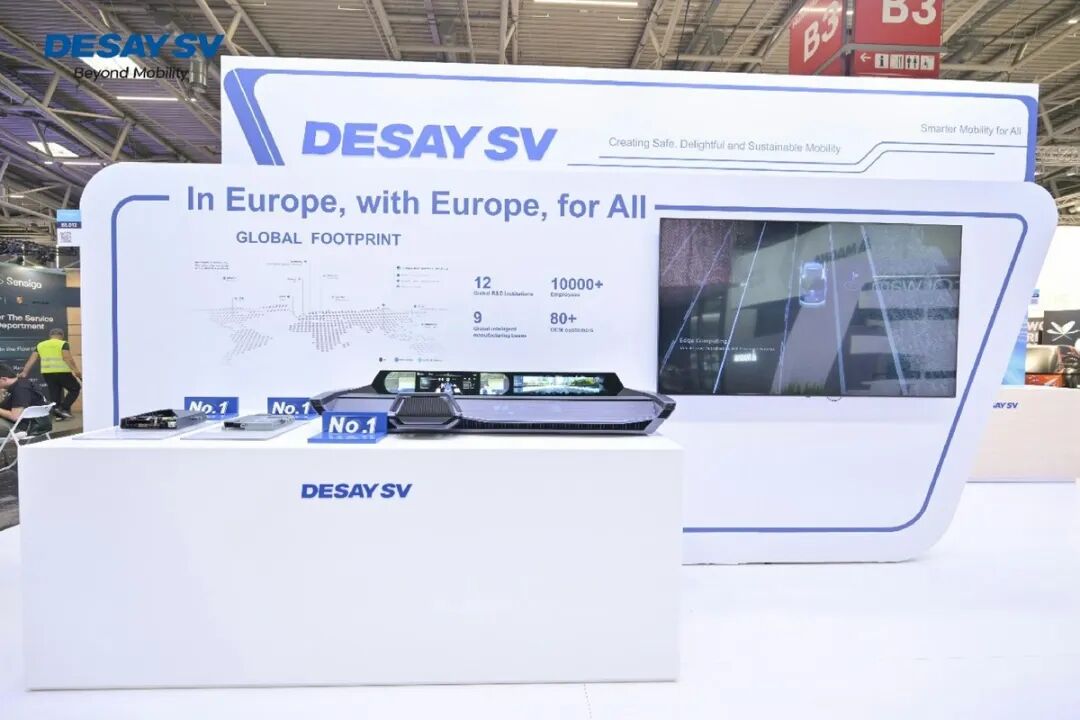
On November 10, in Linares, Jaén Province, Spain, this small Andalusian town—which had been building cars for half a century—came alive again after its factory ceased production in 2011. This time, the occasion was the official commissioning of Desay SV's Spanish smart factory, with mass production slated for the first quarter of 2027.
One detail is worth noting: by the time the factory was commissioned, it had already secured formal project nominations from two European automakers, along with four certifications: IATF 16949, TISAX, ISO 14001, and ISO 45001. Quality, information security, environmental management, and occupational health—none were left out. In particular, without TISAX certification, a Chinese supplier "can't even get a foot in the door to quote."
This event is just one facet of the currently bustling narrative of China's automotive industry globalization. As vehicle production capacity migrates overseas, supply chain globalization is no longer merely a market choice for individual enterprises—it has become a prerequisite for whether vehicle globalization can succeed at all.
In terms of data, as of the first three quarters of 2026, China's total auto parts exports reached US$79.6 billion, a year-on-year increase of 10%. In the 2026 Global Top 100 Auto Parts Suppliers list, Chinese companies also reached 17, surpassing for the first time the 16 from the United States and 15 from Germany.
The flip side of this scale expansion among parts companies is the structural migration of the global automotive supply chain: traditional Tier 1 giants are busy with restructuring and cost reduction, while Chinese parts suppliers have begun to shift from export delivery to overseas R&D, manufacturing, compliance, and local procurement.
The next stage for China's supply chain is no longer about products going out, but about reorganizing cost control, rapid engineering iteration, quality systems, and compliance capabilities into a locally sustainable delivery supply chain system. For overseas projects like Desay SV's Spanish factory, local talent, tier-2 suppliers, quality systems, and jointly entering mass production and ultimately profitability with partners have also become deeper determining factors.
In other words, the overseas expansion model of parts companies is shifting from going it alone to systematic operations. The curtain on Globalization 2.0 for Chinese parts companies is slowly rising.
01 A Window, Not a Seat
For Chinese automakers, after vehicle manufacturing shifts to overseas localization, there is another important question: how much of the original cost, efficiency, and supporting conditions can be retained? In other words, supply chain globalization is no longer just about "shipping out," but about replicating the system abroad and undergoing mass production and profitability tests locally once again.
As industry insiders say, it is determined by three capabilities: whether R&D, validation, manufacturing, and service can be moved to the customer's doorstep; whether one can enter the global model platforms of global automakers; and whether one can operate long-term under trade rules, carbon footprints, and labor systems.
Undeniably, the power map of the global automotive supply chain is being redrawn, and Chinese forces have deeply participated in and even led some key links. This consensus and judgment are not driven purely by market size, but stem from the concentrated training in cost, speed, and engineering capabilities brought by the rapid iteration of domestic new energy vehicle models.
For example, Yanfeng, ranked 15th in the 2026 Top 100 Parts Suppliers list, has product capabilities that have begun to surpass the detail precision valued by traditional luxury manufacturing systems. When participating in the supply for the Zunjie S800, Yanfeng was able to strictly control seat leather surface stitching bursts within 0.5mm, while the stitching burst range for models such as Rolls-Royce and Bentley is 0.6–1.0mm. This indicator at least shows that Chinese suppliers have the capability to enter higher-requirement supply chains starting from process precision.
Of course, the advantages of traditional Tier 1 giants are concentrated in long-term quality systems, global customer relationships, and complex system experience, but the rise of Chinese parts suppliers lies in their ability to deliver software-hardware combinations, cost control, and mass production response to global automakers for validation within shorter development cycles, and to gain opportunities to enter global supply chains through products that previously served local customers (i.e., joint venture brands).
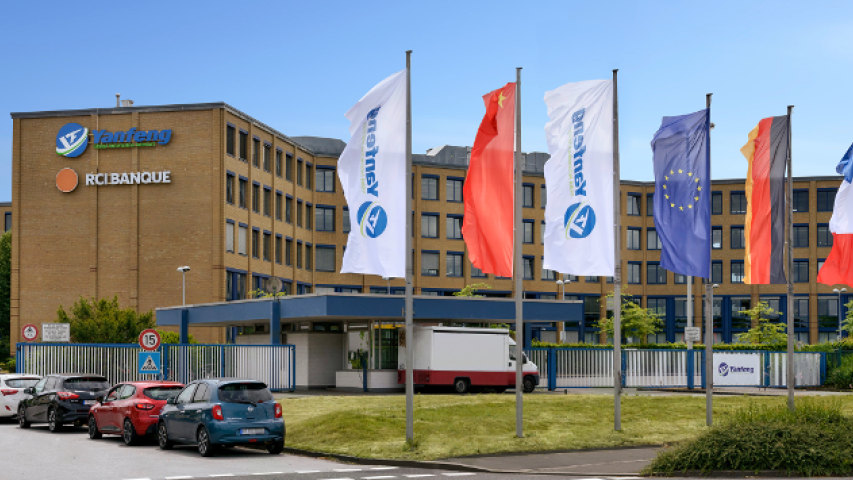
Under the pressure of the enterprising spirit of Chinese Tier 1 suppliers and the new energy trend, traditional European Tier 1 giants are simultaneously facing pressure from transformation investment, price competition, and organizational restructuring costs. Schaeffler, Bosch, Continental, ZF, and others are all in the same situation.
It is not that European Tier 1 giants cannot make electrified products, but that when profits from old products decline and new businesses have not yet reached sufficient scale, they face a gap period of increased investment and shrinking profits. Chinese parts companies thus gain a window to enter new customer systems.
Of course, during this window period, if the old system cannot reduce costs quickly, Chinese suppliers may still gain opportunities through development speed and localization capabilities even if their prices are not absolutely advantageous. Conversely, if overseas customers can still rely on mature supply chains and system advantages to control costs, the window opportunities for Chinese companies will narrow significantly.
However, when Bosch, Schaeffler, and ZF continue to reduce costs, the orders obtained by Chinese parts suppliers may not necessarily have ample profit margins. If local factory construction, staffing, and certification costs rise rapidly, entering the global customer system will not necessarily lead to improved profit margins. It can only be said that the shift in global influence within the auto parts industry offers an entry ticket and a window of opportunity—but not a guaranteed seat at the table.
At present, the overseas journey of Chinese parts companies is entering multiple levels. For example, CATL influences vehicle electrification routes through battery technology, resource chains, and manufacturing scale; Desay SV enters overseas local manufacturing through cockpit domain controllers and display products; Minth enters European factories through exterior parts, trim strips, and other products; Yanfeng relies on strong manufacturing businesses such as seats and interiors to enter markets such as South Africa.
Involving more forward-looking and higher-level cases, such as Horizon Robotics and neueHCT obtaining nominations for German global platforms, this means that Chinese chips, algorithms, and engineering services have begun to be incorporated into global vehicle development. The recent cooperation between Momenta and Uber, starting L4-level test rides and trial operations in Europe, has also gained an early advantage in intelligent driving.
These paths show that Chinese parts companies going global are no longer exporting a single link, but extending at multiple levels from underlying materials and cell manufacturing to automotive electronics, body exteriors, seats and interiors, and intelligent driving.
As China's automotive supply chain begins to establish entry paths around different technology levels and customer needs, risks also exist. For example, certification cycles, asset investment, and profit realization speed differ greatly across different levels. Treating chip nominations, parts exports, and overseas factory construction uniformly as the same kind of "globalization success" will only obscure the real capability gaps.
At present, according to data, China's auto parts exports are still growing rapidly, but export value can only prove the cross-border flow of products and cannot fully prove that companies have formed strong overseas delivery systems.
A revenue structure like Joyson Electronics' 72.7% overseas revenue share in 2025 also reveals another reality: a high overseas revenue share does not mean risks are naturally lower. The exchange rate, labor, compliance, regional demand, and geopolitical risks faced by multinational operations will not disappear because revenue figures are larger; instead, they will become more complex as local assets and personnel scale expand.
02 Risks of Diversified Models
From the perspective of overseas export models, the ways in which China's supply chain enters the global customer system are becoming more diversified, and this also places higher demands on the systematic capabilities of parts companies.
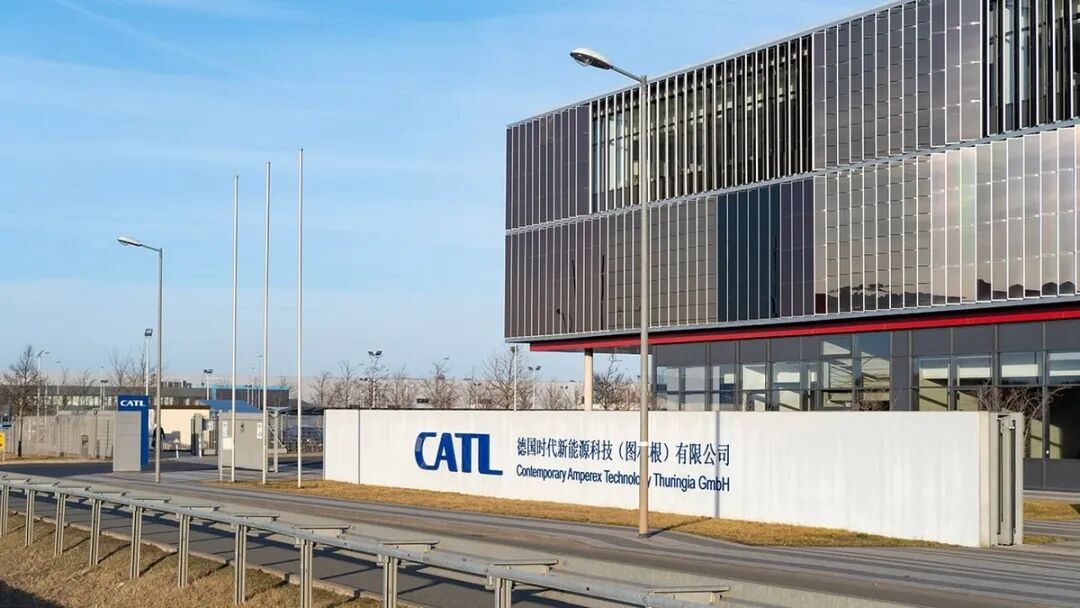
In the past, parts companies mainly followed Chinese automakers overseas; now they are serving overseas automakers through overseas factory construction, technology licensing, joint ventures and cooperation, and global platform nominations.
Take the four moves made overseas by the most representative battery giant CATL as an example; there are four completely different identities. First, the Arnstadt plant in Thuringia, Germany, is wholly owned. With an investment of about 1.8 billion euros, an initial planned capacity of 14GWh, and production starting at the end of 2022, it is CATL's first battery plant in Europe. The identity is owner: plant, equipment, employees, environmental permits—all its own.
In addition, the second plant in Debrecen, Hungary, is also wholly owned, only at a higher magnitude. With a total investment of 7.34 billion euros, planned capacity of 100GWh, and an area of 221 hectares, it is the largest single foreign direct investment in Hungary's history and the largest single manufacturing project implemented overseas by China's battery industry.
The Zaragoza plant in Spain is a joint venture. CATL and Stellantis each hold 50%, with a total investment of 4.038 billion euros, planned capacity of 50GWh, and planned production in early 2027, with products supplied specifically to Stellantis. CATL's identity has changed from owner to shareholder; decision-making power must be shared, and risks must also be shared.
The Ford battery plant in Michigan, USA, is technology licensing. On November 18, Ford Motor announced that the first batch of lithium iron phosphate (LFP) batteries developed for its affordable all-electric pickup Fathom had rolled off the line at the BlueOval Battery Park plant.
The value of this model is not only avoiding some capital and equity constraints, but also allowing Chinese battery capabilities to enter the U.S. manufacturing system in the form of patents, processes, and engineering services. However, this path sounds light but is heavy in practice: process introduction, personnel training, quality systems, intellectual property, and policy changes all require long-term attention. How much revenue and profit technology licensing can ultimately generate remains to be seen.
There is also a less-mentioned line: Indonesia. Of course, the challenges of CATL's Indonesian project also come from systematic capabilities. The total investment of US$5.9 billion covers nickel mines, smelting, materials, battery manufacturing, and recycling, so CATL extends from a battery supplier to a builder of the battery industry ecosystem. If all links connect smoothly, CATL can obtain project value from upstream resources to battery recycling.
However, the larger the project scale, the higher the coordination requirements for resource development, construction progress, customer orders, and funding pace, and the longer the construction and operating cycles that must be crossed. If upstream smelting capacity comes first while battery capacity or customer orders fail to keep pace, pressure on capital occupation and asset efficiency will rise. If the cell project comes first while materials and resources are stuck at bottlenecks, delivery will likewise be affected.
Four identities, four models. CATL's exploration of diversified models also offers many insights for Chinese parts companies.
Another example is neueHCT, the intelligent driving joint venture established by Horizon Robotics and Aumovio, which developed the HCT Luna high-performance front-view all-in-one machine based on the Journey 6B chip and obtained a nomination for a German automaker's global passenger vehicle platform project. The solution is planned for large-scale mass production in 2027 and will also target markets such as Australia, New Zealand, and India in addition to China, with expected shipments of millions of units over a three-year period.
However, the number of nominations can only prove how large a range of products and development platforms are covered, and cannot be directly equated with current revenue. After nomination, automakers will still conduct engineering development, quality validation, regulatory adaptation, and mass production preparation.
After all, the symbol of Chinese intelligent driving truly entering the global supply chain has never been nomination news, but stable mass production of solutions in different regions, different models, and different regulatory environments.

No matter what, technology output by companies such as CATL and Horizon Robotics will raise their own requirements for local services, regulatory capabilities, and organizational governance. When it involves software algorithms, chip toolchains, functional safety, and data compliance, deliverable capabilities must also be formed locally, and licensors must still bear continuous technical support and responsibility boundary management.
Simply transferring technology, therefore, does not guarantee that a solution will work locally over the long term. Unless Chinese companies embed software, toolchains, quality systems, and service teams into their customers' development processes at the same time, technology exports will struggle to translate into stable revenue. This is a point worth watching.
03 The Risks of Regionalization
As the overseas revenue of Chinese parts companies grows rapidly, one inevitable consequence is that overseas outposts are also multiplying.
Joyson Electronics, for example, operates more than 25 R&D centers and 60 production bases across Asia, Europe, and the Americas, with overseas revenue accounting for more than 70% in 2025. Yanfeng's official website states that it has more than 220 locations, about 60,000 employees, and 14 R&D centers worldwide, covering interiors, seats, cockpit electronics, passive safety, and exteriors.
Naturally, the more overseas outposts a company has, the more it must contend with labor systems, energy costs, tax arrangements, customer procurement rules, and supply chain maturity in different countries. As a result, Chinese parts companies going global are forming distinctly regional manufacturing footholds.
Specifically, the European market emphasizes compliance, R&D, and customer collaboration; the North American market attaches greater importance to origin, tariffs, customer relationships, and local manufacturing; and Southeast Asia simultaneously serves as a resource base and absorbs China's vehicle production capacity. A single production base can hardly cover the world anymore, and regional manufacturing networks are gradually becoming the basic configuration for entering the global supply chain.
Regional manufacturing can shorten logistics and response distances, but it also increases organizational and management complexity. If companies cannot effectively combine China's supply chain efficiency with overseas localization, the result will only be higher fixed costs.
Take Minth Group's Lillers plastic parts plant in France and Yanfeng's Roslyn seat plant in South Africa as examples. Overseas factories cannot be viewed merely as remote copies of Chinese production lines; they must also take on local customer collaboration, personnel training, and tier-2 supplier development. A factory is only the starting point of a regional supply chain; the real barrier is the ability to continuously organize local talent, materials, and quality systems.
Regional manufacturing may also create new concentration risks. After all, globalization is not merely a growth option but also a simultaneous test of capital efficiency, organizational capability, and customer judgment. If a parts company builds in Mexico, Southeast Asia, and Europe at the same time, for instance, it is easy to end up with capital expenditure coming first and orders coming later; once orders fall short, capacity sits idle.
One more point: Chinese supply chains going overseas should indeed adhere to long-termism, but long-termism does not equal unlimited expansion. Companies need confirmed "overseas revenue," a clear distinction between site selection, agreements, construction start, and mass production, and a realistic assessment of whether local tier-2 suppliers and talent systems can be established—all of these are factors that must be considered.
Whether overseas parts projects can survive tariffs, exchange rates, strikes, certifications, carbon footprints, and fluctuations in customer sales ultimately depends on whether the localization system can bear cost pressure before generating revenue. The core issue of overseas operations has shifted from "whether we have entered the local market" to "whether local assets can form long-term competitiveness," and profit and cash flow must be placed ahead of expansion speed.
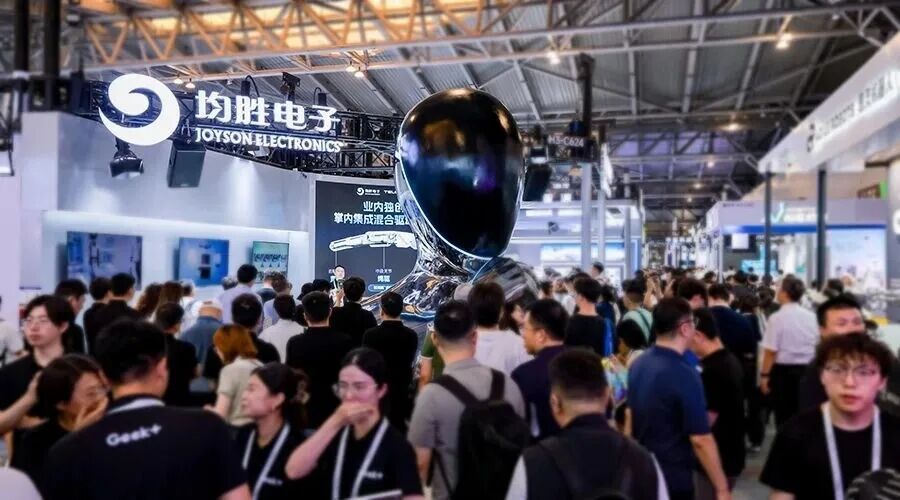
Joyson Electronics, for example, closed three plants in the Americas in 2025 and plans to complete the shutdown of the remaining two plants in Europe and the Americas and the transfer of core production lines in 2026, while advancing the expansion of its steering wheel plant in Morocco, which is expected to come into operation in 2026. Globalization, in other words, requires continuous additions and subtractions around customers, costs, and operational efficiency.
Globalization is also not a move that every parts company must make. According to industry insiders, companies with global customers, large-scale capital, mature products, and overseas management capabilities can build regional manufacturing and R&D networks. Smaller companies, or those with a lower degree of product standardization, are better suited to serving overseas customers through overseas warehouses, agents, and domestic exports.
Ultimately, what will truly determine over the next three to five years whether Chinese parts companies can remain in the global supply chain is not the investment amounts announced at press conferences, but whether overseas plants can ramp up stably, whether local talent systems and suppliers can continue to accumulate, whether global customers will keep buying over the long term, and whether companies can preserve profits amid compliance requirements, cost fluctuations, and trade barriers.
Editor in charge: Du Yuxin Editor: He Zengrong

THE END
-
![]()
Pony Ma Has Found the Right Direction: Betting Big to Buy AI's Future
-
![]()
Globalization of Auto Parts 2.0: It's No Longer About Competing on Price
-
![]()
Domesticating Flagship Models: The Traditional Luxury Brands' Last Resort?
-
Dual-Motor and LiDAR Tech Trickle Down: Is the ORA 7 at 140,000 Yuan a Good Deal or Not?
-
![]()
APEC's AI Highlights: How Will They Transform Shenzhen as a City?
-
![]()
What Is Leapmotor Really After? Q3 Revenue of 31.7 Billion Yuan, Yet Only 40 Million Yuan in Profit!
-
![]()
Himile Technology: Tire Mold Leader with Steady Revenue Growth and Over 2 Billion Yuan in Cumulative R&D Investment Over Five Years
-
![]()
WeRide's Q3 2026: Revenue up nearly 90%, gross margin 43%—Is Spring Finally Coming for L4 Companies?