WeRide Robotaxi Revenue Surpasses 100 Million Yuan
 11/24 2026
 424
Author: Li Xin
Editor: Wang Yimo
Overseas markets are driving business growth, yet the quarterly loss still stands at 310 million yuan.
WeRide's (00800.HK) Robotaxi business has crossed the 100 million yuan threshold in quarterly revenue.
On the evening of November 20, the company released its third-quarter financial report, showing revenue up 88% year-on-year and gross margin rising to 43%. On the other hand, however, net loss for the quarter still exceeded 300 million yuan.
At a stage where autonomous driving is accelerating commercialization, overseas markets have become an important source of revenue growth, and profit models are beginning to show new changes.
Overseas Markets Drive Growth
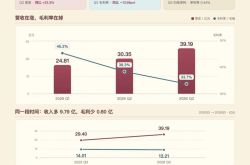
In the third quarter of 2026, WeRide achieved revenue of 321 million yuan, up 88.0% year-on-year and 38.8% quarter-on-quarter; gross profit was 138 million yuan, up about 145% year-on-year, with gross margin rising from 32.9% in the same period last year to 43.0%.
Of this, overseas business revenue reached 147 million yuan, up 171.5% year-on-year, accounting for 45.7% of total revenue—nearly half.
Even more noteworthy is the Robotaxi business. In the third quarter, revenue from this segment exceeded 100 million yuan for the first time, up 204.0% year-on-year, with more than 90% coming from overseas markets.
These figures reveal a shift: WeRide's Robotaxi business is moving from technology testing and demonstration operations into a stage of clearer commercial revenue.
As of the end of October, the company's global L4 autonomous driving fleet numbered about 4,100 vehicles, including more than 2,300 Robotaxis, up 26% from the previous quarter.
The Middle East market has become an important region for overseas expansion. WeRide's Robotaxi fleet operating in Abu Dhabi and Dubai has reached about 600 vehicles, up about 50% from the end of July.
The European market is also advancing. WeRide, together with Uber and AVOMO, obtained Spain's first national-level L4 autonomous passenger vehicle operating license, laying the foundation for Madrid's first Robotaxi commercial service, while also expanding business in Switzerland, Belgium, and France.
However, growth in overseas Robotaxi revenue cannot simply be understood as a simultaneous increase in fares paid by passengers.
WeRide's overseas model is closer to technology service export: the company provides autonomous driving technology and remote assistance, while local partners handle fleet investment and part of the operations.
This model reduces the company's capital needs for purchasing vehicles and building operating networks itself, and also makes business revenue no longer entirely dependent on per-ride fares.
In other words, what WeRide sells overseas is not only autonomous driving mobility services, but also the technological capability to keep a fleet running continuously.
Profitability Still Some Distance Away
Overseas business growth drove overall gross margin improvement, but WeRide still has a clear gap to company-level profitability.
In the third quarter, the company's net loss was 310 million yuan, compared with a loss of 307 million yuan in the same period last year—basically flat.
On a non-IFRS basis, adjusted net loss was 337 million yuan, compared with 276 million yuan in the same period last year, with the loss actually widening by about 22%.
Revenue grew 88%, but losses did not narrow significantly. The reason lies in the cost structure.
In the third quarter, the company's R&D expenses reached 465 million yuan, up about 47% year-on-year, equivalent to 145% of operating revenue in the same period. R&D expenses alone exceeded the quarter's gross profit of 138 million yuan.
This shows that even if some operating businesses have achieved relatively high gross margins, autonomous driving technology R&D, model training, testing and validation, and cross-regional deployment are still consuming large amounts of capital.
However, there is another easily overlooked change in the financial report. WeRide disclosed that Guangzhou Robotaxi operations achieved positive unit economics in the third quarter.
During the same period, Robotaxis in the Chinese market completed about 21 rides per vehicle per day on average, with a peak of 33 rides in a single day, and cumulative registered users increased by 143.5% from the end of the previous quarter.
This means that under existing operating conditions in Guangzhou, the company has preliminarily verified the possibility of per-vehicle revenue covering related operating costs.
But positive per-vehicle unit economics does not mean the entire Robotaxi business is profitable, nor does it mean the group has emerged from losses.
The key still lies in whether the per-vehicle economic model includes vehicle depreciation, remote management, insurance, R&D, and other indirect costs, and whether the same efficiency can be maintained after expanding operating areas.
As of the end of September, WeRide's cash and cash equivalents, time deposits, and other available liquid funds totaled about 4.663 billion yuan.
This provides a funding buffer for continued R&D and market expansion, but how to reduce the capital investment required for ongoing operations remains an unavoidable issue in the commercialization process.
A Tale of Two Models
WeRide is forming two different Robotaxi business models.
In the Chinese market, the company places more emphasis on the operating efficiency of its self-operated fleet, validating per-vehicle profitability by increasing the number of rides per vehicle, expanding service areas, and optimizing operating costs.
In overseas markets, the company relies more on partners to bear vehicle and operating investment, participating in market expansion through technology services and partnership revenue.
Both models have their advantages and correspond to different operating risks.
The self-operated model allows more direct control of operating data, customer experience, and business revenue, but requires bearing vehicle, personnel, insurance, and daily management costs.
The asset-light partnership model has the opportunity to increase expansion speed and capital efficiency, but the company's control over end pricing, fleet utilization, and customer operations may also be somewhat reduced.
This raises a question worth studying: in the future Robotaxi industry, what is the truly valuable asset—vehicles and operating networks, or the technology system that continuously provides autonomous driving capability?
WeRide has already begun trying to answer this question.
In addition to Robotaxi, the company also applies autonomous driving technology to mass-produced passenger vehicles. In the third quarter, the WRD 3.0 L2++/L3 solution added 10 mass-production design wins, with cumulative deliveries exceeding 100,000 units.
At the same time, revenue from its physical AI infrastructure business nearly doubled year-on-year, providing real-world data and training and validation services to embodied intelligence, robotics, and foundation model customers.
This means that the company's long-accumulated autonomous driving technology and data are extending to more application scenarios. But whether these businesses can generate stable profits still depends on product pricing, customer scale, and continuous delivery capability.
From the perspective of industry competition, companies such as Waymo and Pony.ai are also accelerating Robotaxi deployment. As operating areas expand, competition is shifting from whether autonomous driving technology can operate safely to unit operating costs, fleet dispatch efficiency, and commercialization speed.
For WeRide, the most important progress in the third quarter is not just Robotaxi revenue exceeding 100 million yuan, but the simultaneous emergence of positive per-vehicle economics in Guangzhou and growth in asset-light overseas revenue.
The former begins to verify whether Robotaxis can make money on their own, while the latter explores whether autonomous driving capability can continuously generate revenue without relying on owned fleets.
But neither model has yet fully proven its ability to achieve profitable scale.
What is truly worth watching in the future is whether per-vehicle revenue can continue to grow as vehicles increase; whether technology service revenue can continue to cover R&D costs as overseas business expands; and when overall operating cash flow will show substantive improvement.
Robotaxi is no longer just a contest of technological capability.
In the next stage, what will determine corporate competitiveness is who can operate more autonomous vehicles with less capital and obtain sustained returns from them.
This is the change more worth observing behind WeRide's third-quarter financial report.
-
![]()
Doubao Tests Shopping as a Primary Entry Point: Is AI Conversation Becoming the New Shelf?
-
![]()
Insta360 Q3 Financial Report: Revenue Surges to 3.9 Billion Yuan, Net Profit Plummets 93% to Just 17.43 Million Yuan
-
Global Investors Are Converging on AI Hardware
-
Is Charging Now Faster Than Refueling?
-
![]()
$10 Billion Entry: Who Is Pricing AI4S
-
![]()
Why Is ChatGPT Still Running Ads? | iAnalysys Insights
-
![]()
Anthropic's Trillion-Dollar Valuation
-
Optical Communications' "Fire and Ice": Amid NVIDIA Personnel Turmoil, Should We Panic or See the Big Picture Clearly?