Eight Years in the Making: World's First Mass-Produced Folding Steering Wheel Debuts in the Fang Cheng Bao Titanium 9
 11/25 2026
 574
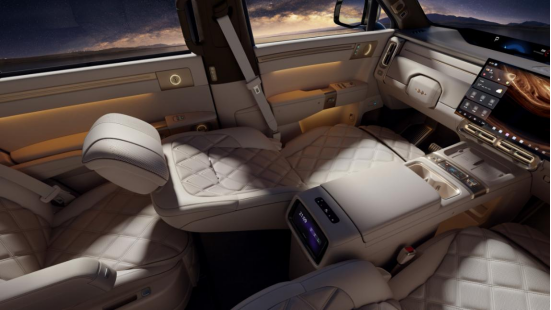
On November 19, the Fang Cheng Bao Titanium 9 was officially launched, with prices starting at 279,900 yuan. The range-topping Folding Smart Cabin Edition debuts BYD's folding smart cabin, marking the first time a folding steering wheel has made the leap from concept car to mass-produced vehicle—paving the way for the driving space of the future.

Mass-Production Debut: A Decade-Old Concept, Brought to Life by BYD
As early as 2016, the industry floated the idea of a folding steering wheel, but mechanical linkage constraints made mass production elusive for years. At the 2019 Shanghai Auto Show, BYD showcased a retractable steering wheel on the E-SEED GT concept car; once stowed into the dashboard, the space in front of the driver was completely freed up. In 2026, that vision finally reached mass-production reality on the Titanium 9—eight years in the making. The steering wheel is built on BYD's self-developed steer-by-wire system, supports folding from 0° to 180°, and completes the entire stowing process in about 10 seconds.
Safe and Reliable: 96,000 Tests Before Delivery to Customers
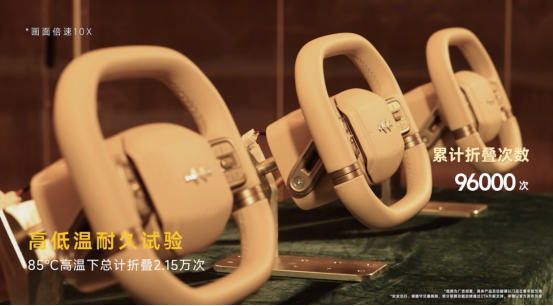
The folding mechanism of BYD's folding steering wheel has undergone a cumulative 96,000 durability tests, covering extreme temperatures from minus 30°C to 85°C, with a high-frequency start-stop service life of 80,000 cycles. The airbag has been validated for deployment in both folded and unfolded states, and the entire folding process is equipped with anti-pinch and foreign-object rebound protection. Around the folding smart cabin, BYD has filed a cumulative 272 patents and, for the first time in an automobile, equipped a high-precision motor of the same type used in embodied intelligent robots.
Verify first, then mass-produce—this is BYD's consistent rhythm. In 2013, the S6 DM prototype validated tank turns and emergency floating, and roughly a decade later these features landed on the Yangwang U8 with the e4 platform. At the first Di Fans conference in 2015, Wang Chuanfu proposed that "even if one wheel is removed, the car can still drive," and in May 2026, the Leopard 8 and Leopard 5 fast-charging editions debuted Yun Nian -P Ultra, officially bringing three-wheel driving into mass production. DM dual-mode, the lithium iron phosphate route, V2L external discharge, and megawatt fast charging all likewise went through a process from being questioned to becoming industry mainstream.
Legal and Compliant: New National Standard Takes Effect, Folding Permitted Only While Parked
On July 1, 2026, the mandatory national standard GB 17675—2025 "Basic Requirements for Automobile Steering Systems" officially took effect, deleting the wording that the steering system must maintain a mechanical connection—providing a regulatory basis for mass production of steer-by-wire. BYD is one of the drafting units of this standard. In terms of usage boundaries, the Titanium 9's folding steering wheel supports only parking and valet parking scenarios: it can be folded only after the vehicle is stationary and shifted into P gear, and cannot be folded while driving; the vehicle is permitted to drive only after the steering wheel is fully unfolded and locked.
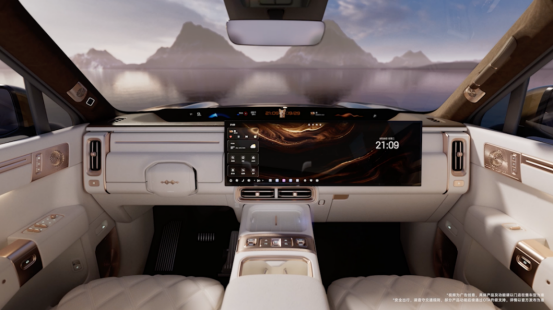
From the concept car on the 2019 show stand to the mass-produced configuration delivered to customers in 2026, the eight-year journey of the folding steering wheel mirrors the path traveled by DM dual-mode, e4, and Yun Nian : first questioned, then verified, and finally becoming the direction forward. In daily use, once the steering wheel is stowed, the driver gains about 25 centimeters of legroom, and together with seats that can recline to 165°, new possibilities emerge for resting at service areas, waiting while charging, and overnight camping. At the same time, the folding smart cabin serves as a technology reserve for L3 and L4 intelligent driving—it is today's driver rest cabin, and even more so the interface for the next generation of smart cabins.
-
Why Are Listed Companies' Financial Reports Starting to Take Douyin E-commerce's Business Logic Seriously?
-
AI Steps on the Gas: A 167-Year-Old Cold Case Finally Hears an Echo
-
![]()
Short Dramas: Big Tech's Q3 Earnings Scapegoat or Lifeline?
-
![]()
Coating Material Selection: Four Critical Gates — Contrast, Absorption, Stress, and Process Window
-
![]()
Maishi Optoelectronics Completes IPO Coaching Acceptance Inspection, Securing 2 Billion Yuan in Financing This Year
-
Second Financing Round of the Year! Chengfeng Technology Secures Tens of Millions of Yuan in B+ Round
-
![]()
Why Can't Hongguo Swallow Bilibili?
-
![]()
The Day After Jensen Huang's Return: The Fed Pours Cold Water on the Rally