Amid Industry Headwinds, Xiaomi Builds Strength for the Long Haul
 11/26 2026
 398
On November 24, Xiaomi Group released its financial results for the third quarter of 2026. On the surface, the numbers may not seem particularly impressive—but when viewed against what is arguably the toughest industry environment in history, the results are nothing short of remarkable. Following the market open in Hong Kong today, Xiaomi's share price climbed over 5%, and by the time of writing, gains had extended to nearly 8%.
Xiaomi's performance this quarter can be summed up in a single word: resilience. On one hand, its core businesses have stabilized; on the other, new ventures are beginning to show accelerating momentum.
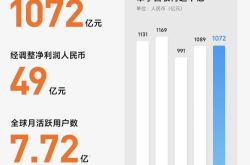
To break it down: Xiaomi's quarterly revenue reached RMB 107.2 billion, holding firm above the RMB 100 billion mark for two consecutive quarters, while the group's gross margin improved quarter-on-quarter. Smartphone revenue exceeded market expectations, with global market share rising quarter-on-quarter for three consecutive quarters and the global average selling price (ASP) jumping 39.8% year-on-year. The IoT business continued to improve its profitability, and internet services grew steadily, with monthly active users hitting a record high.
On the innovation front, the automotive business is scaling up at an accelerating pace, with the Pengcheng series even achieving growth against the broader downturn. With quarterly R&D investment of RMB 9.2 billion, meaningful progress has also been made in chips, large AI models, robotics, and other segments.
An industry winter is also a time for Xiaomi to bide its time and build strength. What keeps its "chassis" steady is the tangible payoff from its premiumization and globalization strategies—and as cutting-edge technologies move toward commercialization and the global reach of its human-car-home ecosystem expands, Xiaomi's room for imagination is only growing.
Weathering the Headwinds
When an industry is booming, companies compete on speed. But when it enters a downturn, keeping the core business intact is far more valuable.
Across Xiaomi's three main battlegrounds—smartphones, IoT and lifestyle products, and new energy vehicles—the industry at large is facing extremely difficult headwinds. The biggest culprits: weak domestic demand, rising costs, and increasingly cutthroat competition.
Take smartphones first. Global shipments fell roughly 20% year-on-year—the largest single-quarter decline on record. Meanwhile, memory prices had already risen two to three times from the start of the year by the third quarter, putting heavy pressure on manufacturers' margins.
Facing these twin pressures, Xiaomi stabilized its smartphone business by adjusting its operating strategy. Lu Weibing, President of Xiaomi Group, said on the earnings call that the core measures were to continuously optimize the product mix, proactively reduce shipments of low-end phones, and maintain channel health.
In the third quarter, Xiaomi's smartphone revenue grew 8.2% quarter-on-quarter, and gross margin rose 0.6 percentage points quarter-on-quarter, beating market expectations. In terms of shipments, Xiaomi has ranked among the global top three for 25 consecutive quarters, with global market share rising quarter-on-quarter for three straight quarters.
For IoT and lifestyle products, the keyword is recovery. Revenue this quarter was RMB 27.2 billion, with the year-on-year decline narrowing significantly for two consecutive quarters. Gross margin reached 21.7%, up 1.6 percentage points quarter-on-quarter, and key categories—including major appliances, tablets, laptops, and TVs—all posted year-on-year growth. According to Omdia, Xiaomi ranked second globally and domestically in wearable band and TWS earbud shipments, and fourth globally in tablet shipments.
Now turning to the automotive business: this year's domestic auto market has arguably hit rock bottom. Data from the China Automobile Dealers Association shows retail sales in the domestic passenger car market fell 24% year-on-year in the third quarter.
Amid the chill, Xiaomi's pure electric vehicles held the core base while extended-range models contributed incremental growth. This quarter, Xiaomi delivered a total of 100,975 vehicles. In October, deliveries exceeded 50,000 units—a new high for the year—and Xiaomi management is "very confident" that November and December will set new single-month records, meaning fourth-quarter deliveries will continue to climb.
Still, the road ahead is hardly rosy. Lu Weibing used the word "complex" multiple times on the earnings call to describe the situation, acknowledging that pressure factors will persist in the coming quarters—but he stressed that Xiaomi's response capacity is strengthening and that he is "fully confident" about controllability.
In this difficult environment, Xiaomi is still far from being able to "turn the tables," but when the industry emerges from the trough, Xiaomi may well be the first to reach an inflection point.
The Twin Engines of Defense
Beyond flexible responses, two deeper engines are supporting Xiaomi through the winter: premiumization and globalization.
A previous research report from CITIC Securities noted that from a long-term perspective, Xiaomi's valuation driver has shifted to brand power—a deeper moat. Management also revealed on the earnings call that Xiaomi's overseas expansion strategy is accelerating.
Whether it's the smartphone business, which has pursued premiumization for several years, or the automotive business, which established a mid-to-high-end route from its very first product, both have proven their quality as the industry tide recedes.
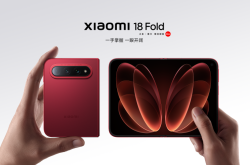
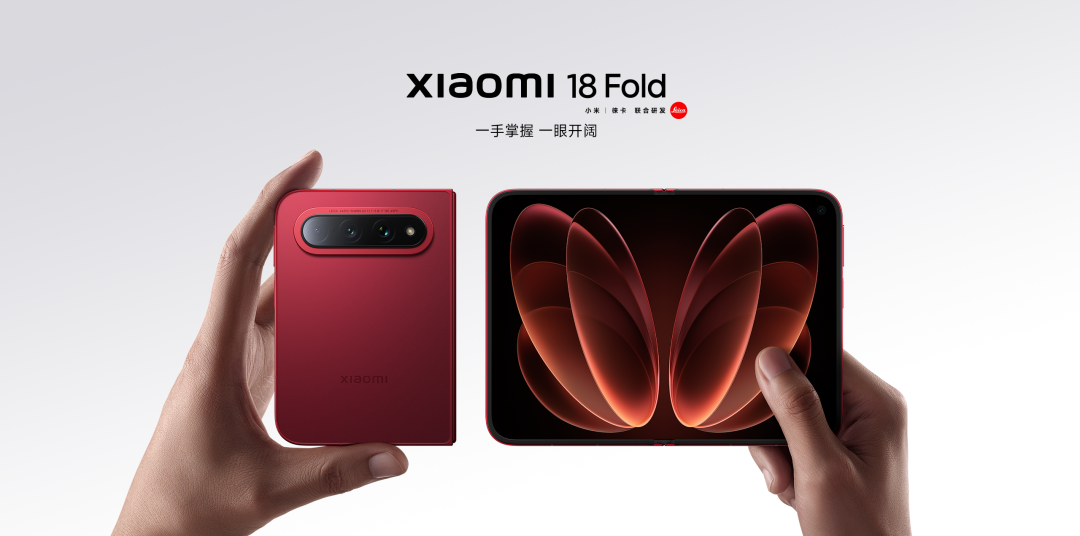
The most visible manifestation in smartphones: ASP rose nearly 40% year-on-year, and market share in higher price segments climbed steadily. In the domestic market, Xiaomi's sales share in the RMB 6,000-and-above smartphone segment increased 1.2 percentage points year-on-year. The foldable flagship Xiaomi 18Fold, launched in September with a starting price above RMB 10,000, achieved first-sale growth of over 310% compared with the previous generation of large foldables, forming a high-end product matrix alongside the Xiaomi 18 series.
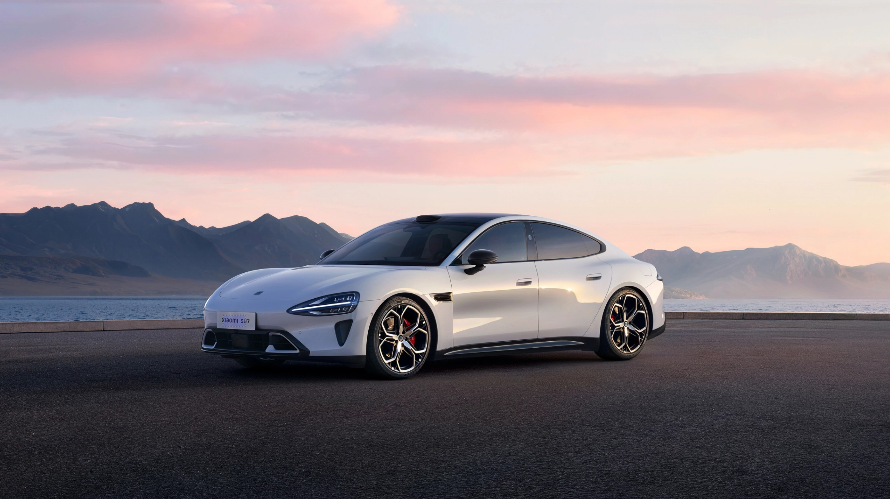
In the automotive business, the SU7 and YU7—more than three years and more than one year post-launch, respectively—remain vibrantly competitive, while the Pengcheng series has begun to pick up the baton. According to Dongchedi data, in October the Pengcheng N70, Xiaomi SU7, and Pengcheng N90 swept the top three in sales among models priced above RMB 200,000. The Pengcheng N70 took the top spot among extended-range vehicles and mid-to-large SUVs, while the Pengcheng N90 led all large SUVs regardless of powertrain type.
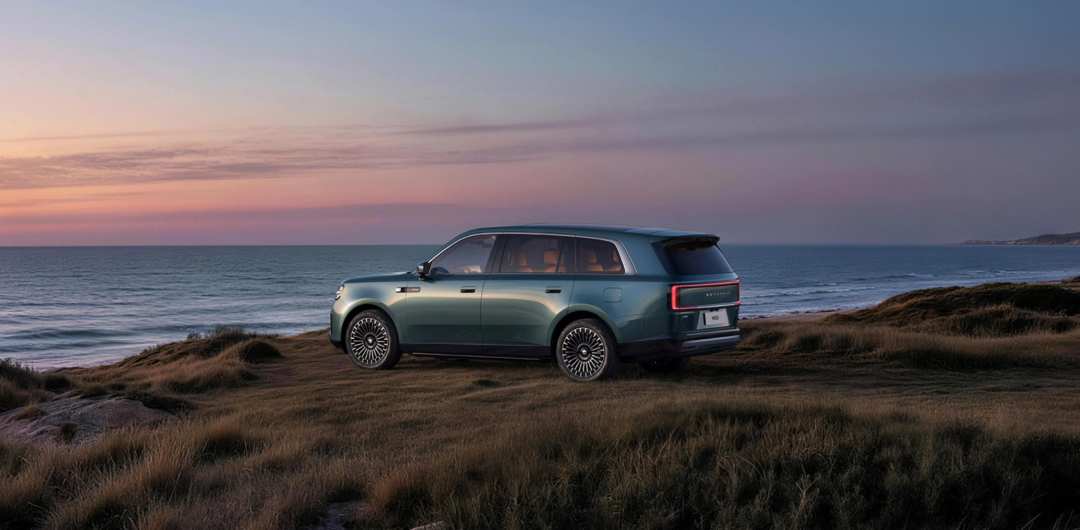
To some extent, this also reflects Xiaomi's disciplined, focused "hit product methodology." In October, all four of Xiaomi's main models delivered over 10,000 units each—demonstrating that the Pengcheng series is not cannibalizing Xiaomi's pure electric lineup but adding to it.
Lu Weibing believes the key to keeping automotive products vital is user net promoter score (NPS), which also underpins Xiaomi Auto's premiumization. According to JD Power, Xiaomi Auto ranks first in NPS among mainstream new energy vehicle brands. Data from the China Automobile Dealers Association also shows that the one-year value retention rates of the Xiaomi YU7 and SU7 have ranked first for four consecutive months among major pure electric models and pure electric sedans priced above RMB 200,000, respectively.
Compared with the domestic market, where demand is insufficient, overseas markets need to serve as the stabilizer and booster for Xiaomi as a whole. Xiaomi smartphones and IoT products have already taken root globally, with overseas revenue accounting for 49.1% of the "smartphone × AIoT" segment, and the automotive business's overseas expansion is fully prepared. Lu Weibing noted that in markets where smartphones perform well, Xiaomi's brand awareness has reached 98.9%—and even in the Nordic market it stands at 60–70%. In these markets, awareness of Xiaomi Auto has reached over 40%, which he called "surprising."
Xiaomi's global smartphone market share has risen quarter-on-quarter for three consecutive quarters, driven by leading positions in key regions: second in Southeast Asia, Latin America, and the Middle East; third in Europe and Africa. Its smartphone shipments rank in the top three in 55 countries and regions globally and in the top five in 67.
In September, Xiaomi appeared at IFA for the first time as an exhibitor—its largest overseas concentrated display of the human-car-home full ecosystem, including the Mijia brand officially entering the European market at scale. Lu Weibing said on the earnings call that many auto dealers proactively approached Xiaomi seeking cooperation, even spending €100,000–200,000 of their own money on user research. Xiaomi has already signed with 8 leading German dealers—"the locations and store images are excellent"—and will enter the European market in the second half of 2027.
This is a path that is difficult first and easier later—and a continuation of Xiaomi Auto's premiumization strategy. Entering the toughest European market first will help Xiaomi Auto expand more smoothly into other overseas regions.
Securing a Position on the New Battlefield
Defending the core business is about ensuring Xiaomi does not retreat against the current. But the offensive in cutting-edge fields—chips, large AI models, and embodied intelligence—is the source of Xiaomi's competitive drive and greater room for imagination in the next stage. It also ensures Xiaomi secures a more forward position on the new battlefield of the AI era.
Xiaomi Group CFO Lin Shiwei said Xiaomi's investment in AI is "very resolute," with RMB 16 billion slated for AI this year.
First, this represents the completion and reinforcement of "infrastructure." Xiaomi has now assembled the pieces—computing power, models, and the OS brain. What AI brings is not just single-point efficiency gains but the growth potential to connect all four segments: smartphones, IoT, automotive, and robotics.
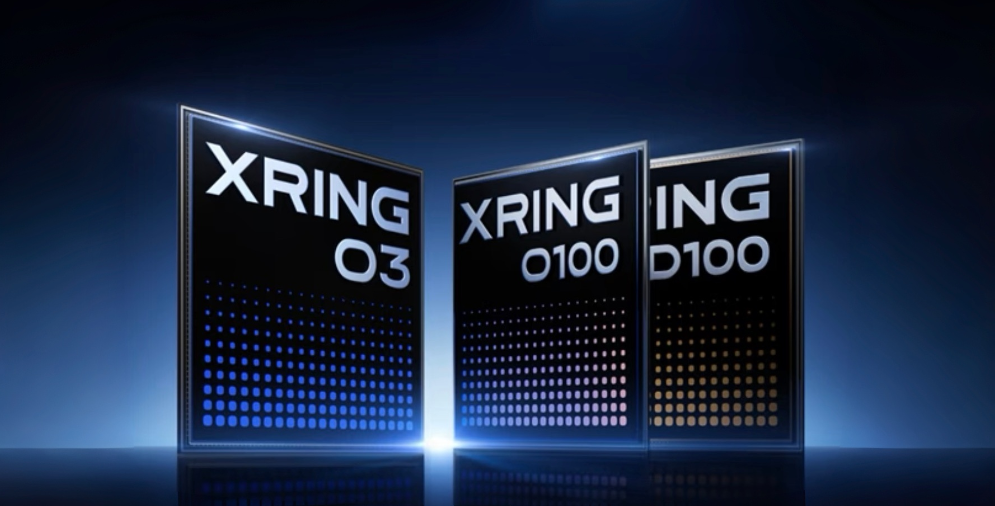
The three major chips—Xuanjie O3, Xuanjie O100, and Xuanjie D100—cover the on-device AI computing power needs of the human-car-home full ecosystem, forming Xiaomi's AI computing foundation. The Xiaomi 18 Fold is precisely the first "meeting" of Xuanjie O3, HyperOS 4, and the MiMo large model, and the other two chips will also be officially commercialized next year.
The MiMo large model has also performed outstandingly since its release—especially in balancing intelligence and cost. According to the Artificial Analysis comprehensive intelligence index and single-task cost data from September, the single-task cost of MiMo-V2.6-Pro is only about 1/20 to 1/60 that of overseas models.
Second, although Xiaomi AI remains in a period of large-scale investment, it has gradually crossed from the laboratory stage into a commercialization rhythm—meaning it has begun to transform into direct productivity.
Take the MiMo large model: it has already been integrated as underlying infrastructure into the human-car-home full ecosystem, including deep integration into Super Xiao Ai 2.0, giving it complex task orchestration capabilities across applications and devices. In Xiaomi cars, it supports intelligent driving and intelligent cockpits, and endows smart homes with further proactive intelligence.
Lei Jun recently mentioned at APEC that the industrial space and imagination of embodied intelligence in the future will exceed that of automobiles. After six years of layout, Xiaomi Robotics has also begun preliminary verification in industrial and home scenarios—for example, first conducting 8-hour long-duration operations in automotive engineering adjustments—while Xiaomi's embodied foundation model has also begun trial operation in Xiaomi Youth Apartments.
The human-car-home full ecosystem has always been Xiaomi's greatest moat. At present, the number of connected devices on the AIoT platform has exceeded 1.2 billion for the first time, and total automotive deliveries are approaching one million units. With the empowerment of AI and globalization, this barrier is still thickening—and has the potential to unleash even greater momentum.
The overall environment remains difficult, but the wind direction for Xiaomi has already quietly changed. This is first reflected in the unanimous bullishness of domestic and international institutions. CITIC Securities, Bank of America, Daiwa, and Citi have all given buy ratings, while Barclays and Morgan Stanley have given overweight ratings, with target prices concentrated around HK$33–35—implying roughly 30% upside from the current share price.
It should be noted that this expectation is more about a turnaround from distress. As Xiaomi's premiumization strategy deepens, the influence of its human-car-home ecosystem extends globally, and its AI foundation gradually takes shape, its true value space will also come to the fore—an AI technology company that simultaneously owns the world's largest consumer AIoT platform and the most complete scenario entry points. By then, Xiaomi may once again embark on a brand-new growth cycle.
-
Four Motors and 850 Horsepower—The BMW All-Electric M3's Specs Would Only Earn a Passing Grade in China
-
![]()
Waveguide Wafers: Flatter Isn't Always Better — The Engineering Judgment Behind the "Good-Enough Line"
-
![]()
From Chat Assistants to Proactive Agents: ByteDance and Tencent Take Opposite Sides Again
-
![]()
Breaking Down Xiaomi's Q3 Report: Higher Phone Prices, So Where Did the Profit Go?
-
Does Xiaomi Need to Make a Bold Bet?
-
![]()
Xiaomi Searches for a "New Rhythm"
-
After Running 11,307 AI Shopping Tests, I Found That the Profit Logic of Consumer Brands Has Changed
-
![]()
Amid Industry Headwinds, Xiaomi Builds Strength for the Long Haul