The Imaging Industry is Being Revolutionized! DJI/Insta360/Hohem Steal the Spotlight at IFA, Pushing Canon and Sony to the Periphery?
 09/10 2026
 545
545
The Global Imaging Industry Steps into the 'China Era'.

On September 8, the IFA 2026 in Berlin, Germany, reached its climax. As one of the world's top three consumer electronics expositions, this year's IFA has brought together over 1,900 exhibitors from 49 countries and regions since its opening on the 4th, and is anticipated to draw more than 220,000 visitors from around the globe. The 'Leitech IFA 2026 Reporting Team' is on-site in Berlin, delivering live, in-depth, and firsthand coverage of the event.
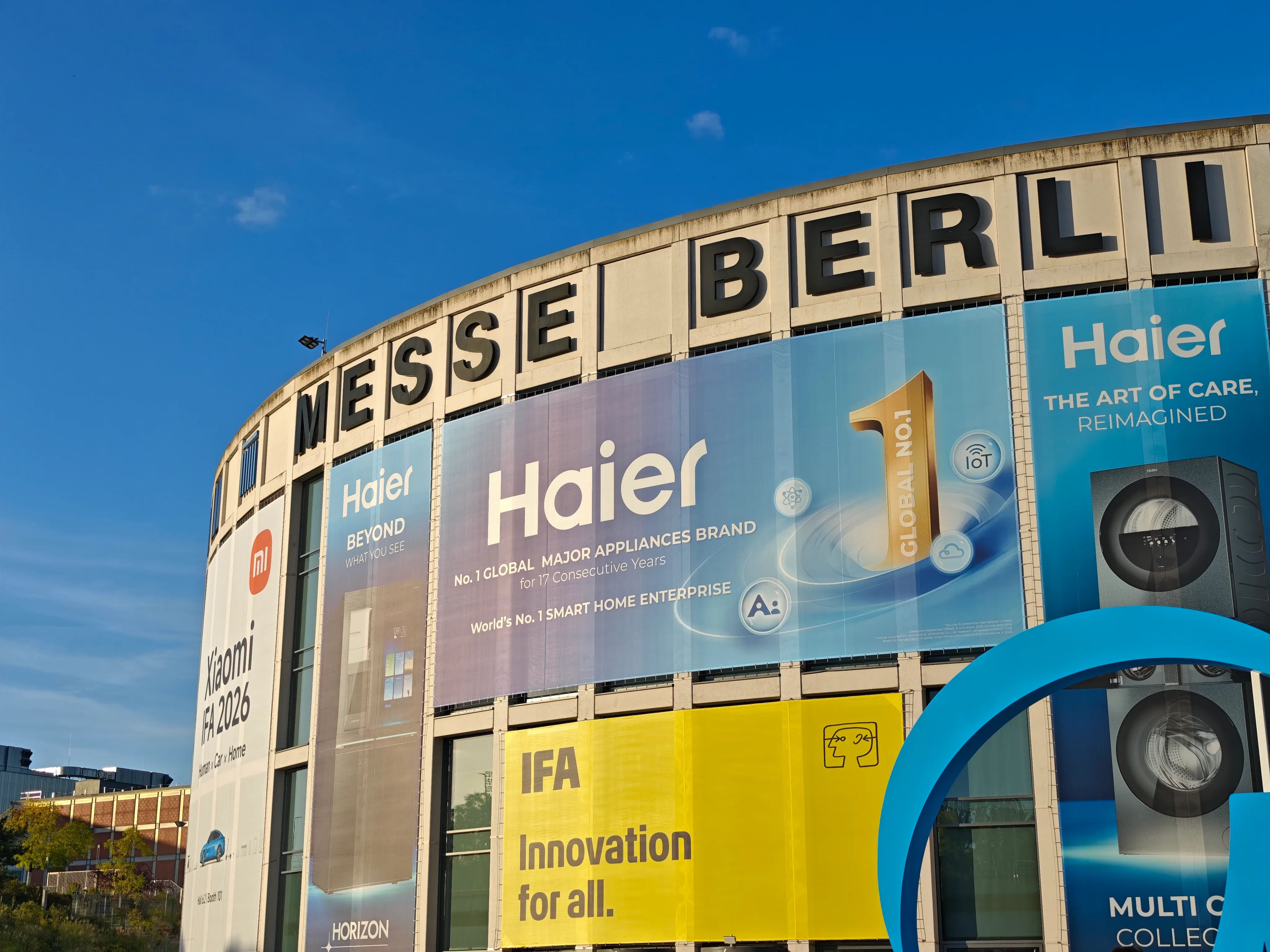
(Image Source: On-site Coverage by Leitech IFA Reporting Team)
Traditionally, it's challenging to link an event centered around 'home appliances' with imaging. However, this year's IFA is clearly breaking the mold: DJI has emerged as the star attraction, with Hohem, Insta360, Hover, and others making significant strides, while numerous domestic and international imaging peripheral manufacturers have congregated in Hall H20. This is not surprising—IFA is reinforcing its identity as a consumer electronics expo, vying for attention with CES, and imaging, as one of the most innovative sectors in consumer electronics, has naturally become a major highlight at IFA.
Traditional cameras have been overshadowed by smartphones, but as the saying goes, 'when one giant falls, many rise.' Mobile imaging has given rise to numerous new categories, increasingly shifting from professional users to the general public.
Creator Hardware Takes Center Stage: All the Gear Influencers Need is at IFA
This year, IFA has dedicated a Content Creation zone, with officials stating that the area has expanded by 70% compared to last year and spans two halls for the first time. This aligns with Leitech's earlier prediction: the rise of self-media, short videos, and live streaming has fueled a 'creator hardware' boom, with imaging, audio, and storage accessories reaping the benefits—and they continue to do so.
(Image Source: On-site Coverage by Leitech IFA Reporting Team)
Why the sudden emphasis on imaging? IFA officials put it this way: 'The creator community has long been a vital part of the tech and entertainment industries.' In simpler terms: more users are shooting videos, live streaming, and creating content than ever before—so many that IFA had to allocate an entire dedicated space for them.
This year's exhibition also features several newcomers: Western Digital (storage), Godox (lighting), Neewer (lighting), Amaran (lighting), Potensic (drones), and Hover Air (drones). Alongside returning exhibitors like DJI, Insta360, Sigma, Lexar, and xTool, a pattern emerges: every link in the content creation supply chain is represented here. Content creation has evolved from a 'niche hobby' into a full-fledged industry.
Insta360 No Longer Monopolizes the Spotlight, While DJI Remains a Major Draw—Even Without New Products
The busiest spot in the imaging hall this year was undoubtedly the booths of DJI and Insta360. As the two titans in smart imaging, their products have set industry benchmarks.
Let's start with DJI. While it didn't unveil any new products at this IFA—most of what's on display is already available in China—that didn't stop its booth from being one of the most crowded at the venue.
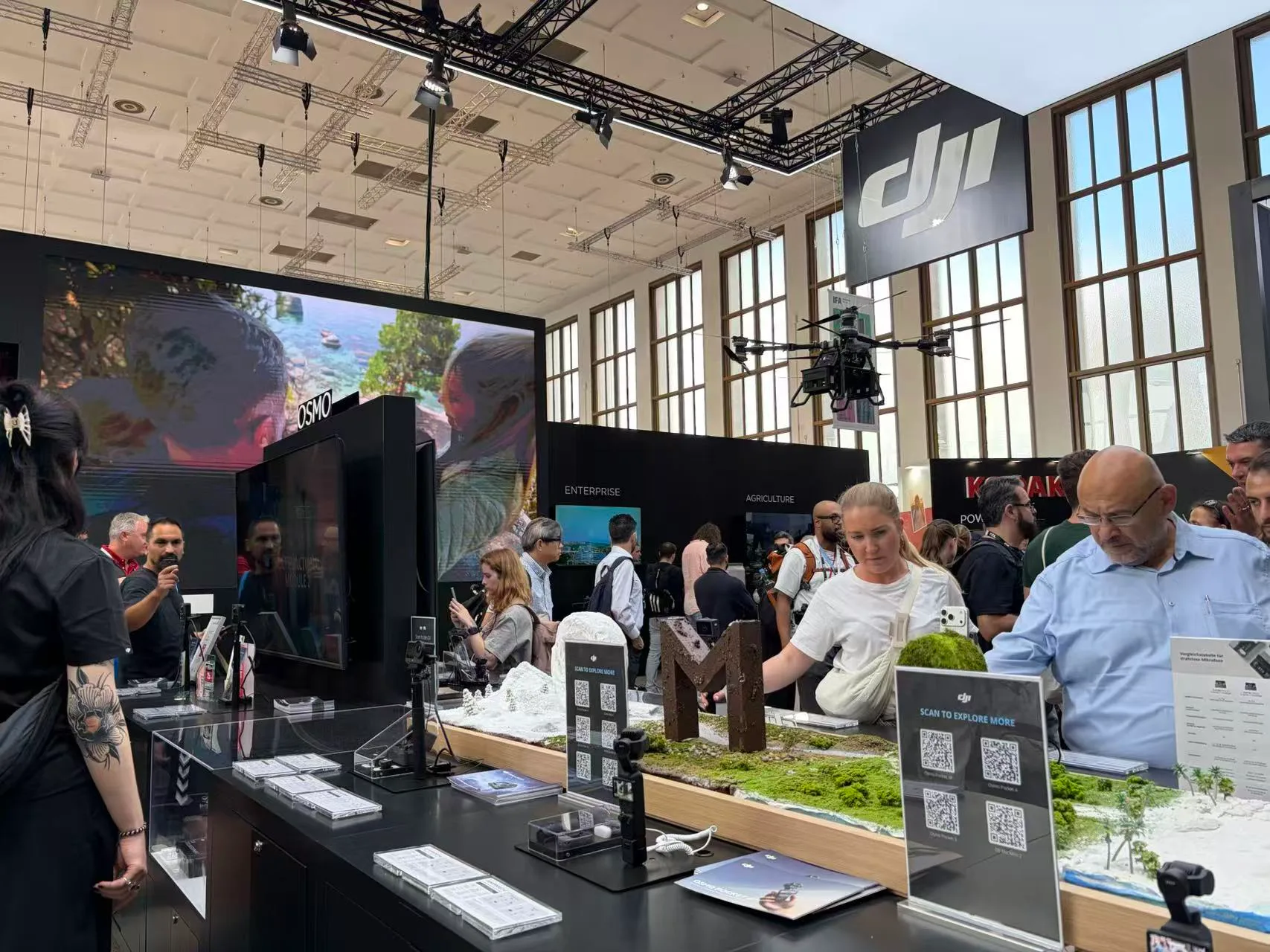
(Image Source: On-site Coverage by Leitech IFA Reporting Team)
Focusing on the products, DJI showcased the Osmo 360 II, its flagship panoramic camera. Officially described as 'the culmination of 12 years of handheld imaging expertise,' it captures a full 360-degree scene with a single sweep, allowing users to crop and reframe shots later as desired.
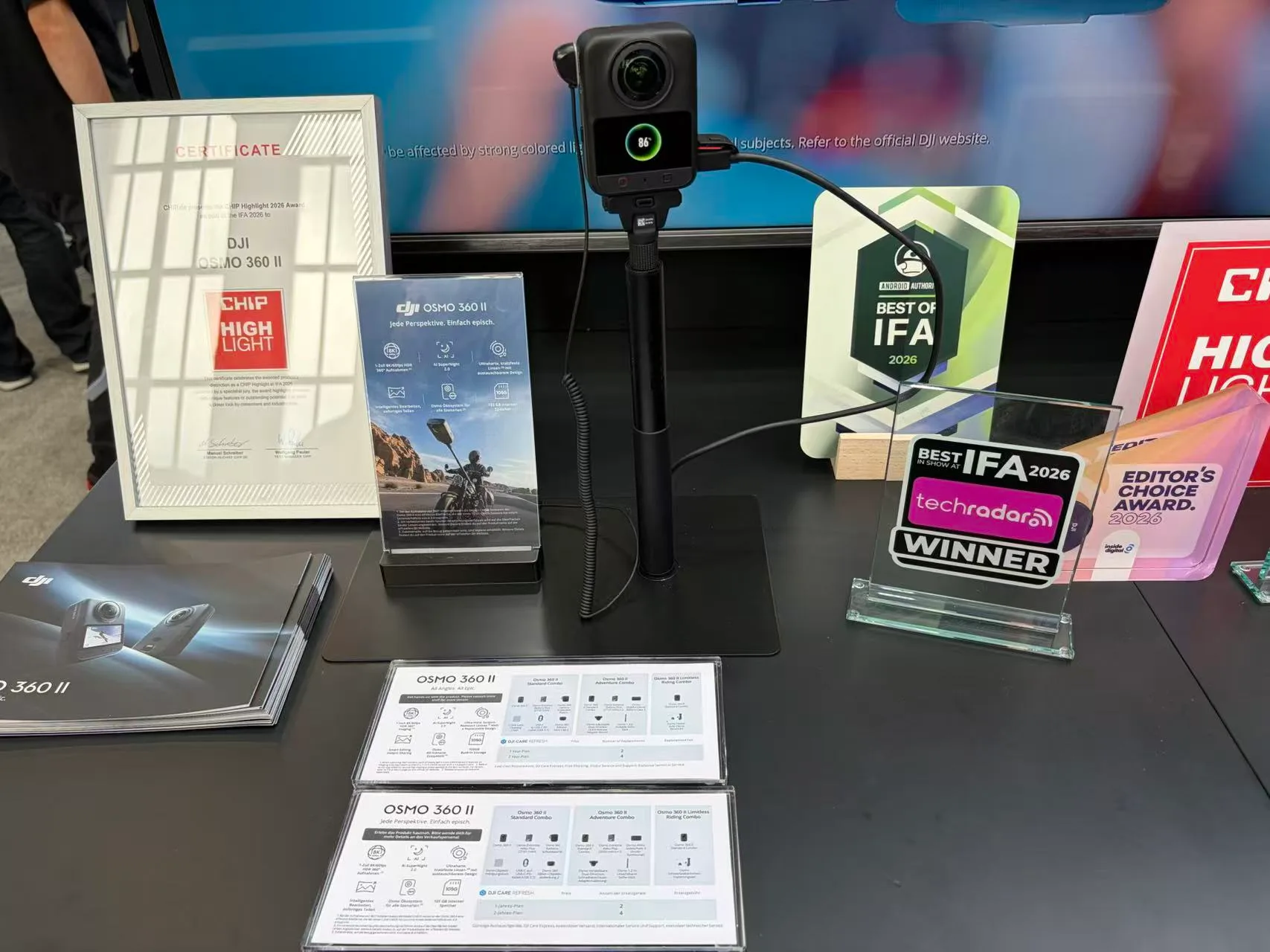
(Image Source: On-site Coverage by Leitech IFA Reporting Team)
Also on display was the newly launched Mic 3, which supports four simultaneous audio tracks—perfect for capturing multiple speakers without crosstalk—and offers 32-bit float dual-file recording, essentially storing two versions of every take for backup in case of clipping. Its transmission capabilities are equally impressive, with an official range of 400 meters and strong interference resistance, maintaining stability even in venues with hundreds of wireless devices. There's also the ultra-portable Mic Mini 2S, weighing just 7.7 grams and barely noticeable when clipped to clothing.
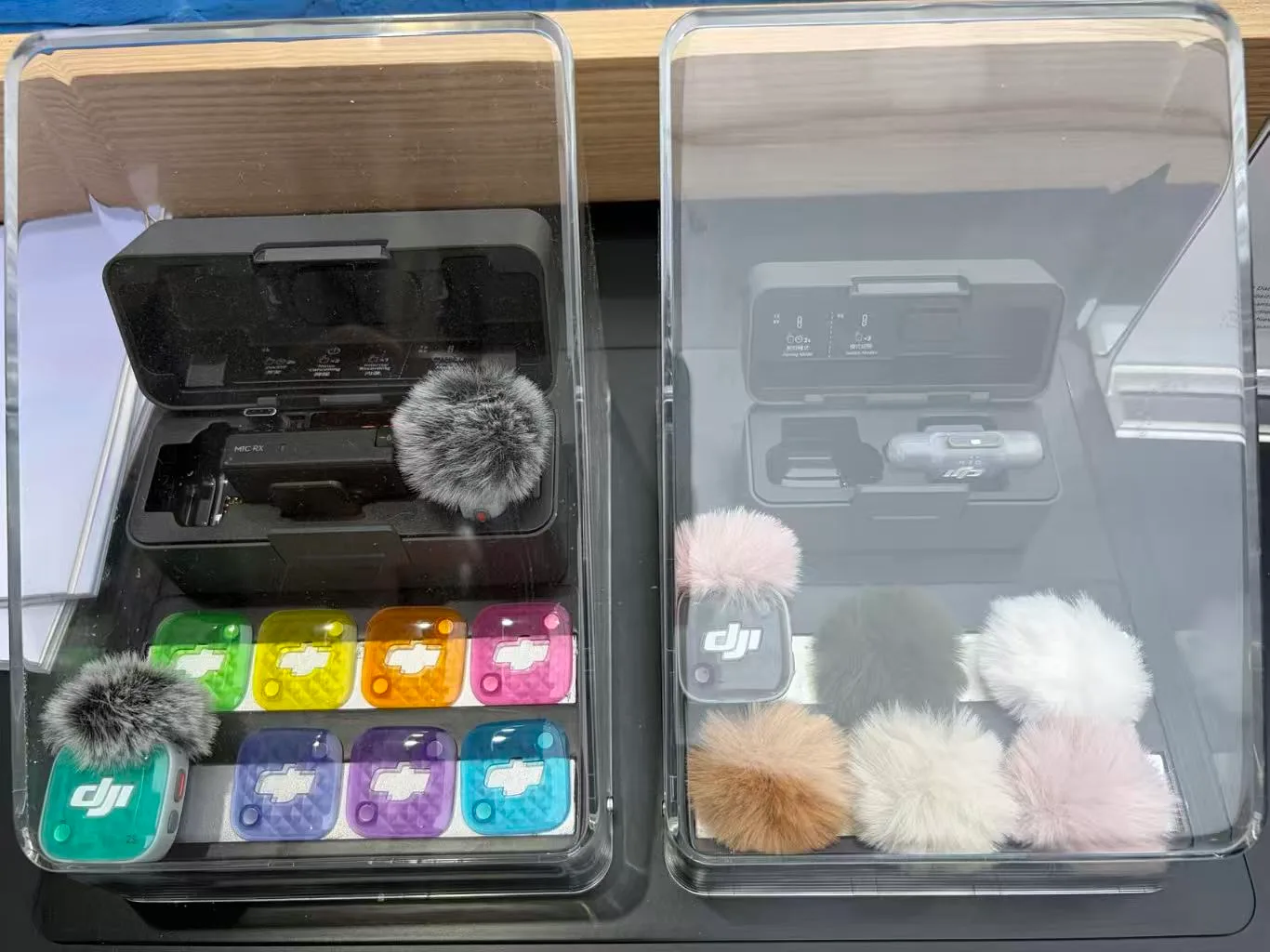
(Image Source: On-site Coverage by Leitech IFA Reporting Team)
In my view, DJI's ability to draw such large crowds stems from its unmatched 'ecosystem' and product breadth. From aerial drones to pocket cameras, gimbals to microphones, consumer-grade to professional equipment, DJI covers nearly every segment of the 'imaging' spectrum.
Insta360, a frequent contender to DJI in recent years, also drew strong crowds at its IFA booth—though still slightly less than DJI, and without the explosive popularity it enjoyed at CES (for obvious reasons: DJI doesn't exhibit at CES, making it Insta360's solo show). This dynamic reflects the broader North American imaging market, but we'll leave it at that.
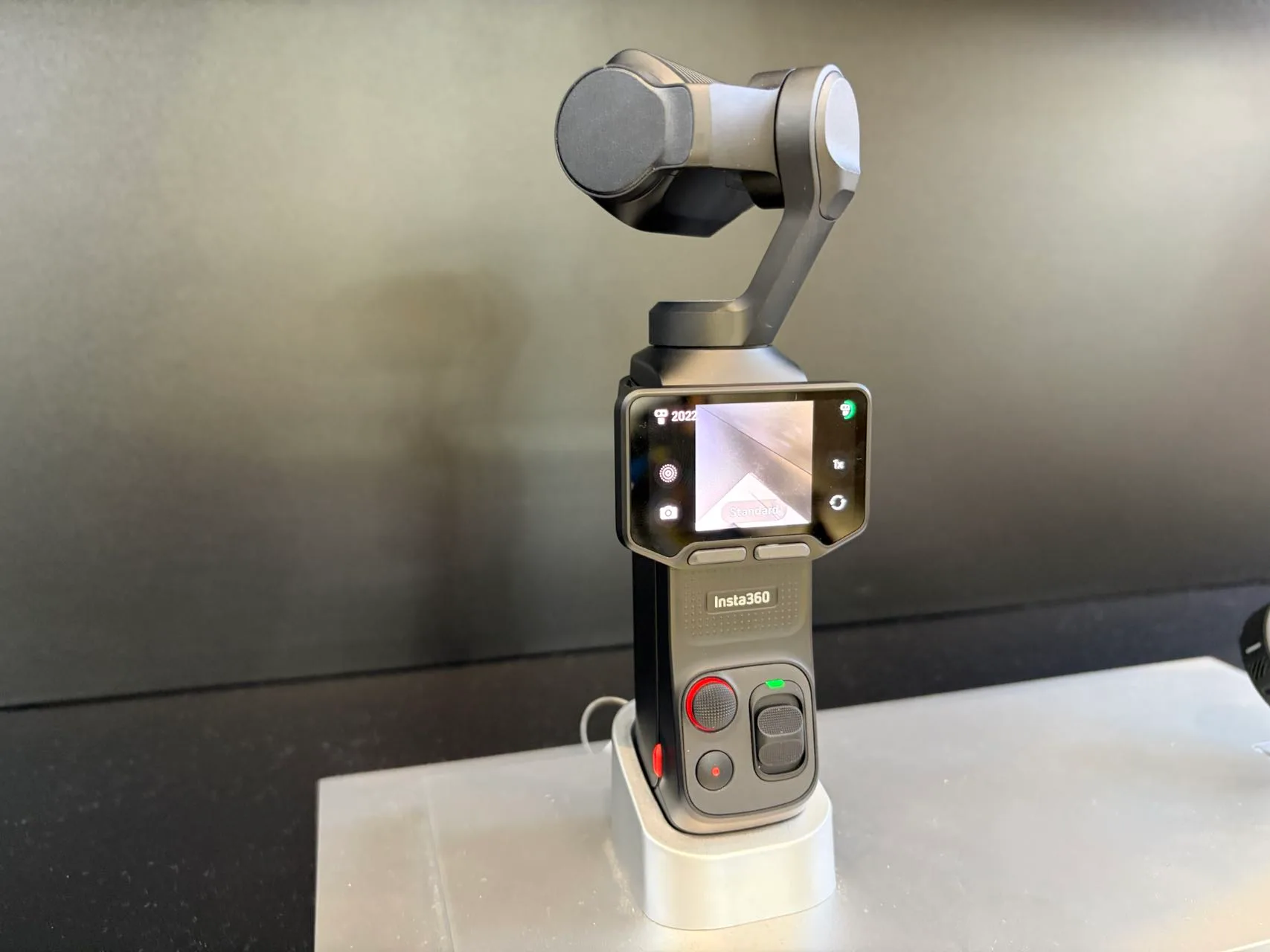
On display, Insta360 featured its newly released panoramic camera X6 and gimbal camera Luna Ultra. The X6, another panoramic model, boasts dual 1-inch Sony sensors and 8K50fps recording. The real game-changer, however, is the Luna Ultra, touted as the world's first 8K Dolby Vision gimbal camera. Since its domestic launch, it has frequently sold out, proving sustained demand for gimbal cameras—I've even heard it triggered lineups in Japan.
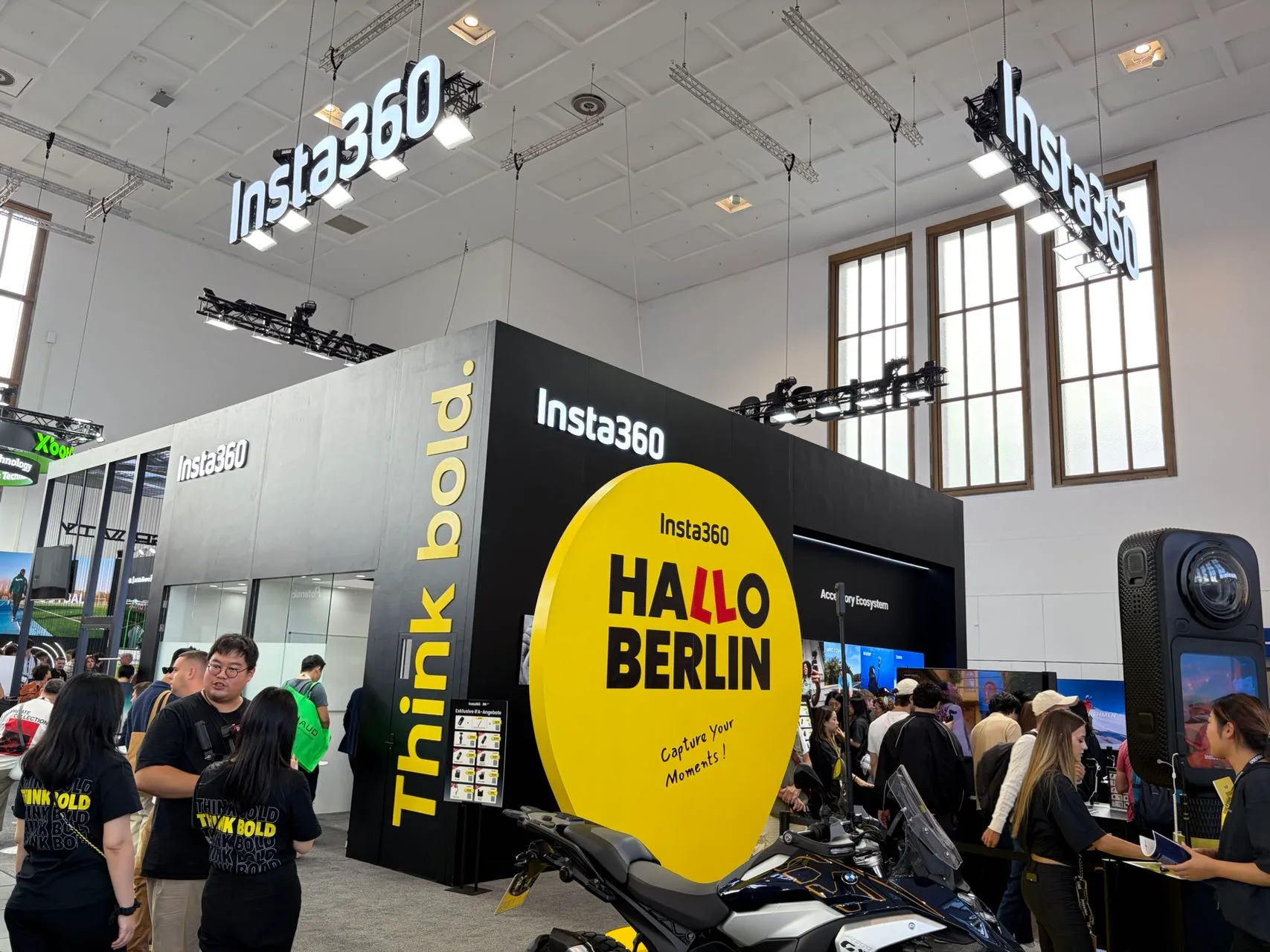
(Image Source: On-site Coverage by Leitech IFA Reporting Team)
According to IDC data, Insta360 held a 71% share of the global panoramic camera market in Q1 2026—meaning seven out of every ten panoramic cameras sold worldwide are Insta360 products. Nearly 70% of its revenue comes from overseas, with a global user base exceeding ten million. This year, it won four IFA Innovation Awards, with the Luna Ultra taking home the top 'Best of Tech' prize. To date, Insta360 is arguably DJI's most formidable competitor.
(Image Source: On-site Coverage by Leitech IFA Reporting Team)
Regardless of the outcome between DJI and Insta360, IFA makes one thing clear: both companies aim to lower the barriers for everyday users to create professional-grade content, a key reason behind the smart imaging boom in recent years.
Hohem Defends Its Gimbal Stronghold While Marching into Imaging's Core
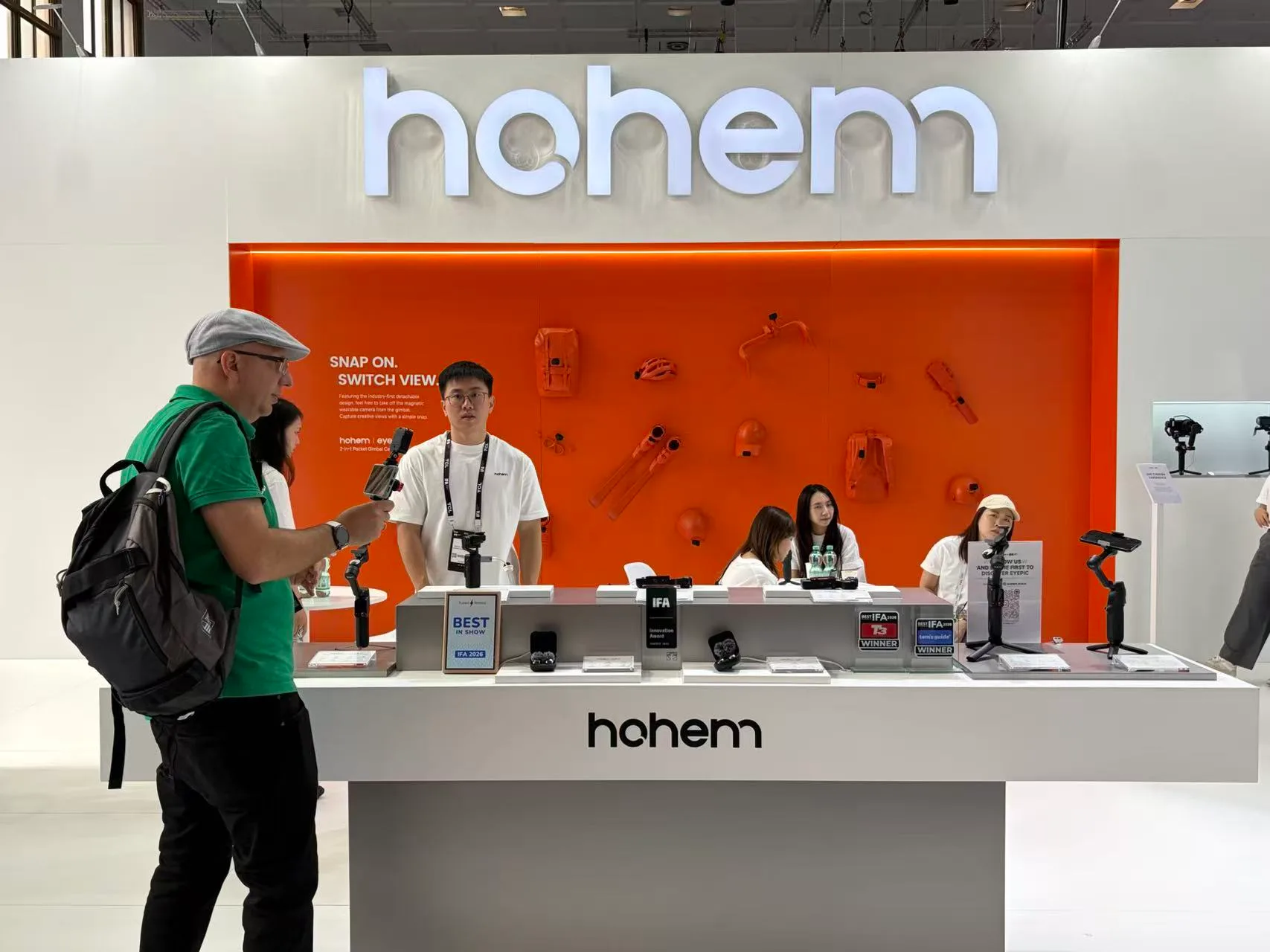
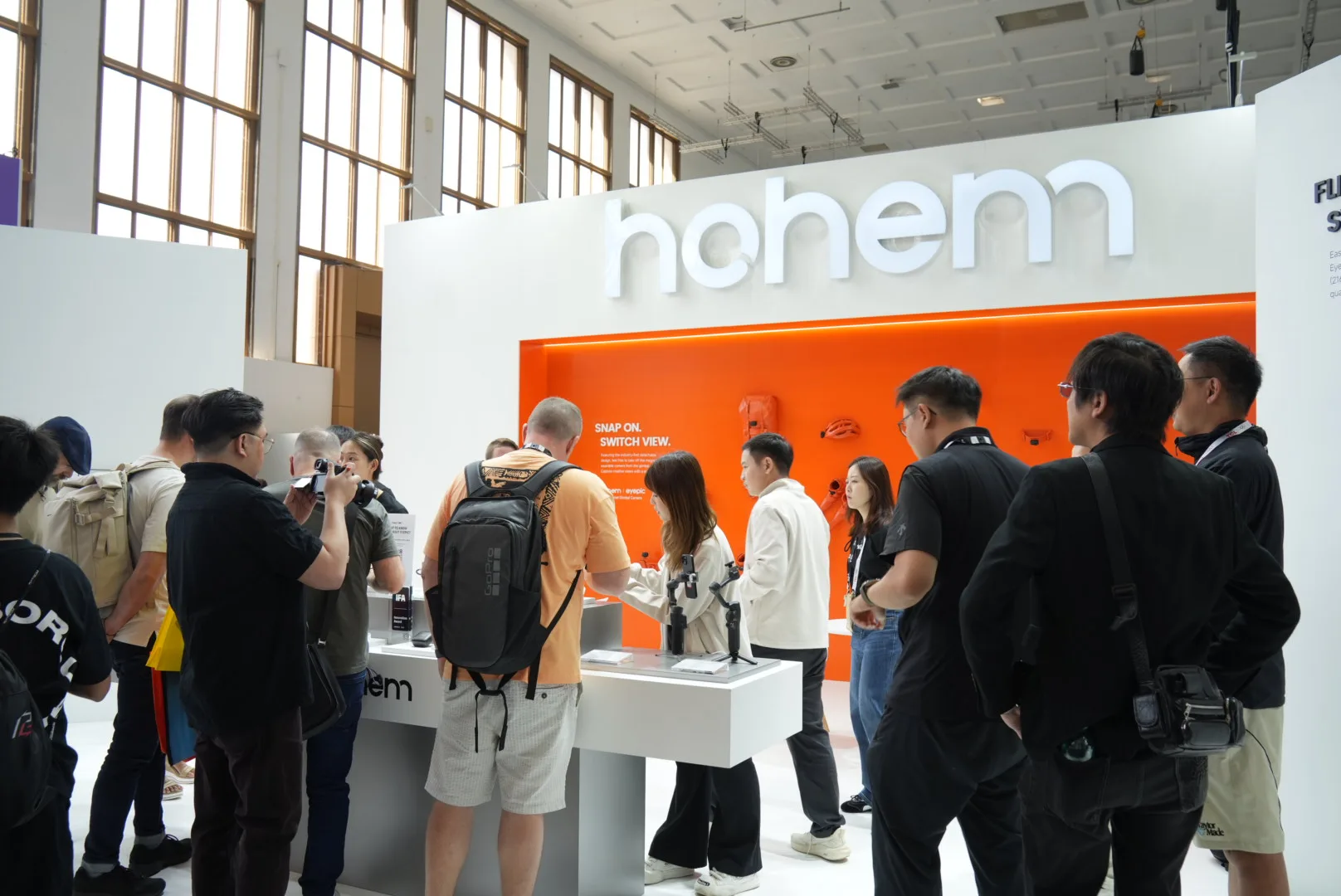
Our old friend Hohem is the global leader in handheld gimbals, with products sold in over 70 countries and more than five million users, giving it significant influence in the gimbal market.
(Image Source: On-site Coverage by Leitech IFA Reporting Team)
This year, Hohem showcased the X4 AI Tracking Phone Gimbal, V4 Ultra Flagship AI Live Streaming Phone Stabilizer, and Mic 2 Wireless Microphone. The X4 supports direct Apple DockKit connectivity and on-body touch controls, prioritizing portability for mobile tracking while being compatible with Android, iOS, and HarmonyOS devices. The V4 Ultra further enhances AI tracking, live monitoring, and remote operation, also supporting DockKit. The Mic 2 fills gaps in long-distance wireless transmission, AI noise reduction, and high-spec recording. Together, these products cover imaging hosts, smartphone stabilization, intelligent tracking, and audio capture.
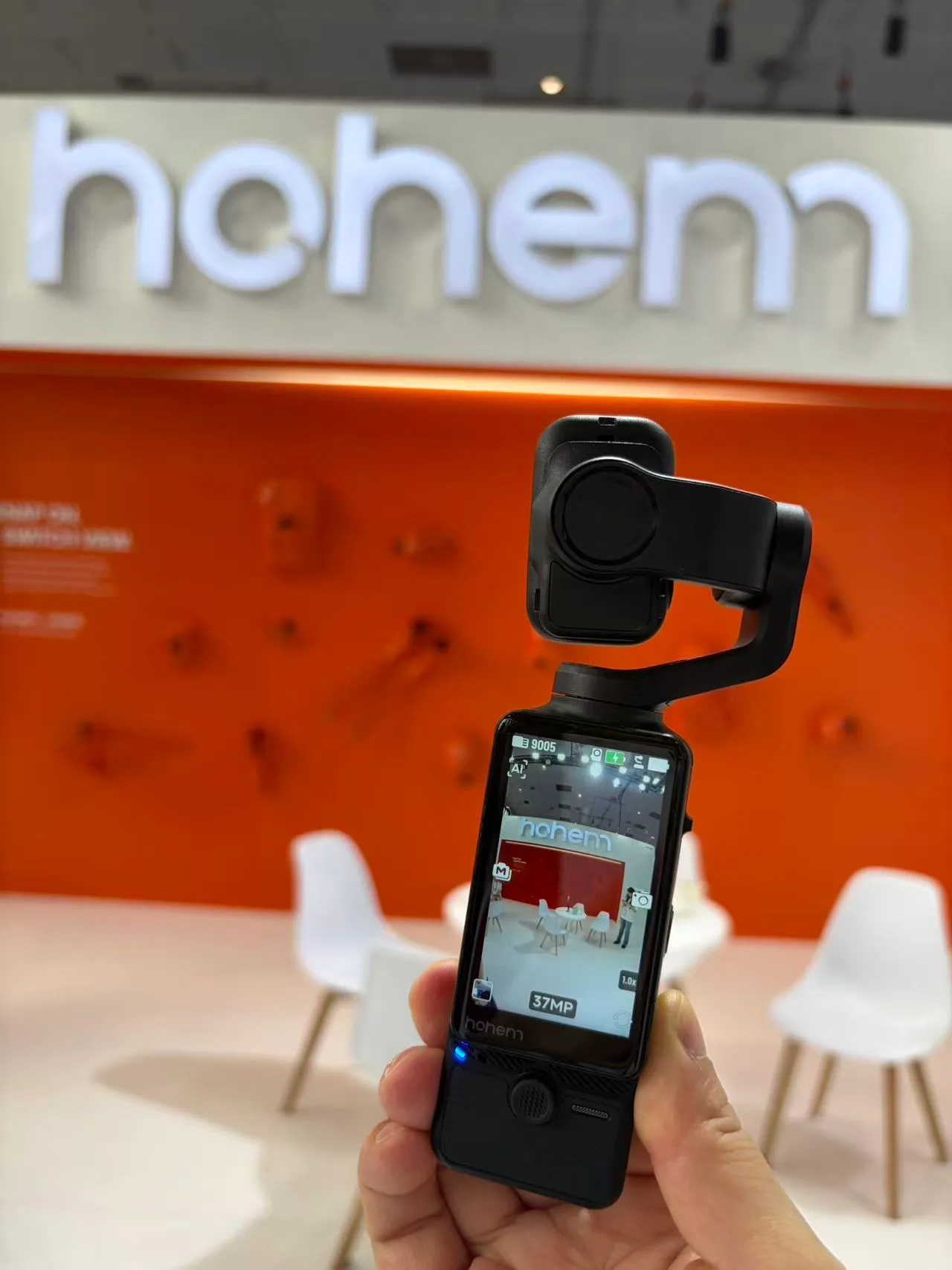
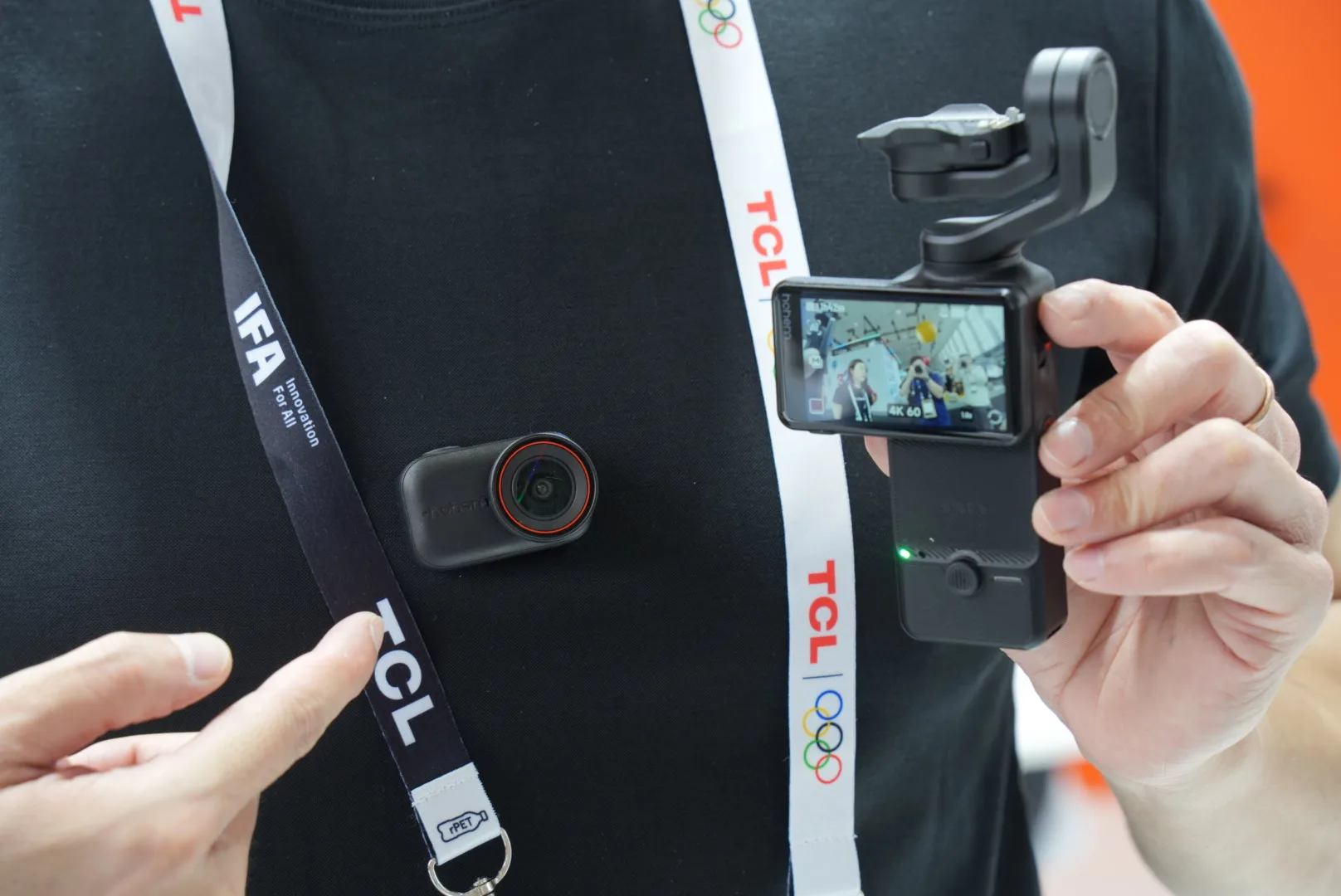
At IFA, Hohem's most talked-about product was the '2-in-1' pocket gimbal camera Eyepic. Its standout feature: the camera module can detach from the three-axis gimbal. In combined mode, it operates like a typical handheld gimbal camera. Users can simply remove the camera module to transform it into a standalone 'thumb camera,' which can be fixed to clothing using a cap clip or lanyard, while the handle continues to display live footage and control recording.
(Image Source: On-site Coverage by Leitech IFA Reporting Team)
This design may seem simple—'detach and reattach'—but the engineering challenges are far greater than they appear. Hohem staff told me they're tackling these issues one by one, as detaching and reattaching the module requires redesigning thermal management, structure, and power supply, making it far more complex than building a standalone camera.
(Image Source: On-site Coverage by Leitech IFA Reporting Team)
In terms of specs, the prototype on display supports 4K/60fps recording and features a lossless vertical shooting mode. Unlike traditional horizontal-to-vertical cropping, it achieves true vertical output via sensor rotation, directly delivering 4K vertical footage.
From an industry perspective, Hohem has been in the handheld gimbal space since 2014, expanding from mechanical stabilization to AI tracking, remote monitoring, and detachable controls. In 2019, it showcased a concept for a sports camera with a built-in three-axis gimbal at the Hong Kong Consumer Electronics Show. The Eyepic represents a fully realized version of this vision, integrating camera, gimbal, screen, and controls into a cohesive, user-friendly product.
The Eyepic is still in the pre-launch phase, with its release date, pricing, and final specs yet to be announced by Hohem. Leitech previously tested an engineering prototype (earlier version) at CES this year, but back then, Hohem restricted access to a 'dark room' for select media only. At IFA, the product was openly displayed to the public, and its maturity had improved significantly—suggesting a formal launch is imminent.
Clearly, Hohem's strategy is to defend its stronghold in gimbals while venturing into core imaging territory. Judging by the Eyepic, Hohem isn't just dabbling—it aims to innovate and create a blockbuster product. Leitech is quite excited about its official release.
HOVERAir Flying Camera: Pioneering the Combination of Drone and Gimbal Camera
HOVERAir's standout product this year is the HOVERAir VERSA, which I'd call the most creative offering at IFA's imaging hall: it merges a drone with a handheld gimbal camera into one device.
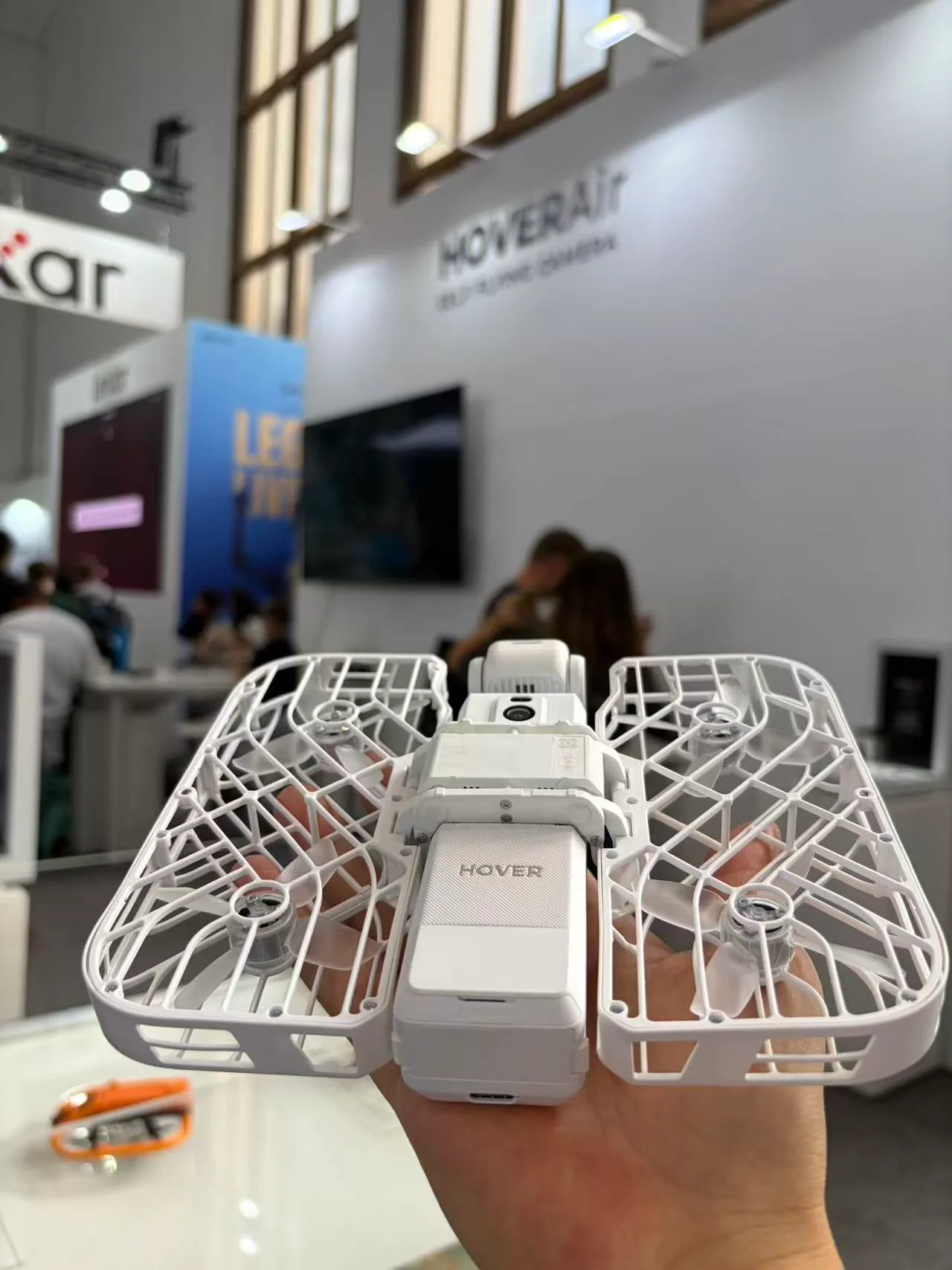
(Image Source: On-site Coverage by Leitech IFA Reporting Team)
By default, it's a complete low-altitude flying camera with four rotors and built-in propeller guards for safe takeoff. When you're done flying, simply detach the camera module to transform it into a handheld gimbal camera.
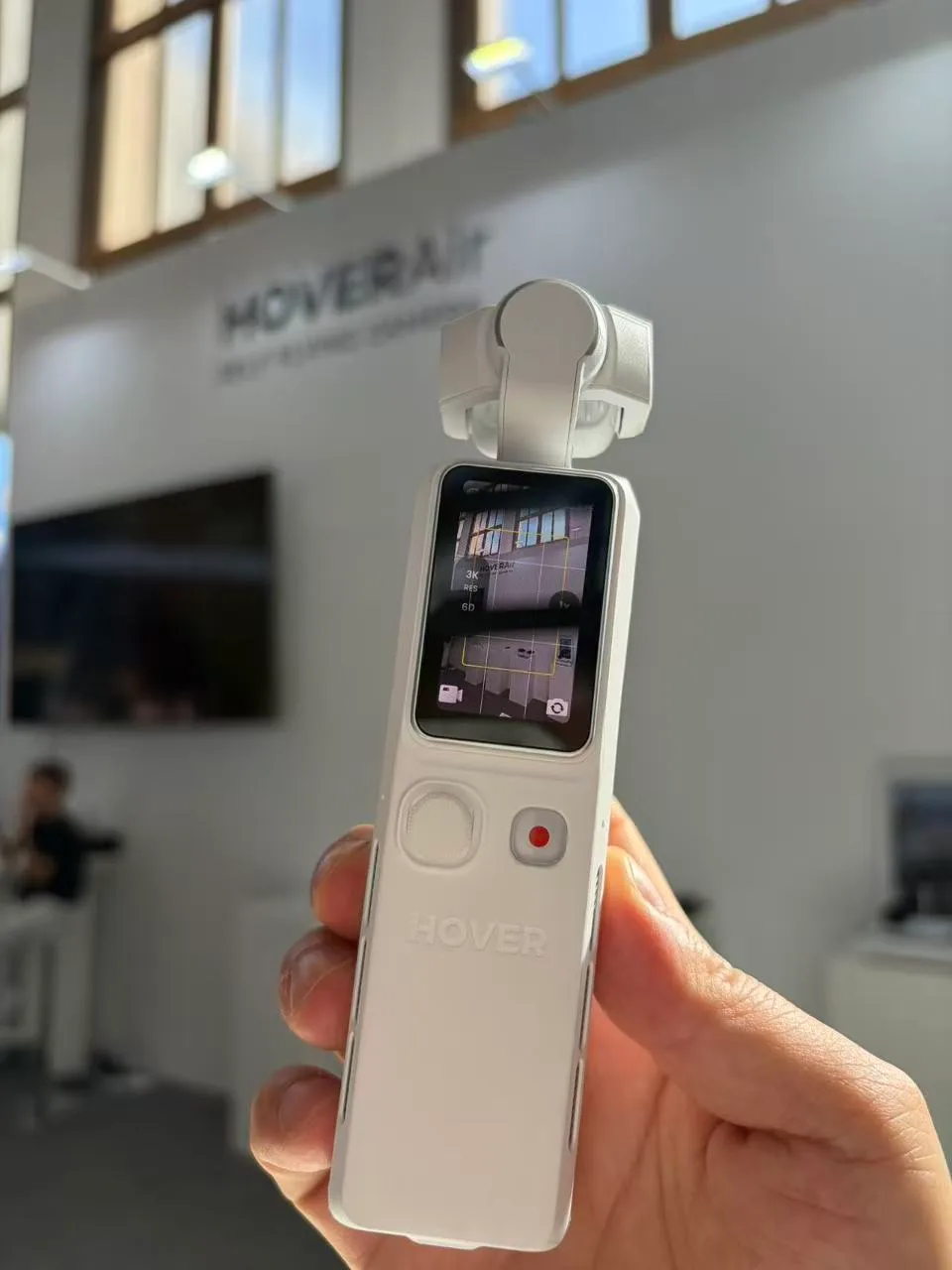
(Image Source: On-site Coverage by Leitech IFA Reporting Team)
Combined, it's a low-altitude flying camera; detached, it's a gimbal camera—one device, two entirely different use cases. Moreover, the product's refinement is impressive: it's fully functional for detaching, assembling, flying, and shooting.
In terms of safety, the HOVERAir VERSA is lightweight, with added propeller guards to prevent injury to people or objects in a collision. Its maximum flight altitude of around 30 meters allows for aerial shots while staying below regulatory limits in most regions (excluding Beijing), making it easy to fly almost anywhere.
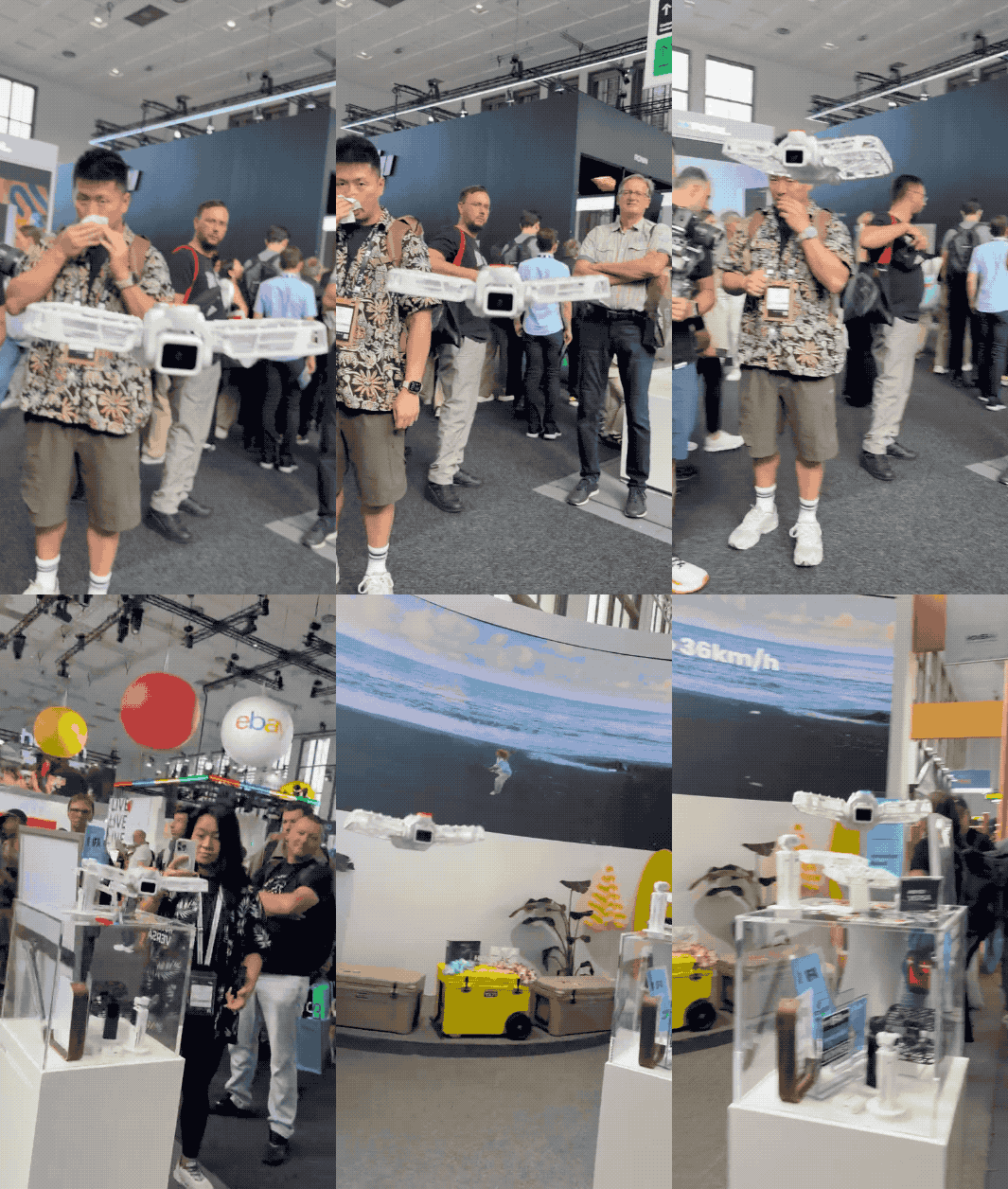
(Image source: On-site filming by Leitech IFA reporting team)
Equipped with AI, the HOVERAir VERSA demonstrates impressive auto-follow capabilities. It requires no prior data entry; simply take off towards the user's face, and it can identify the user accurately and respond swiftly. During the demonstration, Xiaolei walked quickly, squatted, and jumped on the spot, and the device accurately tracked him while maintaining a consistent distance of approximately 1.5 meters.
If HOVER's Eyepic separates and combines the gimbal and thumb camera, the HOVERAir VERSA takes it a step further by bridging the gap between "in the air" and "in hand" functionalities. It can follow and film from the sky and also be detached for handheld shooting. Moreover, this is not a concept model; it is now available for crowdfunding on the Indiegogo platform, priced at $1,270, with an early bird special of $899 (approximately HK$6,860).
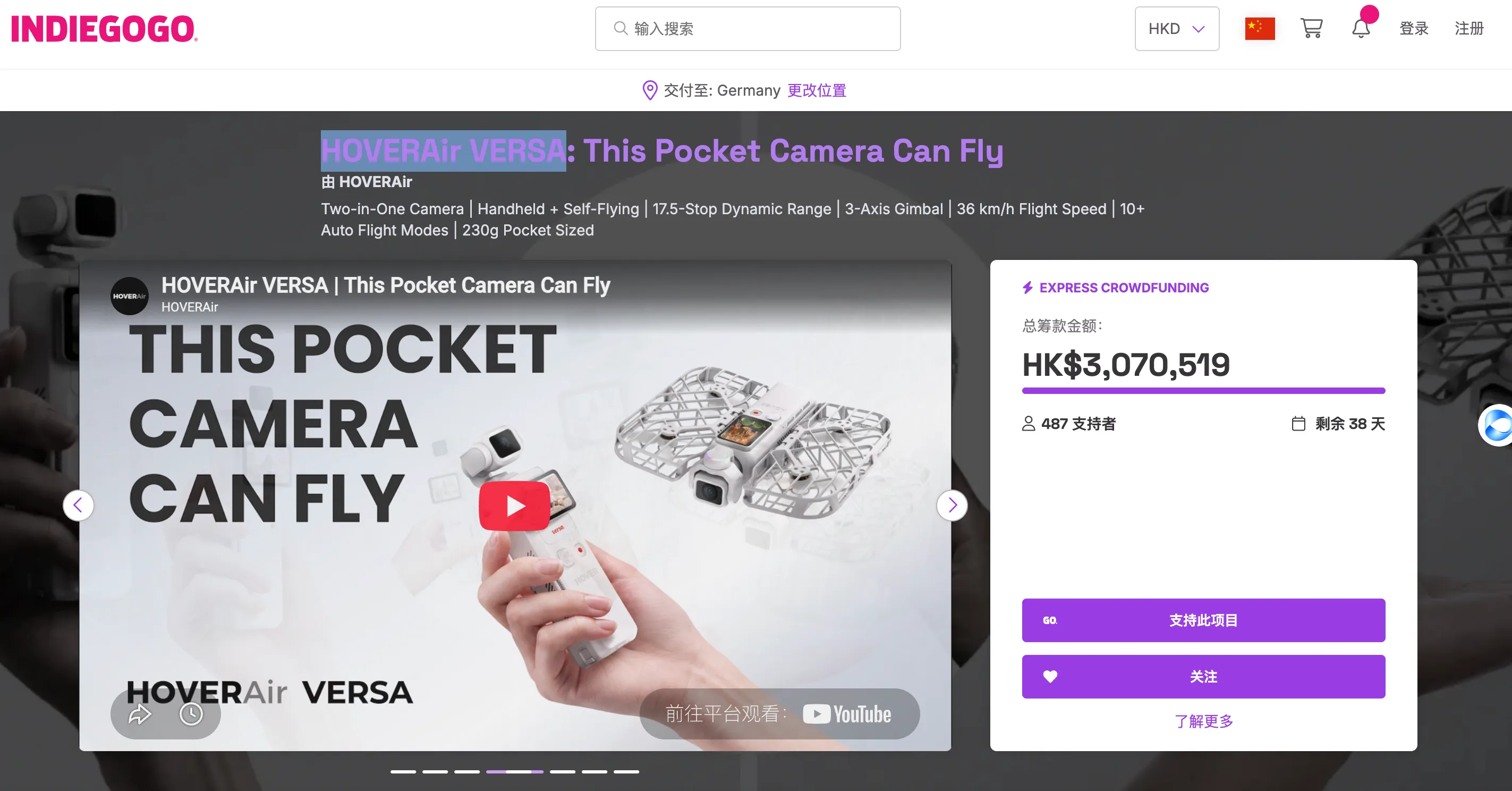
Some readers may wonder why the HOVERAir VERSA is called a flying camera rather than a drone. Aerial
At this year's IFA, Botan introduced its latest innovation, the Atom 3. According to on-site personnel, competitors often boast extensive product portfolios and, to maintain differentiation, reserve AI features like one-touch camera movement, QuickShot, and time-lapse effects exclusively for their professional models. This strategy makes it challenging to extend these features across all models. However, this approach has a certain irony: it is precisely the beginners who most need these "one-touch filming" features, while seasoned users are less reliant on them.
Botan takes a contrasting approach: it freely extends high-end features to its entry-level models. Beginners can achieve professional-looking shots with minimal practice by simply pressing the takeoff and recording buttons, as the drone handles the intricate details.
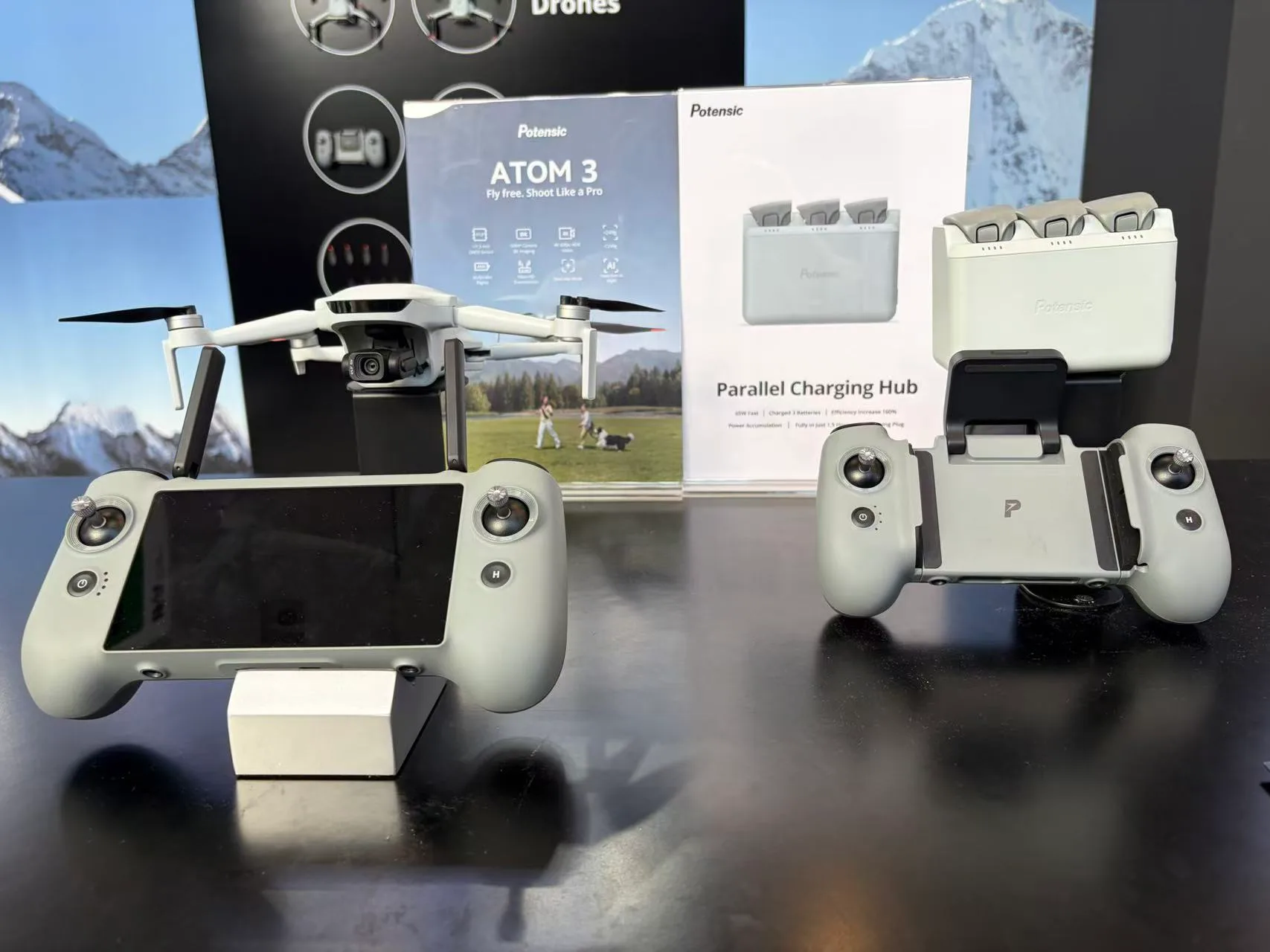
(Image credit: On-site footage by the Leitech IFA reporting team)
The Atom 3 is equipped with AI features such as one-touch camera movement, weighs only 249 grams, supports 4K HDR, offers a 50-minute battery life, and has a 16-kilometer video transmission range, making it highly competitive. From Xiaolei's perspective, Botan is not targeting DJI's flagship users but rather those interested in purchasing drones who are deterred by operational complexities.
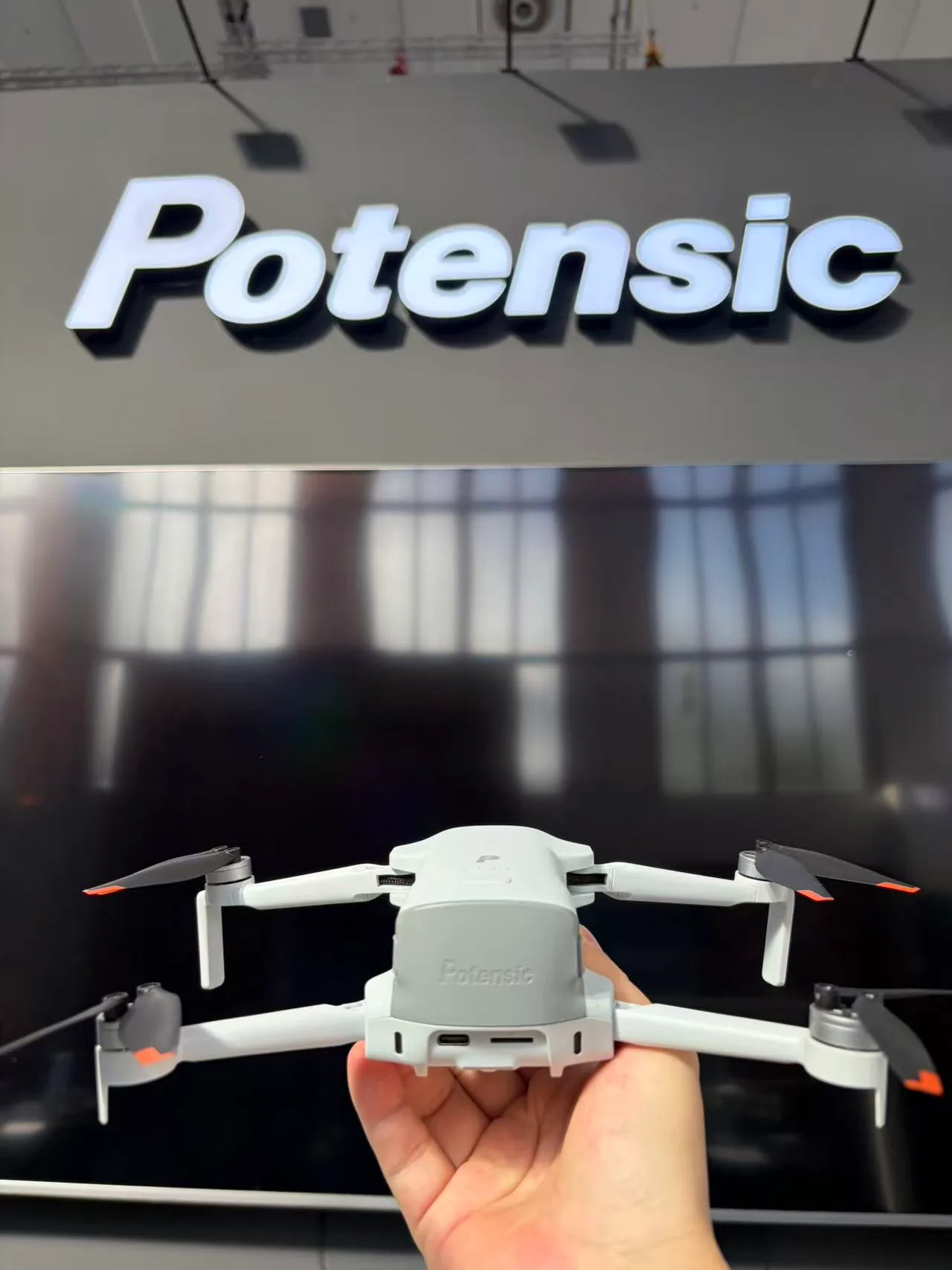
(Image credit: On-site footage by the Leitech IFA reporting team)
In the consumer drone industry, DJI sets the standard. However, beneath this benchmark lies a group of manufacturers thriving on "adequacy + affordability + novice-friendliness," with Botan standing out as the most formidable among them. It's no wonder some users jokingly refer to it as "the best beneath DJI."
Peripheral Manufacturers Focusing on Imaging Are Quietly Making a Fortune
After discussing these manufacturers specializing in "capturing" content, let's shift our focus to those operating behind the scenes.
First, there's storage. Whether it's professional cameras, drones, gimbal cameras, or action cameras, storage is indispensable. This year's IFA saw the presence of three familiar names: Lexar, SUNEAST, and Western Digital. Among them, Lexar left the deepest impression on Xiaolei. On-site staff introduced their newly launched portable SSD, the Muse. Xiaolei's initial reaction upon seeing it was, "It's incredibly thin." How thin? According to the staff, "It's even thinner than the Type-C interface itself."
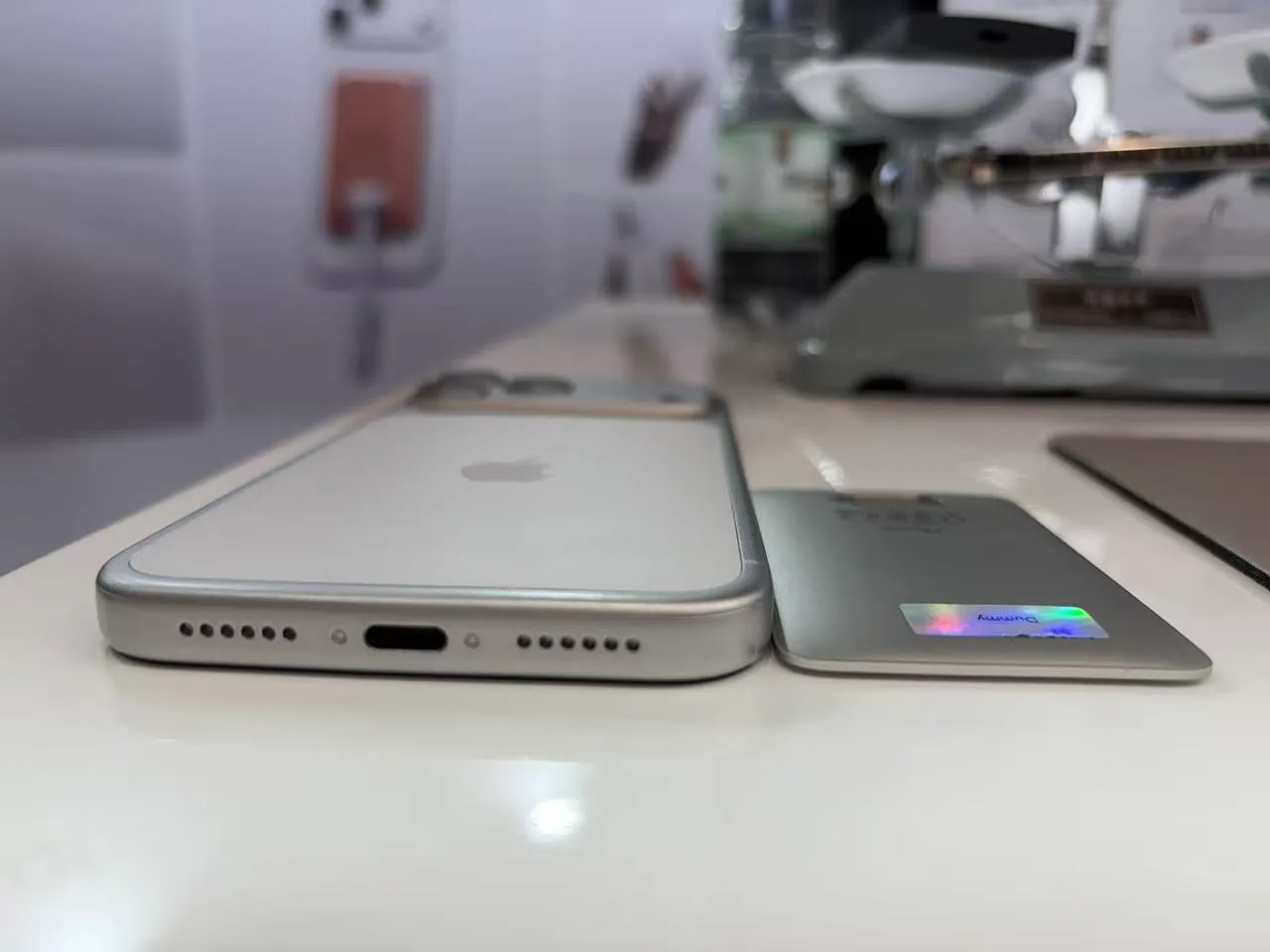
(Image credit: On-site footage by the Leitech IFA reporting team, with the Lexar Muse SSD on the right)
To achieve such extreme thinness, Lexar designed the Muse with a Unibody all-aluminum construction, resembling a premium metal plate in hand. However, we all know that products like hard drives, which require prolonged data transmission, have high heat dissipation requirements. The staff acknowledged that heat dissipation was indeed the biggest challenge, and they invested significant time and effort in materials, CMF processes, and special cables to overcome it.
In terms of read and write performance, the Muse offers a transmission speed of 1,050MB/s, meeting the data transmission needs of most mobile phone users. It can be directly attached to the back of an iPhone (or any phone with a magnetic case) using a magnetic card holder, effectively adding an ultra-thin portable hard drive to the phone.
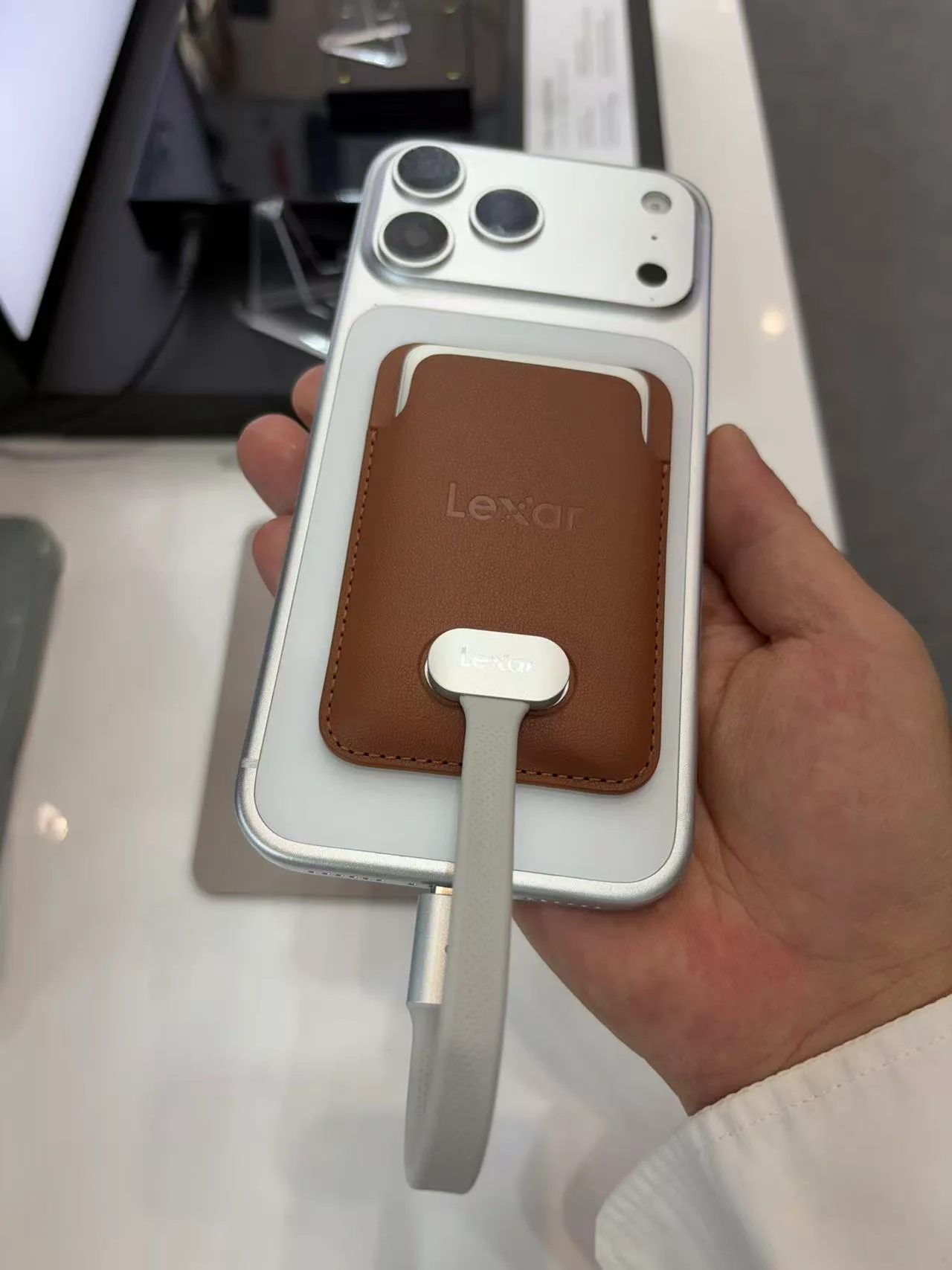
(Image credit: On-site footage by the Leitech IFA reporting team)
The staff mentioned that this might be the first-ever portable SSD in a card format. Although it has not yet obtained MFI certification, over 1,000 Apple Premium Resellers in China plan to stock it. Pre-sales are expected to begin in October, with an official launch in November, coinciding with the release of the iPhone 18 series. Given the current trend of rising storage costs, it would not be an overstatement to call it an essential hard drive product for iPhone users in the future.
In terms of lighting, familiar names like Godox and Neewer were present, along with Amaran from Aputure. All three brought solutions for studio lights, light stands, tripods, and other fill lights. However, that's not what we want to discuss today.
Take Godox as an example. This time, they did not focus on promoting massive studio lights or nighttime fill lights but rather two intriguing new products: the Godox C100 camera, priced at 199 yuan, which Leitech previously reviewed (search for Leitech online for details). It aims to make "taking photos" as accessible as possible, prioritizing portability and fun over image quality. The other product is a portable thermal sublimation photo printer that produces prints immediately after shooting, eliminating the need for a computer or waiting for development, significantly reducing time and consumable costs.
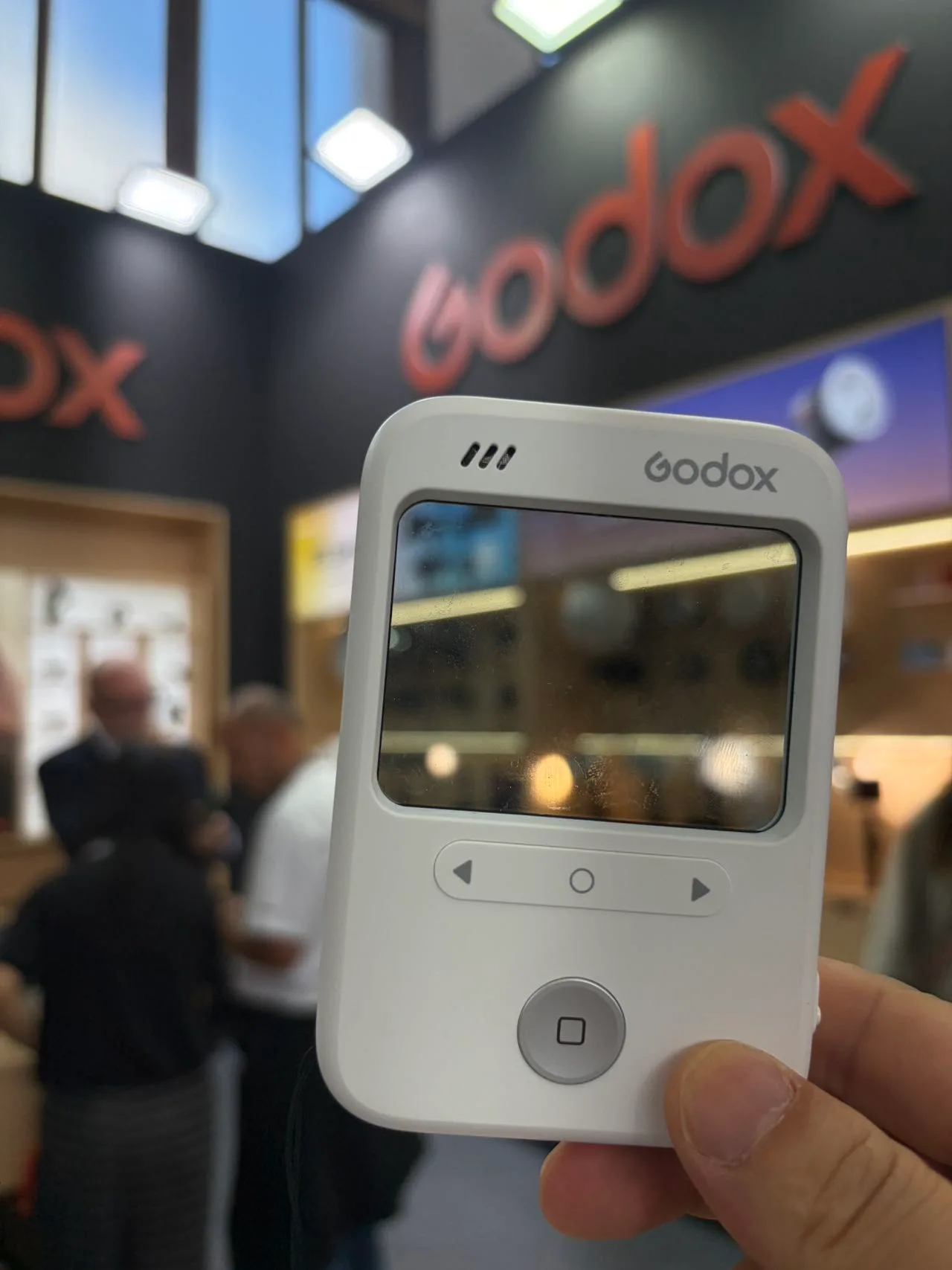
(Image credit: On-site footage by the Leitech IFA reporting team)
The camera handles "capturing," while the printer handles "immediate output." For less than 200 yuan, users can take photos and, with a little extra investment, turn them into tangible prints that can be touched and displayed on walls. Godox's combination reminds Xiaolei of the instant cameras of yesteryear. The only difference is that instant cameras rely on chemical film reactions, while Godox uses digital thermal sublimation. However, their essence is the same: compressing the process of "recording," which once required significant time and cost for development, into a few seconds.
Instant cameras thrived for decades on the selling point of "press the shutter and get the photo immediately." Now, they are gradually being replaced by cheaper, lighter, and film-free digital solutions.
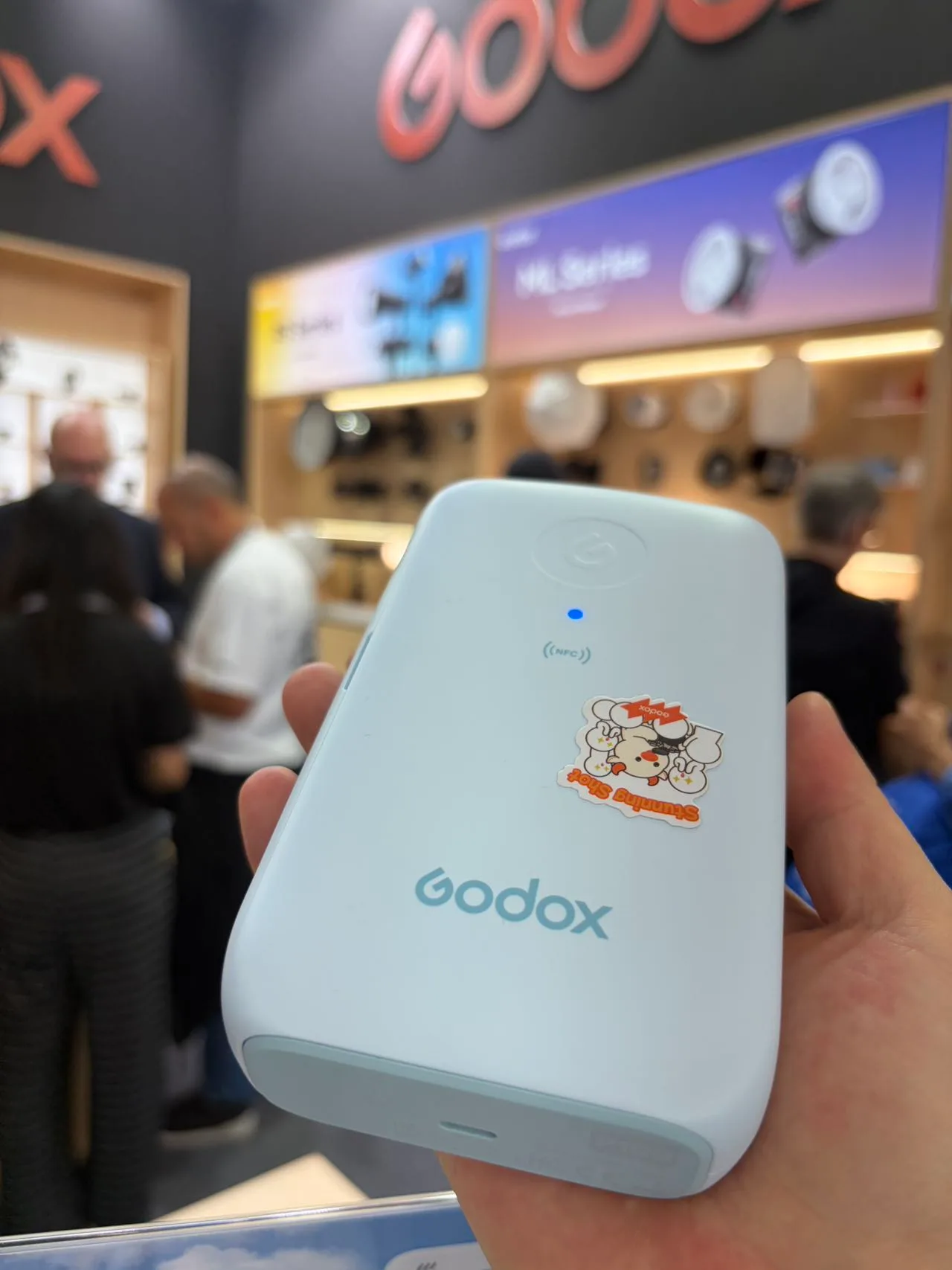
(Image credit: On-site footage by the Leitech IFA reporting team)
Speaking of "affordable cameras," Xiaolei also encountered a domestic camera brand, NBD, at the H20 exhibition hall. It aims to make cameras an entry-level "toy" for the general public.
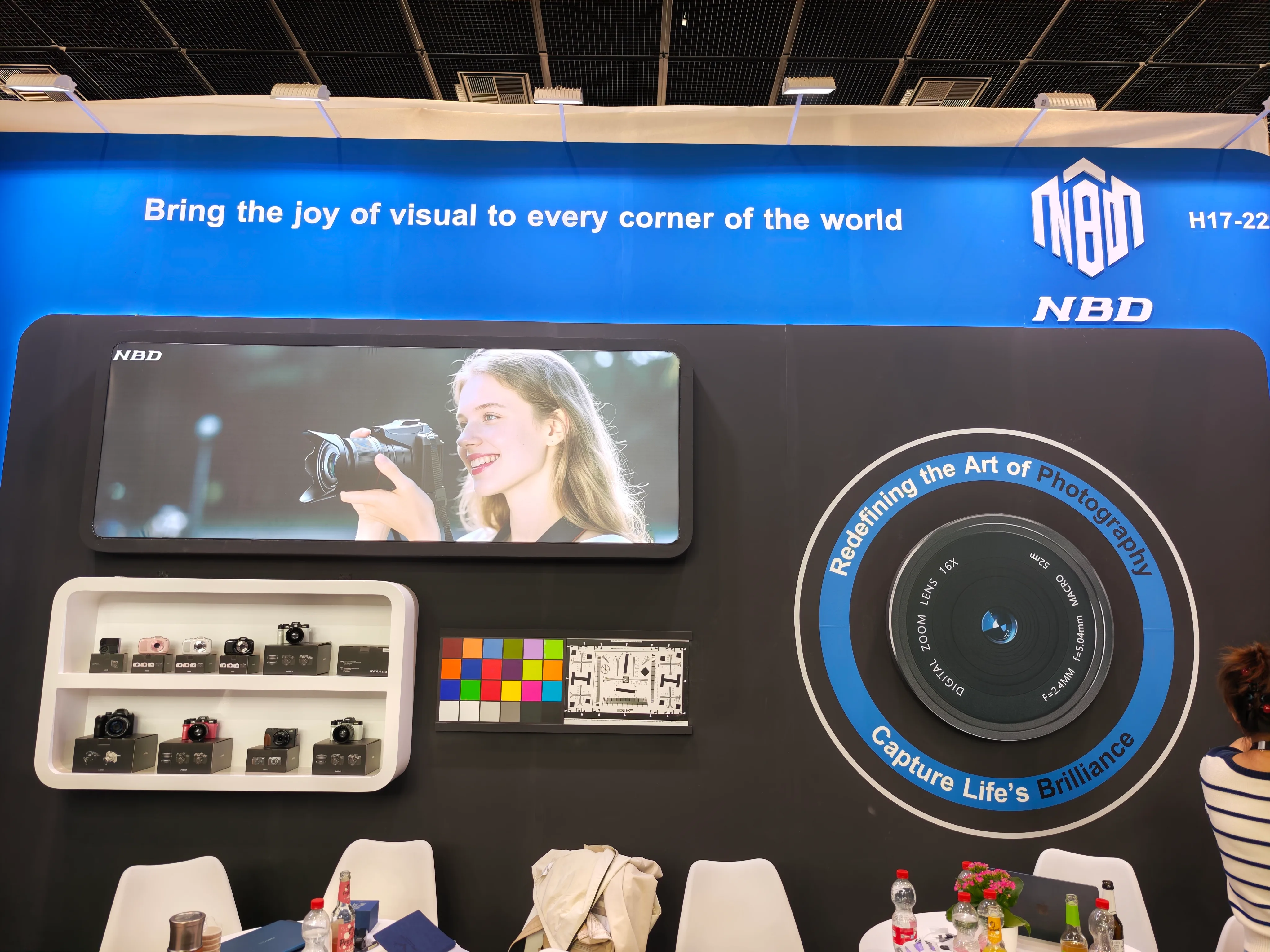
(Image credit: On-site footage by the Leitech IFA reporting team)
According to on-site staff, their latest product, the NBD 8K digital camera, is equipped with a SmartRender Core 3.0 chip, featuring "millisecond-level AI scene recognition." It also includes 6-axis stabilization, panoramic stitching, and other features that were once expensive additions. By leveraging AI and algorithms, it brings the high-end camera experience to a device priced at 400 euros (approximately RMB 3,117).
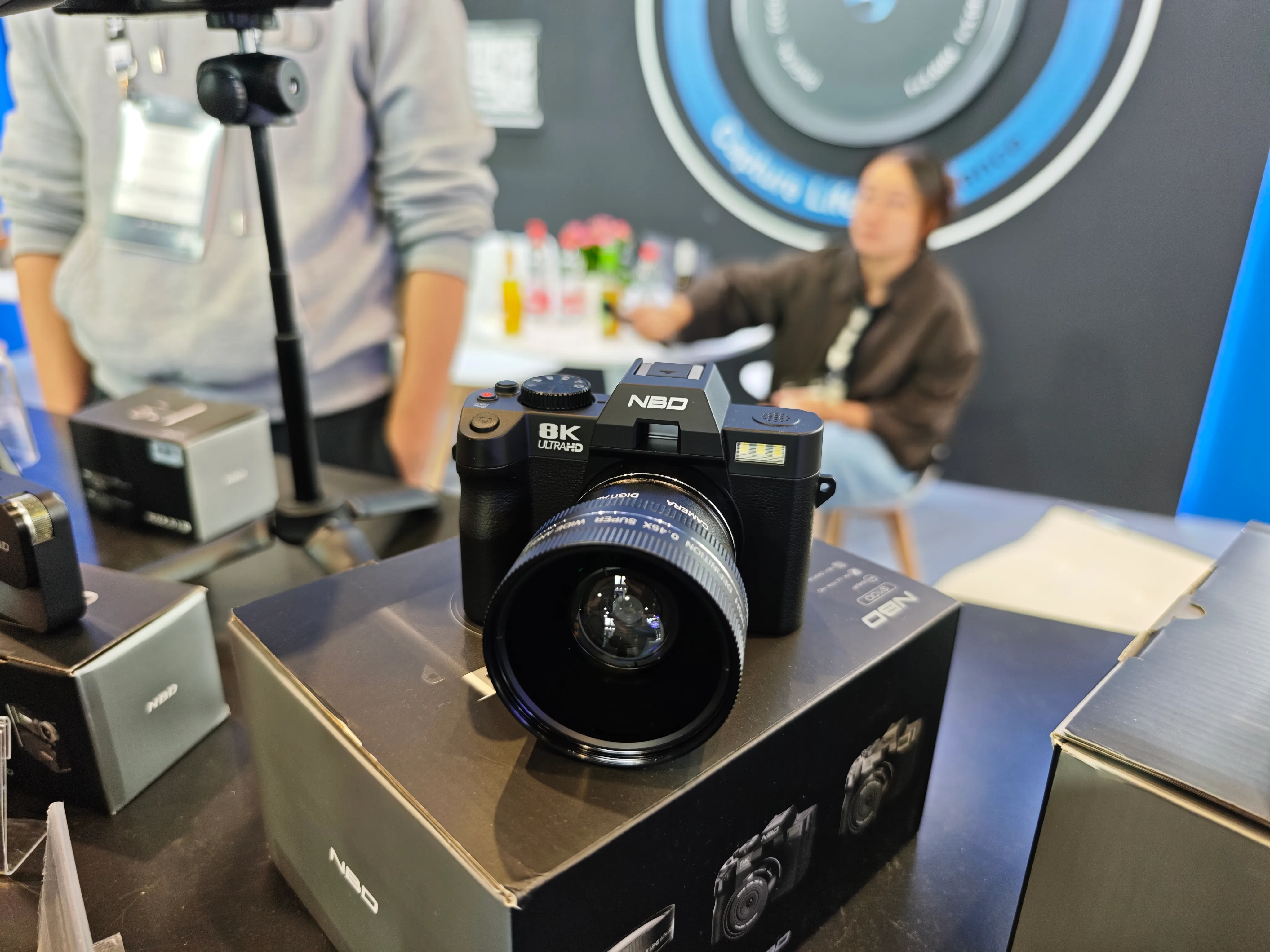
(Image credit: On-site footage by the Leitech IFA reporting team)
But that's not all. Its lens features a modular design, allowing it to be switched between telephoto and ultra-wide-angle configurations—a bold and intriguing concept.
When we think of cameras, international giants like Nikon, Sony, and Canon usually come to mind. However, under the siege of domestic newcomers, these brands are now struggling. While they still hold an unparalleled advantage in the professional realm, the larger market lies in mass-market mobile imaging, which has become the domain of Chinese brands.
Moma and Others Capitalize on Audio to Benefit Creators
Imaging is not just about visuals. Take televisions, for example: good picture quality is fundamental, but poor sound quality can significantly detract from the viewing experience. The same applies to content creation: no matter how clear the footage, if it's plagued by wind noise, the material becomes unusable. Thus, "hearing" has always been on par with "seeing."
This year's IFA saw an interesting phenomenon in the audio sector: microphones were once the domain of third-party audio brands, but this year, imaging giants like DJI, Insta360, and HOVER have all seriously promoted their own microphones—such as DJI's Mic Mini 2S, Insta360's Mic Pro, HOVER's Mic 2, and Moma's LARK A2.
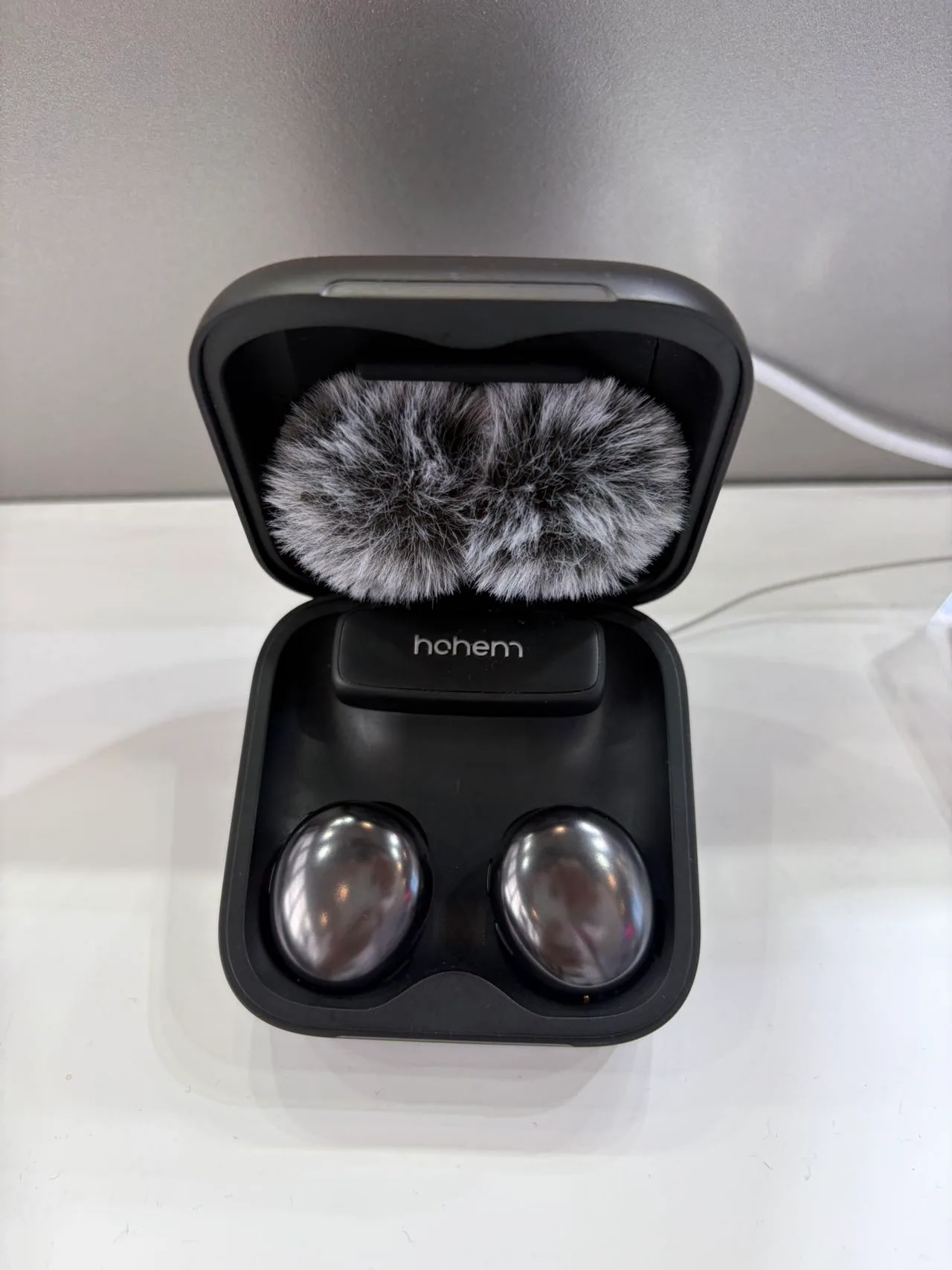
(Image credit: On-site footage by the Leitech IFA reporting team)
In previous years, these microphones were mere supporting actors, displayed alongside gimbals and cameras. This year, however, they took center stage, standing alongside the main products.
Each of these microphones has its unique selling points:
- Insta360's Mic Pro is designed to complement its panoramic cameras, focusing on scenarios where users film and narrate while walking. Its sound recording and app integration are highly commendable.
- HOVER's Mic 2 offers a straightforward value proposition: affordability. It brings dual-channel recording and noise reduction, once exclusive to high-end models, to an entry-level price point.
- DJI's Mic 3 features one receiver with four transmitters, while the Mic Mini 2S weighs just 7.7 grams.
- Moma's LARK A2 and M3 emphasize AI, allowing one-touch AI activation and serving as some of the first hardware partners for WorkBuddy.
Let's focus on Moma's LARK A2. It incorporates a noise prevention technology called CCT Check, which operates on a simple principle: it records two audio tracks simultaneously, with one track 6 to 7 decibels lower than the other. Under normal circumstances, the standard track is used. However, if a sudden loud noise occurs and the volume peaks, it seamlessly switches to the lower-decibel track, fundamentally solving the issue of audio clipping. This "anti-clipping" measure is implemented at the hardware level, rather than relying on post-recording algorithms to alert users of clipping.
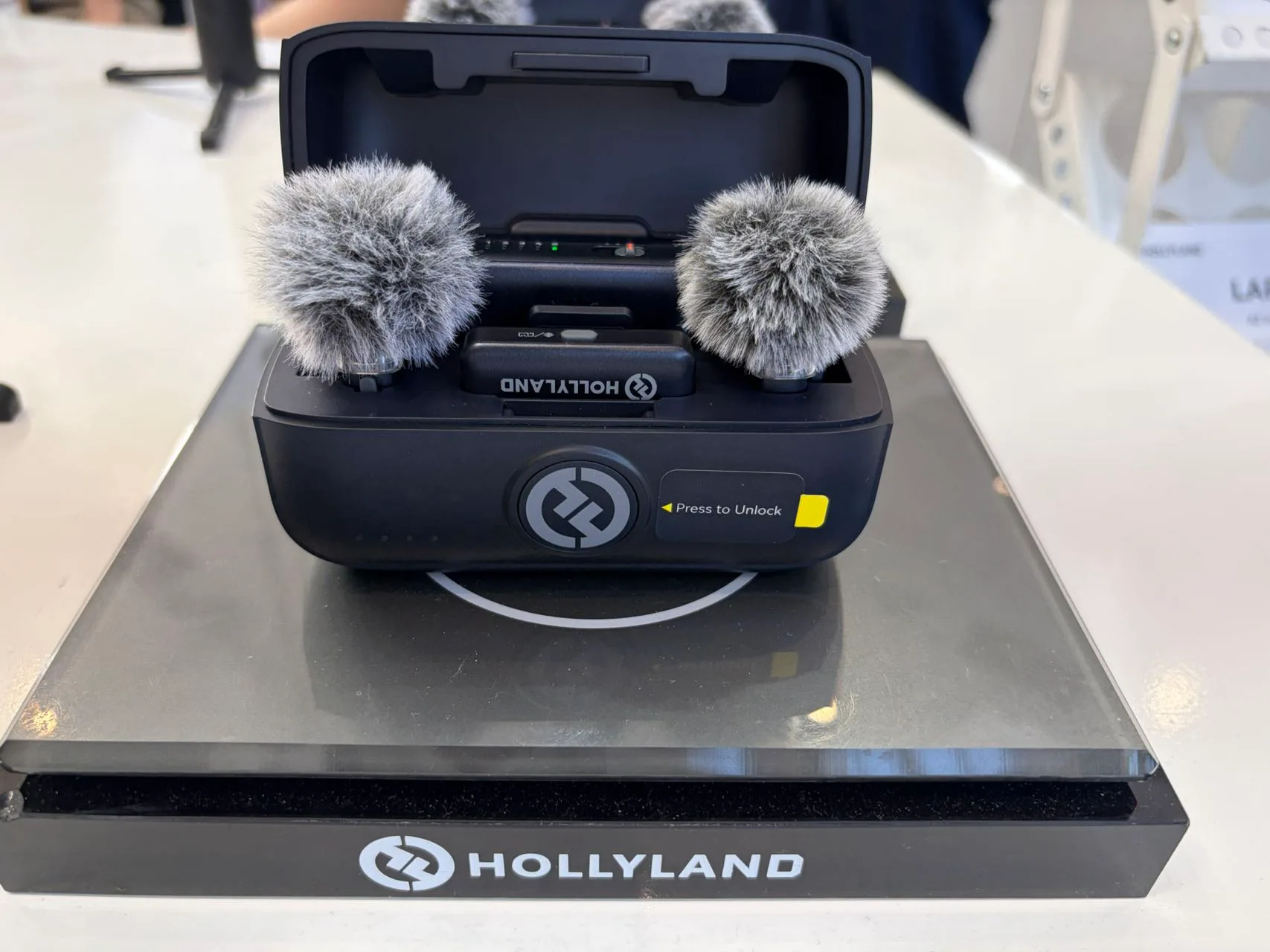
(Image credit: On-site footage by the Leitech IFA reporting team)
It also includes a subtle yet practical detail—automatic standby. When the microphone is in use but no one speaks for an extended period, and the environment remains quiet, it automatically turns off the screen and indicators to conserve power. The screen and indicators reactivate when someone speaks. According to the official, this power-saving mode extends battery life by approximately one and a half hours. For a microphone that must be carried around and ready for use at any moment, this is more practical than simply increasing battery size.
Moma's approach to audio differs from that of traditional manufacturers. It prioritizes high-quality audio recording from the outset. Most microphones labeled with "AI recording" rely on post-processing algorithms to compensate for deficiencies. In contrast, Moma focuses on the input end, striving to excel in the "simple" task of recording. Its partnership with WorkBuddy, which offers one-touch wake-up and soft-voice triggering, aligns with HOVER's strengths.
While drones and cameras once addressed the issue of "seeing," it is now clear that "seeing" alone is insufficient; "hearing" must also be prioritized. Consequently, imaging manufacturers are venturing into microphone production. Conversely, traditional audio manufacturers are moving towards the imaging realm, as seen with Moma's foray into live-streaming cameras. Imaging manufacturers hold the "gateway," while audio manufacturers are relegated to "accessories." This somewhat awkward situation compels Moma, Rode, and other audio brands to infiltrate the imaging sector; otherwise, they risk being overshadowed by the audio equipment of imaging giants.
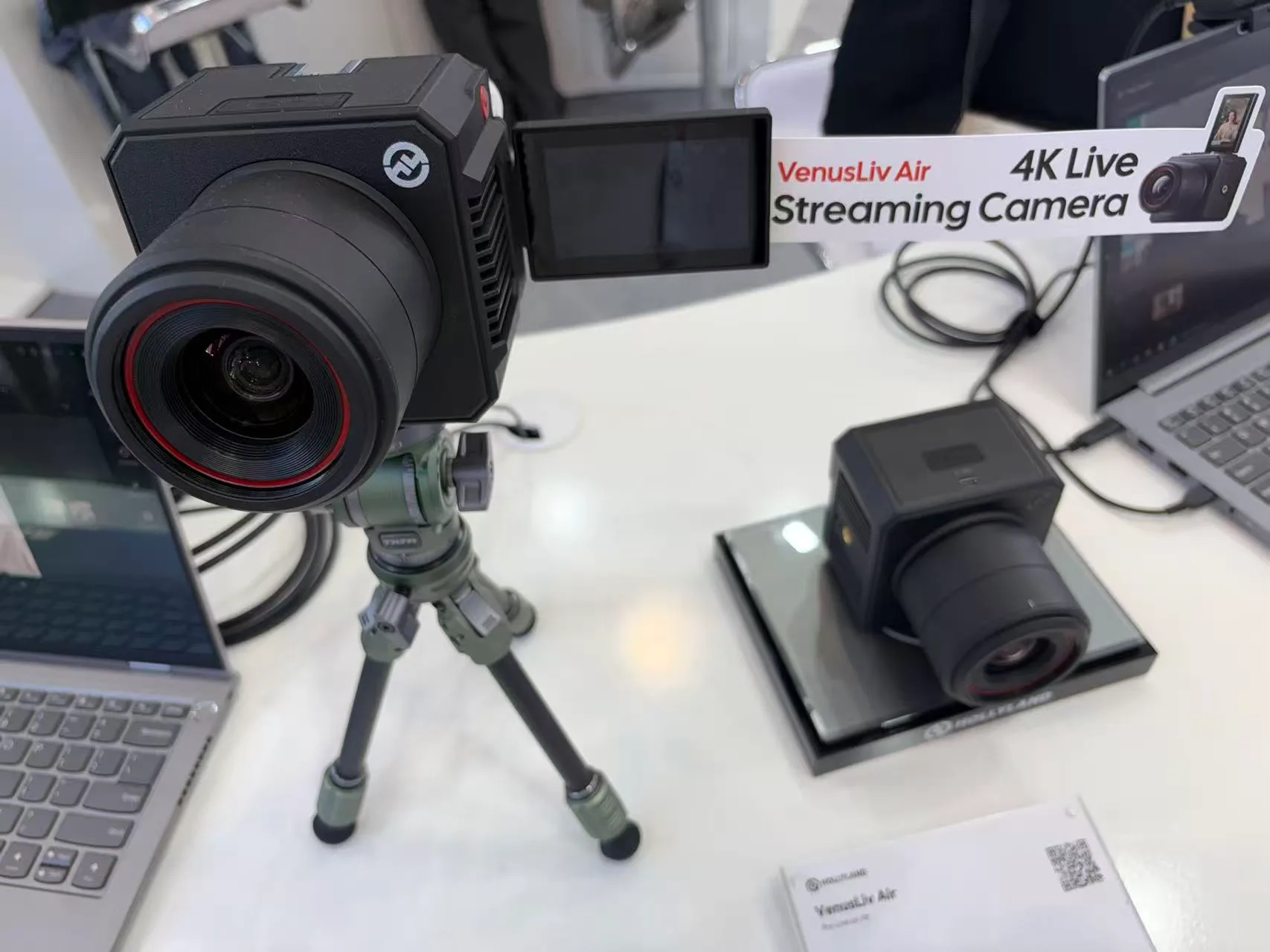
(Image credit: Photographed on-site by the Leitech IFA reporting team)
From "Tools" to "Infrastructure"
After touring the H20 Creative Hardware Pavilion, Xiaolei observed that imaging devices have evolved from individual "tools" into systematic "infrastructure."
In the past, when we talked about cameras, the discussion centered around "which one has better image quality." This year at IFA, the conversation has shifted to "who can enable an ordinary person to create the best content at the lowest cost." DJI and Insta360 are competing on image quality, while Hohem focuses on ease of use, exploring "all-in-one" solutions alongside HoverAir. In essence, everyone is pursuing the same goal: making "photography" increasingly accessible.
Another change at this year's IFA is that the protagonists of the imaging market have shifted from established camera manufacturers to emerging Chinese brands. Sony still relies on a range of professional cameras to attract some users, while familiar names like Sigma and Kodak either display a few outdated models as mere formalities or remain largely silent.
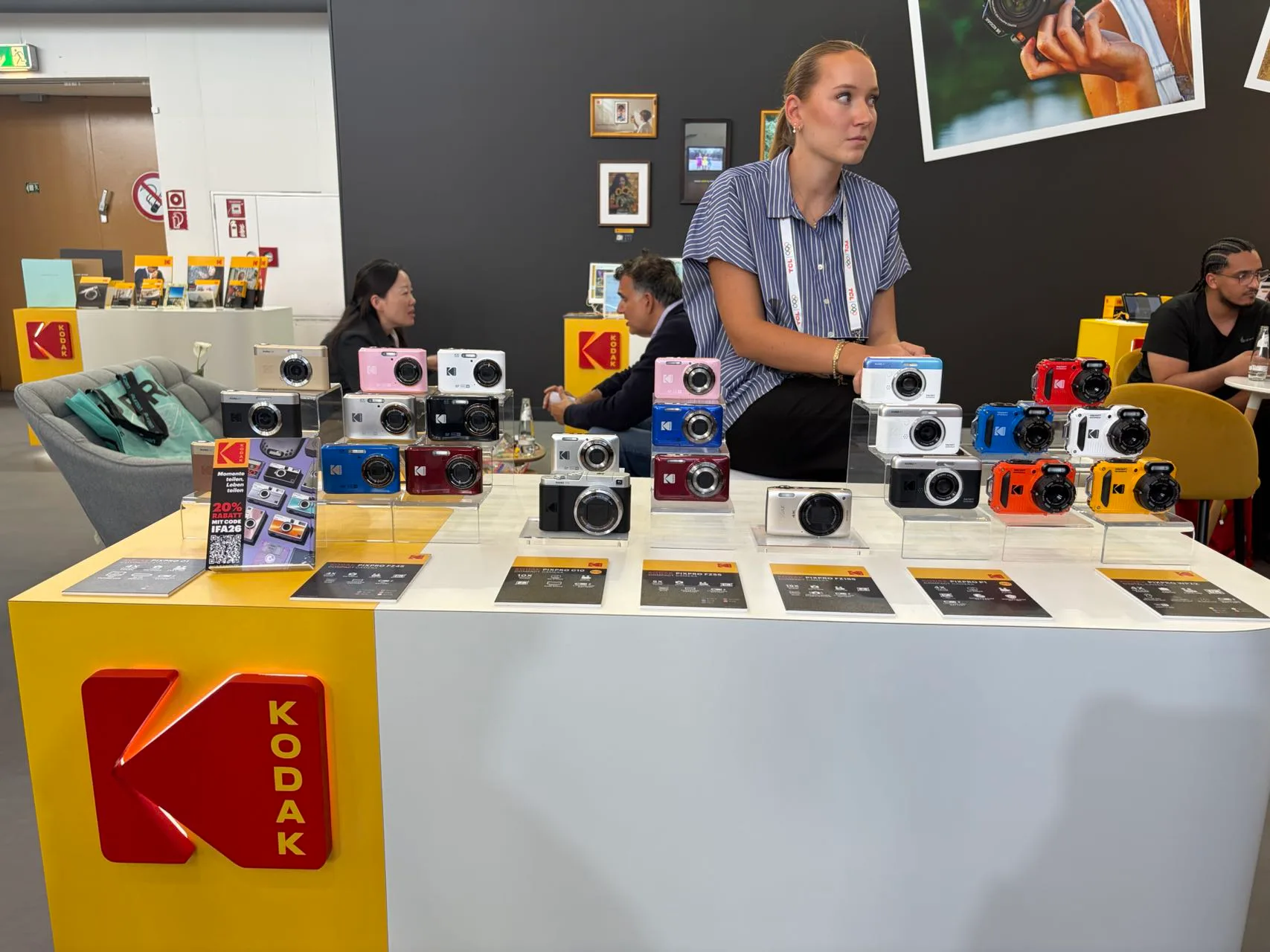
(Image credit: Photographed on-site by the Leitech IFA reporting team)
It is actually Chinese brands that are leading the industry in upgrading image and sound quality, driving product innovation, and making professional equipment more accessible. The global imaging industry has now fully entered the China Era.
-
![]()
Insta360 Revenue Surges, Yet Profits Dive: Stock Price Slashed by Half This Year, Earnings Projections Revised Downward
-
In-depth | OpenAI's First-Generation In-House Chip Shines, Unveiling a New Approach to Computing Power Beyond Expectations
-
![]()
The Imaging Industry is Being Revolutionized! DJI/Insta360/Hohem Steal the Spotlight at IFA, Pushing Canon and Sony to the Periphery?
-
![]()
Starting from 15,999 yuan! Apple's First Foldable iPhone Duo Released: First Under-Display Front Camera on Inner Screen, eSIM Only
-
![]()
Starting from 259,900 yuan, 5,500 orders in one day! Will the XT5 PHEV become Cadillac's Normandy in the new energy sector?
-
Mistral Raises €3 Billion in Series D Funding: European AI Powerhouse Ignites Global Computing Arms Race
-
Li Xiang Bets 2.65 Billion on Sunwoda, Li Auto Fights Back from the Brink
-
250,000 Yuan a Year vs. $1,500 a Month! The AI Budgets of Big Firms Are at Polar Opposites