Jia Yueting's 'Humanoid Robots' Take Center Stage: Priced at $17,000, 1,211 Orders Already Booked
 02/06 2026
 610
610
Robots Sell Out Instantly Upon Launch
Author|Wang Lei
Editor|Qin Zhangyong
Jia Yueting has made a bold move into the robotics arena.
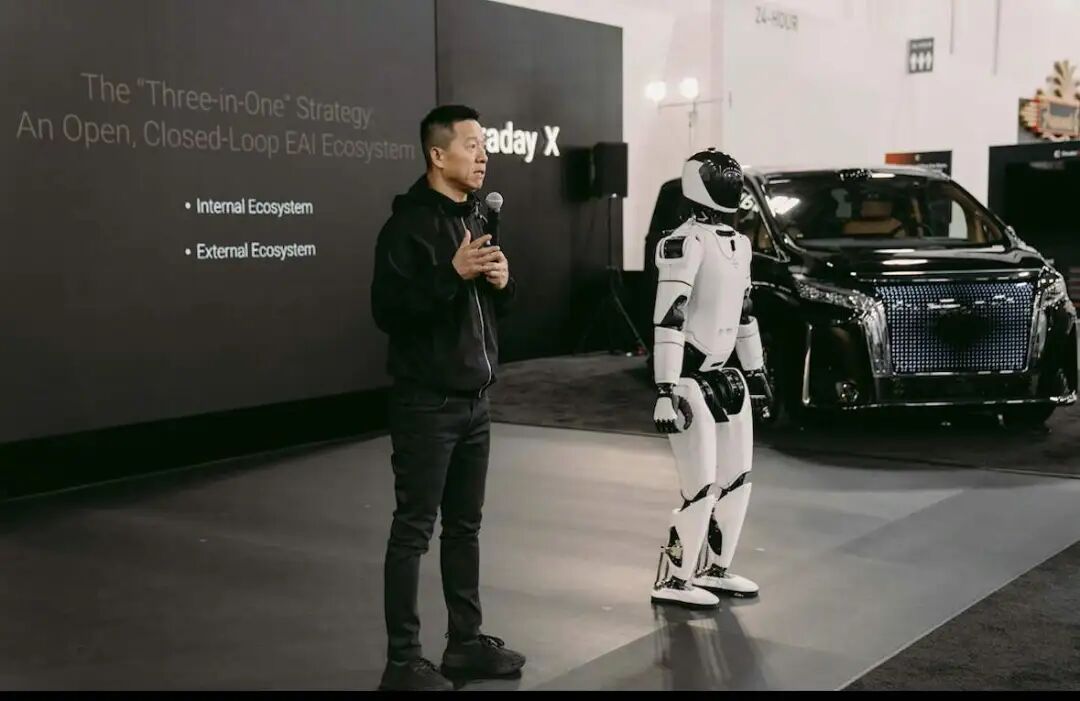
On February 5, Jia Yueting, the founder of Faraday Future and a serial entrepreneur, once again captured public attention. This time, he didn't unveil cars but introduced four models of Embodied AI (EAI) robots.
At the National Automobile Dealers Association (NADA) Convention in Las Vegas, Jia showcased the Futurist, Master, Aegis, and Wheel-Arm Series EAI robots through a global livestream.
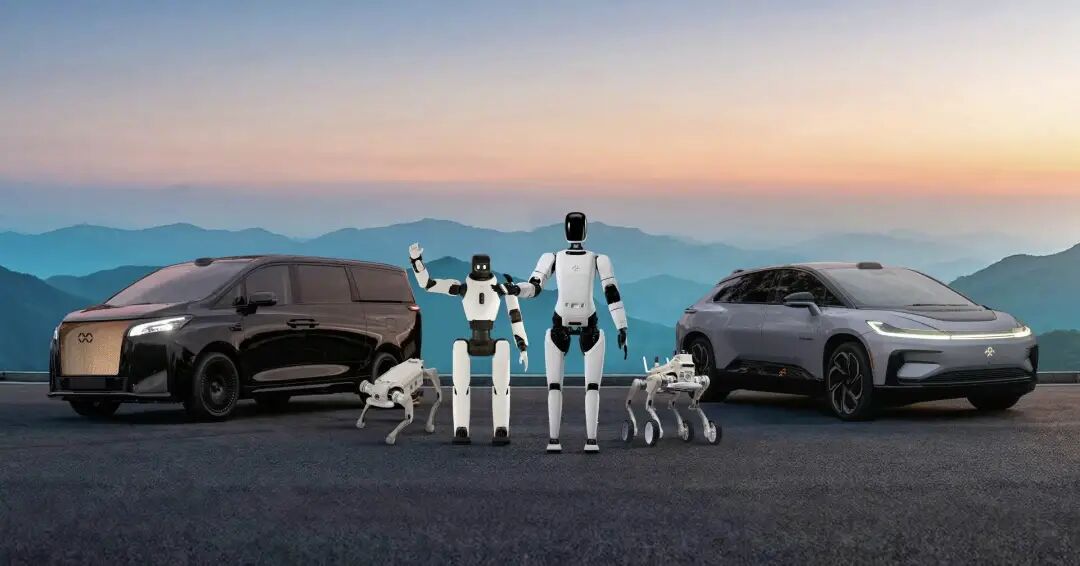
Remarkably, these robots were made available for purchase immediately upon their launch. The Futurist, Master, and Aegis series made their worldwide debut, while the Wheel-Arm Series robots are slated for release in the second quarter.
Before the event wrapped up, an official announcement revealed that 1,211 paid pre-orders had already been secured. Additionally, Jia shared a 20-second video on social media, demonstrating the robots performing dynamic actions such as 'spinning and jumping'.
Shortly after the event, the hashtag '#JiaYuetingLaunchesHumanoidRobots' started trending, drawing significant online attention. While 'creating humans' appears more promising than 'building cars', questions about trust linger, given the turbulent history of the FF91. Can robots instill the same level of confidence?
01
Four Models Unveiled Simultaneously
If deliveries can be ensured with a steady influx of orders, Jia could indeed realize his ambition of making Faraday Future the first U.S. company to deliver humanoid robots with positive gross margins.
The four robot series encompass two mainstream forms—humanoid and quadrupedal—with prices ranging from $2,499 to $34,990 and distinct product positioning.
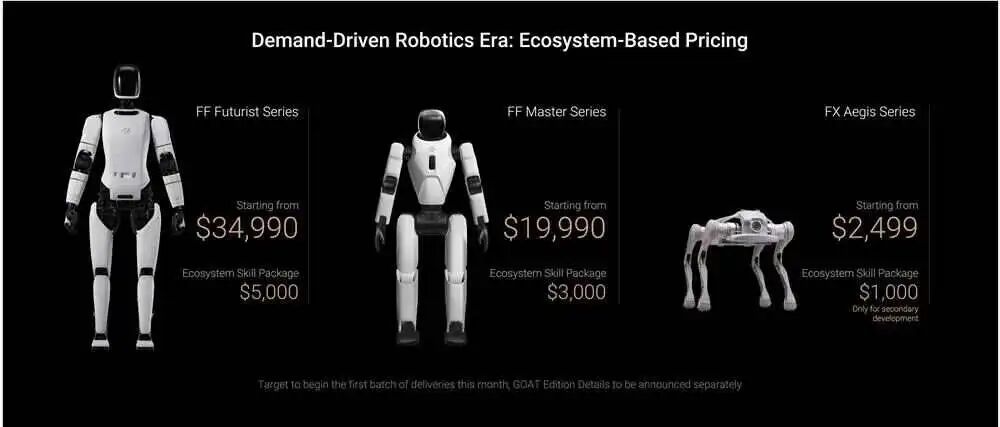
The full-size humanoid Futurist series, dubbed 'Professional Embodied AI Humanoid Robots' by FF, starts at $34,990 (approximately RMB 242,000), with an optional Ecosystem Skills Package priced at $5,000.
Designed for high-complexity professional scenarios, this robot emphasizes bionic joints and adaptability to complex environments, targeting industrial inspections, medical assistance, and other specialized fields. Based on the NVIDIA Orin platform, it boasts 200 TOPS of computing power, equipped with multiple high-definition cameras, fisheye cameras, RGB-D cameras, 3D LiDAR, and tactile sensors. It supports remote control, VR teleoperation, and collaborative tasks via Wi-Fi and 5G networks, capable of understanding complex environments and evolving across diverse tasks and industry demands.

Additionally, it features 28 high-performance motors with a peak torque of 500 N·m, a power density of 125 N·m per kilogram, a three-hour battery life, and hot-swappable batteries for uninterrupted operation. It supports natural communication in up to 50 languages and includes a customizable, interactive facial screen.
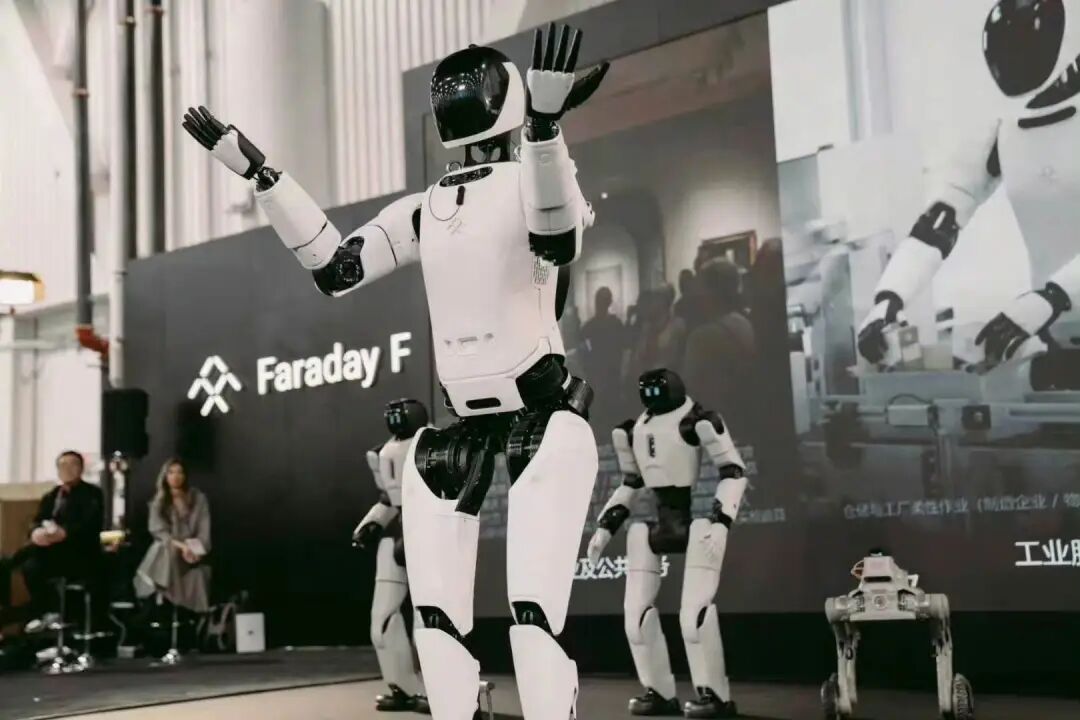
The Master series focuses on 'athletic performance', boasting 30 degrees of freedom (excluding hands) and the option to install dexterous hands. With motion positioning accuracy of 5 millimeters and over 20 preset actions, it prioritizes motion precision and interaction responsiveness. As seen in the demonstration video, it can perform actions like flying kicks and spinning kicks.
Priced starting at $19,990 (approximately RMB 140,000), with an optional Ecosystem Skills Package for $3,000, the Master series targets high-interaction scenarios.
The Aegis series, designed for security and companionship, is the most affordable of the three, starting at $2,499 (approximately RMB 17,000). Resembling a robotic dog, it comes standard with a quadrupedal structure and offers a four-wheeled version, along with a $1,000 Ecosystem Service Package.
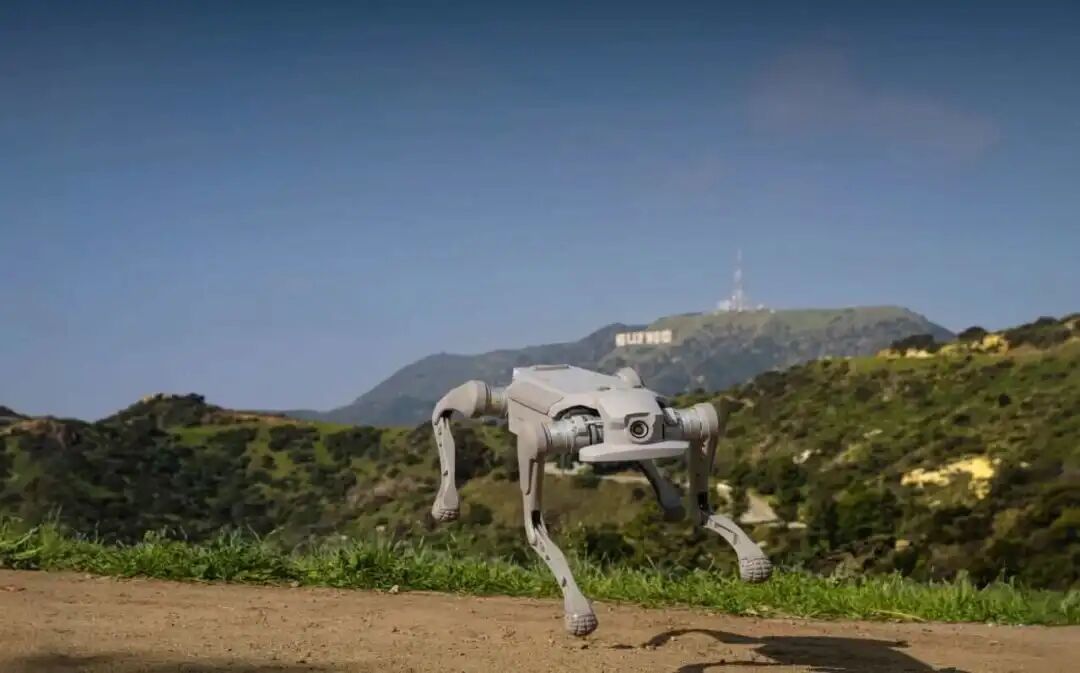
It can flexibly integrate LiDAR, depth cameras, communication modules, and even robotic arms, fire extinguishers, and professional security plugins based on mission requirements, primarily targeting 24/7 environmental monitoring and home care through multimodal perception systems.
Furthermore, Jia announced that each product would offer a custom GOAT version for elite users, with pricing and specifications to be revealed later. Compared to overseas robotics companies, where prices often soar into the millions, Jia's robots are significantly more affordable.
No wonder Jia described these robots as 'price killers'.
'Our goal is to significantly reduce terminal prices, substantially lowering the industry's overall price barrier while shifting value towards functional and practical skills and services. This will accelerate the popularization of EAI robots, transitioning them from concepts to scalable, essential applications.'
When it comes to articulating value, Jia has always excelled.
02
Jia Needs a Fresh Narrative
Of course, a mere product launch wouldn't align with Jia's style—it must incorporate 'concepts'. Every major launch introduces a new ecosystem strategy, a hallmark of Jia's approach.
As he stated, 'We believe our three product series, with their competitive pricing, 633 industry applications, practical value, and trinity ecosystem strategy, will propel the EAI robotics industry towards four modernizations'.
While most may not fully grasp the significance behind these numbers, they certainly sound impressive, reminiscent of Jia's signature 'ecosystem synergy'.
The '633 industry applications and practical value' refer to six technological leadership areas, empowering six commercial and public service scenarios, three family service scenarios, and three industrial service scenarios, forming the '5X4 Technology Architecture'.
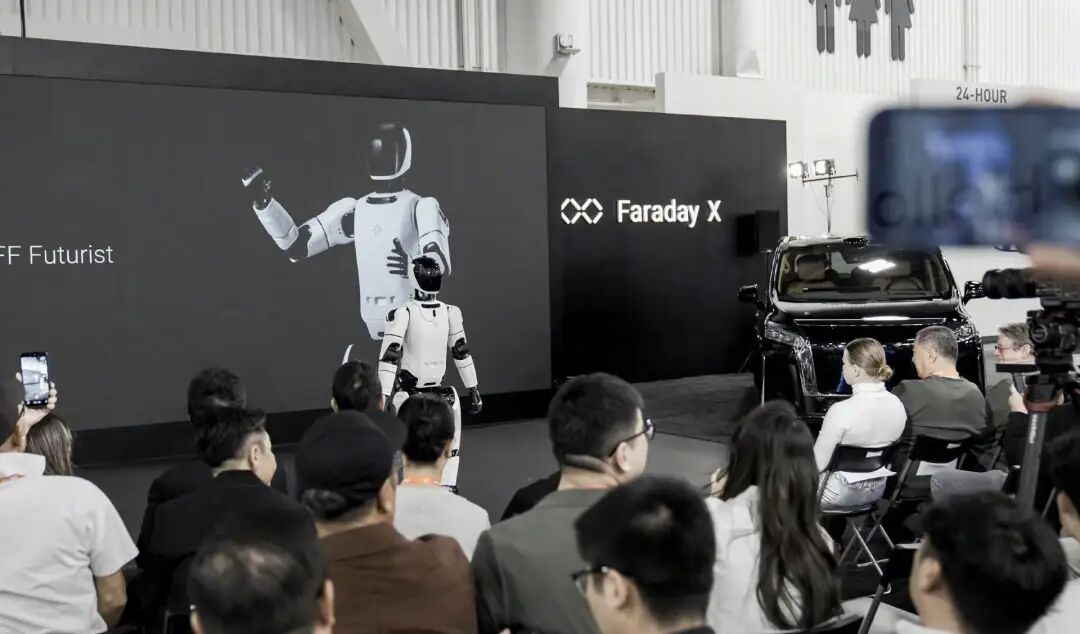
Simply put, the EAI 5x4 technology architecture consists of four technological systems and five technological platforms. The four systems cover physical structure, power and energy, intelligent interaction, and motion control; the five platforms include a Skills Open Platform, Brain Platform, Hardware Platform, Mechanical Platform, and Cloud Training Platform. The EAI Brain Platform is the core, aiming to achieve cross-scenario, highly generalized autonomous capabilities.
Additionally, at the event, Jia proposed the 'Four Modernizations' trend for the EAI robotics industry: generalization, professionalization, data assetization, and ecosystem protocolization. He noted that 12 years ago, he pioneered the 'electrification, AI, internetization, and sharing' trends in the automotive industry, leading global transformation. Now, the 'Four Modernizations' of EAI robotics will drive the intelligent industry revolution.
Simultaneously, FF launched the FF EAI Brain Open-Source Developer 1.0 Platform, inviting global robot OEMs, developers, and Skill teams to participate. Through open-source code, unified standards, and ecosystem collaboration, it aims to build a universal EAI 'brain' and skills ecosystem for multi-form robots.
The 'Trinity' ecosystem strategy embodies 'ecosystem synergy', integrating terminals, open-source platforms, and data factories. Internally, large-scale terminal delivery generates data to enhance AI brain capabilities, which in turn improves EAI terminal product strength, driving larger-scale sales and forming a technological ecosystem closed loop.
This rapidly establishes operational cash flow advantages, facilitating EAI EV financing and business growth. Externally, by open-sourcing FF's technology and platforms, opening protocol standards, and linking industry partners, developers, shareholders, and users, it achieves synergy.
To enhance profitability, FF introduced the 'FF Par' model, evolving from traditional dealerships. It upgrades from a single 'car sales' model to a sustainable 'car sales + user operations + vehicle ecosystem operations' approach. Partners are integrated into the OEM co-creation ecosystem, allowing dealers to become OEM shareholders and directly participate in and share OEM capital value.
In simpler terms, dealers become OEM shareholders through investment, directly sharing in company growth. FF's one-time car sales revenue transforms into recurring user subscriptions and ecosystem service income, enhancing dealer profitability and user loyalty.
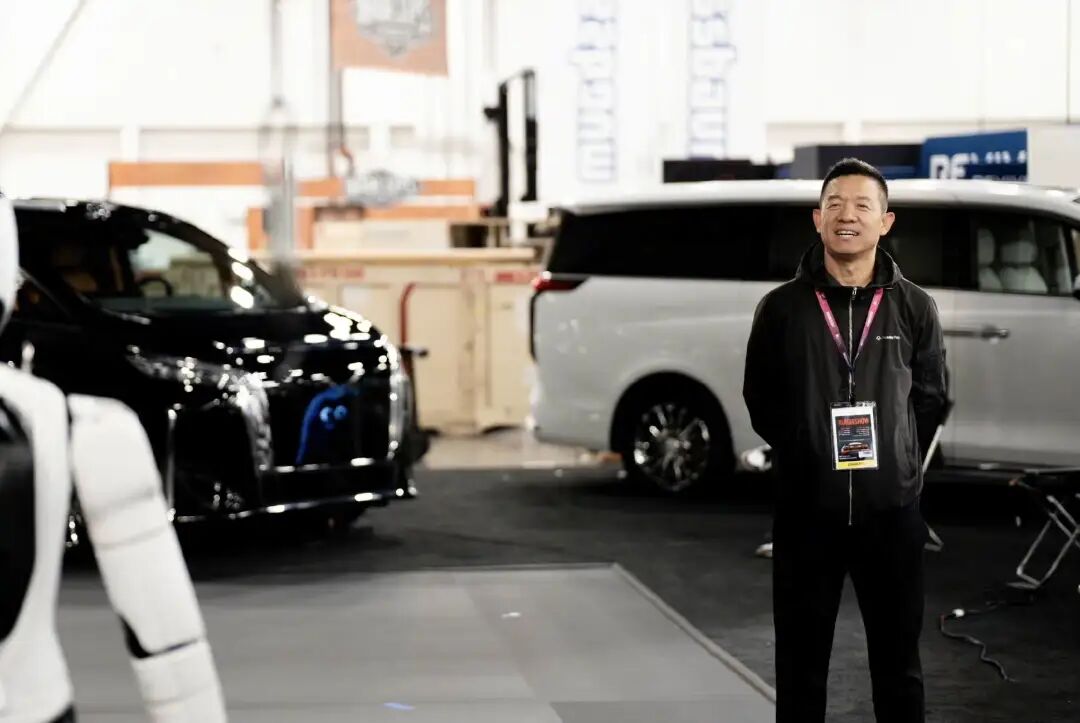
Throughout this launch, Jia remains the ultimate storyteller. AI and robotics, two of the hottest trends today, serve as his new narrative to secure capital support.
Shortly before unveiling the robots, Jia announced that FF had secured $10 million in investment from AIxC, entirely equity-based with no discounts or convertible debt. The transaction is expected to close around February 13, providing timely financial relief for Jia's business empire.

However, from LeEco's 'Breathtaking Dreams' to Faraday Future's 'Disruptive Car Manufacturing', and now to humanoid robots, Jia's entrepreneurial journey has always been accompanied by 'grand narratives' and 'empty promises'.
Take car manufacturing: Since 2017, FF has showcased impressive products at CES, yet delivery capabilities remain elusive. Nonetheless, each new story from Jia seems to revive hopes for his 'automotive dreams'.
This time, Jia has turned his sights to humanoid robots. Will capital buy in?
-
Several Judgments on the Development Trends of AI Data Centers
-
![]()
Tough Times Are Here: The Auto Industry Is Mired in Immense Pain
-
![]()
Honda Finds Itself 'With No Alternative' but to Battle On for Another Ten Years
-
![]()
Is the 'Chili Fish Head' Car, Once a Hit Among Noble Ladies, on Its Way Out?
-
![]()
DJI Osmo 360 II Review: Impeccable Hardware, Yet Software Still Lags Behind
-
![]()
The 'Dichotomy' in Alibaba's AI Ledger
-
Reinventing the 'Old Guard' with AI: A $12 Billion Venture in Just a Year
-
![]()
Alibaba's Q2 Profit Plummets by 32.6 Billion Yuan, with 67.7 Billion Yuan Earmarked for Capital Expenditures