DJI Osmo 360 II Review: Impeccable Hardware, Yet Software Still Lags Behind
 08/25 2026
 476
476
It cannot be denied that DJI is truly a brand that dares to break the mold in the industry, and its name, which implies 'innovation,' is highly appropriate.
In 2025, DJI unveiled its inaugural panoramic action camera, bridging the final gap in its mobile imaging portfolio. Despite being DJI's maiden venture into panoramic cameras, it delivered exceptional image quality, stabilization, and sophisticated algorithms all at once. At that time, Leitech bestowed an exceptionally high rating upon the Osmo 360, labeling it as "a debut at its zenith."
However, this raised another pertinent question: If the Osmo 360 set such a lofty benchmark from the outset, what should the Osmo 360 II aspire to achieve? This conundrum didn't linger long in my mind: Recently, Leitech got its hands on DJI's latest panoramic camera, the Osmo 360 II, and subjected it to rigorous testing.
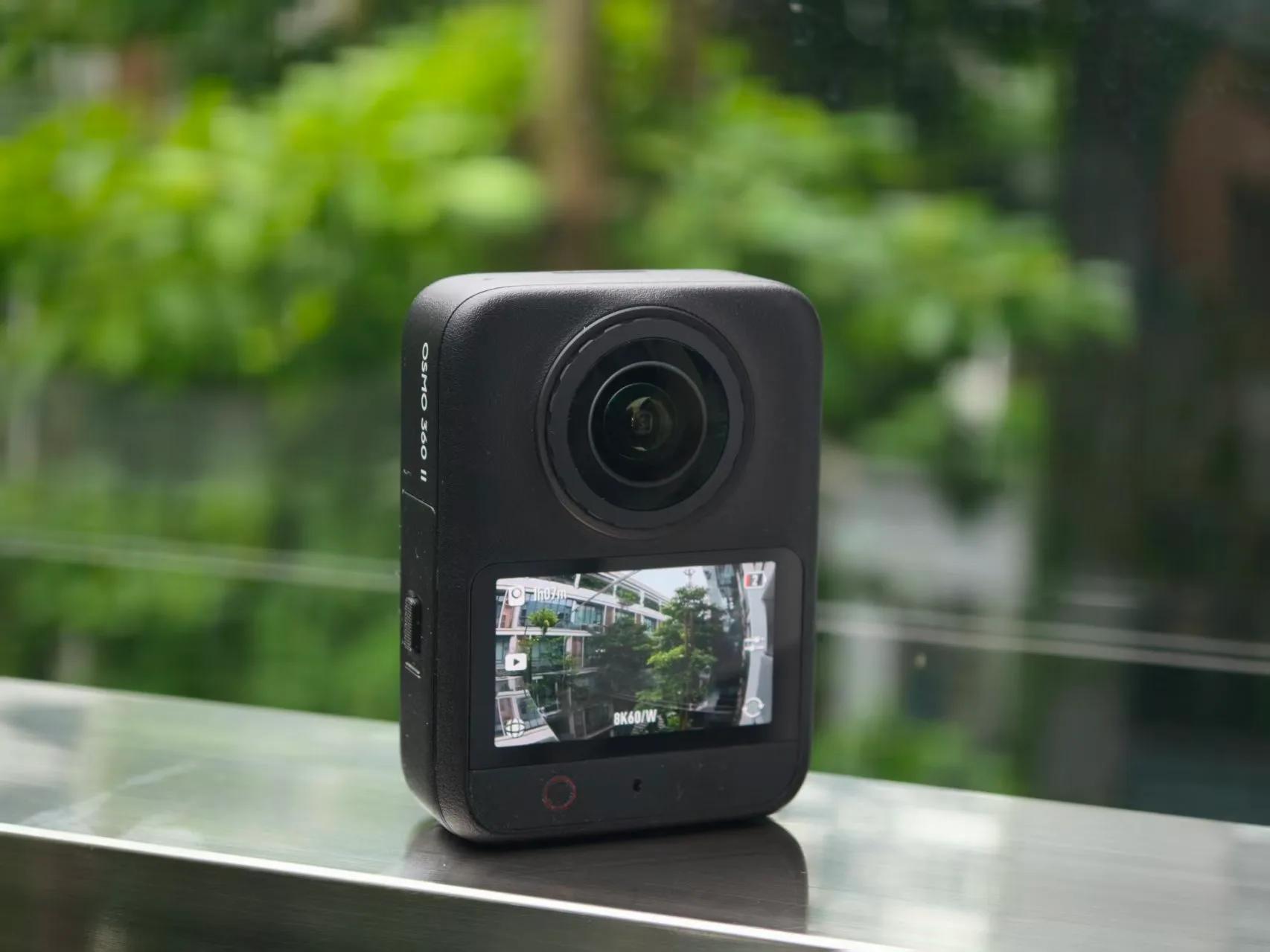
Image Source: Leitech
In terms of aesthetics, the Osmo 360 II closely mirrors its predecessor, featuring the same gray-and-black color palette, non-slip texture, and three-button interface. While the adage "if it ain't broke, don't fix it" holds merit, the Osmo 360 II's near-identical appearance to its forerunner makes it challenging to perceive it as a "next-generation" model at first glance.
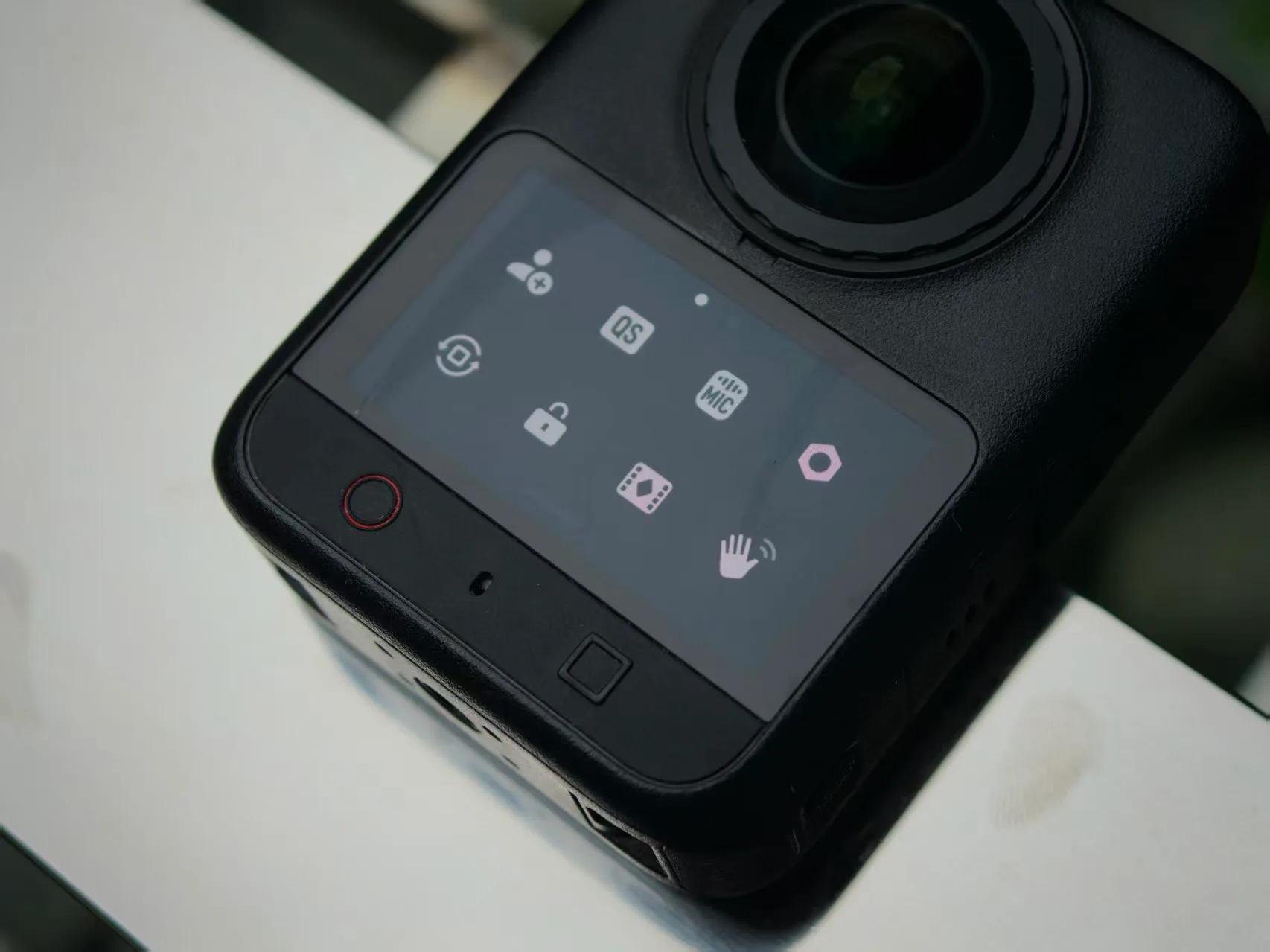
Image Source: Leitech
Nonetheless, during a recent team-building excursion, I seized the opportunity to evaluate the Osmo 360 II firsthand. Suffice it to say, DJI evidently prioritized "internal enhancements" over exterior modifications this time around.
So, can this panoramic camera, priced at 3,299 yuan, build upon its predecessor's success and reach even greater heights? Here's Leitech's verdict.
While I mentioned internal upgrades earlier, let me manage your expectations: The second iteration employs the same square CMOS sensor as the first, with no alteration in sensor size. Hence, don't anticipate it to "dominate the competition with a larger sensor"—the ceiling for image quality remains roughly on par with the inaugural model.
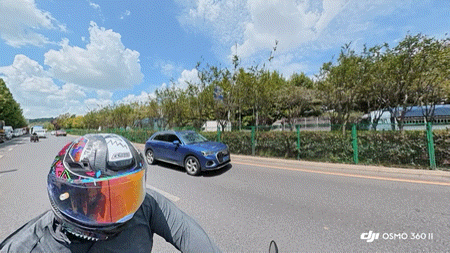
However, DJI didn't skimp on fine-tuning: Owing to enhanced data throughput, the Osmo 360 II can now capture 8K60fps panoramic video, an improvement over the first generation's 8K50fps. Don't underestimate those additional 10fps—they render motion scenes smoother and offer greater flexibility for slow-motion editing subsequently, significantly enhancing usability compared to the first generation. Consider capturing slow-motion footage while cycling, for instance: Even under slow-motion tracking shots, the image no longer appears jerky.
Video Source: Leitech
Moreover, despite the sensor hardware remaining unchanged, DJI discovered a "clever workaround" to augment video dynamic range, elevating it from 13.5 stops to 14.5 stops. As we know, panoramic cameras utilize two independent lenses and sensors. DJI employed an ingenious method here—the front and rear lenses capture footage with varying exposure balances, which are then merged using a more potent imaging algorithm, further expanding the dynamic range through the dual-lens exposure disparity.
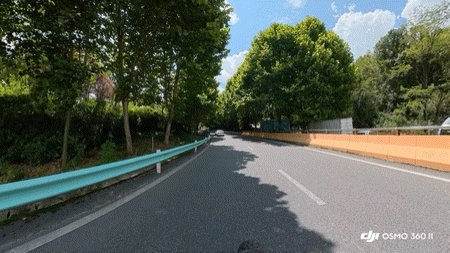
In real-world shooting scenarios, the most conspicuous improvement is evident in high-contrast settings. Consider footage captured at noon in Guizhou: Even sans a gray filter, the sky overhead and surrounding shadows retain ample detail, with no blown-out highlights or desaturated areas.
Video Source: Leitech
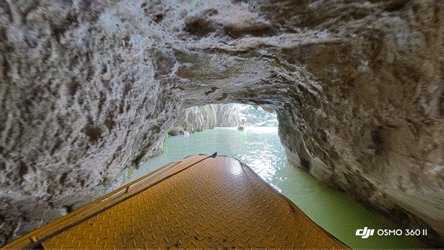
I also captured some dynamic high-contrast scenes, and the transition between bright and dark areas was smoother than in the first generation. Gone are the days of dark areas devolving into a muddled mess and bright areas becoming overexposed and white—the Osmo 360 II preserves significantly more detail in both regions.
Video Source: Leitech

Video Source: Leitech
For an outdoor-oriented panoramic camera, this enhancement is far more valuable than merely stacking higher resolutions on a spec sheet.
While the image quality improvements of the Osmo 360 II are evident, from a user's standpoint, such upgrades are essentially "par for the course." Compared to image quality, I contend that the Osmo 360 II's most noteworthy advancements lie in its overall user experience relative to the Osmo 360.
Firstly, the Osmo 360 II's panoramic algorithm has undergone refinement. Like other panoramic cameras, the first-generation Osmo 360 grappled with stitching issues in near-to-medium-distance shots. If the subject was too proximate to the lens, the stitched image often misaligned. Consequently, in most instances, we had to fully extend the selfie stick to capture usable panoramic footage.
The issue is that, in high-speed motion scenarios like cycling, extending the selfie stick inevitably induces camera shake, posing a safety hazard to both the camera and the user.
The Osmo 360 II's stitching is markedly superior: Even when I mounted it directly on a motorcycle's handlebars, there were no discernible artifacts around the subject's edges. In my opinion, this upgrade significantly broadens the usable range of "post-framing" for panoramic cameras and constitutes one of the Osmo 360 II's most commendable improvements.
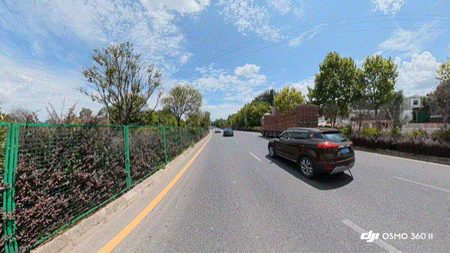
Video Source: Leitech
Additionally, the outermost protective lens cover is now user-replaceable. Due to the nature of panoramic cameras, the Osmo 360's two fisheye lenses must protrude outward, rendering the surface lenses highly susceptible to scratches. Any issues necessitated sending it to after-sales service. While DJI's after-sales support is commendable, the back-and-forth process was time-consuming.
The Osmo 360 II's protective lens cover boasts a novel removable design. With a replacement kit, users can swap it out themselves—no need to halt shooting and seek after-sales support in the middle of nowhere.
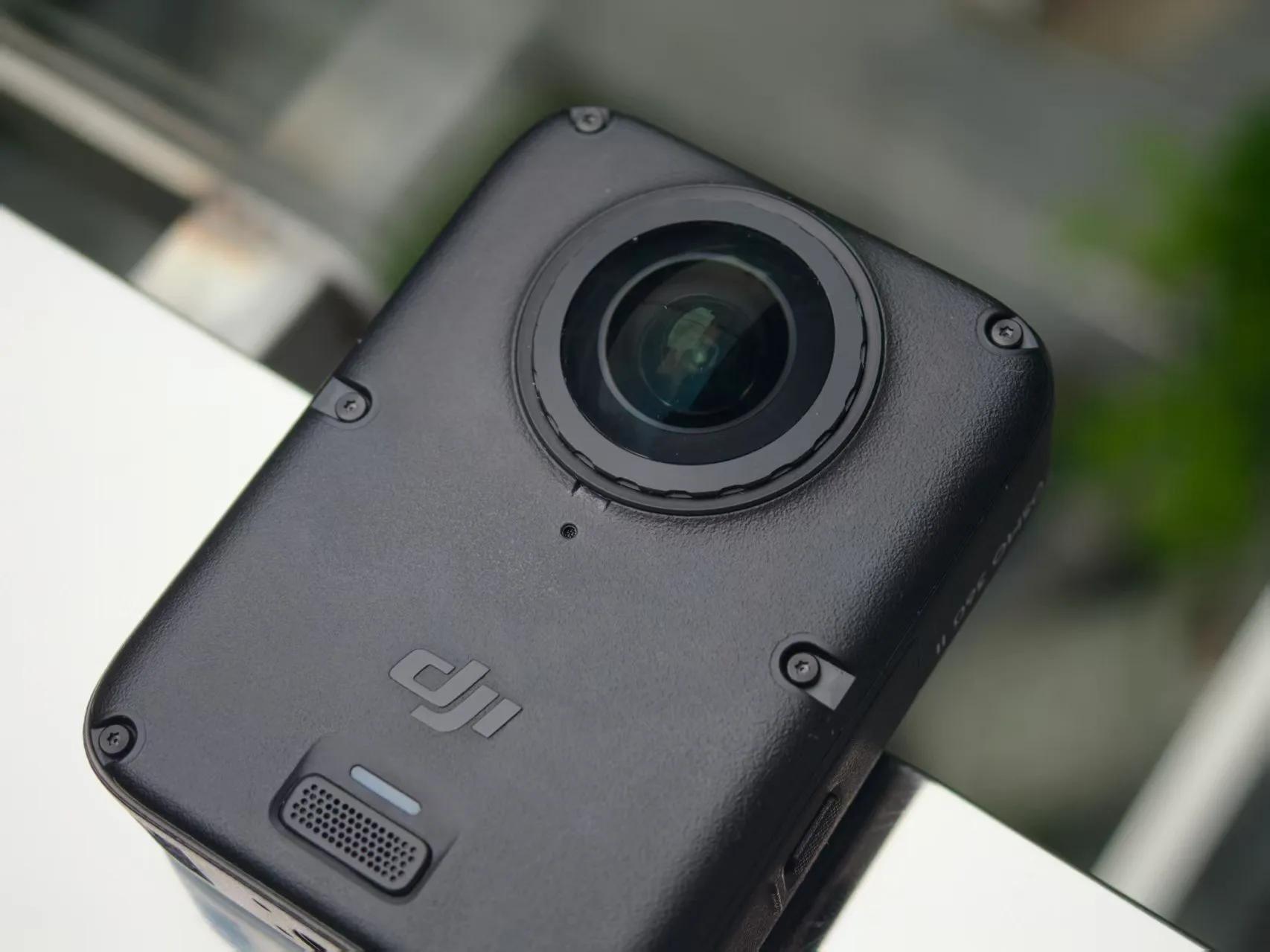
Image Source: Leitech
Beyond that, the Osmo 360 II incorporates 105GB of built-in storage, ideal for those "forgot-my-card" moments. While 105GB doesn't last long when shooting 8K60fps video, it's incredibly handy in emergencies.
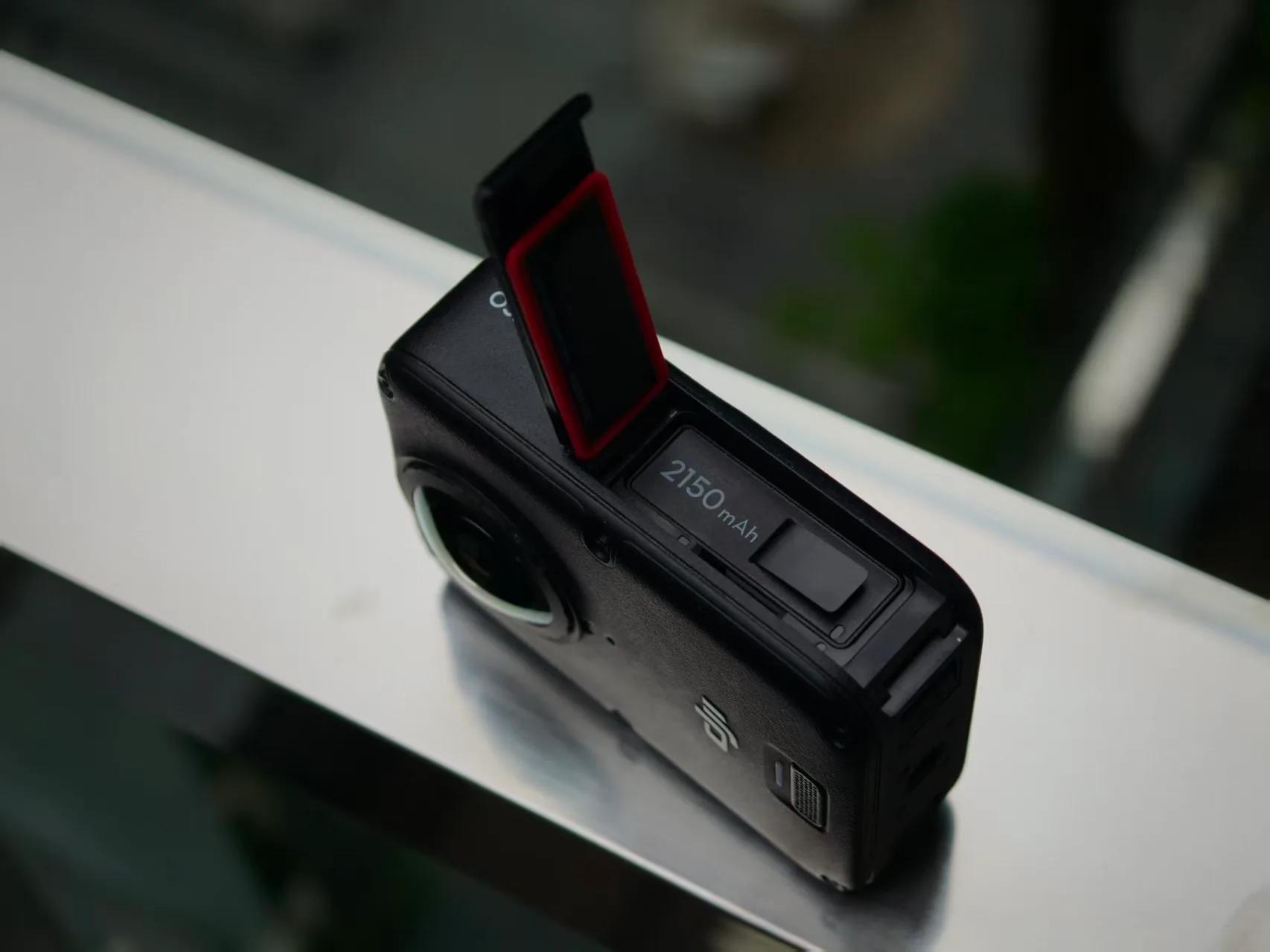
Image Source: Leitech
Based on my experience, the Osmo 360 II's hardware is truly impeccable. Unfortunately, DJI still has considerable room for improvement in the panoramic shooting software ecosystem.
During testing, the desktop version of DJI Studio occasionally failed to preview camera movements—you'd adjust the trajectory, but the scene wouldn't budge. When exporting footage from a cycling trip in Chongqing, I couldn't preview any camera movements or effects whatsoever, though the exported video turned out fine.
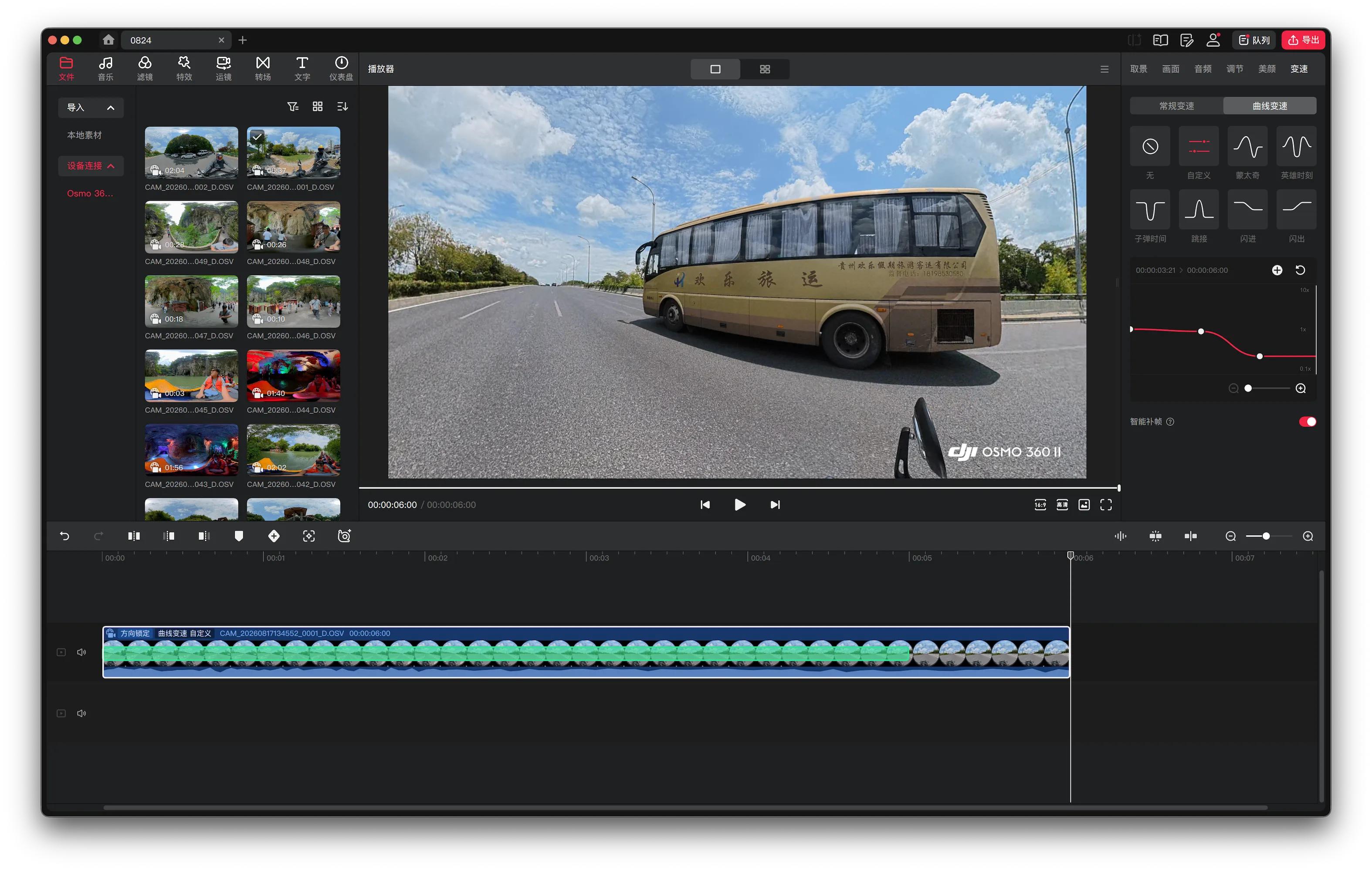
Image Source: Leitech
While the desktop DJI Studio has its bugs, the mobile Mimo app functions adequately. However, for serious panoramic editing and camera movement adjustments, most users will still opt for a computer to ensure efficiency. But with DJI Studio's questionable reliability and its unconventional lens control logic compared to other video software, DJI clearly has a long road ahead in software optimization.
Ultimately, panoramic camera post-production is inherently more complex than for regular action cameras. If DJI Studio doesn't improve, it risks squandering the goodwill garnered by the second-generation hardware. Fortunately, Mimo's intelligent tracking, highlight moments, and one-click editing remain user-friendly, so beginners aren't entirely left in the lurch.
Following Leitech's review template, here's a summary of the Osmo 360 II's pros and cons:
Pros:
1. 8K60fps + 14.5-stop dynamic range for superior backlight and low-light performance;
2. Enhanced panoramic algorithm for more stable stitching;
3. User-replaceable lens protectors;
4. 105GB of built-in storage.
Cons:
1. No sensor upgrade;
2. DJI Studio experience remains subpar;
3. No external cooler support, prone to overheating during outdoor shooting.
In terms of user experience, Leitech doesn't believe the Osmo 360 II is a must-have for everyone. The sensor remains unchanged, with all image quality upgrades based on algorithmic refinements. If you're not a professional user, the Osmo 360 II's enhancements may not be particularly noticeable.
However, as a "fix + upgrade" product, if the original Osmo 360's shortcomings deterred you, the Osmo 360 II is clearly tailored for you. Additionally, if you've never ventured into panoramic cameras before, the Osmo 360 II is an excellent entry point.
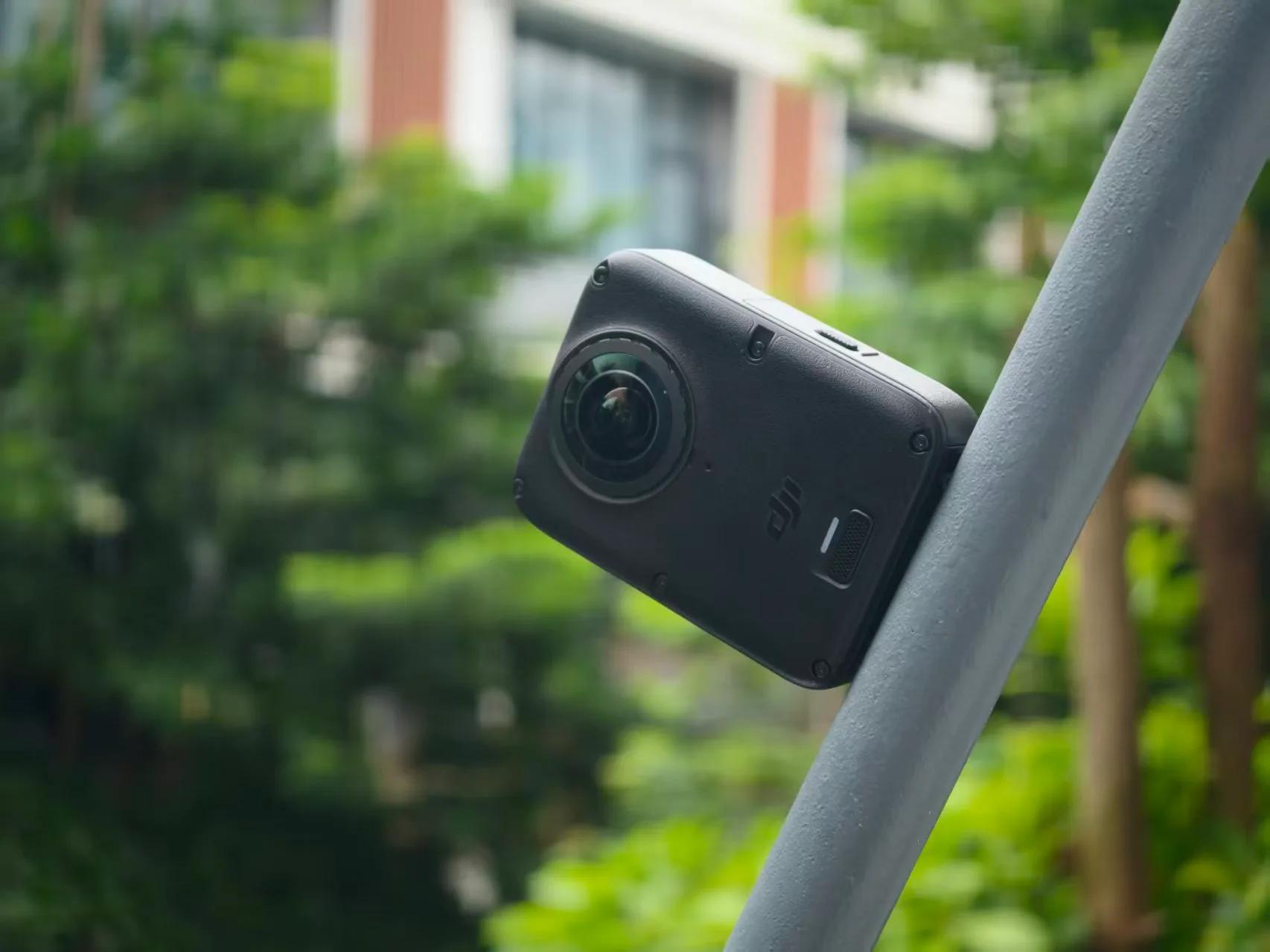
In terms of overall experience, the Osmo 360 II's stellar performance underscores DJI's maturation in panoramic camera development: The first generation nailed image quality, stabilization, and algorithms, setting a high bar; the second generation fills in the gaps.
Admittedly, the second generation's sensor lacks a hardware upgrade, so it's not a complete overhaul. However, DJI avoided making superfluous changes merely to feel "innovative" and instead focused on rectifying the first generation's shortcomings. This approach may not be flashy, but for DJI's "second-generation" product in a new category, it's a steady and dependable strategy.
Of course, DJI Studio's missteps remind us that while hardware can be swiftly enhanced, cultivating a robust ecosystem takes time. The second generation has addressed all the fixable issues—now, the remaining software challenges hinge on DJI's next update.
-
![]()
Tough Times Are Here: The Auto Industry Is Mired in Immense Pain
-
![]()
Honda Finds Itself 'With No Alternative' but to Battle On for Another Ten Years
-
![]()
Is the 'Chili Fish Head' Car, Once a Hit Among Noble Ladies, on Its Way Out?
-
![]()
DJI Osmo 360 II Review: Impeccable Hardware, Yet Software Still Lags Behind
-
![]()
The 'Dichotomy' in Alibaba's AI Ledger
-
Reinventing the 'Old Guard' with AI: A $12 Billion Venture in Just a Year
-
![]()
Alibaba's Q2 Profit Plummets by 32.6 Billion Yuan, with 67.7 Billion Yuan Earmarked for Capital Expenditures
-
![]()
DJI Osmo 360 II In-Depth Review: How Does It Achieve Significant Image Quality Enhancements Without Sensor Changes or Excessive Spec Stacking?