AI Restructures the Storage Industry, SanDisk Unlocks Data Value Across Cloud, Edge, and Endpoints with Innovation
 04/03 2026
 507
507
In 2026, the global flash memory industry stands at a new historical juncture. As artificial intelligence permeates every scenario—from large-scale model training in the cloud to edge computing, intelligent endpoints, and in-vehicle systems—the exponential surge in data is rewriting the underlying demand logic of the storage industry. The traditional focus on capacity and cost has now evolved into a comprehensive evaluation of performance, reliability, and scenario adaptability.
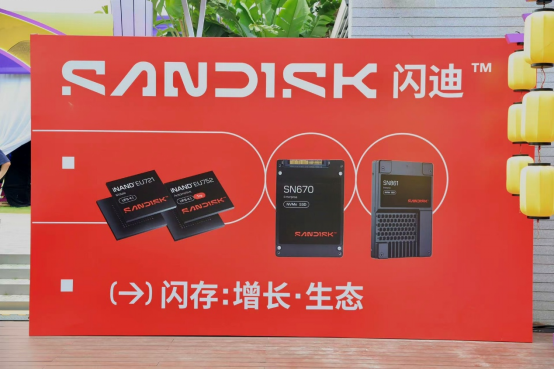
< SanDisk Exhibits at CFMS | MemoryS 2026 >
At the CFMS | MemoryS 2026 Summit, themed “Navigating Cycles, Unleashing Value,” the AI-driven industrial transformation was vividly showcased. As a global leader in flash memory and advanced storage technology innovation, SanDisk presented its full-scenario flash memory solutions covering cloud data centers, automotive endpoints, mobile devices, and smart video sectors. Alongside the launch of its new SANDISK iNAND MC EU721 embedded flash drive, the company outlined the development trajectory of the flash memory industry in the AI era through keynote speeches and media roundtables—emphasizing that only by anchoring technological innovation to full-scenario demands can companies truly navigate industrial cycles and unlock the core data value of the AI era.

< SanDisk Media Roundtable >
At the media roundtable, three speakers—Cai Yaoxiang, Vice President and General Manager of SanDisk China; Zhang Dan, Product Marketing Director; and Geng Hua, Product Marketing Manager—discussed the evolution trends of flash memory storage technology driven by AI and shared details about full-scenario flash memory solutions, including the new SANDISK iNAND MC EU721 embedded flash drive.

< Cai Yaoxiang, Vice President and General Manager of SanDisk China >
Cai Yaoxiang, Vice President and General Manager of SanDisk China, stated: “The rapid proliferation of AI applications, coupled with the continuous development of smartphones and intelligent connected vehicles, along with the improvement of data center infrastructure, has led to a surge in data volume and more complex workloads. This has created a significant demand for advanced flash memory storage technology. SanDisk has long been deeply committed to the Chinese market, focusing on local diversified needs. Leveraging advanced vertical integration capabilities, cutting-edge NAND technology accumulation, and production capacity advantages, we provide innovative flash memory storage solutions for diverse application scenarios. Across enterprise, consumer, client, gaming, mobile, and embedded sectors, SanDisk empowers customers to fully unlock data value through a rich product portfolio, charting a clear path for high-quality development in the AI era.”
AI Restructures Storage Demands, Unlocking Triple Opportunities for the Flash Memory Industry
The explosive growth of AI is making flash memory the core foundation of digital infrastructure. Currently, the NAND market is embracing three key opportunities, with storage products transitioning from capacity-driven to architecture-driven innovation. As Eric Spanneut, Senior Vice President of Global Products at SanDisk, mentioned in his summit speech, in the era of inference, intelligent agent workflows have become a storage bottleneck. SanDisk is driving product transition to QLC through global leading NAND technology, fused platform architectures, and system-level leadership. In the data center sector, the BiCS8 UltraQLC-based SANDISK SN670 NVMe SSD, with a capacity of up to 256TB, is designed for rapid data lakes; offloading KV cache to SSD reduces first token generation time (TTFT) by 41x by eliminating pre-filling calculations, while the SANDISK SN861 NVMe SSD, equipped with fifth-generation advanced PPE and a capacity of 32TB (3DWPD), easily adapts to new KV cache applications. Eric Spanneut concluded by stating that from data centers to edges, from mobile devices to IoT, SanDisk is advancing flash memory technology and products with a holistic perspective. Looking ahead, NAND will continue to evolve to address real-world storage challenges, truly empowering full-domain innovation through flash memory.
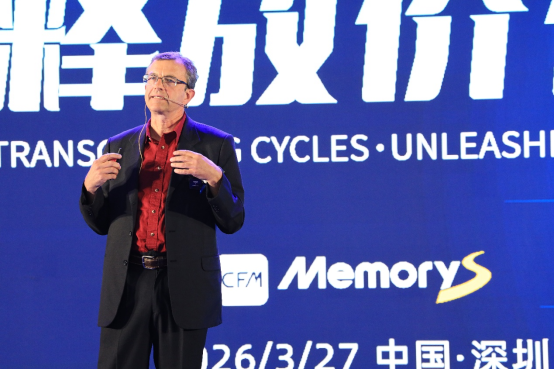
< Eric Spanneut, Senior Vice President of Global Products at SanDisk >
It can be said that storage competition in the AI era is no longer a battle of single product parameters but a systemic capability contest to cover full scenarios from cloud to endpoints and adapt to AI’s full workflow demands. SanDisk’s full-stack product layout (layout) and technological innovation showcased at this summit precisely align with the core pulse of industry development.
Full-Scenario Product Matrix Addresses Storage Pain Points from Cloud to Endpoints in the AI Era
Facing the comprehensive storage challenges brought by AI, SanDisk has leveraged decades of flash memory technology accumulation and innovation to create a full-scenario product matrix spanning data centers, mobile devices, smart vehicles, and smart video. Tailored to the pain points of AI workloads in different scenarios, precise technological adaptations and solution implementations have been achieved.
Mobile Endpoints: QLC UFS 4.1 Launch Unlocks New AI Experiences on Devices
The proliferation of on-device AI is driving mobile intelligent device storage technology into a new development phase. At the summit, SanDisk unveiled its first UFS 4.1 product based on QLC NAND technology—the SANDISK iNAND MC EU721 embedded flash drive. Designed for mainstream to flagship mobile intelligent devices, this product features advanced BiCS8 QLC 3D NAND technology, delivering sequential read speeds of up to 4500MB/s and sequential write speeds of 4300MB/s for the 1TB capacity version. Optimized for edge AI and AR/MR/XR applications, it enables localized AI data processing on mobile devices while integrating Advanced RPMB privacy encryption, device health anomaly monitoring, and HID fragmented file management to ensure long-term fluency and security. Currently sampled, the product offers 256GB, 512GB, and 1TB capacity options, with an expected market launch in April 2026, driving QLC technology adoption in high-end flagship mobile intelligent devices.
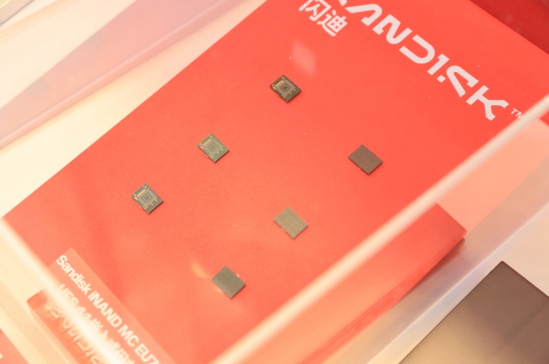
< SANDISK iNAND MC EU721 Embedded Flash Drive >
Cloud Data Centers: Dual-Track Layout for AI Training and Inference Workflows
Addressing the diverging demands for “compute-intensive” and “storage-intensive” scenarios in data centers, SanDisk offers a diversified enterprise SSD product line to cover the full AI data lifecycle, helping enterprises optimize storage combinations for differentiated demands at each stage, thereby improving efficiency and reducing TCO for large-scale AI workloads.
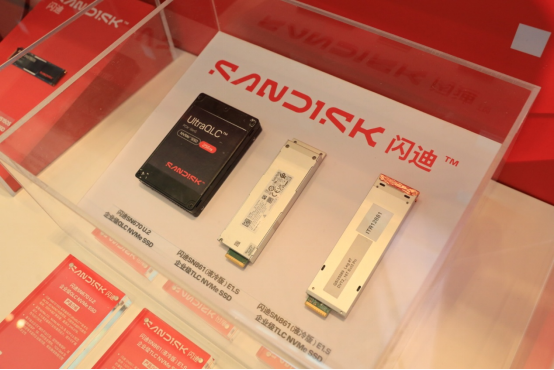
< From left to right: SANDISK SN670 NVMe SSD and SANDISK SN861 NVMe SSD >
In compute-intensive scenarios, targeting large model training, inference, and KV Cache offloading, SanDisk introduces the SANDISK SN861 NVMe SSD. This PCIe Gen5 enterprise SSD, with capacities up to 16TB, features ultra-low latency and exceptional responsiveness, perfectly suited for training, inference, and AI service deployment of large language models (LLMs); its lower power consumption enhances IOPS per watt, effectively reducing total cost of ownership (TCO). Notably, the SN861 E1.S has passed NVIDIA GB200 NVL72 system certification, and all interface and capacity versions support FDP (Flexible Data Placement) to significantly reduce write amplification (WAF), extend SSD lifespan, and improve service quality. Additionally, both U.2 and E1.S form factors have earned OCP Inspired certification from the Open Compute Project (OCP).
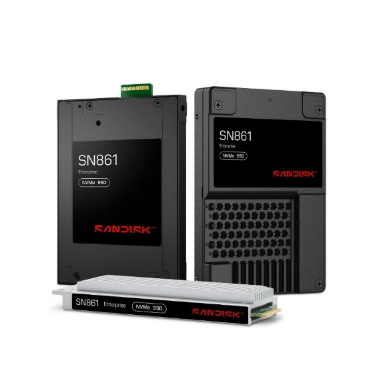
< SANDISK SN861 NVMe SSD >
In storage-intensive scenarios, addressing RAG vectorized data storage and high-speed AI data lake construction, SanDisk provides the UltraQLC-based SANDISK SN670 NVMe SSD, with capacities up to 256TB, offering exceptional capacity and performance support for building high-speed AI data lakes while effectively meeting enterprise demands for large-capacity storage and efficient retrieval of warm data transitioned from cold data.
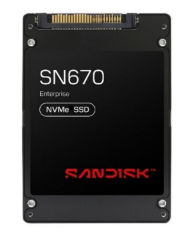
< SANDISK SN670 NVMe SSD >
Automotive Endpoints: Building the Data Foundation for Intelligent Connected Vehicles in the AI Era
The rapid development of intelligent connected vehicles and software-defined vehicles has made automotive storage a core growth market for the flash memory industry in the AI era. High-load applications like autonomous driving and smart cockpits demand not only higher performance and capacity but also stringent requirements for wide-temperature adaptability, reliability, and data security. At the summit, SanDisk introduced two automotive-grade storage products to comprehensively cover diverse scenario demands of onboard AI systems. Among them, the SANDISK iNAND AT EU752 UFS 4.1 embedded flash drive is SanDisk’s first automotive-grade product adopting the UFS 4.1 standard, designed for next-gen onboard AI systems. Featuring BiCS8 TLC NAND technology, the 1TB version delivers sequential read speeds of up to 4300MB/s and write speeds of 4100MB/s, over twice the performance of previous generations, significantly enhancing decision-making responsiveness for onboard AI systems. Meanwhile, its 1TB capacity provides ample space for onboard AI model storage and software OTA upgrades.
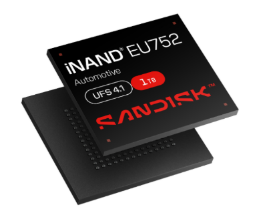
< SANDISK iNAND AT EU752 UFS 4.1 Embedded Flash Drive >
For next-gen high-performance central computing architectures, SanDisk offers the SANDISK iNAND AT EN610 NVMe SSD. This automotive-grade product supports wide-temperature operation, features M.2 1620 BGA packaging, capacities up to 1TB, and large-capacity TLC flash memory while allowing flexible configuration of storage space into high-endurance SLC mode, perfectly adapting to the stringent workload demands of onboard central computing architectures.
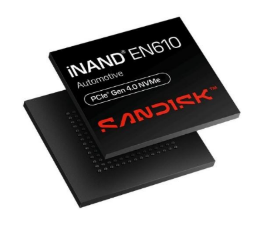
< SANDISK iNAND AT EN610 NVMe SSD >
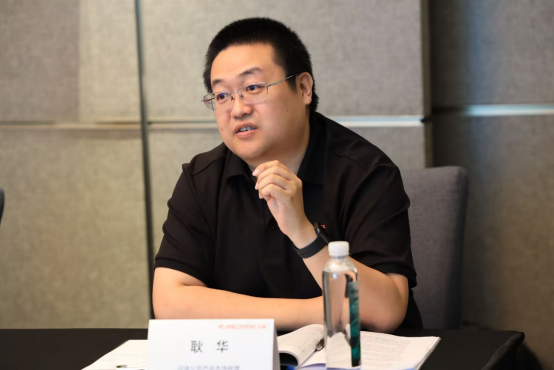
< Geng Hua, Product Marketing Manager at SanDisk >
Addressing differentiated storage performance demands across automotive scenarios, Geng Hua, Product Marketing Manager at SanDisk, further explained during the summit’s roundtable: “Automotive storage currently focuses on two main scenarios: cockpit and intelligent driving. Cockpit applications prioritize boot speed, map loading, and content retrieval performance, while intelligent driving scenarios require balanced read-write performance to ensure timely storage of logs and video data generated during system operation.”
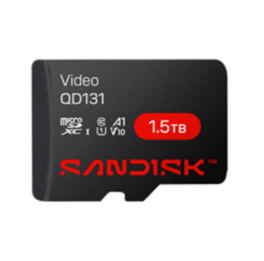
For smart video scenarios, SanDisk showcased the SANDISK Video VD QD131 microSD high-endurance video storage card, optimized for terminal video scenarios. Supporting 24/7 continuous writing, it adapts to extreme working environments, offers capacities up to 1.5TB, and features intelligent health monitoring, combining high capacity with efficiency and reliability to meet stringent demands in smart video, automotive, and other critical scenarios.
Deeply Cultivating Technology and Anchoring Long-Term Value in the Flash Memory Industry in the AI Era
The full-scenario product layout from the cloud to the endpoint is underpinned by SanDisk's decades of flash memory technology accumulation and a profound understanding of industry trends in the AI era. As early as 1991, SanDisk introduced a 20MB solid-state drive. Over the years, SanDisk has leveraged its advanced vertical integration capabilities, NAND technology expertise, and production capacity advantages to continuously provide robust and innovative storage solutions across various industries. This forms the core confidence in meeting the diverse needs of full-scenario applications in the AI era.

< Zhang Dan, Director of Product Marketing at SanDisk >
As Zhang Dan, Director of Product Marketing at SanDisk, mentioned during a media roundtable, 'From a technological perspective, we employ one of the world's leading NAND technologies. From the perspective of SSD products, we have a converged platform architecture. From a system-level design perspective, we maintain extensive communication with mainstream cloud service providers (CSPs), aiming to foster industry consensus in this field and thereby provide system-level leadership and development direction.'
This is also the 'answer' SanDisk provided at this CFMS summit—only by consistently focusing on technological innovation, addressing full-scenario storage needs from the cloud to the endpoint, and collaborating with the industrial ecosystem, can one truly navigate through industry cycles and continuously unlock the data value in the AI era.
-
![]()
The Allure of 'Acquisition Spree': Li Shufu's Left Turn, Xu Jiayin's Right
-
![]()
Strategic Transformation Yields Results: Phoenix Optics Reports 10.9% YoY Rise in Core Net Profit for H1 2026
-
![]()
Three Key Growth Trajectories Synergize! Crystal-Optech Reports 3.478 Billion Yuan in Revenue for H1 2026
-
![]()
Semi-Annual Report Sparks XPENG Motors Buzz
-
![]()
1.6 Billion Big Order Secured! SeeYA Technology's Revenue Soars by 287.87% in the First Half of the Year
-
![]()
Baidu's Profits Plunge by 68%: Unraveling the Mystery Behind the Numbers
-
![]()
Baidu’s Profits Tumble by 68%! Where Has All the Money Gone?
-
![]()
Hynix’s Taobao Store Shuts Down Abruptly: What Should Customers Do About Warranty Services for Memory Modules?