Apple's Lawsuit Could Set Back OpenAI's Hardware Ambitions by Years
 07/13 2026
 469
469
This article is written based on publicly available information and is intended solely for informational purposes. It does not constitute any investment advice.
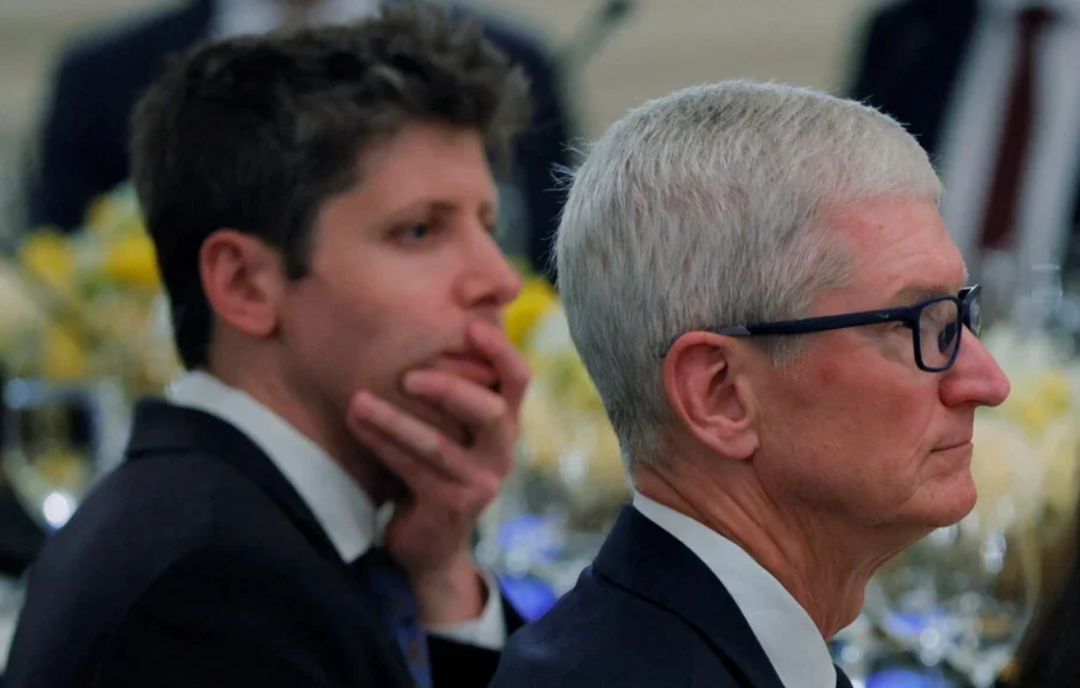
On July 11, Apple filed a 40-page complaint in the U.S. District Court for the Northern District of California, accusing OpenAI and its Chief Hardware Officer, Tang Tan, of systematically stealing trade secrets.
The core of Apple's allegations is straightforward: OpenAI encouraged employees still working at Apple to study confidential materials before interviews, bring hardware components and prototypes to so-called 'show-and-tell' interview sessions, and send internal documents to personal email accounts for future use before departing.
Apple wrote in the complaint: 'OpenAI's nascent hardware business now rests on the shakiest of foundations, its core corrupted by unlawfully misappropriated trade secrets.'
On the surface, this is a trade secret dispute; at its core, it is a systematic legal strike by Apple against OpenAI's hardware division, with precise timing, targets, and demands. OpenAI's hardware ambitions could be set back by years as a result of this lawsuit.
01 From One Interview to a Systematic Hunting
The most glaring plot (Note: ' plot ' is kept as-is for context, but in proper translation would be 'detail' or 'incident') in the complaint comes from a former Apple engineer named Chang Liu. When he left to join OpenAI's hardware division, he took a company-issued MacBook that was never returned, along with a damaging secret: he knew of a software vulnerability that provided ongoing access to Apple's internal file servers.
'LOL, I found I can access the network storage. This is hilarious,' Chang Liu wrote in a message to his former colleague, Alyssa Peng. Apple alleges that after joining OpenAI, he used this vulnerability to download presentations, hardware design diagrams, manufacturing details, and testing procedures. Alyssa Peng replied, 'I'm ready,' and used her own laptop to help him obtain more information. Several months later, in April of this year, Alyssa Peng also joined OpenAI's expanding hardware division.
This was not an isolated incident. Apple describes in the complaint a campaign to 'systematically acquire, retain, and use' its confidential information. OpenAI's interviews were designed as information-gathering sessions. One Apple employee, who had just received project materials hours before an interview, was grilled by Tang Tan on the same project's details during the meeting. The complaint states, 'This became a recurring pattern.'
More alarmingly, Tang Tan required candidates to bring 'physical components' to interviews. Batteries, logic boards, and other components were brought to OpenAI's offices. At least one candidate expressed discomfort, saying he was 'surprised someone brought unreleased hardware' and that he 'didn't know you could take these things out of the office.' Apple's response: You can't.
Once employees were onboard, OpenAI distributed a 'checklist,' allegedly compiled by Tang Tan, instructing new hires on how to evade Apple's security team reviews. The complaint alleges that this checklist was specifically used to help departing employees send information from Apple devices to personal email accounts before leaving.
02 The Risk-Taking Gene of a Former Apple Executive
The central figure in this lawsuit is Tang Tan. He worked at Apple for 25 years, starting with early Mac notebook and iPod designs, taking over the entire iPhone design team in 2011, and later leading the Apple Watch design efforts. Before departing, he was Apple's Vice President of Product Design, overseeing multiple product lines including the iPhone, smartwatches, AirPods, and the hardware engineering department.
A person who worked with Tang Tan described him to Bloomberg as known for 'flying too close to the sun,' with a working style of 'moving fast, breaking things, and ignoring details.'
In late 2023, he informed his superiors that he would leave Apple. Surprisingly, Apple unusually allowed him to stay until February 2024 to oversee the transition. But behind the scenes, he had already begun collaborating with former Apple design chief Jony Ive and OpenAI CEO Sam Altman on a grand hardware project to create a new class of AI devices that could one day challenge the iPhone itself.
Tang Tan and Ive co-founded io Products, a startup acquired by OpenAI last year for $6.5 billion. Also involved were Ive's successor at Apple, Evans Hankey, and Scott Cannon, a former manufacturing manager who left in 2010. Apple's allegations strike at the essence of this team's composition: OpenAI is attempting to replicate Apple's product development machine.
The poaching continued until last month. In June, OpenAI hired Paul Meade, Apple's head of smart glasses. This time, Apple reacted differently: Paul Meade was immediately shown the door without a transition period. Sources familiar with the matter say OpenAI has poached over 400 former Apple employees, hollowing out teams across hardware engineering departments.
03 Why Now?
Apple reveals in the complaint that it had attempted to resolve the dispute before litigation. In February, Apple contacted OpenAI, expressing concerns about confidential information flowing to the company and demanding an investigation and cessation of such behavior. Apple claims OpenAI never responded.
Meanwhile, cracks in the relationship were widening. Apple and OpenAI had been partners. In 2024, Apple announced it would integrate ChatGPT into Siri. But shortly after, rumors emerged that OpenAI had threatened to sue Apple, alleging that Apple had failed to effectively fulfill its agreement to embed ChatGPT into the iPhone. Bloomberg previously reported that even the threat of litigation would not be quickly forgotten in Cupertino.
The deeper conflict lies in product competition. OpenAI's acquisition of Ive's io Products aims to develop next-generation AI devices that could break free from the iPhone's dominance. According to sources, OpenAI is developing an AI-powered smartphone alternative, though the first product may be simpler—the company has explored concepts ranging from earbuds and smart glasses to AI-enhanced speakers. Meanwhile, Apple is also developing next-generation home devices, AirPods with cameras, smart glasses, and other wearables. The two companies are now on a collision course in the same track (Note: ' track ' is kept as-is for context, but in proper translation would be 'market' or 'arena').
Apple's complaint makes uncompromising demands: it requires OpenAI to immediately cease all infringing activities, destroy all materials containing Apple's proprietary information, and redesign all products that may contain Apple's technology. If the court grants these requests, OpenAI's hardware division could face a complete reboot.
04 More Than a Lawsuit: A Pre-IPO Blow
The lawsuit's impact on OpenAI extends far beyond the legal realm. OpenAI is preparing for an initial public offering and has committed billions of dollars to its hardware business. But sources reveal that when acquiring io Products, the company had little more than concepts and early prototypes—no substantial products existed. At the time, OpenAI was still struggling to find a compelling product path. Now, that path may be blocked by a single lawsuit.
The longer-lasting impact lies in partnerships. Microsoft, once OpenAI's most steadfast ally, has removed OpenAI from Copilot and internal users, accelerating its shift to proprietary models. Apple was supposed to be OpenAI's bridge to consumers, but now that bridge has become a legal battleground. As one industry commentator put it: 'OpenAI is burning every bridge it has.'
One line in Apple's complaint may be the most damaging: 'From technicians to the Chief Hardware Officer, with the cooperation of business partners, OpenAI has been stealing Apple's trade secrets and confidential information.' This is not rhetoric. It is written in a legal document filed with a federal court, where every line will be scrutinized, cross-examined, and made public. For a company racing toward an IPO, this level of public allegation is a continuous hemorrhage.
Tang Tan was known for risk-taking at Apple. But this time, he may have flown too close to the sun. And the entire OpenAI hardware division is falling with him.

-
![]()
Will Changan Mazda, Mired in Difficulties, Follow Skoda’s Path Out of China?
-
![]()
This Week in Home Appliances: Domestic Cool, Overseas Hot – Haier, Midea, Gree, Hisense Break Through; JD.com, TCL, Samsung, Vanward Drive Transformation
-
Seres Anticipates Over 2.2 Billion Yuan Loss in Q2, with Core Subsidiary AITO Automobile Projected to Lose 1.9-2.15 Billion Yuan
-
![]()
Breaking Through Barriers: Five Models for Chinese Automakers to Access Global Markets
-
![]()
Young Generation Trades Cars as Often as Smartphones! Average Age of New Energy Vehicles: Just 1.8 Years...
-
![]()
Musk Declares SpaceX Will Surpass the Combined Value of Everything on Earth! Is He Just Making Bold Claims? Online Debates Rage On…
-
![]()
The Most Terrifying Truth Behind GPT-5.6: AI Has Started to Self-Evolve
-
![]()
Is AI Still the Main Theme of the Market After the Decline of Memory Stocks?