Will Changan Mazda, Mired in Difficulties, Follow Skoda’s Path Out of China?
 07/13 2026
 507
507
Will Changan Automobile repeat the patterns set by Dongfeng with Luxgen, GAC with Mitsubishi, and SAIC with Skoda, ultimately opting to abandon Changan Mazda?
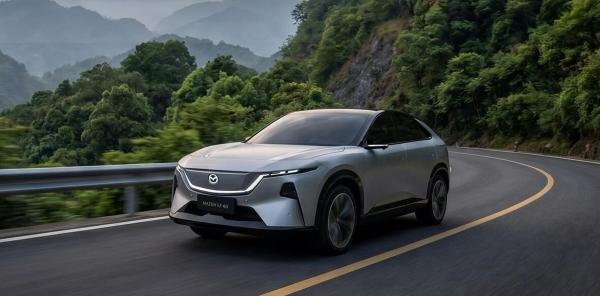
“I thought buying from a nearby dealer would make maintenance convenient, so I opted for the dealership's dual insurance package when purchasing the car. However, soon after I got my new car, the 4S store closed, forcing me to travel to a store in the next district, which was both far and congested. Not long after, that store also shut down, and I was redirected to a Hyundai 4S store for maintenance,” recently shared a frustrated Changan Mazda owner from Sichuan on Xiaohongshu.
This is not an isolated incident. On platforms like Xiaohongshu, Dongchedi, and Chezhinet, searching for keywords such as "Changan Mazda 4S store closures" and "Mazda dual insurance package" reveals numerous similar complaints. From Chengdu to Chongqing, and from Zhengzhou to Kunming, the wave of Changan Mazda dealership closures is leaving many owners without after-sales support.
The root causes of this situation point to two stark realities:
First, sales are stagnant, and dealers are "losing money on every sale." In 2024, Changan Mazda’s annual sales were only 75,700 units, a decline of more than 70% from its peak of 309,400 units in 2017. "Losing money on every sale" has become the norm, leading to store closures as a measure to cut losses. A manager at a Changan Mazda dealership in Beijing revealed to Luki Business Review that their monthly sales are only in the double digits, primarily driven by loyal Mazda enthusiasts. Few young people visit the store, and even fewer choose electric vehicles.
Second, the manufacturer relies too heavily on traditional selling points in its marketing. While the sales network is crumbling, official messaging still focuses on traditional slogans like "Skyactiv-X" and "Jinba Ittai" (Horse and Rider as One). Even during the launches of the EZ-6 and EZ-60, the manufacturer emphasized "Jinba Ittai." Dealers struggle to explain to customers why they should spend over 100,000 yuan on a Mazda electric vehicle.
In contrast, existing fuel car owners feel neglected. Under a public welfare post published by Changan Mazda’s official WeChat account on June 28 this year, a highly upvoted user comment bluntly stated: "I think it would be better if your official account shared upgrade packages, update methods for older models, and maintenance knowledge instead of just advertising."
A closer look at the official account’s content reveals that among the 13 posts published after the June 13 post about the Chongqing Auto Show, not a single one directly discusses the cars. The pressing daily needs of loyal brand supporters—how to make their cars more user-friendly and durable, or when new energy vehicles will receive OTA updates—are absent from the official communication agenda.
All of this is happening against the backdrop of a collective retreat of joint venture brands in the Chinese market. As the tide recedes, Changan Mazda faces a situation that must be accurately documented.
"Among the remaining joint venture automakers, we are the most aggressive," said Wang Xiaoling, the newly appointed executive vice president of Changan Mazda, in an interview at the Beijing Auto Show in April.
Her statement was telling.
Rewind a year. In May 2025, Deng Zhitao, then executive vice president of Changan Mazda, optimistically declared that a new product would be launched annually until 2027, aiming for annual sales of 300,000 units, with new energy vehicles accounting for 90%. Earlier, in April of the same year, Deng issued a "military order" before the debut of the EZ-60, mandating 20,000 units in sales from its launch to the end of the year.
From Deng Zhitao to Wang Xiaoling, the statements of two consecutive executive vice presidents have been remarkably similar—aggressive, firm, and uncompromising.
But the louder the slogans, the more jarring the echoes of disappointment. According to Yiche sales data, the EZ-60 was launched in September 2025, with sales of 3,317, 4,565, 3,377, and 3,123 units from September to December of the same year, failing to meet the four-month target of 20,000 units. From January to May this year, Changan Mazda’s cumulative sales were 39,784 units, only 13.3% of the annual target of 300,000 units.
When a brand feels compelled to label itself as "aggressive," it often means it has no retreat. However, this might have been achievable in the past.
Industry insiders note that Mazda fans were once highly loyal. The Mazda 6, known as the "King of Corners," dominated the B-segment market, while the Mazda 3 and CX-5 won over countless fans with their "Jinba Ittai" experience.
During the heyday of joint venture brands, Mazda cultivated a highly loyal fan base with its unique driving dynamics and design aesthetics. The nickname "Eastern BMW" alone attracted many.
"At the time, compared to Japanese brands like Toyota and Honda, Mazda offered better value for money, filling a gap in the fuel car market," a senior automotive analyst who worked at a Mazda joint venture for four years told Luki Business Review.
So why is it struggling now?
The analyst explains from an industry perspective that in the current era of accelerated new energy transitions, Mazda has failed to keep pace. Additionally, fuel car development is controlled by the Japanese side, limiting localization. Meanwhile, Chinese brands have surpassed Mazda in performance and value, with competitors constantly emerging to squeeze the market.
Changan Mazda’s product lineup can be described as "stagnant." Its current mainstay models, such as the Mazda 3 Axela and CX-5, are familiar faces. The fourth-generation Mazda 3 Axela was launched in September 2019, marking the first complete platform iteration since the third generation in 2013. As of June 2026, the 2025 and 2026 models are merely annual updates of the fourth generation.
Notably, most Axela models do not support wireless Apple CarPlay, and only a few high-end trims offer Level 2 autonomous driving. Competitors like the BYD Qin PLUS have surpassed it in smart cockpits and autonomous driving while offering lower prices.
The analyst bluntly states that Changan Mazda has been overtaken by new energy brands like Tesla and BYD. It’s not that Mazda has worsened; the era has simply moved too fast.
Back then, "Mazda fans" were willing to pay for "driving pleasure" because no other brand in the same price range could match Mazda’s handling and design. But now, new energy vehicles achieve 3-second acceleration, smart chassis systems deliver stable cornering, and domestic cars priced around 100,000 yuan come standard with Level 2+ autonomous driving.
To boost competitiveness, the Axela once slashed prices by 30,000 yuan to "trade price for volume," but this backfired, causing the brand’s premium image to collapse. In the comments section of Xiaohongshu posts recommending Changan Mazda, some users bluntly state: "I’ll consider it when its new energy vehicles drop below 100,000 yuan."
Data from the used car market further illustrates the issue. The "May 2026 China Automotive Residual Value Research Report" jointly released by the China Automobile Dealers Association and Jingzhengu shows that Mazda’s three-year residual value is 53.8%, a decline and even lower than electric vehicles like the BYD Tang L and Leapmotor C16, both exceeding 70%.
"We rarely receive Changan Mazda cars these days; there aren’t many on the market," said a used car dealer in Beijing’s Huaxiang district to Luki Business Review. "The inventory is too low, and few people buy new ones."
"Changan Mazda is now living off its past reputation," the analyst told Luki Business Review. "Skoda recently withdrew from the Chinese market, and Changan Mazda could face a similar fate."
"Changan Mazda’s sales in the Chinese market now account for only about 5% of its global total, making it somewhat insignificant," said Zhang Xiang, a researcher at the Automobile Industry Innovation Research Center at North China University of Technology, to Luki Business Review.
Thus, while overseas markets like North America continue to generate stable profits from fuel cars, the Chinese market—which is bleeding sales and requires massive new energy investments—has been deprioritized in headquarters’ decision-making.
This explains why Changan Mazda is always slow in accessing R&D resources and introducing new models in China. Standing on the edge of the Chinese market, if it fails to leverage existing electric vehicle platforms to quickly gain market share and find new survival strategies, this once-iconic maverick will likely follow Skoda’s path, becoming another marginalized joint venture specimen in China.
However, unlike Skoda and other early withdrawals, Changan Mazda now has its own electric vehicle brand. In 2023, Changan Mazda established a new joint venture model with Changan Automobile. In October 2024, the first pure electric sedan, the EZ-6, built on Changan’s EPA platform, was launched, followed by the second new energy model, the EZ-60, in September 2025.
While most joint ventures hesitate at the new energy threshold, Changan Mazda’s rapid launch of two mainstream platform electric vehicles demonstrates a resolute and dignified transition stance.
But the cost has been heavy. In its desperate survival efforts, Mazda has ceded its core "soul." Both new energy models directly adopt Changan’s EPA1 electric platform, rely entirely on China’s domestic supply chain, and use range extenders developed by Changan. Mazda contributes only its Kodo design language and "Jinba Ittai" chassis tuning. Industry insiders comment that the EZ-6 and EZ-60 are essentially "rebadged" Changan Avanar models.
This joint venture model, which cedes core new energy components to the Chinese side, differs from Nissan’s approach of using its proprietary intelligent electric hybrid technology (e-POWER). While the former may boost sales in the short term, it fails to make a significant impact or gain a foothold in the mainstream new energy market, unlike Nissan’s past successes.
Moreover, ceding core three-electric (battery, motor, electronics) and intelligence technologies to the Chinese side has stripped Mazda of technological initiative. First, when consumers experience intelligence logic similar to the Avanar series, the physical basis for Mazda’s traditional high premiums disappears. New electric vehicle buyers are unlikely to associate Mazda with leading electrification technology. Second, since core components and technology platforms originate from the Chinese side, Changan Mazda has less direct and efficient control over supply chain fluctuations, cost management, and subsequent intelligence upgrades compared to domestic brands.
When Luki Business Review asked Changan Mazda insiders whether future electric vehicles would use Mazda’s proprietary platforms, the response was a noncommittal "not yet determined."
If Mazda is not committed to a localized showdown in China’s new energy market, what is the true purpose of launching these two models at the cost of "technological autonomy"?
"Mazda will not develop new models specifically for the Chinese market," Zhang Xiang bluntly told Luki Business Review. Regarding the launch of the two new models, Zhang said Mazda views China as a hub for high R&D standards and low costs, aiming to develop global new energy models here.
This strategic consideration is reflected in the repositioning of Changan Mazda’s Nanjing plant. Now, it is not only Mazda’s sole overseas new energy R&D center but also its global new energy vehicle export hub. The overseas version of the EZ-6, the Mazda 6e, is already planned for export to over 20 countries and regions, including Europe and Australia.
Becoming a "frontline outpost for overseas expansion" is the greatest value Changan Mazda can offer to its Japanese headquarters, but it also means its battle against new energy forces in China has effectively retreated to the fringes.
From a business perspective, given Changan Mazda’s consecutive sales declines, incomplete new energy transition, and fading market presence, the industry wonders: Will Changan Automobile follow Dongfeng with Luxgen, GAC with Mitsubishi, and SAIC with Skoda in abandoning Changan Mazda?
"With Chinese brands now having technology and products, Changan’s domestic segment has become its pillar, and it no longer relies on joint ventures as ‘profit blood donors.’ If Changan Mazda continues to incur losses, from a business standpoint, divesting or selling shares to stop the bleeding makes sense," Zhang Xiang told Luki Business Review. After all, in early June, Changan Automobile planned to transfer 40% of its shares in Changan Ford New Energy Vehicle Technology Co., Ltd., which, if successful, would make Changan Ford New Energy wholly owned by Changan Ford.
However, to gauge Changan Automobile’s attitude toward Changan Mazda, one must examine the cold, hard financial statements.
For a long time, Changan Mazda was Changan Automobile’s most stable profit pillar after "Changan Ford." During its 2016-2017 heyday, leveraging the premium appeal of Skyactiv models like the Axela and CX-5, Changan Mazda’s automotive and engine businesses generated 1.481 billion yuan in investment income for its parent company in 2016. In 2017, at its sales peak, this figure soared to 1.838 billion yuan, accounting for nearly a quarter of Changan Automobile’s annual net profit.
However, by 2025, while Changan Automobile’s financial statements do not separately report losses for Changan Mazda, the joint venture segment, which includes Changan Ford and Changan Mazda, incurred a 430 million yuan investment loss for the parent company. The former "profit cow" has now become a "chronic bleeding point" requiring continuous parental support.
Currently, this joint venture loss must be offset by profits from Changan Automobile’s domestic segment. In Q1 this year, Changan Automobile’s net profit was only 351 million yuan, ranking seventh among traditional automakers, behind Jiangling Motors. Among the seven traditional automakers, Changan Automobile also saw the highest year-on-year net profit decline at 74.09%.
Worse, the crisis has spread to Mazda’s global operations. Data shows that in FY2025, Mazda’s sales were 4.92 trillion yen, down 2% year-on-year, with net profit at 35.1 billion yen, a 69% decline.
This brings us back to the original query: Faced with the transformation from a "profit cow" to a "bleeding point," will Changan Automobile give up on Changan Mazda? Zhang Xiang shifts the discussion slightly, noting, "Not in the immediate future."
The rationale behind this is that, within Changan Automobile's strategic framework, Changan Mazda acts as a "proving ground" for "overseas technological expansion," operating under the guise of a joint venture.
To safeguard this "new energy proving ground," Changan Automobile has refrained from abandoning Changan Mazda. Nonetheless, this decision to "not abandon" is accompanied by intense internal restructuring and the growing pains that come with it.
Since 2025, amidst internal turmoil, Changan Mazda has witnessed four remarkable executive turnovers. Within a single year, its chairman, president, head of marketing, and executive vice president were all replaced. Notably, two consecutive chairmen—Zhang Deyong and Ni Erke—are financially astute "bean counters," with careers forged on the principles of "budget control and risk aversion." This sends a clear signal: Changan Mazda has entered a defensive phase focused on "cost-cutting and efficiency-driving."
However, internal "austerity measures" alone are insufficient to win the new energy battle, which requires sustained investment and fierce competition.
It is evident that time is running out for this Japanese "East Sea BMW."
-
![]()
Why Hasn’t AI-Driven Payment Flourished Despite Tech Giants’ Push?
-
![]()
Intensify Efforts in the High-End Optoelectronic Semiconductor Sector! Aipu Dingchun and Jiangsu Meidong Forge a New Joint Venture
-
![]()
From Endoscopes to Optical Interconnects for AI Computing Power: A Veteran Optical Company's Strategic Shift
-
![]()
Behind the Scenes of Token Factories' Rise as a Capital Market Sensation
-
![]()
What Does MaaS Ultimately Bring to Chinese Cloud Providers? | In-Depth Industry Analysis
-
![]()
China’s Auto Resale Value Report Unveiled: AITO M9 Electric and Hybrid Variants Dominate Rankings
-
![]()
Dialogue with Huang Yangming: On the Eve of the Physical AI Boom, the Value of Data Infrastructure Begins to Materialize
-
![]()
The Experience is a Bit Unusual! Logitech G Cloud Review: Great Feel, but Not Ideal for Cloud Gaming