ByteDance AI Begins to Take Center Stage
 08/03 2026
 517
517
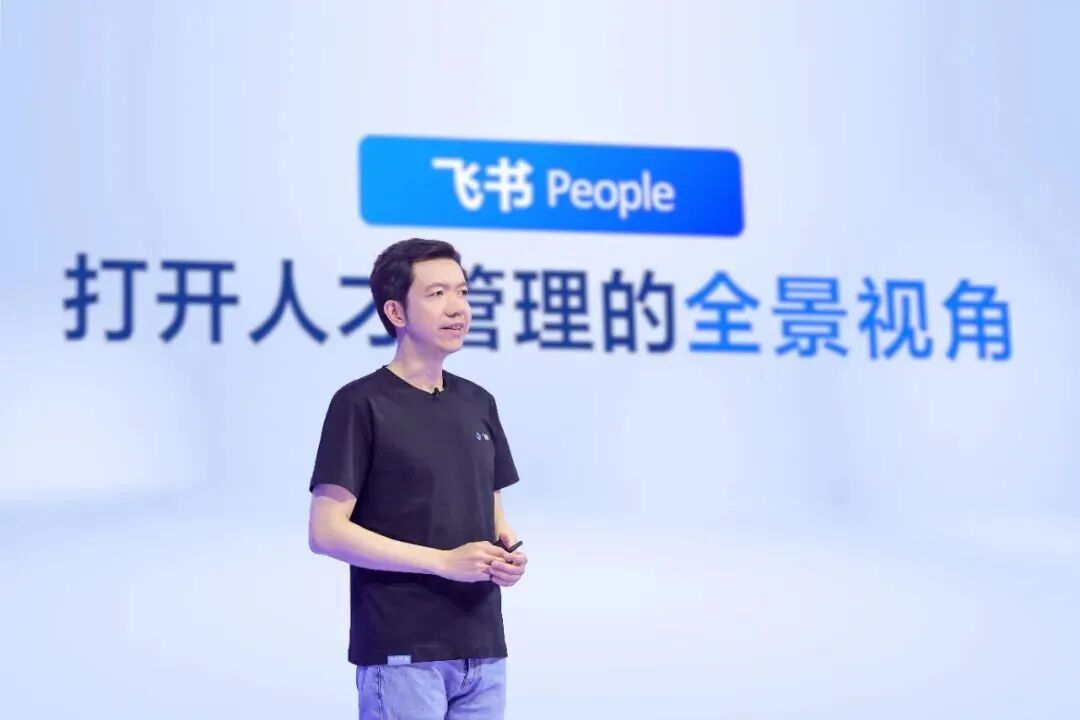
The first work-related software employees will interact with in the future will not be a mere collaboration tool, but an AI assistant; office functions will simply be an extension of AI capabilities. Therefore, the command center must be the AI business line, rather than the collaboration tool line.
Edited by | Dr. Qi
On July 30, an internal organizational adjustment at ByteDance prompted the external world to reassess the future of Feishu.
The Feishu product team was fully integrated into Doubao, forming a new Doubao product team. Xie Xin, the head of Feishu, now reports to Zhao Qi, the head of Doubao. On the sales front, the Feishu GTM team was merged with Volcano Engine to form the "Creativity Service Platform," managed by Tan Dai.
With products falling under AI and sales under cloud services, Feishu is no longer an independent entry point.
The initial reaction from the outside world was that "Feishu has been absorbed by Doubao," but this is actually a systematic realignment of ByteDance's strategic focus, organizational structure, and even business model in the AI era.
As AI Agents become the new entry point for productivity, who should stand at the organizational center? ByteDance's answer is: Doubao.

From Racing to Focus: Doubao Unifies ByteDance's AI Front
In the early stages of the AI application boom, ByteDance pursued multiple AI application exploration lines simultaneously.
There were AI programming tools for developers like Trae, the Doubao assistant for ordinary users, Kouzi for enterprises and developers, and Feishu's enterprise-based AI capabilities, Aily. These products were not simply redundant but represented several hypotheses for AI implementation: some believed AI would be a new tool for developers, requiring entry through code production; others saw Agents as a new application form, necessitating a creation platform; still others thought AI would eventually enter enterprise production, requiring integration with office software. The racing mechanism made sense in the early stages. From 2025 to early 2026, the Agent concept rapidly gained traction, but the industry remained undecided: was an AI assistant a chatbot? A digital employee automating tasks? Or an intelligent capability embedded in software? No one knew the answer, so ByteDance chose to "place multiple bets," using organizational racing to find a breakthrough. However, by 2026, the situation changed dramatically. A July report by Analysys showed that in June, monthly visits to AI office intelligent agents on desktops in China exceeded 60 million, with Tencent's WorkBuddy topping the charts at 20.97 million, surpassing the combined total of ByteDance's Trae (12.79 million) and Alibaba's QoderWork (7.88 million). 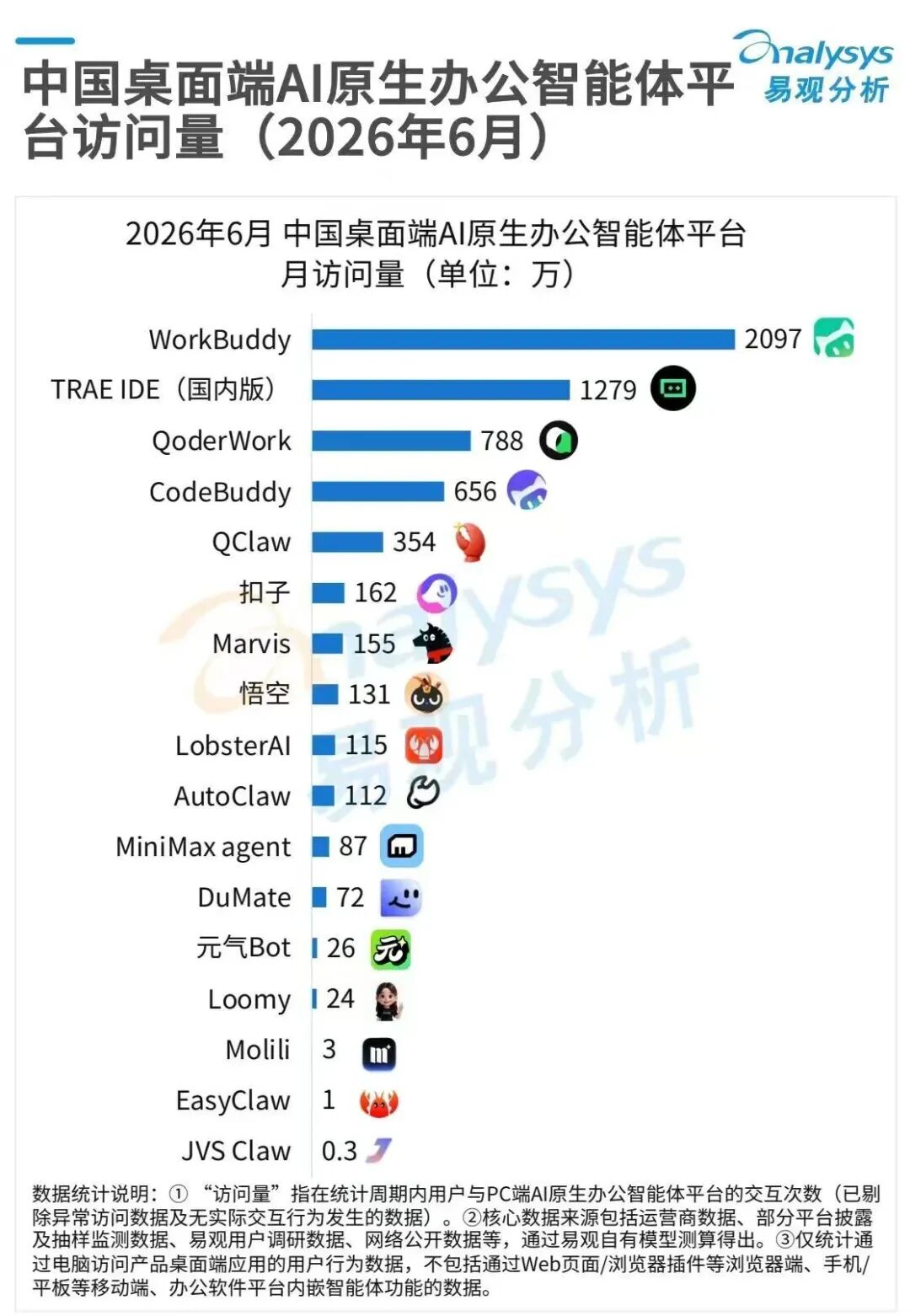
The data signaled that the window of opportunity for desktop-level office applications was closing rapidly each month, and the competition for AI applications was shifting from "exploring possibilities" to "competing for entry points." At this point, if ByteDance continued to maintain multiple routes, it would waste scarce resources like top model talent, computing power, and organizational attention.
This year, ByteDance's annual keyword is "scaling new heights," with the core goal of conquering large model technical capabilities. Liang Rubo stated bluntly at the June FORCE conference: "Scaling the AI peak is ByteDance's most important task right now." This means AI is the core, and other businesses must make way for it.
This adjustment reflects ByteDance's consideration of the "opportunity cost" of strategic resources. Shifting from racing to focus, ByteDance is not contracting its front but consolidating its scattered AI product lines under the Doubao banner to concentrate firepower for the upcoming positional warfare.
This is not unique to ByteDance; Alibaba and Tencent have also simultaneously ended their internal multi-product races. Tencent merged parts of the QClaw team into WorkBuddy; Alibaba integrated its three Agent products, QoderWork, Wukong, and MuleRun, into a unified brand, "Qianwen Office." Globally, the same trend is occurring: OpenAI merged Codex into ChatGPT, Google integrated NotebookLM into Gemini, and Anthropic consolidated Claude, CoWork, and Code into a single resource pool focused on AI office entry points. Clarifying entry points, unifying brands, and reducing redundant investments have become a consensus. 
Why Doubao?
After the strategic realignment, who takes center stage? ByteDance's judgment is clear: the first work software employees will open in the future will not be a collaboration tool but an AI assistant; office functions are merely an extension of AI capabilities. Therefore, the command center must be the AI business line, not the collaboration tool line.
Doubao indeed holds the capital to take center stage. QuestMobile data shows that in June 2026, Doubao's monthly active users reached 382 million, far surpassing Qianwen (167 million) and DeepSeek (129 million). This means Doubao already possesses the rarest asset in Chinese AI applications: the user intent entry point. However, "knowing what users want to do" does not equal "knowing how to deliver it."
A set of data points to ongoing changes. Tencent's WorkBuddy saw a 115.3% increase in active users over the past three months, becoming the most popular productivity intelligent agent tool in China; TRAE has accumulated 6 million registered developers and over 1.6 million monthly active users, with Token usage growing by 700% over the past year. These data point to a new trend: the most valuable C-end users are shifting from occasional question-askers to "productive individuals" like programmers, product managers, and operations staff. They open the product as individuals but handle business tasks; while the users are C-end individuals, the value chain extends to B-end organizations.
This is the logical fulcrum for Doubao to become the center. It has the traffic base but lacks the scenario depth and security compliance capabilities needed to serve "productive individuals" and organizations—two strengths accumulated by Feishu over a decade. After integration, Doubao Enterprise Edition can natively embed into real workflows, extending from C-end traffic entry points to B-end deep work scenarios. Using Doubao's AI capabilities as a spear and Feishu's scenario depth as a shield, with Volcano Engine's cloud services as logistical support, ByteDance aims to fight a positional war in the AI era with a full-stack approach. 
Rebuilding the Growth Flywheel for the AI Era
In the past, the core of internet competition was traffic distribution. Products could grow independently, and businesses could feed each other traffic. However, in the AI era, the competitive logic has changed: models, scenarios, data, and cloud services are no longer isolated capabilities but a tightly interlinked chain. ByteDance's decision to integrate Feishu into the Doubao system is a strategic "unification": large models become the foundation, and office work becomes the most important commercialization scenario. Previously, Feishu, Volcano Engine, and Doubao developed in parallel, each independently acquiring customers with clear boundaries.
In the AI era, this organizational approach began to expose problems: Doubao focused on AI capabilities, while Feishu focused on office scenarios, leading to fragmented team goals and significant resistance to product integration.
This adjustment represents a top-down decision: Doubao's large model is the group's universal AI foundation, and Feishu is the highest-value B-end implementation scenario on this foundation. This brings two immediate changes. First, resources are concentrated on strategic high ground: future Feishu features will start not with "how to make a good collaboration tool" but with "how to embed AI agents." Second, Feishu's decade-old "data nourishment" is fully activated. Group messages, meeting records, approval workflows—these unstructured pieces of information once locked in systems are now golden assets for feeding models. Employees no longer need to learn complex prompts; the model comes with enterprise context out of the box. Feishu's sacrifice of its independent identity is not a demotion but a "priority pass" to access the AI foundation, transforming from a collaboration tool into ByteDance's core experimental field for AI productivity.
Strategic consolidation solves the issue of aligning efforts, but a more practical consideration remains: how can AI investments generate commercial returns? The internet believes in "scaling through brute force," relying on massive users to dilute costs; however, AI follows Token economics, where every model invocation corresponds to real computing power consumption. Doubao is the AI assistant with the highest DAU in China, but when charging consumers, even a minimum price of 68 yuan per month sparked controversy. Despite its leading product strength, large models remain a massive cost center for ByteDance.
The cost structure is even harsher: traditional SaaS has declining marginal costs with scale, but AI applications work the opposite way—the more active users, the higher Token consumption, and the deeper the loss gap. According to LatePost, in the first half of 2026, Doubao, with 200 million DAU, generated less than 1 million yuan in daily revenue while consuming tens of millions daily.
Meanwhile, ByteDance plans to increase its 2026 capital expenditures to over 200 billion yuan, equivalent to 60% of its 2025 profits. Even so, chatbots remain a must-win battleground for giants. ChatGPT's weekly active users have surged to the billion level, and Doubao's monthly active user base is an unparalleled traffic foundation that is low-threshold and highly compatible, making it easy to integrate vertical services but difficult to replace. The problem is that traffic alone cannot sustain paid services. Doubao recently launched paid memberships ranging from 68 to 500 yuan, but if it remains limited to personal light office tasks, its persuasive power will always be limited. What can truly justify membership fees are medium-to-heavy office and organizational collaboration—Feishu's strength and the missing piece for Doubao. Feishu holds tens of thousands of enterprise clients, serving as a natural traffic pool for Doubao Enterprise Edition.
The merger's goal is to unlock a closed-loop monetization path: converting Feishu's enterprise clients into paying customers for Doubao Enterprise AI, using B-end revenue to fund large model R&D. For Feishu, attaching to Doubao's foundation allows direct reuse of mature large model capabilities, avoiding the high costs of building its own model team. The business model is also rewritten. Previously, Feishu sold SaaS subscriptions, with enterprises paying for seats, features, and collaboration efficiency; future Doubao sales will focus on Tokens, MaaS, and industry solutions. In short, software companies sold Licenses in the past, while AI companies will sell Tokens and services in the future.
Feishu's sales system merging into Volcano Engine follows this logic: the commercial closed loop for AI enterprise services is already deeply tied to cloud resources. This path has already yielded preliminary results. In Q2 2026, over 90% of Feishu's new clients simultaneously purchased AI products; as of July, ByteDance's large model business annualized revenue reached 4 billion USD, surpassing the combined total of other domestic model companies; Doubao's large model daily Token invocations exceeded 180 trillion. On one hand, it adds value by telling C-end users the story of AI-empowered office work; on the other, it reduces costs by making B-end office clients a vital blood supply during the prolonged burn-rate period.
Doubao handles the national-level entry point and traffic, Feishu converts traffic into enterprise payments, and Volcano Engine turns each invocation into settable cloud and Token revenue. ByteDance's move is a calculated gamble. Balancing the books is just the surface; the other half lies in the power structure of enterprise AI. Previously, Doubao, Feishu, and Volcano Engine operated more like three adjacent businesses; after adjustment, they form a complete chain: Doubao captures intent, Feishu provides work context, and Volcano Engine handles model operation and commercialization.
For an AI product to truly become an office entry point, it must secure at least five powers: intent power (who users ask first), context power (understanding business background), permission power (knowing read-write boundaries), execution power (able to dispatch tools), and settlement power (able to collect payments). Doubao holds intent power but lacks context and permissions in enterprise environments—areas where Feishu excels. The competitive focus of AI office work is shifting from "whose model is stronger" to "who can truly integrate into enterprise workflows."
Doubao expands the entry point, Feishu brings usage habits from personal computers into organizational systems, and Volcano Engine converts them into settlement revenue. Deeply bound together, ByteDance truly gains full-chain control from intent to revenue, representing an ultimate bet on enterprise service discourse in the AI era. 
Conclusion
Feishu's integration into Doubao does not signify the obsolescence of traditional SaaS by AI but rather AI's reabsorption of software. Past software involved humans using tools; future software will involve AI calling the shots in the world. This is also ByteDance redefining its core assets: upgrading its past traffic advantage into productivity distribution capabilities for the AI era.
Doubao becoming the center of the AI front is a bet on whether ByteDance can replicate its mobile internet-era entry point advantage when AI becomes the next productivity gateway.
This strategic shift impacts not only Feishu but also the organizational and commercial paradigms of a bygone era. ByteDance is exploring how a company rooted in content and traffic can evolve a "national-level entry point" into an "enterprise-level productivity backbone" in the age of AI-native technologies, transforming every real-world interaction into a catalyst for large model self-optimization.

Edited by: Muren
Reviewed by: Zhang Wenxin
Produced by: Rui Zong
▼
Welcome to follow the video channel #IamDrQi#
-
Financing and IPO: Is Ant Group a Financial Giant or a Pioneer in Cutting-Edge Tech?
-
![]()
Revenue Soars Twofold in Three Years! Optical Firm Reignites Bid for Hong Kong Stock Exchange Listing
-
![]()
Jiangsu LEAD Microelectronics Successfully Hands Over Its Inaugural 12-Inch Wafer-Level Optical Magnetron Sputtering System!
-
![]()
Domestic Computing Power Hits Breakthrough: Super Nodes as the Pivotal Force
-
![]()
Tongze Kangwei Secures IPO Registration on GEM: Broadband Terminal Equipment Provider Set for Imminent Share Issuance
-
![]()
Transforming Car Manufacturing into a 'Smartphone Launch' Frenzy: 5 Tips to Avoid Pitfalls When Purchasing a New Car
-
![]()
The Three-Way Battle Among AI Office Software: A Decade of War Among BAT
-
![]()
The Three-Way Battle Among AI Office Software: A Decade-Long War Among BAT