The Three-Way Battle Among AI Office Software: A Decade of War Among BAT
 08/03 2026
 499
499

Author: Dai Cong
Editor: Hu Zhanjia
Operations: Chen Jiahui
Produced by: LingTai LT (ID: LingTai_LT)
Header Image: Publicly available image from the internet
In just 10 days, Tencent, Alibaba, and ByteDance have all made significant moves in the AI office sector.
Alibaba launched QianWen Office, integrating three internal Agent products—QoderWork, Wukong, and MuleRun—into a single entry point, quietly placed in the left navigation bar of DingTalk. ByteDance underwent its largest organizational change in five years, splitting off the Feishu product team and merging it with Doubao to form the Doubao product team, with 'Doubao Office' on the horizon. Earlier, Tencent incorporated the QClaw business into the organizational structure housing WorkBuddy.
A new trend is emerging: driven by AI Agents, traditional office products are being phased out. AI office solutions require not just product improvements but also the courage to start from scratch. Once-concurrently launched platforms like DingTalk and Feishu are gradually being swept away by the tides of the times.
The Future Belongs to AI Office Opportunities
 The Decade-Long War Between Feishu and DingTalk
The rivalry between Feishu and DingTalk has a long history.
A decade ago (2016), ByteDance initiated the development of Feishu internally, aiming to create an office product tailored to its needs. However, its subsequent development far exceeded ByteDance's initial expectations. In 2019, ByteDance opened Feishu to the public, engaging in a head-on confrontation with DingTalk. The two sides competed fiercely over user numbers, features, clients, revenue, and even office spaces.
Feishu's East China headquarters is located in Hangzhou Future Sci-Tech City, just a stone's throw away from DingTalk's global headquarters. A source close to the matter told LingTai LT (ID: LingTai_LT) that Feishu's choice of location in East China was, to some extent, to facilitate poaching talent from DingTalk.
During those years, Feishu experienced rapid expansion, reaching nearly 10,000 employees at its peak, with only tens of millions of monthly active users. In contrast, DingTalk, with 200 million monthly active users, had just over 2,000 employees. To some extent, Feishu's approach embodied ByteDance's strategy of achieving miracle (miracles) through sheer force, but it also brought significant cost pressures. A ByteDance employee revealed that Feishu often catered to internal demands, sometimes fulfilling requests from a single colleague, which may be related to Feishu's original purpose.
Against this backdrop, Feishu had to lay off more than 2,000 employees in March 2024. In comparison, DingTalk's total workforce remained at just over 2,000.
According to comprehensive media information from Tianyancha, DingTalk was launched a year earlier than Feishu but immediately targeted the B-end market. Leveraging 'free' services and 'attendance tracking,' it quickly dominated the enterprise office market. A former ByteDance mid-level executive explained to LingTai LT (ID: LingTai_LT) that while attendance tracking may seem simple, it is far more complex in many manufacturing settings.

For example, a major appliance manufacturer has highly complex attendance settings. Firstly, workers operate on multiple shifts, requiring alignment with the shift schedule. Secondly, workers may work across multiple sites, necessitating accurate geographical tracking. Finally, workers' final salary calculations are closely tied to attendance, making the system inherently complex, not to mention exceptions like leave and shift swaps.
Feishu has always been perceived as an advanced team with cutting-edge products, often overlooking basic functions like attendance tracking. Another example is that some accounting software on DingTalk features dual passwords, a traditional function that Feishu would never implement. As a result, DingTalk surged ahead in the early years. After venturing into external commercialization, Feishu focused on key accounts (KAs). Over the past few years, while Feishu's user share in the overall enterprise office market has not grown significantly, its annual revenue growth has reached 30%. Consequently, Feishu and DingTalk, products with vastly different user bases, now have very similar revenues.
According to Caijing, in terms of user numbers, Feishu had 30 million monthly active users in 2025, while DingTalk had 200 million—a significant gap. In terms of revenue, Feishu's ARR (annual revenue) exceeded 3 billion yuan that year, while DingTalk's ARR was just over 4 billion yuan, only 1 billion yuan more than Feishu's. Of course, factoring in costs like computing power and marketing, Feishu is still operating at a loss in the short term.
DingTalk is not without its crises.
In March 2025, Alibaba recalled Wu Zhao, the founder of DingTalk, partly to compete for key accounts. After his return, Wu Zhao strictly enforced attendance policies and initiated a price war to win clients, aiming to achieve profitability within 12 months. At the product level, DingTalk launched an AI spreadsheet in the area where Feishu prided itself the most—multi-dimensional tables. Feishu responded swiftly, releasing an upgraded version of its multi-dimensional tables, which Xie Xin claimed was at least 12 months ahead of DingTalk's.
However, at that time, neither Wu Zhao nor Xie Xin could have anticipated that this debate would soon become irrelevant. A few months later, Wu Zhao was forced to leave DingTalk for a second time due to the 'Trapped in DingTalk' incident, replaced by Chen Yusen, a post-90s leader who quickly spearheaded the launch of QianWen Office. Meanwhile, Xie Xin was reassigned to report to Zhao Qi, the head of Doubao, to support Doubao Office.
The war between Feishu and DingTalk seemed to come to an abrupt halt within a week, but a new battle was just beginning.
 WorkBuddy Disrupts the AI Office Market
Many media outlets attribute Alibaba and ByteDance's adjustments to the stimulate (stimulus) of Tencent's WorkBuddy, but this is not entirely accurate.
According to Baijing Lab, a source close to Feishu revealed that ByteDance had internally proposed merging Feishu with Volcano Engine and Doubao as early as last year. At that time, neither WorkBuddy nor QClaw existed. In March of this year, WorkBuddy began its public beta test. On its second day of launch, request volumes surged, forcing the team to urgently scale up capacity.
On July 22, Analysys released the 'Q2 2026 China Office Intelligent Agent Platform Market Insights' report. The data showed that in June 2026, Tencent's WorkBuddy had 20.97 million monthly visits, approaching Feishu's 30 million and far ahead of ByteDance's Trae and QoderWork.
In short, an AI office intelligent agent launched just a few months ago is already nearly on par with Feishu, which has been around for nearly a decade. This success is undoubtedly supported by Tencent Group but also reflects WorkBuddy's remarkable word-of-mouth expansion.
In the past ten days, Alibaba and ByteDance have officially announced organizational adjustments within their AI office divisions. Alibaba unveiled 'QianWen Office,' led by Chen Yusen, the newly appointed CEO of DingTalk. ByteDance integrated the Feishu and Doubao teams to form the new Doubao Office product team, headed by Zhao Qi, who is relatively unknown to the public.
Compared to Wu Zhao and Xie Xin, the public knows much less about Chen Yusen and Zhao Qi. According to comprehensive media information from Tianyancha, both share a common background in AI-related work. Chen Yusen is a young, renowned tech geek who, before becoming CEO of DingTalk, was leading a team at Alibaba Cloud to develop the AI Agent product MuleRun. Zhao Qi holds a Ph.D. in computer science from Peking University and previously worked at Douban and Wandoujia. In 2017, Zhao Qi joined ByteDance, serving in its growth, commercialization, and HR departments. A year ago, Zhao Qi transitioned from the HR department to lead the Doubao product team.
Whether it's Tencent's emphasis on WorkBuddy or Alibaba and ByteDance's series of adjustments, the essence is to compete for entry points into office scenarios in the AI era, albeit through different approaches.
Tencent's strategy is to fully support WorkBuddy, a product of the AI era, after seeing its success. Alibaba's approach is to appoint an AI Agent team leader as CEO of DingTalk, integrating his previously overseen MuleRun with DingTalk's internal Wukong and related QoderWork to create 'QianWen Office,' which is then bidirectionally embedded with DingTalk for complementarity and connectivity. ByteDance's strategy is to merge the Feishu and Doubao product teams into the Doubao Office product team, integrating Doubao's capabilities into the Feishu system.
The merger of Doubao and Feishu is not surprising.
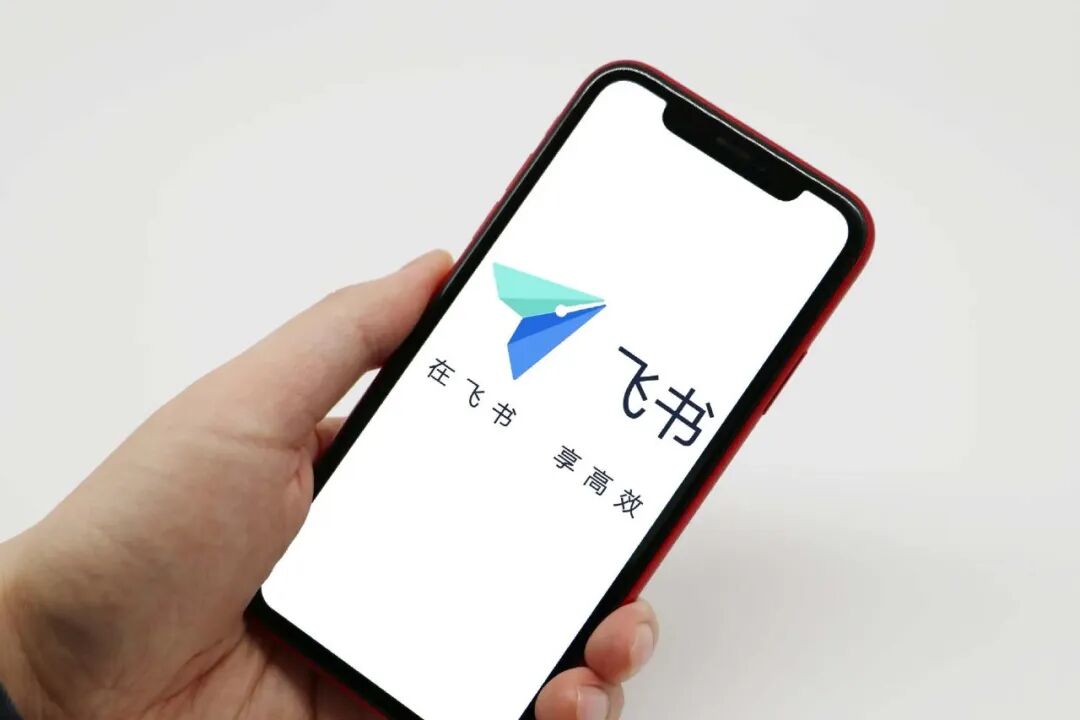
Before this merger, Feishu's product team was already deeply involved in developing the enterprise version of Doubao and had initiated internal testing among some Feishu clients. A month ago, Doubao and Feishu accounts were integrated, seen as a signal of their deeper merger.
Feishu is gradually giving way to Doubao and is no longer the protagonist of ByteDance's B-end office products. This is not Feishu's fault but a result of the changing times.
Over the past few years, competition between Feishu and DingTalk has revolved around traditional office needs. Whether it's DingTalk's attendance tracking or Feishu's documents and multi-dimensional tables, their essence is to help enterprises improve workflow efficiency. However, the emergence of AI Agents is disrupting past work models. People now need not just a smoother collaboration process but also hope that Agents can handle a large amount of repetitive and tedious work.
'The primary user of software is shifting from humans to Agents,' an industry insider commented in a media interview.
 The Overlooked WeCom
While the rivalry and decline of Feishu and DingTalk are noteworthy, and WorkBuddy's disruption serves as a catalyst in the AI-era office battle, many have overlooked WeCom, which once formed a tripartite balance with DingTalk and Feishu.
WorkBuddy is Tencent's rising star in the AI office era, but WeCom, with hundreds of millions of users, is not a minor player to be ignored. However, unlike Alibaba and ByteDance, Tencent has not yet deeply integrated WorkBuddy with WeCom, due to various factors, the most important being that WeCom belongs to the WeChat Business Group (WXG), while WorkBuddy falls under Tencent Cloud and Smart Industries Group (CSIG).
As is well known, WeChat enjoys significant independence within Tencent, making a deep integration between WorkBuddy and WeCom nearly impossible. Even for foundational models, WeChat has independently developed a lightweight large model, WeLM, in addition to Tencent's mainstay Hunyuan model. WeChat's Xiaowei Assistant, currently in beta testing, adopts a hybrid architecture of 'WeLM for lightweight tasks + DeepSeek for complex reasoning as a fallback.'
Of course, in the overall office market, WeCom has always taken a different path from Feishu and DingTalk. Leveraging WeChat's billion-plus users, WeCom's main advantage has always been its connection to C-end users, essentially serving as a connector to help enterprises reach clients within the WeChat ecosystem.
As a result, while DingTalk and Feishu were locked in fierce competition, WeCom, with hundreds of millions of monthly active users, remained largely out of the spotlight. However, AI seems to be changing this dynamic.
According to comprehensive media information from Tianyancha, in June of this year, WeCom introduced an AI Agent named 'Dayuan' in version 5.0.9 and initiated internal testing. However, it was not until July 27 that 'Dayuan' gained widespread attention when the official WeChat account, WeChat Pie, published an article introducing its capabilities: support for invoking WeCom's intelligent documents, meetings, schedules, etc. Notably, 'Dayuan' does not currently integrate WeChat's WeLM model but instead uses DeepSeek, Hunyuan, and MiniMax, with the ability to switch between the three models. The default model is DeepSeek-V4-Flash.
There are also reports of internal testing for WeLM integration. WeCom's decision not to directly integrate WeLM may be due to considerations regarding the model capabilities and parameters required for Agent-based office operations. In the future, as WeLM iterates, it is not ruled out that WeCom may eventually adopt WeChat Business Group's self-developed WeLM model, similar to how WeChat's Xiaowei Assistant operates.
Within Tencent's B-end business, Tencent Docs and Tencent Meeting, like WorkBuddy, belong to the CSIG group, while WeCom operates independently under WXG. This is also a point of criticism regarding Tencent's B-end SaaS market layout (layout).
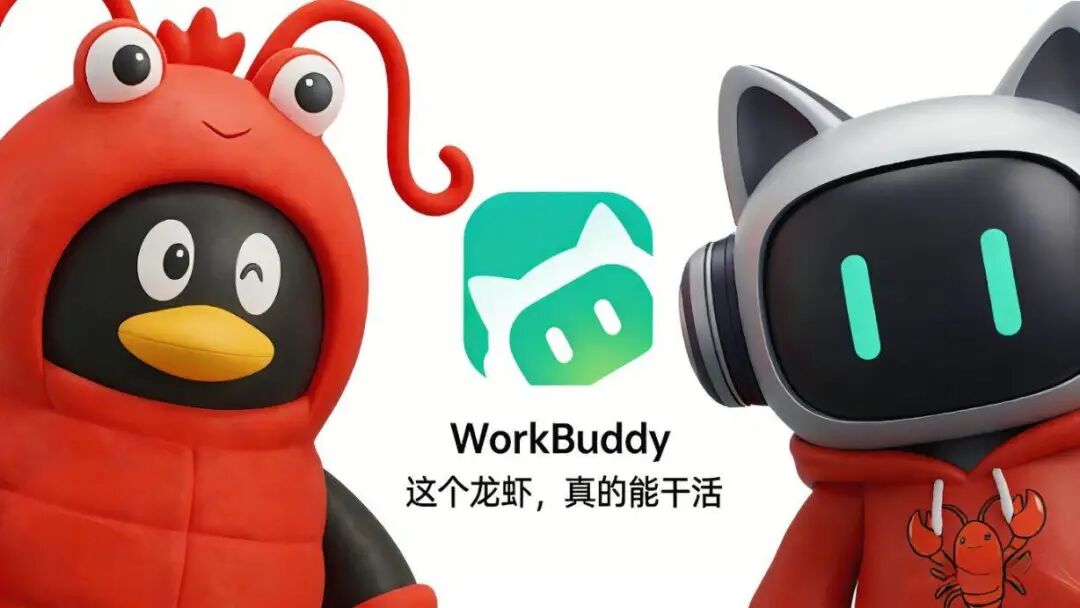
Now, in the AI era, this issue persists. On the positive side, WorkBuddy has unexpectedly helped Tencent gain an early lead in the large model era. In the previous era, WeCom carved out a niche by leveraging WeChat's connections, DingTalk led with its ultimate (ultimate) attendance tracking, and Feishu, after three years of Build up power (accumulation), captured many top-tier users with its ultimate (exceptional) document experience, achieving rapid revenue growth in recent years.
In the rapidly evolving AI agent era, while Feishu and DingTalk are still locked in competition, WorkBuddy has emerged as a leader in AI office products, forcing Alibaba and ByteDance to undertake significant organizational reforms.
In just one week, Alibaba and ByteDance swiftly completed their organizational adjustments. Qianwen Office and Doubao Office are on the verge of launch, while Tencent is still vigorously promoting WorkBuddy, with advertisements flooding from subway stations to elevator spaces in residential areas. WeCom's "Dayuan" is still in the beta testing phase.
In this new era, who will become the primary gateway for office workers' desktop productivity remains undecided, and the real competition has only just begun.
-
Financing and IPO: Is Ant Group a Financial Giant or a Pioneer in Cutting-Edge Tech?
-
![]()
Revenue Soars Twofold in Three Years! Optical Firm Reignites Bid for Hong Kong Stock Exchange Listing
-
![]()
Jiangsu LEAD Microelectronics Successfully Hands Over Its Inaugural 12-Inch Wafer-Level Optical Magnetron Sputtering System!
-
![]()
Domestic Computing Power Hits Breakthrough: Super Nodes as the Pivotal Force
-
![]()
Tongze Kangwei Secures IPO Registration on GEM: Broadband Terminal Equipment Provider Set for Imminent Share Issuance
-
![]()
Transforming Car Manufacturing into a 'Smartphone Launch' Frenzy: 5 Tips to Avoid Pitfalls When Purchasing a New Car
-
![]()
The Three-Way Battle Among AI Office Software: A Decade of War Among BAT
-
![]()
The Three-Way Battle Among AI Office Software: A Decade-Long War Among BAT