MiniMax, Desperately Swimming Across the Killing Line|WAVE
 08/03 2026
 354
354
Edited by|Yang Xuran
MiniMax has also joined the open-source ranks.
On July 31, MiniMax officially released H3, a new-generation multimodal generative model. This is MiniMax's first open-source multimodal generative model, supporting various inputs such as text, images, audio, and video. It can directly output 2K resolution visuals and generate up to 15 seconds of audiovisual content.
Recalling the previous large model, M3, released five months ago, it fell short of expectations on several key metrics, triggering a single-day stock price plunge of over 15% and marking one of the most nerve-wracking moments for MiniMax since its listing.
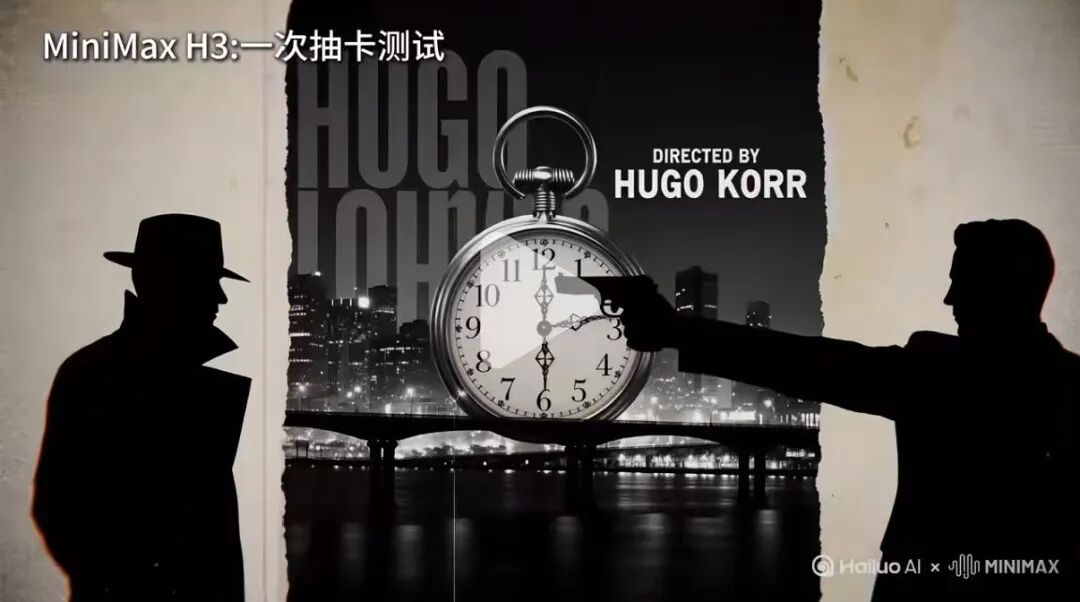
The release of H3 now raises a critical question: Will it enable MiniMax to turn the tide, or will it face even greater pressure? This is a major event closely watched by the capital markets.
Currently, the entire AI sector is in a sensitive period, with investors' criteria for value judgment quietly shifting. MiniMax's choices and movements reflect the collective anxiety of China's AI large model industry.
This article is an in-depth value piece from the WAVE content team. Feel free to follow us on multiple platforms.

The Killing Line
In July, two major events occurred across the industry: First, Moonshot AI officially opened downloads for the complete model weights of Kimi K3. Second, DeepSeek reduced the cache hit price for V4-Flash to 0.02 yuan per million tokens.
These two vastly different paths converged at the same moment, drawing a "killing line" across the large model industry.
This line was significantly raised at the upper end of performance by Kimi K3. With a total of 2.8 trillion parameters, Kimi K3 is the world's first open-source 3-trillion-parameter model, ranking fourth globally and first among open-source models in Artificial Analysis' intelligence rankings.
This means any new model seeking market recognition in terms of performance must at least compete with Kimi K3 at this parameter scale.
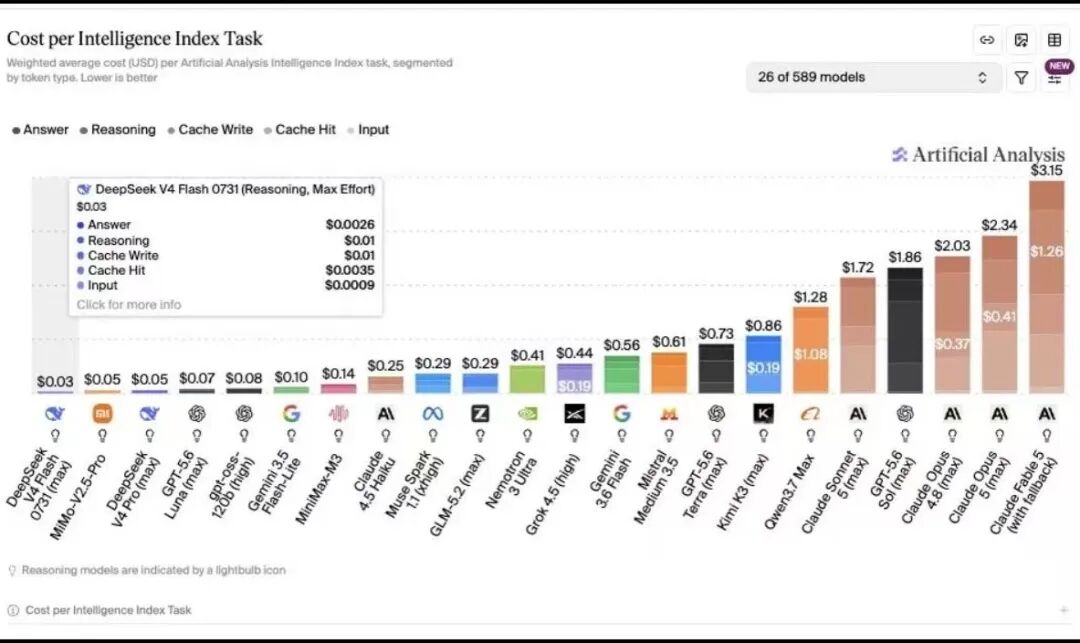
At the lower end of pricing, this line was pressed down by DeepSeek. V4-Flash reduced the cache hit price to 0.02 yuan per million tokens, with output costs around 0.28 USD per million tokens—just about 1/90th of Anthropic Claude Opus 4.8's price.
A netizen's sharp comment: Fast runners don't always get rewarded, but slow ones will definitely see the reaper.
A model that cannot outperform Kimi K3 in performance while lacking DeepSeek's pricing advantage will likely be eliminated by the market. The killing line tightens simultaneously on both dimensions, leaving almost no room for players in the middle.
Open source could disrupt the industry landscape. The previous industry consensus was that top AI models must remain closed-source and high price (high-priced), with closed-source implying technological moats and high prices ensuring commercial sustainability.
This logic underpinned trillion-dollar valuations for companies like OpenAI and Anthropic.
Kimi K3's open-sourcing thoroughly challenges this belief. When top models become freely available, how long can closed-source models sustain their high-price narratives? For listed large model companies and those rushing toward IPOs, their valuation logic will inevitably be reassessed by secondary markets.
The core of competition in the large model industry is shifting from singular model capabilities to a comprehensive contest of performance, cost, and open ecosystems. Open source transcends technical choice—it is essentially a strategic gamble for survival.
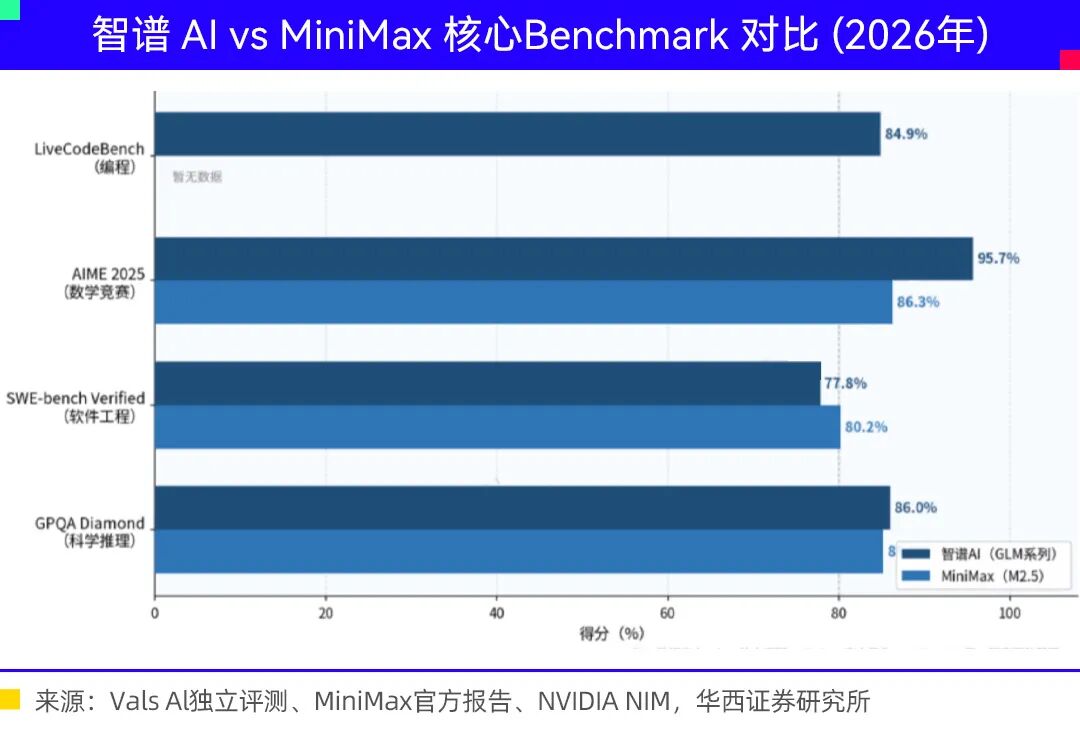
MiniMax sits in this middle ground. H3 ranks first globally in video editing capabilities on Artificial Analysis' video model leaderboard, with a generation price of just 0.8 yuan per second (2K resolution)—one-third that of comparable flagship video models. However, MiniMax has not achieved top-tier status in either performance or pricing.
MiniMax's choice to go open source now appears more as a passive response to industry changes:
1. Lowering barriers to AI technology adoption and promoting open-source community development;
2. Attracting chip manufacturers and developers to participate in optimization, with H3 designed from the outset for compatibility with multiple domestic chips;
3. Securing a foothold in the AI video Track (sector) already dominated by Seedance, compensating for platform and user base deficiencies through ecosystem and developer scale.
Open source is a commercial choice whose ultimate effectiveness will be tested financially.

Double-Edged Sword
Open source is not a panacea: In the long run, it's a strategic layout (layout) to build ecosystems and capture market share; in the short term, it may intensify financial pressure.
By opening model weights, developers' barriers to entry are lowered, attracting community contributions of code, feedback, and optimizations. This can ultimately form a vast ecosystem built on one's own technology stack.
Once established, such an ecosystem creates moats far deeper than closed-source patents, as the entire industry's infrastructure rests on this technology. Linux, Android, and Hadoop all succeeded through this path.
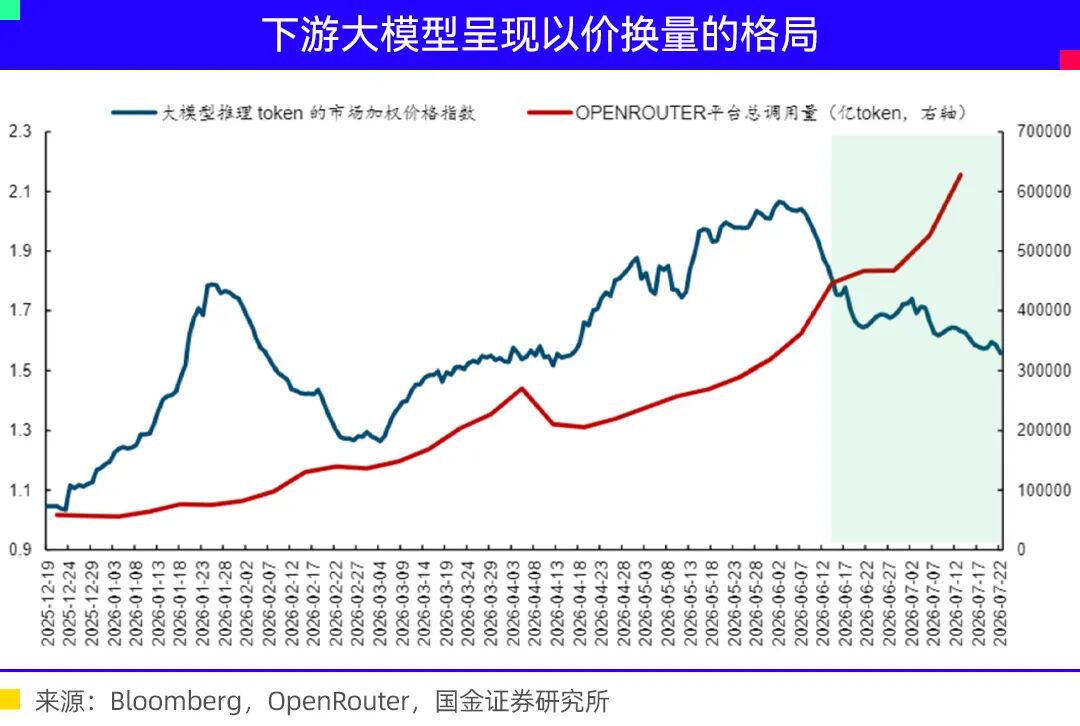
Financially in the short term, open source means abandoning direct monetization. A company investing hundreds of millions of dollars to train a top model and then releasing it for free seems almost unthinkable under traditional business logic.
More critically, open source doesn't automatically generate revenue. Model downloads, usage, and secondary development don't directly convert to cash flow. Monetization still relies on matching (supporting) services like cloud offerings, enterprise support, and customized development—all of which take time to scale.
The question is how long this waiting period will last. Across the industry, AI companies choosing open-source routes generally have revenue scales an order of magnitude smaller than closed-source counterparts.
Closed-source OpenAI generates about $13 billion in annual revenue, Anthropic around $45 billion, and Seedance 2.0 exceeds 1 billion RMB in monthly revenue. Individually, any of these likely surpasses the combined revenue of MiniMax, Zhipu, and Kimi.
Open source may help a large model win acclaim, community support, and developers, but currently, it doesn't guarantee profits.
For financially strained MiniMax, open-sourcing its flagship model resembles walking a tightrope.
In 2025, MiniMax reported total revenue of $79.038 million, up 158.9% YoY, with gross profit of $20.079 million (up 437.2% YoY) and gross margin improving to 25.4%. These growth figures are undoubtedly impressive.
However, this growth stems from high investment. In 2025, MiniMax's R&D spending increased 33.8% from $189 million in 2024 to $253 million, primarily for cloud services used in model training.
This $253 million R&D investment yielded $79.04 million in revenue—over three times the output. This doesn't account for the many operational costs of running the company.
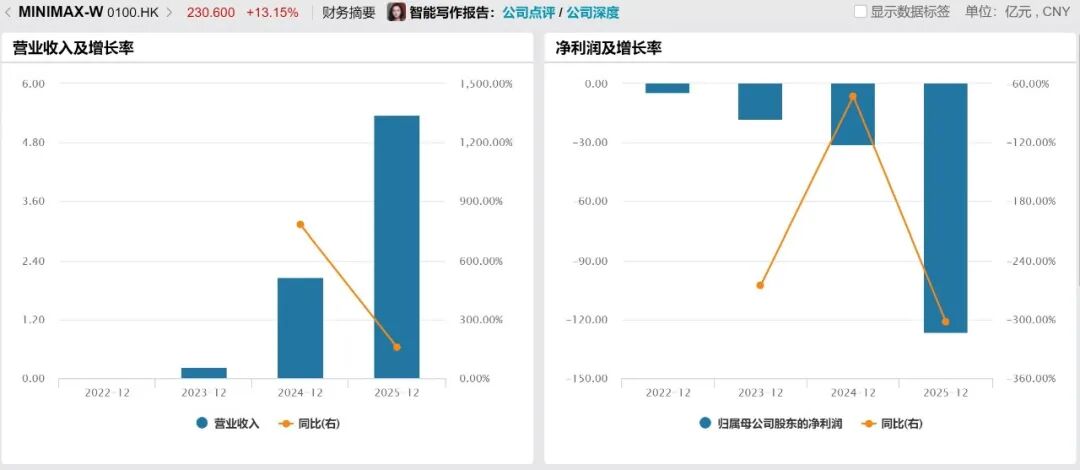
More critically, its adjusted net loss was $251 million in 2025, nearly unchanged from $240 million in 2024 despite revenue more than doubling.
This indicates MiniMax's growth is driven by equally massive investments ("burning money") rather than efficiency-driven organic growth. The company remains in an extreme cash-burning state, which is hard to reverse in the short term—almost unavoidable in the capital-intensive AI field.
Continuous iteration of AI large models requires endless computing power investments, while expanding user bases means steadily rising inference costs.
Moreover, if MiniMax aims to build an open-source ecosystem and become a platform company, it must develop developer toolchains, establish community operations, provide enterprise-grade support, and adapt to more chips and hardware platforms—all requiring ongoing capital injections.
Faced with a MiniMax that needs constant cash burning to survive while seeking a more valuable course, how long can shareholders' patience last?

Testing Patience
Historically, MiniMax has been a large model company with frequent capital operations.
When listing on the Hong Kong Stock Exchange in January, MiniMax attracted 14 cornerstone investors, including Aspex, Eastspring, Mirae Asset, Alibaba, and E Fund, with total subscriptions reaching $350 million (~2.723 billion HKD).
In March, MiniMax's stock price hit a historic high of 1,330 HKD, valuing the company at over 410 billion HKD. For early investors, paper gains reached dozens or even hundreds of times their initial investment.
Everything seemed promising until the lock-up expiration.
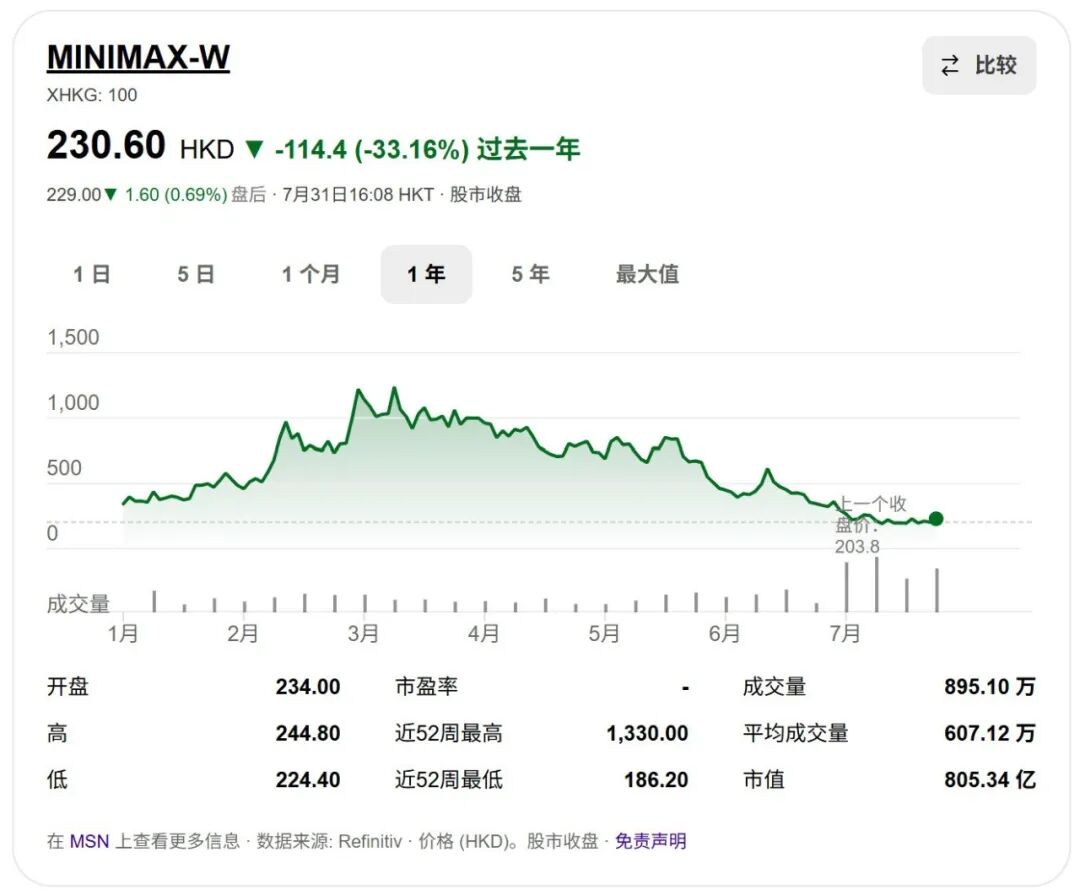
On July 9, MiniMax faced its first major lock-up expiration post-IPO, with approximately 146 million shares (63% of total shares) becoming tradable. The free float surged from under 6% to about 50%, and market liquidity at the time struggled to support this, triggering panic.
Over 80% of Pre-IPO and cornerstone shareholders publicly committed to holding their stakes long-term. On lock-up day, MiniMax's stock opened 1% lower before plunging 10%, briefly rebounding to 397.4 HKD but ultimately closing down 17.98% amid persistent selling.
The verbal pledge of "over 80% of shareholders not selling" rang hollow against 20.94 million shares traded.
Morgan Stanley was the largest net seller among brokerages on lock-up day, offloading about 2.5216 million shares, followed by CLSA, CICC Hong Kong, Haitong International, and Goldman Sachs Asia—financial investors behind these brokerages.
MiniMax promptly launched its largest-ever secondary offering. On July 10, it announced placing 35.6 million new Class A shares (at 268 HKD each, a ~9.89% discount) and simultaneously issuing 6.5 billion HKD in zero-coupon convertible bonds maturing in 2027 (the AI large model industry's first convertible bond).
Multiple Pre-IPO and cornerstone investors chose to further increase their stakes at this time, while the company's founder announced he would take no salary until AGI is achieved, demonstrating commitment to investors and markets.
MiniMax's frequent capital market maneuvers only fuel concerns that its urgent need for funds overrides short-term stock price considerations. The company is also planning an A-share STAR Market IPO—evidently attracted by higher valuations and liquidity, crucial for financing, investment, and growth.
Many investors dislike MiniMax's potential A-share return, but the company now prioritizes shareholder demands over investor sentiment.
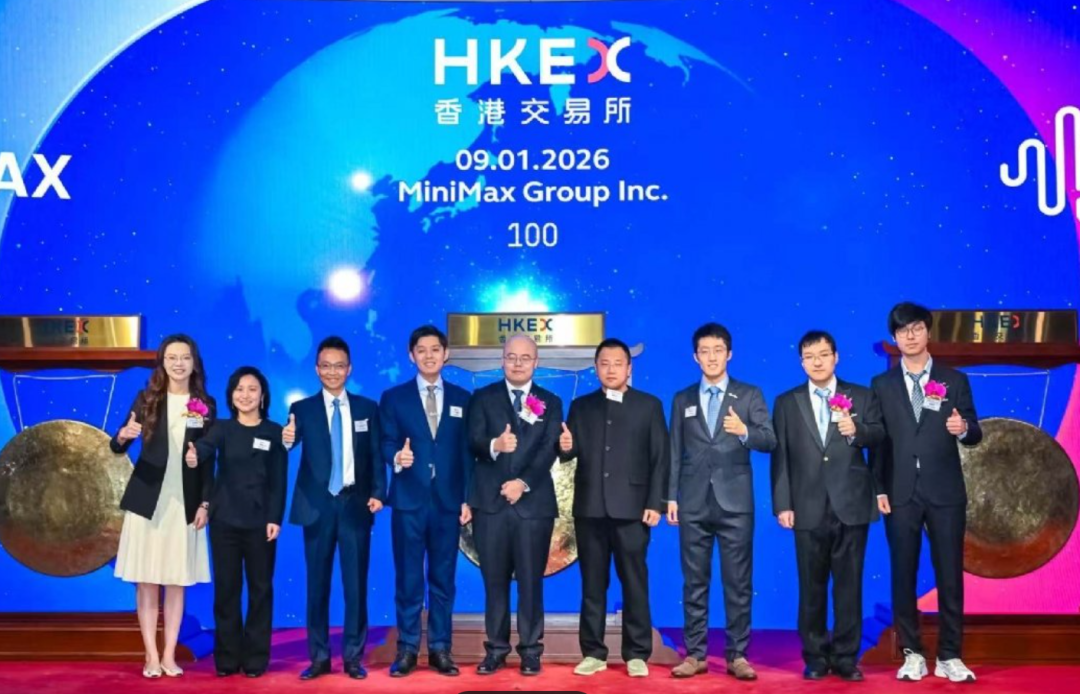
Among shareholders, strategic industrial investors (Alibaba, MiHoYo) are unlikely to exit easily (easily) as long as MiniMax maintains strategic value in cloud services orders and game development.
The majority are financial investors (Aspex, Boyu, IDG, etc.) whose business models impose strict fund lifecycles and LP return obligations, making "exit at peak" their ultimate goal.
If MiniMax cannot quickly complete an A-share listing to "recoup losses," if commercialization progress fails to produce more convincing data, if losses don't narrow significantly... each "if" strains financial investors' patience. Verbal commitments to "long-term holding" ultimately mean little.
MiniMax adopts a phased lifting model. After releasing 48.9% of its shares in July, approximately 12% of its shares will be gradually unlocked from late August to early October 2026.
By January next year, the lock-up period for shares held by the company's senior management and core insiders will also come to an end. This will pose a real test of the company's value, as the company's insiders are the most aware of its investment value and significance.
-
Financing and IPO: Is Ant Group a Financial Giant or a Pioneer in Cutting-Edge Tech?
-
![]()
Revenue Soars Twofold in Three Years! Optical Firm Reignites Bid for Hong Kong Stock Exchange Listing
-
![]()
Jiangsu LEAD Microelectronics Successfully Hands Over Its Inaugural 12-Inch Wafer-Level Optical Magnetron Sputtering System!
-
![]()
Domestic Computing Power Hits Breakthrough: Super Nodes as the Pivotal Force
-
![]()
Tongze Kangwei Secures IPO Registration on GEM: Broadband Terminal Equipment Provider Set for Imminent Share Issuance
-
![]()
Transforming Car Manufacturing into a 'Smartphone Launch' Frenzy: 5 Tips to Avoid Pitfalls When Purchasing a New Car
-
![]()
The Three-Way Battle Among AI Office Software: A Decade of War Among BAT
-
![]()
The Three-Way Battle Among AI Office Software: A Decade-Long War Among BAT