Goertek Leaves No Room for Mercy This Time Around
 04/30 2026
 341
341
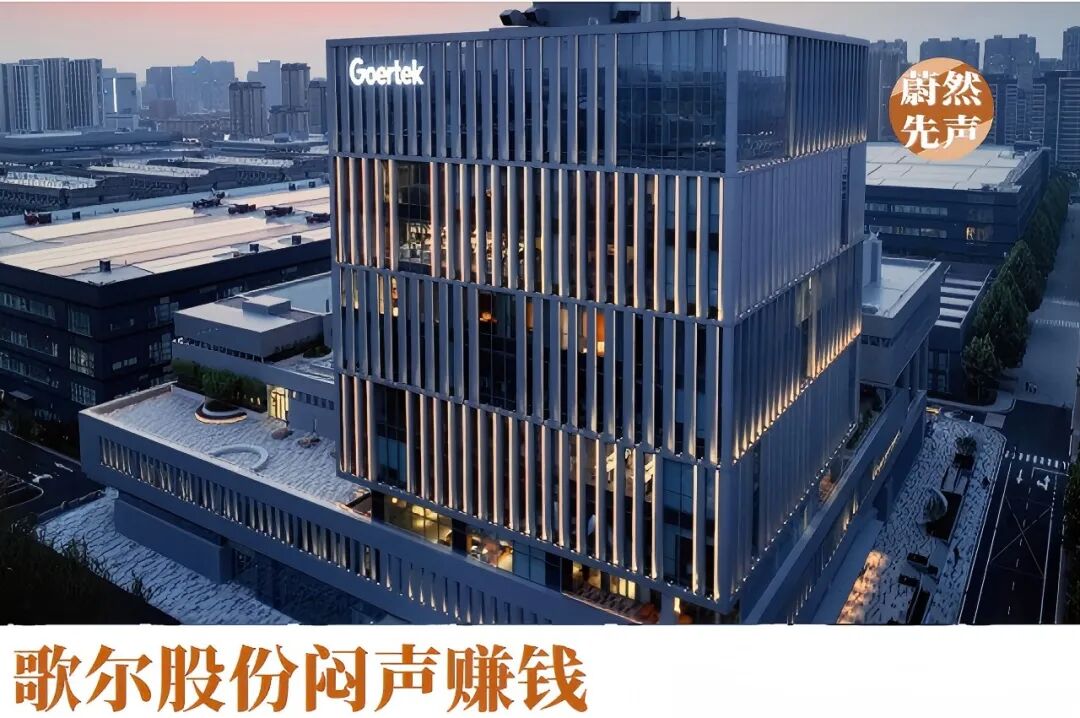
Author | Fang Qiao Editor | Wang Gefa
Three years ago, a significant order reduction from a major client nearly destabilized this Weifang-based contract manufacturer. Fast forward three years, and with AI glasses emerging as the hottest trend in the consumer electronics sector, Goertek has firmly established itself as a key player.
On April 20th, Huawei took the lead by launching its inaugural AI glasses, powered by HarmonyOS 6. Meta, Apple, and Google are slated to follow suit with their new offerings later in the year.
Just three days later, Goertek unveiled both its 2025 annual report and Q1 2026 financial results: its full-year net profit attributable to shareholders soared by 47.85%, while its Q1 net profit, excluding non-recurring items, climbed by 19.57%. This marked Goertek's first-ever revenue and net profit growth during the traditionally slow season, fueled by sustained orders for AI glasses and XR hardware.
As the exclusive contract manufacturer for Meta's Ray-Ban AI glasses, Goertek occupies a pivotal position in the supply chain for this hardware race—a status achieved through over a decade of dedication and a costly lesson learned.

Established in 2001 as a microphone parts factory in Weifang, Goertek went public on the Shenzhen Stock Exchange in 2008. The real turning point came in 2010 when it entered Apple's supply chain, initially supplying components for wired earphones and later expanding to AirPods manufacturing. Its market value once soared to nearly RMB 180 billion. However, an over-reliance on a single client base proved to be a significant vulnerability.
By late 2022, Apple's decision to discontinue a smart acoustic product resulted in a more than 10% drop in Goertek's revenue from that segment, with net profit plummeting nearly 60%.
This setback accelerated the company's ongoing structural adjustments. Having initiated its VR layout (Note: retaining the Chinese pinyin for this specific term due to its unique industry context) in 2012, Goertek shifted this sideline to the forefront after the order reduction. After years of accumulation, it now commands over 70% of the VR contract manufacturing market, while reducing Apple's sales share to about 32%—compared to Luxshare's ~70% at the same time.
This strategic shift is evident in its business structure. In 2025, smart hardware revenue reached RMB 53.769 billion, accounting for over 50% of total revenue, with AI glasses contract manufacturing serving as the core growth engine. The company secured over 70% of Xiaomi's initial AI glasses orders and 70% of Huawei's AR glasses orders. Precision components revenue hit RMB 17.978 billion, up nearly 20% year-on-year, with a gross margin of 23.52%—12+ percentage points higher than that of smart hardware, acting as the main profit stabilizer.
Goertek's strength in precision components stems from its industry leadership in MEMS sensors. According to Yole and other industrial agencies, by sales volume, Goertek (including its subsidiary Goertek Micro) is currently the world's largest MEMS acoustic sensor enterprise, topping China's SEMI MEMS top 10 list for years.
Per IDC data, global AI smart glasses shipments surged over 200% year-on-year in 2025, driving concurrent expansion in related component markets and directly boosting Goertek's precision components business.

Full-year 2025 revenue reached RMB 96.55 billion, down 4.36% year-on-year. The sharp increase in net profit requires closer examination: Goertek Optics' equity restructuring removed it from consolidation, with the remaining equity revalued at fair value, generating approximately RMB 2.142 billion in one-time gains—the main driver of net profit growth. Excluding this, net profit excluding non-recurring items fell over 30% year-on-year, revealing the true state of the core business in 2025.
Q1 2026 signals a more positive outlook: revenue hit RMB 18.659 billion (+14.44% year-on-year); net profit RMB 503 million (+7.28% year-on-year); net profit excluding non-recurring items RMB 349 million (+19.57% year-on-year). The higher growth in the latter indicates tangible improvements in the quality of the core business.
Q1 gross margin reached 13.77%, up 1.36 percentage points year-on-year—the highest for the period in recent years. Full-year 2025 operating cash flow hit RMB 6.849 billion (+10.46% year-on-year); cash on hand reached RMB 22.404 billion by Q1 end, up over RMB 3.5 billion net from year-end.
Looking ahead, the shipment peak is yet to come. Omdia data shows global AI glasses shipments reached 8.7 million units in 2025 (+300%+ year-on-year); IDC expects global shipments to exceed 40 million units by 2029, with China's market growing at approximately 56% CAGR.
In 2026, Meta, Apple, Google, and Samsung all plan to launch AI glasses or smart audio products, with a denser order cycle expected in the second half of the year.
To bolster its optical capabilities, Goertek Optics acquired Sunny Optics to enhance waveguide R&D and mass production capabilities, and formed a joint venture with Conant Optics for consumer-grade lenses, significantly expanding its coverage across the AI glasses "display + optical module + lens" chain. R&D investment reached RMB 5.026 billion in 2025 (+10% year-on-year), totaling over RMB 23 billion in the past five years, with cumulative patent filings exceeding 37,000 by year-end.
Goertek's growth has always hinged on major client relationships—a leverage that will remain critical and uncertain in the foreseeable future. Apple's XR hardware strategy shifts and Meta's resource allocation between VR and AI glasses will directly impact Goertek's order mix.
The company has reduced its single-client concentration to approximately 30% from historic highs, with precision components gradually increasing their profit contributions. However, to establish stronger pricing power at the component and system levels requires sustained product and technological delivery. The current AI hardware boom provides a concentrated window to validate Goertek's transformation.
Disclaimer: This content is for reference only. The information and opinions expressed do not constitute investment advice. Readers should make cautious investment decisions.
This article is written based on publicly available information.
-END-
-
![]()
From Philosophical Concept to Technological Concept, and Then to Economic Concept: The Past and Present of Token
-
![]()
When DeepSeekV4 and Meituan LongCat Simultaneously ‘Surpass One Trillion Parameters,’ What Signals Are Being Sent?
-
![]()
Chinese Home Appliances Should Not Indulge in the False Victory of 'Defeating Foreign Brands'
-
![]()
2026 Beijing International Auto Show: Navigating the Future of Smart Driving
-
![]()
The Fan Economy: A Lucrative Field, Yet AI Artists Struggle to Gain Fans
-
![]()
Now, Luxshare Precision no longer wants to limit itself to contract manufacturing for Apple.
-
![]()
Global CPU Giant Launches Potent Surprise Offensive, Introducing New AI Logic Core
-
![]()
China's Optical Fiber Boom