In an Era of AI Computing Power Scarcity, College Students Can No Longer Afford Computers
 08/24 2026
 409
409
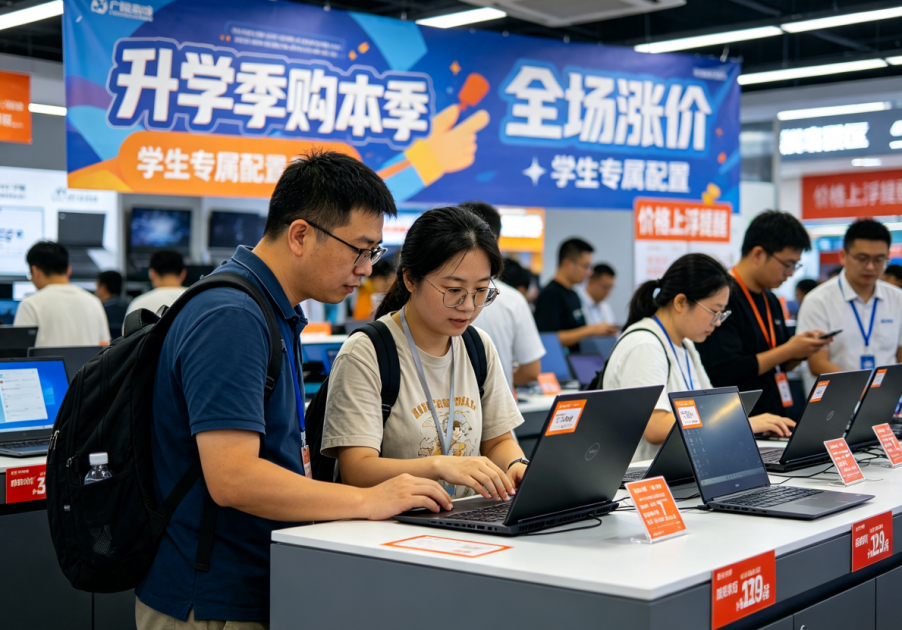
Image generated by AI
Hardware price increases are set to become the new norm in the industry
Written by/ Li Jinlin
Edited by/ Chen Dengxin
Layout by/ Annalee
As a new batch of prospective college students prepares to embark on their university journey, the annual back-to-school tech shopping frenzy commences as usual. In previous years, the 5,000-yuan price bracket was the go-to range for prospective students purchasing laptops, offering a plethora of lightweight and entry-level gaming options. This allowed parents and students to leisurely compare numerous models.
However, the summer market of 2026 paints a starkly different picture. The Apple MacBook Air has seen a price hike of at least 1,500 yuan, the Lenovo Legion R7000P has surged by over 1,000 yuan in just a month, and the NVIDIA RTX 5090 graphics card has skyrocketed from around 20,000 yuan to a staggering 35,000 yuan...
Whether visiting offline electronics stores or browsing e-commerce selections, the once-bustling 5,000-yuan mainstream price segment is rapidly dwindling. Laptops with identical configurations have generally seen price increases of 800 to 1,500 yuan compared to the previous year. To acquire a mainstream configuration of 16GB of memory and 1TB of solid-state storage, the entry point for new machines has risen to over 6,000 yuan.
Many consumers find themselves at a crossroads: either settle for a lower configuration, accept reduced performance, and make do for two to three years, or exceed their original budget and spend an additional thousand or even two thousand yuan to purchase a machine that meets their needs.
On the flip side, leading industry players are also signaling a more somber outlook. Industry heavyweights, including Apple executives, have publicly stated that hardware price hikes are not merely a short-term market trend but will become the industry's new norm.
As the era of affordable PCs fades into obscurity, what new phase of development will the computer market enter?
The 'Butterfly Effect': From Memory Modules to the Entire Supply Chain
If one word were to encapsulate the 2026 storage chip market, many industry insiders might choose 'famine.' It's not that there's a lack of 'rice,' but rather that all the 'rice' has been snapped up by major players.
From Microsoft, Google, and Amazon to domestic giants like ByteDance, Tencent, and Alibaba, everyone is frantically constructing AI training clusters. These 'super brains' have an insatiable appetite for memory, far surpassing initial estimates. A top-tier AI server can require several terabytes of memory, consuming 8 to 10 times more than an ordinary cloud server.
Towards the end of last year, Samsung, SK Hynix, and Micron successively announced that their 2026 production capacity for the next-generation high-bandwidth memory HBM had been almost fully booked, with consumer-grade computer memory wafer production pushed to an all-time low.
Consequently, a wave of exorbitant memory price hikes ensued. The spot price of DDR4 16GB memory modules surged by 340% within a year, skyrocketing from under 200 yuan in August 2025 to nearly 900 yuan in July 2026. 32GB DDR5 kits jumped from 900 yuan to nearly 4,000 yuan, marking an increase of over 300%.
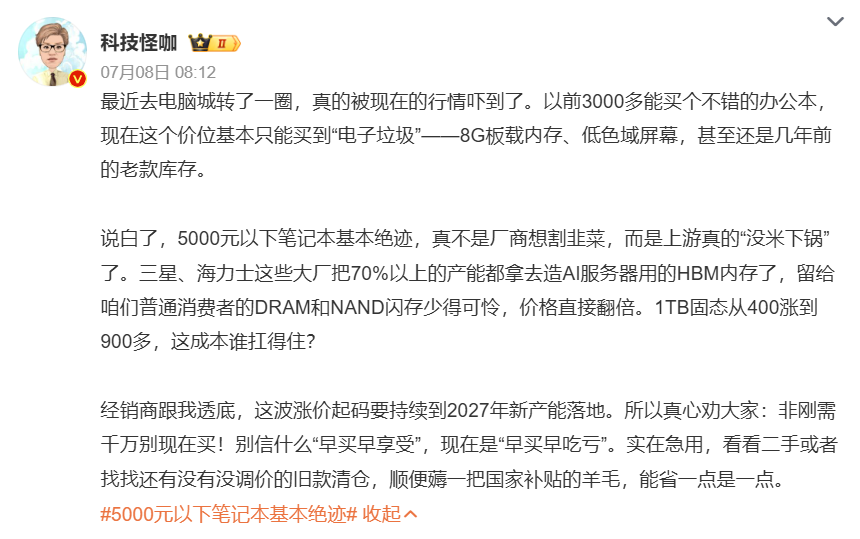
Tech Influencers Weigh In on the Computer Price Hike Wave
Zhou, who has been in the memory wholesale business in Shenzhen's Huaqiangbei for twelve years, smiled wryly at the wall of price tags: "I've been in this business for so long, and I've never witnessed such a crazy market. It used to be a price hike at the end of the year, followed by a drop after the New Year, but now prices change daily. I sell at whatever price the upstream gives me; I dare not stock up." He pointed to the few lonely memory modules in the display case and said, "These few, I managed to snag through connections from Hong Kong channels. At this time last year, I'd have at least several hundred in stock."
The turmoil in the consumer market is even more pronounced.
In early August, Zhang Chi, accompanied by his son who had just been accepted into university and operating under a strict budget set by his wife at 'no more than 10,000 yuan,' shopped around from Dell to HP to Lenovo. In each store, his son's eyes lit up at the high-end models, while Zhang Chi hesitated.
Finally, in a Lenovo store, his son set his sights on the 13,999-yuan Legion Y7000P. Zhang Chi originally intended to persuade his son to settle for an eight or nine thousand yuan laptop and upgrade to a better one after entering graduate school. But after his son's repeated requests, he gritted his teeth and bought the computer, later sending his wife a WeChat message saying, "I went over by four thousand; I'll make up for it with my bonus next month."
Zhao Mengke, who was accepted into a second-tier university's civil engineering program this year, took a different approach. After learning that his desired Mechanical Revolution gaming laptop was nearly 2,000 yuan more expensive than last year, he changed his strategy. That evening, he bought a used ThinkPad T14 and an additional 16GB of memory.
"It should be just enough for writing papers, drawing CAD, playing games, and so on. I'll consider upgrading to a higher configuration when computer prices drop a bit later; now is definitely not the best time to buy." Considering his family's financial constraints, Zhao Mengke felt there was no need to insist on a high-end computer.
The choices of individuals like Zhao Mengke are coalescing into an undercurrent.
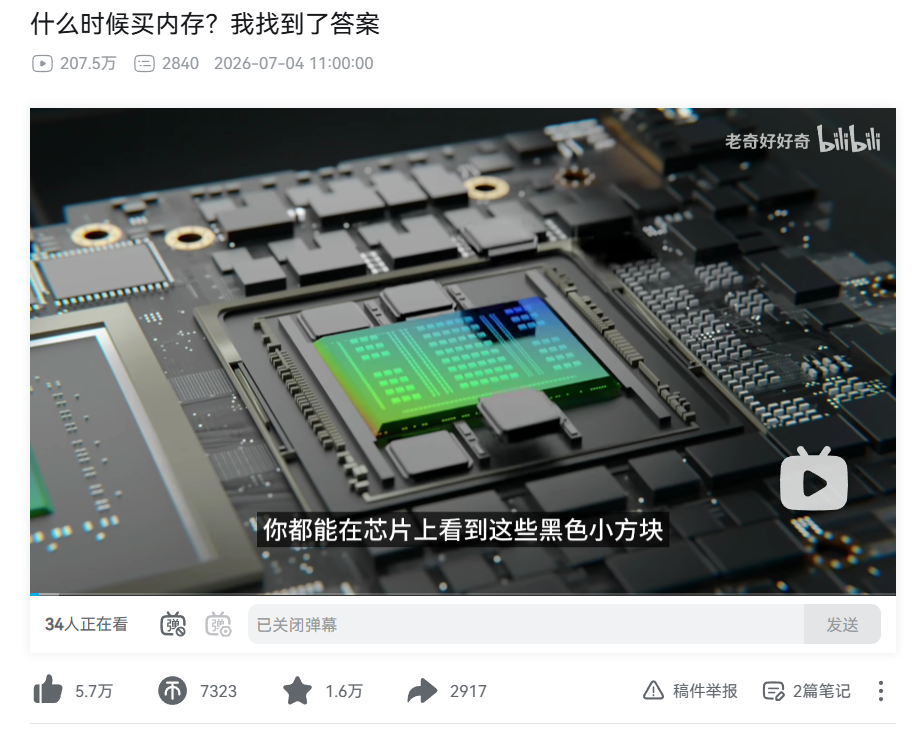
Many Tech Influencers Advise 'Holding Off on Purchases'
Data reveals that domestic online retail sales of laptops in the first two months of this year reached 947,000 units, marking a significant year-on-year decline of 40.5%. Sales revenue stood at 5.99 billion yuan, also down by 40.5%, indicating a rare year-opening slump in recent years.
Meanwhile, starting in late April 2026, a large number of Dell laptops equipped with Intel's 12th-generation Core processors began appearing on mainstream second-hand trading platforms like Xianyu and Zhuanzhuan. Typical models like the Latitude 7430 were generally priced between 1,600 and 2,000 yuan, with some devices still under warranty. This phenomenon spans commercial laptops, consumer-grade lightweight laptops, and gaming laptops across multiple product lines, forming a stark contrast with the current surge in memory and storage chip prices and drawing market attention.
More intriguingly, several high-end models from previous years, once considered 'relics,' have become the most cost-effective options due to their freely upgradeable memory and hard drives. Some netizens joked, "I used to think buying second-hand was embarrassing; now I feel like buying new is paying an 'anxiety tax.'"
The Irreversible Price Hike Wave Demands a New Equilibrium
In the face of the collective computer price hike wave, a bizarre scene has emerged in the market: the once fiercely contested 5,000-yuan price segment now only houses some extremely stripped-down 'shell machines': 8GB of memory, 256GB of low-speed hard drives, low-color-gamut TN screens, and even struggling to run Windows 11 smoothly. Computers that can truly run games, code, and edit videos smoothly now start at a price quietly surpassing 7,500 yuan.
From past market fluctuations, memory price hikes typically lasted 3-6 months before retreating, but this time, institutions and analysts almost unanimously believe the story is different.
CITIC Securities' research report states that the Agent AI era, centered on storage capacity, is driving a long-cycle paradigm shift in the storage industry. In terms of supply and demand, AI inference has led to a dramatic increase in Token consumption, with KV Cache surging linearly. The mismatch between explosive demand and original manufacturer expansion has led to normalized shortages, with supply expected to remain tight until 2027 and price hikes persisting throughout 2026.
This means that old strategies like 'waiting for Double 11 sales' or 'back-to-school promotions' are no longer valid. Manufacturers may not want to avoid promotions, but they lack the profit margins to offer discounts.
Some consumers have already discovered after visiting several electronics stores that the gifts offered during back-to-school promotions are nothing more than laptop bags and mice, with high discounts or high-value gifts no longer in line with market conditions.
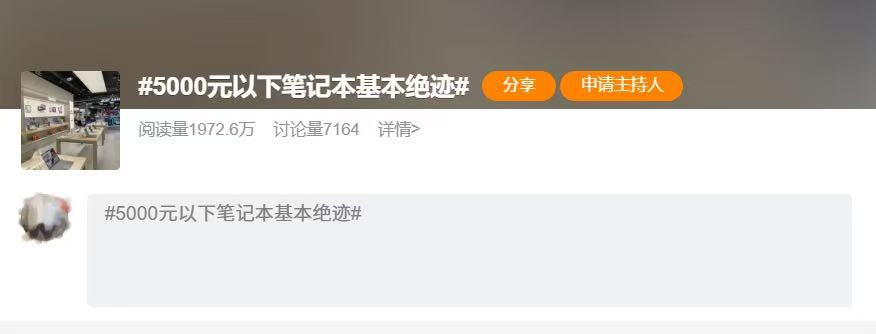
Faced with the temporarily irreversible price hike wave, consumers are not without options.
-
![]()
Alibaba's AI Offensive: Over Half of Investment Allocated, Time to Reap Returns
-
![]()
Alibaba’s AI Push: Over Half of Investments Made, Time to Harvest Returns
-
![]()
Chinese Enterprises Going Global 3.0: From World Factory to AI Infrastructure Builder
-
![]()
Honor RobotPhone Review: Half Movie Camera, Half Robot
-
![]()
AI-Driven Cheating Surges in Universities! Online Exams Reduced to Mere Formalities, Degree Credibility on the Line
-
Insta360’s Decade in Panoramic Imaging: Making Cameras ‘Invisible’ and Returning Creation to the Masses
-
![]()
Foreign Media Claims Apple is Concentrating Resources on AI Development: Vision Pro and Siri Teams Lay Off 200 People
-
Big News! Huaneng and Huawei Hold Talks in Shenzhen with Ren Zhengfei in Attendance; Huawei Emerging as the 'Second Brain' of China's Energy System