Raising a Record-Breaking 5 Billion Yuan in Funding: Far from Enough, What Commercial Rockets Truly Need to Soar
 02/23 2026
 660
660
Insights from Huasheng
After a decade of relentless effort, Space Honor has secured the largest single funding round ever for a commercial rocket company, a testament to its unwavering commitment and hard work.
What's even more intriguing is the dramatic shift in capital market sentiment towards commercial space in just six months—from a cautious wait-and-see approach to a fierce scramble for investment opportunities. Those who foresee the future early on gain a significant advantage.
However, securing 5 billion yuan is not a trophy but a new challenge. The funds must be judiciously invested in cutting-edge technologies while maintaining a steady R&D pace, resisting the urge to be swept away by capital pressure. Beyond financial resources, what the industry lacks most is market and public tolerance.

5 billion yuan—this is the staggering amount raised by Space Honor in its D++ funding round.
Is it substantial? Absolutely—it shattered China's private commercial rocket sector's single-funding record.
But is it sufficient? Not quite. In June of the previous year, its D+ round's initial close raised a mere 700 million yuan. Prior to that, the company endured a three-year funding drought during its darkest days.
Behind these figures lies a poignant truth: Over the past decade, domestic commercial space rocket companies have collectively raised only 30 billion yuan, yet they've managed to sustain the entire sector to this day. Such capital efficiency deserves applause, but it's also disheartening—companies have had to operate on shoestring budgets, conducting experiments and R&D with strict financial controls, never enjoying stability.
A Half-Year Transformation: From Capital Exile to Fierce Competition
Just six months ago, capital approached this sector with trepidation, wary of its "high investment, long cycle, and high risk" nature.
When Huasheng discussed this direction with primary and secondary market investors, most dismissed it with disdain. Some early investors even sought buyers for their stakes in leading companies.
But in a mere half-year, the winds have shifted entirely: New funding rounds are clustering, with investors scrambling to inquire about secondary share transfers, fearing they'll miss out on this rare opportunity.
Three key factors drive this transformative shift:
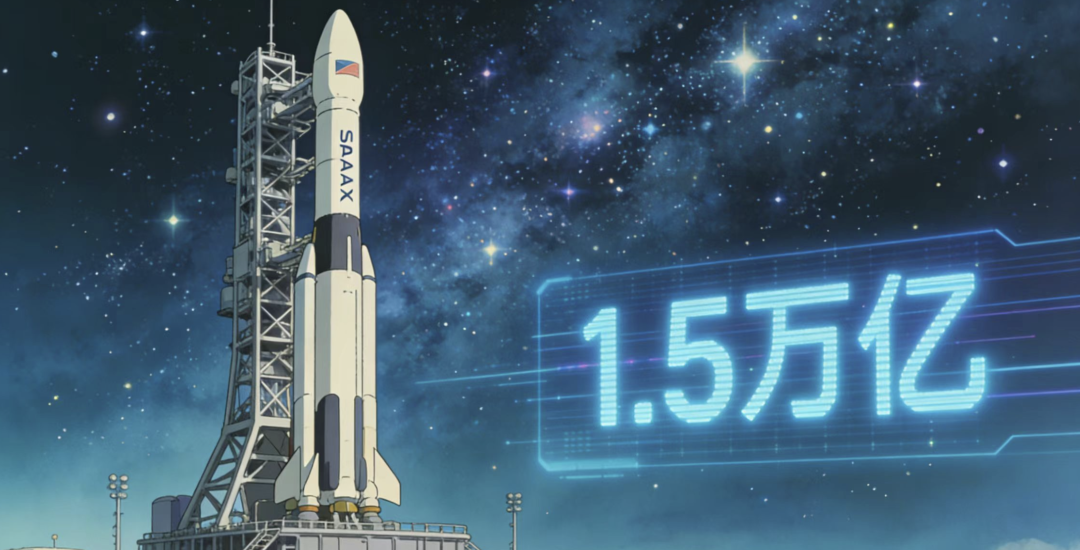
1. SpaceX's valuation has soared past $1.5 trillion, with the world's largest IPO on the horizon, demonstrating to capital the immense commercial potential of space ventures;
2. After a decade of struggle, domestic private space companies have overcome technological experimentation phases, achieving breakthroughs in core technologies like rocket recovery and liquid oxygen-methane engines. Some now offer small-batch commercial delivery capabilities, delivering tangible results;
3. Hard tech has become the mainstream investment direction in capital markets, and commercial space—with its technological barriers and national strategic value—has naturally become a premium target for capital.
Solid Foundation: Peng Xiaobo's Decade in Space
Capital is always pragmatic—it doesn't cluster without reason.
Space Honor became commercial space's "capital darling" not by chance but through a decade of hard-earned technological expertise built by its founders and team.
Over ten years, the company has translated technological visions into reality: from early rocket technology verification to the Hyperbola-2's successful vertical recovery test, and now the Hyperbola-3's final sprint towards its maiden flight. These tangible technological achievements are why capital is willing to bet big.
Most impressively, Space Honor emerged from its darkest moments, enduring multiple failures to reach today's spotlight. These experiences have forged a determined team that optimizes solid rockets while developing reusable liquid rockets, pursuing a dual solid-liquid strategy with firm pragmatism.

As early as July 25, 2019, Space Honor achieved its first solid rocket's orbital launch, becoming China's first private rocket company with orbital capability. Simultaneously, in December 2019, the reusable liquid engine JD-1 for its liquid rocket completed a 500-second full-system endurance test—a concrete step in its reusable liquid rocket development strategy, advancing rapidly.
Solid rockets better meet current launch demands, securing orders and cash flow; liquid rockets position the company for future markets, creating a dual-wheel drive.
5 Billion Yuan Isn't a Trophy—It's a Tougher Beginning
Securing 5 billion yuan in funding is the result of Space Honor's decade-long perseverance, seemingly a sweet reward. However, for the company and the entire sector, the real challenges are just beginning.
Funding is never a gift from heaven but a "technological loan" for the future. Every dollar injected demands tangible technological delivery.
This round will primarily fund the Hyperbola-3's reusable liquid oxygen-methane rocket development and commercialization, as well as building full-process capabilities for "land launch, sea recovery." Scheduled for its 2026 maiden flight, this rocket aims to achieve a critical breakthrough: "orbital entry + sea recovery" in one go.

In Huasheng's view, with capital flooding in, the competitive logic of commercial space has shifted: Over the past decade, the industry competed on capital efficiency—how to sustain R&D and reach the next funding round with limited funds.
Today, the sector has transformed from a marathon across deserts into a split-second short-track speed skating race, where technological advancement, maturity, and deployment speed matter most. The pressure to deliver technologically and withstand capital expectations defines success.
Leading commercial space companies now stand at the IPO threshold. While capital hasn't pressed for urgent listings, it expects faster technological and commercial progress.
For leaders like Space Honor, the greatest challenge isn't funding but maintaining R&D pace amid capital expectations.
Rocket development is an engineering challenge, not a scientific one—contrary to common belief.
The two biggest barriers: First, the trial-and-error cycle is too long. Rocket development is engineering, not cutting-edge science—rockets have existed for 80 years. Second, each trial consumes massive funds, personnel, and resources. Overcoming these requires deep expertise.
Aerospace engineering follows its own rules. Rocket development and launch testing involve thousands of components, making trials inevitable.
Capital, however, seeks efficiency and returns. Balancing short-term capital demands with long-term R&D patterns—without succumbing to hype or rushing—is the core challenge for all commercial space founders.
In fact, this isn't just Space Honor's test but the entire sector's shared trial.
Commercial Space's Biggest Gap: Tolerance for Failure
Beyond balancing capital and R&D, commercial space faces a more pressing issue: Market tolerance lags far behind capital enthusiasm, and media coverage often misrepresents the sector.
For example, LandSpace's prospectus revealed the industry's frustration: Rocket launch success directly impacts client confidence, future orders, and even corporate cash flow.

In state-run aerospace, launch failures are seen as normal R&D steps. Internal "zeroing" processes analyze issues and improve technology, with media and the public rarely overreacting. The state, as the core client, provides ample room for trial and error.
However, private commercial space companies rarely enjoy such "tolerance." A single rocket test failure—even routine R&D testing—can trigger market overreactions and industry information volatility.
Worse, some media misrepresent commercial space: either overhyping technological breakthroughs or amplifying single failures, lacking an objective understanding of industry patterns. Such one-sided attention exacerbates public misunderstandings and complicates companies' trial-and-error paths.

Hard tech development is never smooth—it requires continuous technological iteration, market tolerance, capital patience, and public understanding. Like SpaceX's journey from three Falcon 1 failures to today's routine reusable rocket operations, decades of tech accumulation and market tolerance for failure made it possible.
Space Honor's 5 billion yuan marks a critical milestone for commercial space. It recognizes not just a company's decade-long perseverance but capital's final validation of commercial space's hard tech value.
But we must remember: Commercial space's spring isn't built on funding alone. It comes from technological breakthroughs, successful launches, and steady commercialization—all achieved step by step.
This effort demands capital patience, market tolerance, and companies like Space Honor holding true to aerospace's original mission.
By Li Xiyin · Huasheng
-
![]()
Xiaomi's MiMo Stages a Two-Year Comeback to Top Global Inference Volume Rankings
-
Tech Titans' Offline Tussle for Desktop Dominance: The Office Agent Showdown
-
![]()
Full-Spec Power and BOSE Subwoofer: The REDMI K100 Pro Max Performance Review
-
![]()
Yuewen’s Unending Innovation: Navigating Content Industry Shifts
-
![]()
Huawei, Li Auto, XPENG, Xiaomi: After Scrutinizing Seven Papers, What Are 'World Models' and 'VLA' Really Competing For?
-
![]()
Proposed to Raise 955 Million Yuan through Private Placement! Huicheng Vacuum Boosts Localization of Ultra-Precision Optical Coating Equipment
-
![]()
Cash Flow Soars 13-Fold! What Major Strategic Move is Wuhan Five Square Optoelectronics Planning?
-
![]()
Leaked Design of vivo X500: Reverts to Circular Camera Module in Top-Left Corner, Pays Homage to Classic X90 Aesthetic