From Starlink to Moon-Based Factories: Musk Wagers on 'One Million Satellites' to Relocate Data Centers to Space
 02/25 2026
 631
631
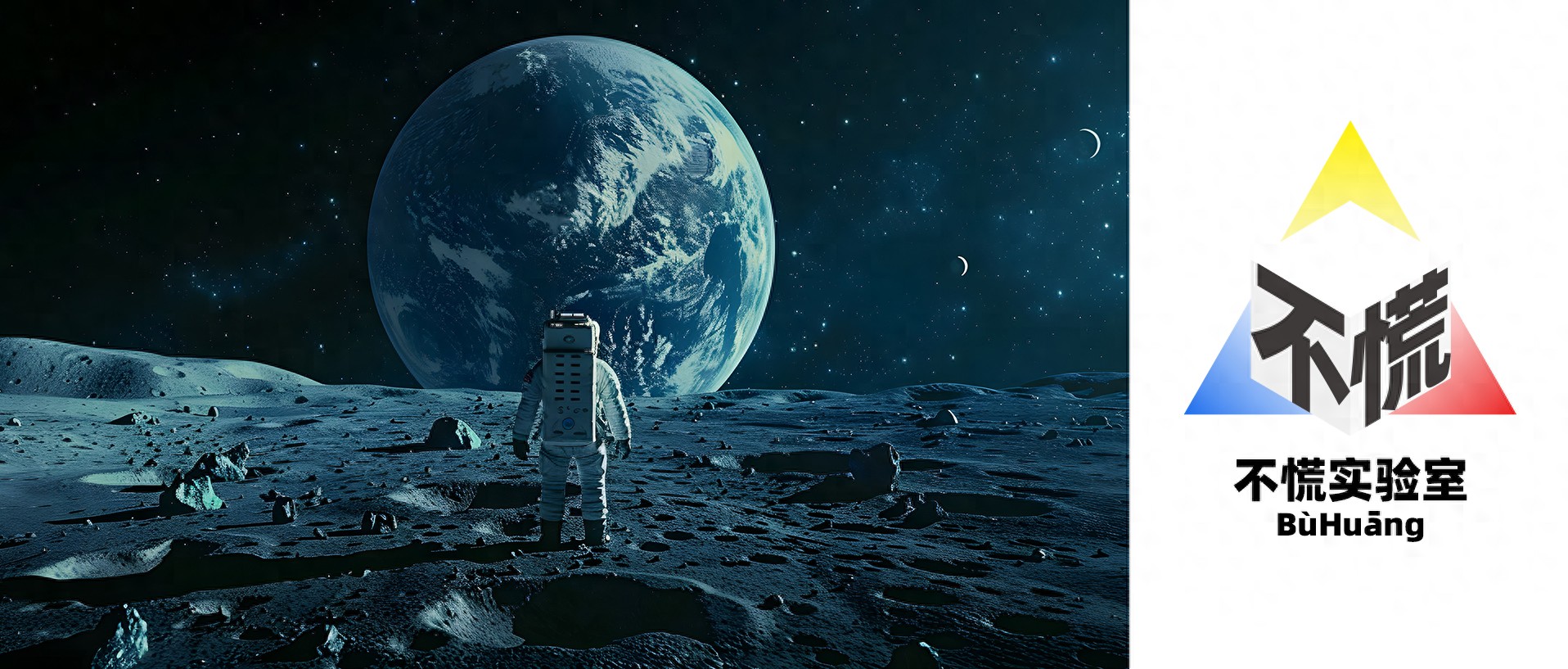
On February 23, 2026, Elon Musk, CEO of SpaceX, unveiled a revolutionary concept of a 'lunar electromagnetic launch' that sent shockwaves through the industry. According to reports from French futuristic science websites, Musk envisions constructing a colossal electromagnetic launch device and a satellite assembly plant on the Moon. By capitalizing on the Moon's low gravity and absence of atmosphere, he aims to 'launch' satellites into Earth's orbit.
A Bold Concept
This visionary plan is designed to bolster SpaceX's application to the U.S. Federal Communications Commission (FCC) for permission to deploy a network of up to one million satellites in low-Earth orbit. The goal is to create an on-orbit data center network capable of supporting high-performance computing needs, including AI applications.
Musk intends to propel space exploration from the 'exploration phase' to the 'development phase' through this initiative. He envisions building a new space computing infrastructure and transforming the Moon into a strategic 'outpost base' for human AI civilization, fundamentally reshaping the economic model of commercial spaceflight.
To grasp the rationale behind Musk's audacious concept, it's essential to examine SpaceX's current business landscape.
As the global leader in commercial spaceflight, SpaceX has nearly cornered the global commercial launch market with its reusable rocket technology. Its flagship project, Starlink, has also evolved from costly infrastructure development to commercial monetization.
However, with the increasing congestion of low-Earth orbit resources and competition from terrestrial 5G/6G technologies, Starlink's first-mover advantage is under threat.
A deeper concern stems from the explosive growth of AI large models, which is driving global computing power demand to unprecedented levels. Meanwhile, the energy and cooling constraints of ground-based data centers are becoming increasingly evident.
Influencing Technological Trajectories
Musk's proposed 'lunar launch' plan, though seemingly a technological pipe dream, is actually aimed at breaking free from Earth's gravitational constraints, addressing extreme cost control challenges, and elevating SpaceX from a 'transportation company' to a 'space infrastructure operator' to gain a competitive edge in the future computing power wars.
From a technological standpoint, the concept of lunar electromagnetic launch is not without merit. The Moon's gravity is merely one-sixth of Earth's, and the lack of atmospheric resistance theoretically allows for a substantial reduction in energy consumption costs for launching satellites from the Moon.
The core value of 'orbital data centers' lies in overcoming ground-based computing power limitations. Ground-based data centers grapple with issues such as high energy consumption, cooling challenges, and geographical constraints. In contrast, space offers access to virtually limitless solar power and deep-space radiation cooling, theoretically enabling more efficient and low-carbon computing power solutions.
From an industry trend perspective, space data centers have emerged as a strategic battleground in global technological competition. Tech giants like Google and Amazon have already embarked on related technological verifications, and China is rapidly catching up.
SpaceX's plan for a million-satellite constellation targets the exponential demand for computing power driven by AI development. By integrating on-orbit data processing, it aims to create a hybrid computing power system with 'ground-based as the primary and space-based as the supplementary.' If realized, this layout could revolutionize the global computing power supply landscape and even influence the trajectory of AI technology development.
Numerous Risks
Despite its grand vision, SpaceX's lunar launch plan is fraught with risks.
Firstly, there's the enormous technological gap. Constructing massive infrastructure on the Moon involves countless unresolved challenges, such as automated construction, energy transmission, and survival in extreme environments.
Humans have yet to establish a permanent base beyond Earth, let alone build kilometer-long electromagnetic launch tracks and automated satellite factories on the Moon.
Secondly, there are legal and ethical risks. Deploying one million satellites would render Earth's orbit extremely crowded, and the space debris problem could provoke strong international opposition and even legal action.
Finally, there's the financial risk. The initial investment for this project would be astronomical, representing a massive financial drain even for Musk. If the funding chain were to break, it could potentially drag down his entire commercial empire.
After all, the distance from Earth to the Moon is 380,000 kilometers, and the journey from concept to reality may be even more arduous.
-
![]()
Xiaomi's MiMo Stages a Two-Year Comeback to Top Global Inference Volume Rankings
-
Tech Titans' Offline Tussle for Desktop Dominance: The Office Agent Showdown
-
![]()
Full-Spec Power and BOSE Subwoofer: The REDMI K100 Pro Max Performance Review
-
![]()
Yuewen’s Unending Innovation: Navigating Content Industry Shifts
-
![]()
Huawei, Li Auto, XPENG, Xiaomi: After Scrutinizing Seven Papers, What Are 'World Models' and 'VLA' Really Competing For?
-
![]()
Proposed to Raise 955 Million Yuan through Private Placement! Huicheng Vacuum Boosts Localization of Ultra-Precision Optical Coating Equipment
-
![]()
Cash Flow Soars 13-Fold! What Major Strategic Move is Wuhan Five Square Optoelectronics Planning?
-
![]()
Leaked Design of vivo X500: Reverts to Circular Camera Module in Top-Left Corner, Pays Homage to Classic X90 Aesthetic