BYD: Far More Formidable Than Anticipated
 12/30 2025
 584
584
Source | Bohu Finance (bohuFN)
Author | All too well
Last year, the European Union officially slapped additional tariffs on electric vehicles imported from China, with the maximum rate soaring to 45%. This move initially sparked concerns about BYD's full-scale entry into the European market.
However, BYD's accomplishments in Europe over the past year have far exceeded expectations.
Data from the European Automobile Manufacturers Association (ACEA) reveals that BYD delivered a stellar performance in the European market in November 2025. New vehicle registrations skyrocketed by 235% year-on-year, reaching 16,158 units. When including the UK, Iceland, Liechtenstein, Norway, and Switzerland, the number surged to 21,133 units, marking an over 200% increase.
When we zoom out to a broader timeframe, the changes become even more striking.
From January to November 2025, BYD's cumulative sales in Europe hit 159,869 units. While this figure may seem modest compared to Volkswagen's over 3.26 million units and Tesla's over 200,000 units sold in the same period, BYD's sales growth trend underscores its strength. Volkswagen's European sales grew by a mere 4.6% during this period, while Tesla saw a 28% decline. In stark contrast, BYD's year-on-year growth reached an impressive 276%.
This growth rate is unprecedented in Europe and marks the first time a Chinese automaker has achieved such remarkable speed in the European market.
So, how did BYD pull this off?
01 Navigating a Challenging Market
As the world's most mature automotive market, Europe presents formidable challenges beyond stringent regulations and high tariffs.
Firstly, consumer loyalty to local brands is exceptionally strong. In major markets like Germany and France, consumers heavily favor domestic brands such as Volkswagen, Renault, and Peugeot. Secondly, the distribution and service systems are highly entrenched. Europe's dealer networks, leasing, and government procurement systems have long been dominated by local brands, making product competitiveness alone insufficient for new entrants.
This explains why Chinese automakers have boldly expanded into Southeast Asia, Latin America, and the Middle East in recent years but have proceeded cautiously and slowly in Europe.
However, Europe represents an automotive market with an annual output value of approximately €500 billion, and there is still significant room for new energy penetration. Notably, the average selling price of electric vehicles in Europe is twice that in China. From a strategic perspective, gaining a foothold in Europe means earning recognition under the most stringent standards in the global automotive industry.
As BYD Executive Vice President Li Ke put it, "If you win here, it means you excel in every aspect."
This explains BYD's significant investments in localization.
On one hand, BYD acquired European dealers to gain more autonomy. In Germany, BYD acquired a local dealer subsidiary, bringing sales and parts distribution under its direct management and securing greater control over distribution channels.
Simultaneously, BYD recruited a team of seasoned professionals familiar with the European automotive system. Among them was Maria Grazia Davino, former head of Stellantis UK and a former Fiat executive, who swiftly reshaped BYD's dealer network in Germany and strengthened its localized operational capabilities in the European market.
A senior analyst commented, "They correctly recruited business-savvy talent from traditional automakers, and everything is gradually falling into place. Their product lineup is growing daily and remains highly competitive."
On the other hand, BYD promoted localized production and service system construction, such as the layout of its Hungarian factory and supporting service centers, which helped boost consumer confidence in the brand's long-term presence.
Whether sponsoring Euro 2024, acquiring dealers, or building logistics and infrastructure, BYD's determination to capture the European market is evident. Li Ke once promised to invest up to $20 billion in Europe.
Moreover, the early results of these localization efforts are already visible.
02 BYD's Transformation
This year, BYD swiftly adjusted and adapted to local demands in the European market. The most notable change was in its product portfolio. BYD accelerated the launch of plug-in hybrid models, which became key to its success in Europe.
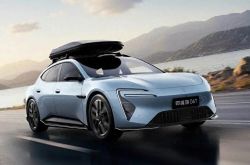
In November, plug-in hybrid vehicle registrations in Europe surged by 35% year-on-year to reach 109,000 units, outpacing the overall automotive market's growth. Among them, the Seal U registered 6,475 units that month, becoming Europe's best-selling plug-in hybrid model. With approximately 63,000 cumulative registrations in the first 11 months, it ranked first in the plug-in hybrid market.
The rapid growth in plug-in hybrid demand stems not from European consumers' preference for hybrids but from practical necessities.
On one hand, Europe's charging infrastructure lags significantly. As of the second quarter of this year, Europe had about 1.05 million public charging stations, just one-fourth of China's total. However, from 2017 to 2023, EU pure electric vehicle sales grew 18-fold, while charging stations increased only six-fold. On the other hand, infrastructure distribution is highly uneven, with Nordic countries having relatively well-developed charging conditions, while Southern and Eastern Europe suffer from chronic supply shortages.
In this context, plug-in hybrids emerged as a better option, offering the range of fuel-powered vehicles while complying with European emissions regulations. Their ability to switch between fuel and electricity meets the diverse needs of long-distance and short-distance travel.
Another key to the Seal U's success in competitive markets like Germany lies in its comprehensive advantages. In Germany, the Seal U starts at approximately €38,000, about €4,000 lower than the Volkswagen Tiguan PHEV. It achieves a combined fuel consumption of 1.2 liters per 100 kilometers, lower than the BMW X1 PHEV, and offers an eight-year, 160,000-kilometer battery warranty, two years longer than mainstream competitors. These multifaceted advantages lower the decision-making threshold for consumers.
While plug-in hybrids helped BYD establish itself in the European market, BYD also brought its philosophy of "technology democratization" to the region.
For a long time, the European electric vehicle market suffered from a clear segmentation: high-end options were abundant, but affordable models for the masses remained scarce. After subsidies gradually phased out, mainstream pure electric vehicles often remained priced above €30,000—presenting an opportunity for BYD.
For instance, this year, BYD introduced its domestically proven pure electric model, the Seagull, to Europe under the localized name Dolphin Surf. Despite its higher price compared to the Chinese market, it remains highly competitive. In Germany, the Dolphin Surf offers three versions—Active, Boost, and Comfort—priced between €22,990 and €30,990.
During its launch promotion, the starting price was reduced to €19,990, directly undercutting the Citroën e-C3 and putting pressure on other European automakers' affordable pure electric markets.
This strategy is familiar: BYD leverages its scaled manufacturing and vertical integration to reduce costs to levels difficult for competitors to match, making electric vehicles accessible to more consumers. More importantly, the Dolphin Surf comes standard with features like a rotating central touchscreen, reversing camera, and adaptive cruise control—configurations that often require additional payment in European brand models—highlighting BYD's sincerity.
Feedback from some European dealers confirms BYD's achievements in the European market. One dealer admitted that operations were "extremely challenging" initially, as consumers had barely heard of BYD, and only pure electric models were available at first. However, as the product lineup expanded, especially with the introduction of plug-in hybrid models, sales began to improve significantly. The head of the Leeds dealership noted that the sales team clearly sensed consumers "beginning to realize this is not a cheap brand" but a mature automaker willing to adapt its product structure to local conditions.
More notably, BYD's explosive growth in the European market occurred before the launch of its new factory in Hungary. This factory produces both pure electric and plug-in hybrid models, with a supporting service system under construction. Combined with the rail logistics network connected to Greece's Piraeus Port, BYD can cover the Central European market more efficiently, reducing delivery and operational costs.
In other words, BYD has even more confidence.
03 Conclusion
Of course, BYD faces significant challenges.
Similar to its domestic approach, BYD, which even chooses to build its own overseas shipping vessels, has adopted an extremely heavy asset model. This approach requires massive scale; once growth slows, costs and pressures will surface simultaneously.
Meanwhile, European automakers are accelerating their counterattacks.
Stellantis has launched the new Citroën ë-C3, pricing electric vehicles at around $25,000, while collaborating with Chinese automaker Leapmotor to introduce the T03 to Europe with a starting price as low as €18,900. Additionally, its ongoing STLA Frame platform paves the way for longer-range pure electric and extended-range models.
Volkswagen Group is also not resigned to playing second fiddle: the ID.2 is expected to launch next year at approximately €25,000, followed by the ID.2all, with plans to introduce the ID. EVERY1 at around $21,500 by 2027. Its collaboration with Rivian on vehicle architecture and software is seen as a crucial step in rebuilding its competitiveness.
The greater challenge lies in the fact that these European automakers possess mature dealer networks, corporate vehicle procurement, and leasing system resources—structural advantages that cannot be easily surpassed in a short time.
Thus, to some extent, BYD is embarking on a bold adventure, using heavy assets and long-term commitments to penetrate a highly mature and heavily fortified market.
This is a game for the brave and a necessary step for Chinese automakers.
Reference Sources:
1. The New York Times: How Chinese Automakers Doubled Market Share in Europe Despite High Tariffs
2. Farsight Technology Review: BYD is the Ideal Choice for Europeans
3. The New York Times: Chinese Auto Brands Rapidly Occupy Market Share in the UK
4. Bloomberg: China’s EV Powerhouse BYD Accelerates into Europe’s Heartland
The cover image and accompanying illustrations are copyrighted by their respective owners. If the copyright holders believe their works are unsuitable for public browsing or should not be used free of charge, please contact us promptly, and our platform will make immediate corrections.
-
![]()
Enflame Tech's IPO Journey: Navigating Over 5.9 Billion Yuan in Losses and Soaring Debt in Q1 This Year
-
![]()
Trillion-Yuan Giant Li Shufu 'Streamlines': Could Levc Be the Casualty?
-
![]()
AI Competes for Electricity and Generates Power in the Gobi Desert
-
![]()
The First Batch of Victims of the AI Bubble: Programmers
-
![]()
ByteDance, DJI, and Xiaohongshu Secure Top Three Positions Among China’s Fastest-Growing Unicorns
-
Tesla's in-car voice system in China is finally learning to 'understand human language'
-
![]()
Foreigners Are Amazed: Chinese Electric Vehicle Drive Systems Unveil Innovative 'Poses'
-
![]()
700,000 Brothers and the Future of Robots: Behind JD.com's 'Nirvana Plan'