$70 Billion Dream Shattered: Meta Personally Puts an End to the 'XR Android Dream,' Leading to Aborted ASUS and Lenovo Headset Projects
 12/30 2025
 694
694
In December 2025, less than two years after Meta's high-profile announcement of opening up Horizon OS and its ambition to create the 'Android of the XR era,' a strategic U-turn has quietly unfolded.
According to Meta's official statement, the company has 'paused' licensing its mixed reality operating system, Horizon OS, to third-party manufacturers. Frankly, this is tantamount to a death sentence for ASUS ROG, Lenovo, and even the rumored Microsoft Xbox XR devices—products that never saw the light of day, being stifled in their infancy.
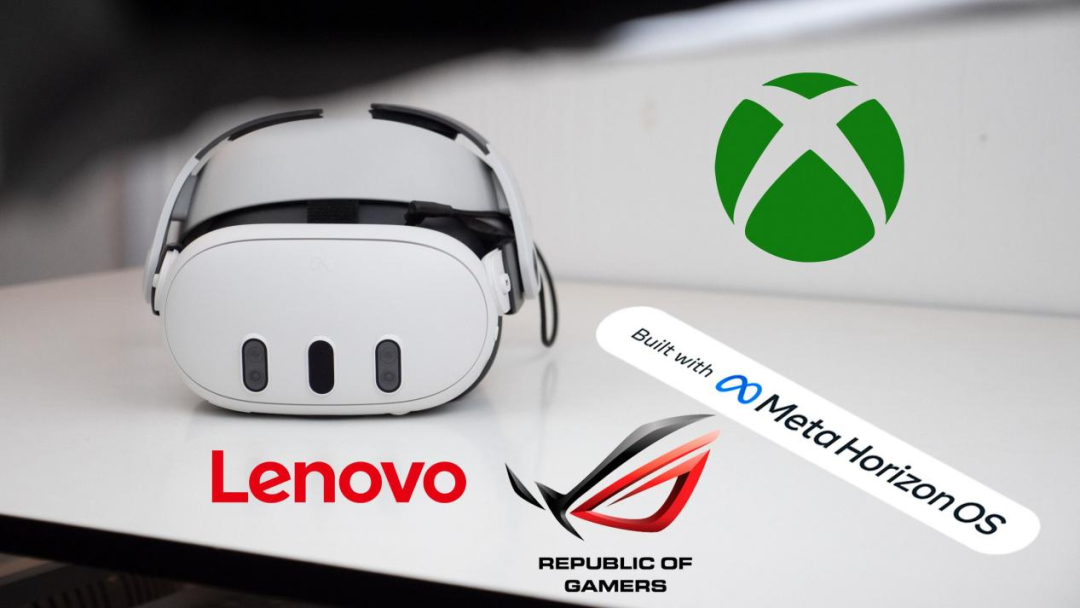
Ironically, Meta's decision to hit the brakes coincides with a critical phase in Google's steady advancement of the Android XR ecosystem. On one side, Meta retreats and reverts to its old path. On the other, Google opens its arms, using an open strategy to attract companies like Samsung and XREAL.
The once highly anticipated Meta 'Android dream' has ultimately shattered into pieces.
The Dilemma of 'Wanting Both': A Pit Dug by Meta Itself
In April 2024, Meta officially renamed the Quest operating system to Horizon OS and announced it would license it to hardware manufacturers like ASUS and Lenovo. At the time, Zuckerberg's ambition was unmistakable: to establish Meta Horizon OS as the Android of the XR realm, competing with Apple's visionOS and seizing the next generation of human-computer interaction.
However, the vision was grand, but reality proved harsh.
Firstly, Meta's own business model harbored a fundamental contradiction from the outset: Meta has long sold its Quest series headsets at cost or even at a loss (e.g., the Quest 3S priced at just $299), relying on software services, content royalties, and advertising to gradually 'recoup losses.'
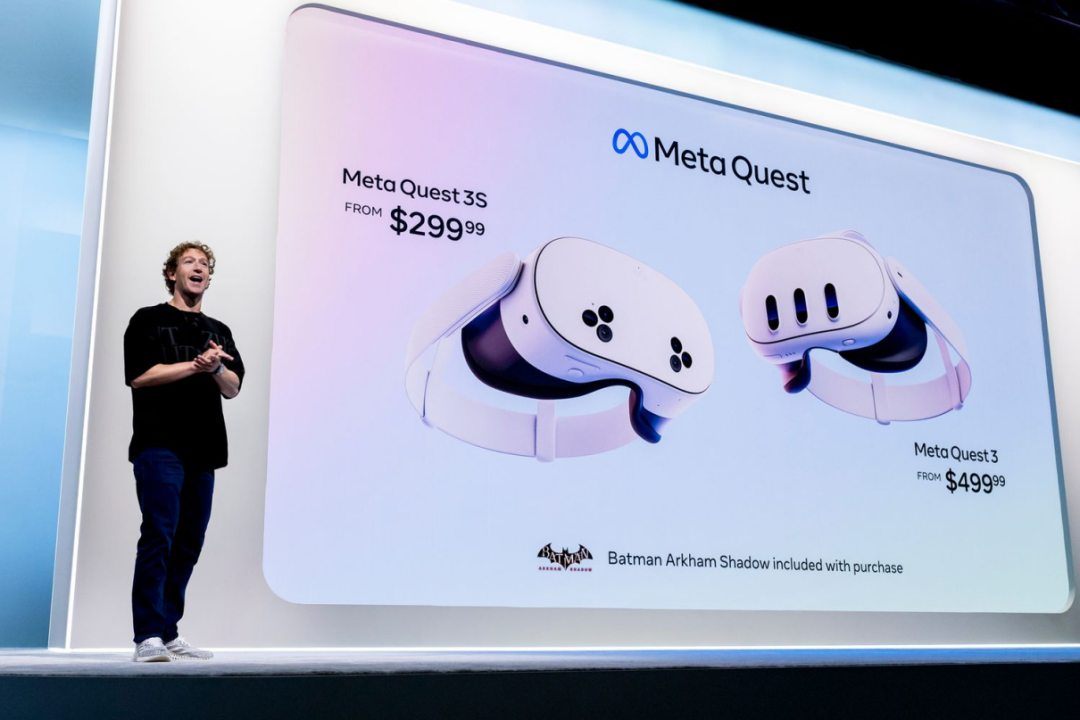
This 'hardware subsidy + platform commission' approach works for Meta, given its cash cow businesses like Facebook, Instagram, and WhatsApp. But for hardware-dependent manufacturers like ASUS and Lenovo, it's an unsolvable dead end.
Imagine this: If you're ASUS launching a ROG headset comparable in performance to the Quest 3, how would you price it?
Sell it for $699? Users would retort, 'Why not buy the Quest for half the price?' Sell it for $299? Sorry, you can't even cover costs, let alone make a profit.
The result: Third-party manufacturers face neither profit margins nor differentiation advantages, trapped in a typical 'chicken rib' dilemma.
Meanwhile, while Meta Horizon OS boasts the richest library of immersive VR content in the standalone headset space, it has clearly fallen behind in the competition for a full-scenario application ecosystem. Earlier reports revealed developers' concerns over Horizon OS's performance, suggesting it had regressed.
As Meta struggled with 'wanting both ecosystem and control,' Google entered the fray with Android XR.
Google's 'Dimensional Strike': Android XR Arrives
In late 2024, Google officially launched the Android XR operating system, explicitly supporting a full spectrum of devices from lightweight smart glasses to high-end MR headsets. More importantly, it directly inherited millions of existing apps from the Google Play Store, allowing developers to adapt applications to XR scenarios with minimal code changes.

What does this mean?
For users, donning an Android XR device grants instant access to millions of existing Google Play Store apps, with familiar applications seamlessly adapting without waiting for 'XR-exclusive remakes.' For developers, they avoid building an ecosystem from scratch, instead standing on the shoulders of giants.
This 'plug-and-play' ecological advantage is something Horizon OS simply cannot match.
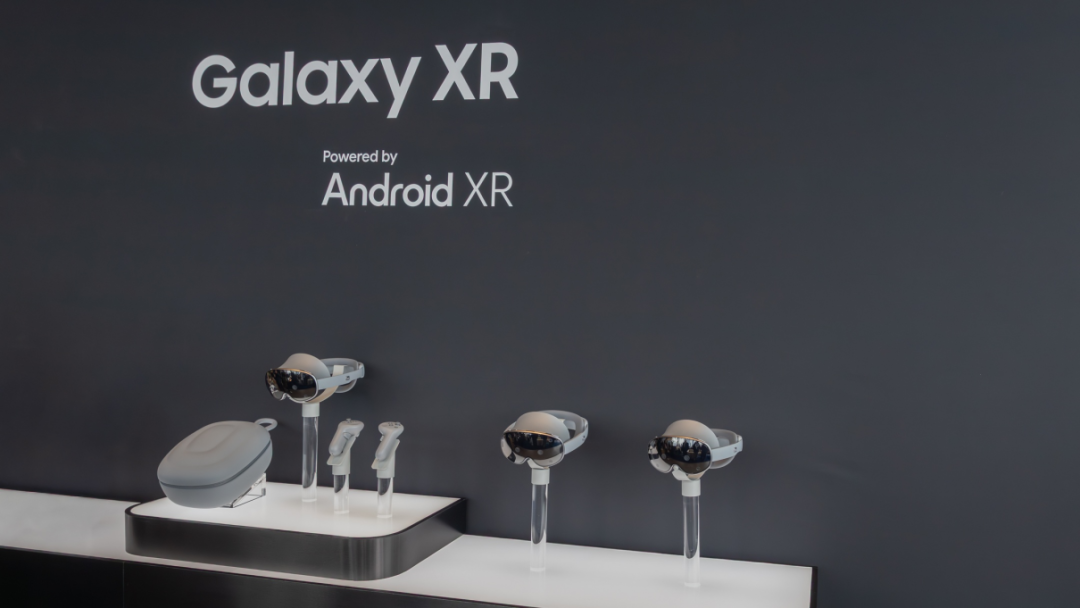
Critically, industry partners quickly aligned: Samsung released its first Android XR device, the Galaxy XR; XREAL confirmed its Project Aura smart glasses, powered by Android XR, would launch as planned in 2026.
Most crucially: Google currently has no plans to launch its own XR hardware.
This means it won't act as both 'referee and player' like Meta. For third-party manufacturers, Android XR isn't just a technological platform—it's a safe, trustworthy commercial partner that doesn't compete for their market share.
In contrast, Meta shouted 'co-building the ecosystem' while using low-priced Quest headsets to squeeze partners' survival space. This logic of 'wanting both ecosystem prosperity and hardware monopoly' is commercially untenable.
Predictably, after Meta closes the door on third-party licensing, any manufacturer hoping to enter the standalone headset market will have to turn to Android XR.
Reality Labs' Strategic Shift: Has $70 Billion Bought Clarity?
It's important to emphasize that Meta's strategic retrenchment isn't an isolated event but part of a broader XR strategy overhaul.
Since 2021, Reality Labs has accumulated losses exceeding $70 billion, becoming one of the largest and longest-running 'money-burning' projects in tech history.
Latest earnings show that in Q3 2025, Reality Labs' revenue surged 74% year-over-year to $470 million, driven by hot sales of AI smart glasses co-developed with Ray-Ban. However, operating losses remained staggering at $4.432 billion, flat year-over-year. For the first nine months of 2025, operating losses widened to $13.171 billion from $12.762 billion a year earlier, averaging daily losses exceeding $48 million.
Meanwhile, the market is no longer dominated by Meta alone. As more brands enter, user attention fragments, slowing Quest's user growth; the developer ecosystem weakens, with top-tier content updates lagging.
Industry consensus links the 'pause' of third-party Horizon OS headset plans to Meta's recent large-scale restructuring of its VR and Reality Labs teams.
Recent leaked internal memos reveal clearer directions:
Meta plans to launch an ultra-lightweight 'mixed reality glasses' by H1 2027, featuring a split computing design;
Simultaneously, the company has initiated the Quest 4 project, focused on gaming experiences and positioned as a 'significant upgrade' over the Quest 3, though with a notably higher price point.
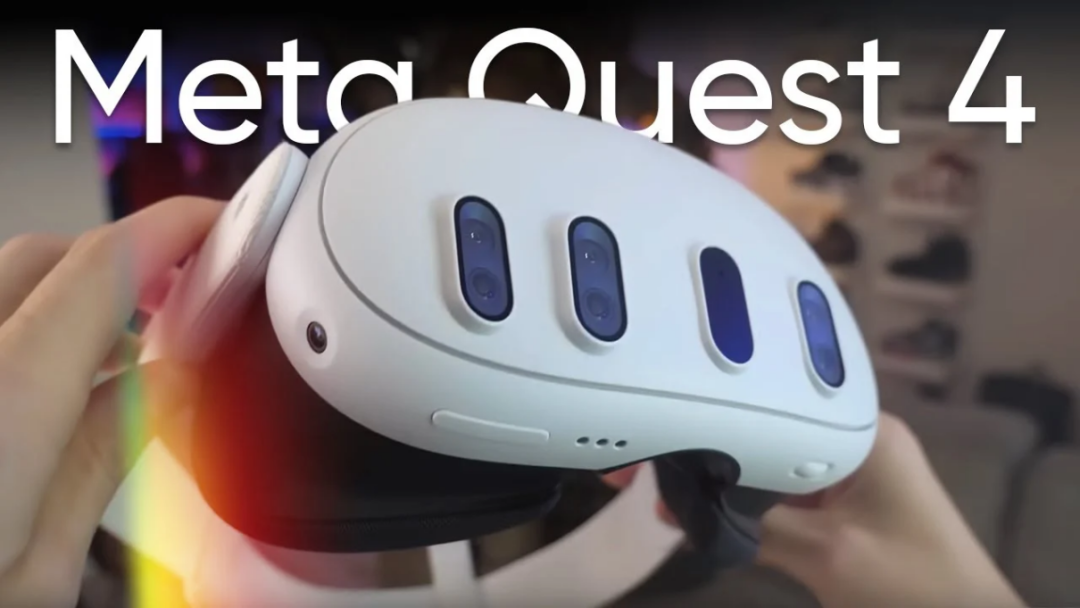
In other words, Meta is shifting from 'mass adoption' to a 'high-end boutique' strategy, attempting to improve hardware losses through higher unit prices.
The $70 billion tuition fee is exorbitant but has brought clarity.
Meta now understands: XR isn't a race won by throwing money, and ecosystem building can't be faked with 'pseudo-openness.'
Summary
Would things have turned out differently if Meta had chosen to collaborate with Google?
Maybe, maybe not. But history doesn't offer do-overs.
Android XR's success may stem not from Google 'licensing' a system but from its willingness to relinquish hardware control, focusing instead on creating an open, universal, developer-friendly platform. It doesn't compete for partners' market share but helps them expand theirs.
Meta's 'openness,' however, always carried a strong desire for control, ultimately creating commercial contradictions and deterring partners.
Perhaps true openness isn't about 'letting you use my system' but about 'being willing to become part of a larger ecosystem.'
By Vivi
Unlabeled images in the text are sourced from the internet.
-
![]()
Hardware is the skeleton, AI is the soul, and data integrates the two
-
![]()
China’s AI Industry: A Unified Pivot Towards Monetization?
-
![]()
New Progress! Infineon Completes Acquisition of ams OSRAM's Non-Optical Sensor Business
-
![]()
35 Million Bet on an Optical Future! Tengjing Technology Makes a Move in AR
-
![]()
Why World Models Get Stuck on Construction Roads in Autonomous Driving Applications
-
Alibaba Initiates Cultural Transformation: Is Jack Ma Making a Strategic Comeback?
-
Tianfeng Heads to Hong Kong for IPO with RMB 3.8 Billion in Funds: Xingyu's Cross-Border Foray into Embodied AI Faces Uncertain Future
-
![]()
Mengshi Auto’s High-End Aspirations Dashed: Huawei Partnership Fails to Revive Sales, New Model’s Entry Price Dips Below 300,000 Yuan