Beijing Benz Issues an Urgent Clarification! The All-Electric CLA Has Not Been Discontinued, but the Electric Vehicle Market Is Challenging
 07/27 2026
 483
483
Highly anticipated but struggling in sales.
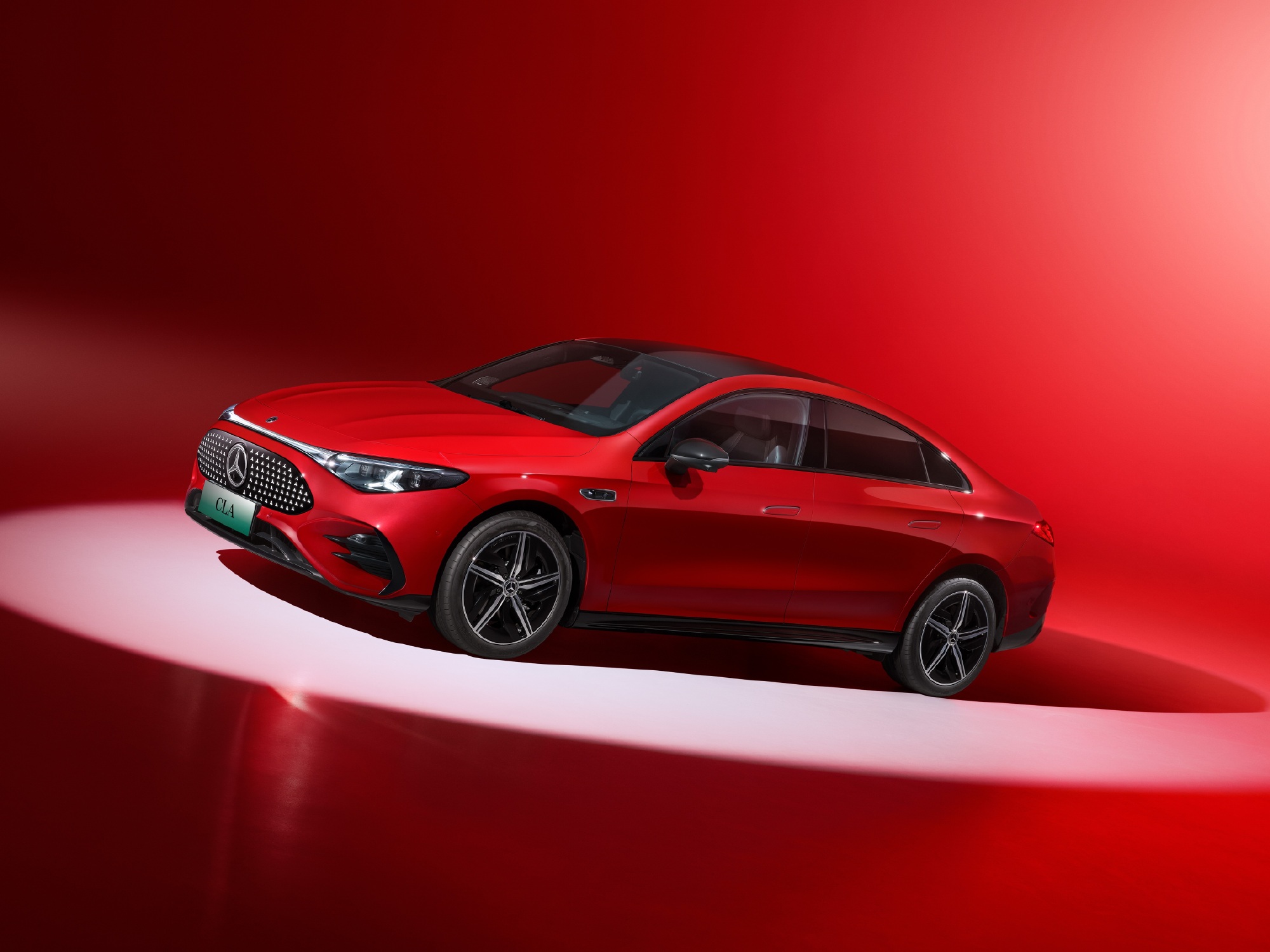
Has the Mercedes-Benz all-electric CLA, which has only been available in the Chinese market for eight months, already been discontinued?
Multiple foreign media outlets have reported that Beijing Benz has temporarily halted production of the Mercedes-Benz all-electric CLA, likely due to sluggish sales.
However, on July 24, Beijing Benz refuted these reports, stating that the "CLA model remains in production with relatively stable monthly sales. As is common practice, different production lines will rotate for high-temperature breaks and utilize this period for equipment maintenance."
(Image Source: Mercedes-Benz)
According to data compiled by Dianchetong (ID: dianchetong233), from February to June this year, the total sales of the Mercedes-Benz CLA EV in China amounted to only 627 units, with a peak of 358 units sold in March.
What do these figures indicate? The Tesla Model 3 sold 14,266 units in June alone, averaging 475 units per day; the Xiaomi SU7 sold 20,414 units in June, averaging 680 units per day.
Even the "retrofitted electric" BMW i3 sold 1,039 units in June. In other words, the sales of the Mercedes-Benz all-electric CLA over five months are equivalent to just over half a month's sales of the BMW i3, less than a day and a half's sales of the Tesla Model 3, and even less than a single day's sales of the Xiaomi SU7.
As the first model built by Mercedes-Benz on the new MMA platform and the vanguard of Mercedes-Benz's new round of electrification and intelligent transformation in China, why are the sales of the Mercedes-Benz all-electric CLA so lackluster?
Initially, there was considerable online buzz surrounding the all-electric CLA. It was praised for its low power consumption, superior two-speed transmission over single-speed, excellent drivability, and a strong sense of luxury. Despite the overwhelming praise at launch, sales figures reveal that consumers are not convinced.
The answer is straightforward: insufficient competitiveness.
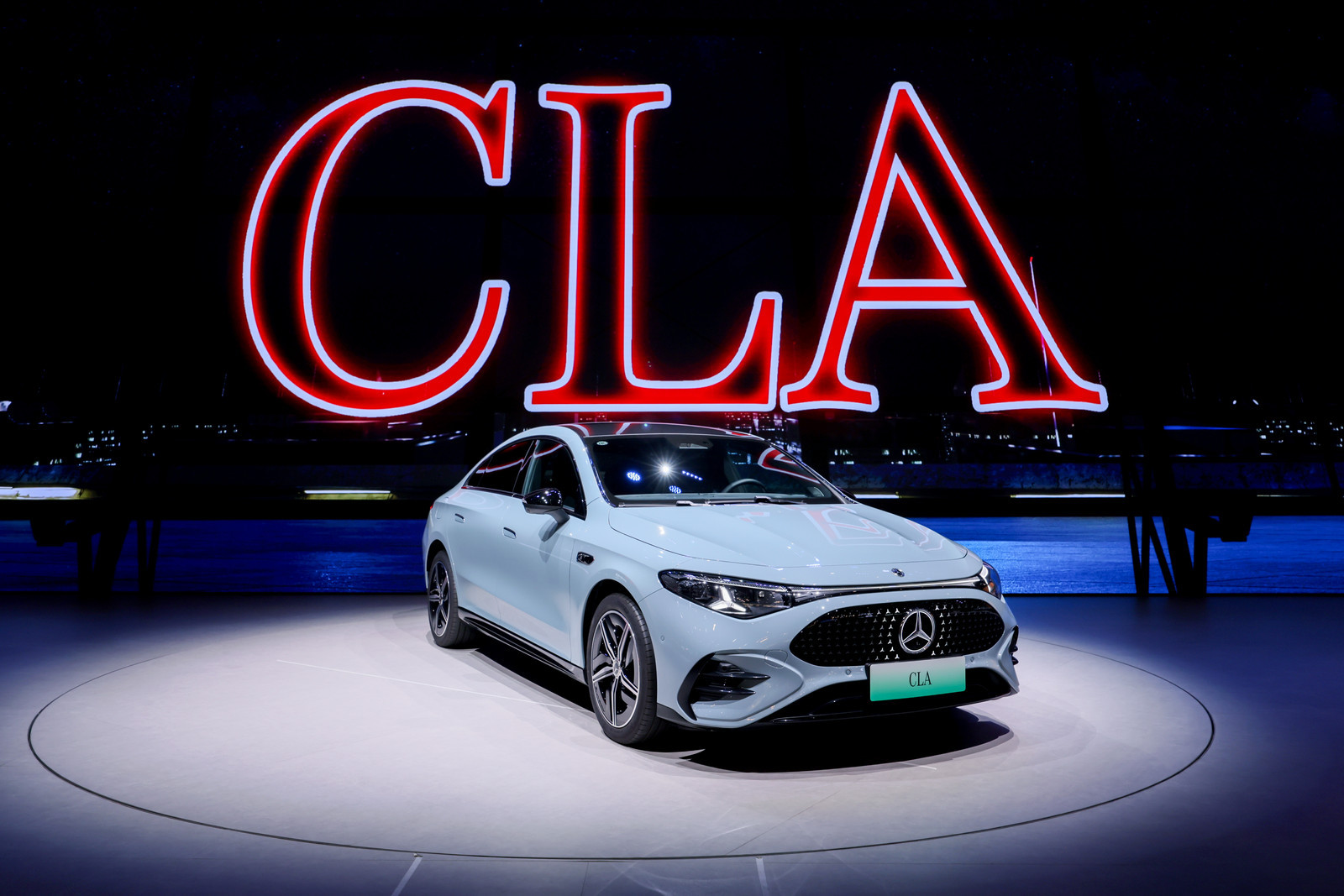
Let's examine the basic parameters of the all-electric CLA: body dimensions of 4763*1836*1471mm, wheelbase of 2830mm, motors available in 165kW and 200kW versions, and battery capacities of 60kWh and 80kWh.
Now, let's consider the pricing: 229,000 to 285,600 yuan.
At this price point, let's not compare it with domestic all-electric vehicles like the Xiaomi SU7 yet; let's just compare it with the Tesla Model 3.
The Tesla Model 3 has dimensions of 4720*1848*1442mm, a wheelbase of 2875mm, motors available in 194kW, 225kW, 137+194kW, and 137+265kW versions, and batteries available in 62.5kWh and 78.4kWh versions.
The pricing for the Model 3 ranges from 235,500 to 339,500 yuan. Excluding the high-performance all-wheel-drive version, the pricing is 235,500 to 285,500 yuan.
In this comparison, the Model 3 and the all-electric CLA are relatively close in terms of size, performance, and pricing.
(Image Source: Mercedes-Benz)
However, the issue lies in the fact that Mercedes-Benz, as a latecomer in the new energy sector, has significantly less brand power and influence in the all-electric vehicle market compared to Tesla.
Therefore, when the prices and configurations of the two models are similar, consumers are more inclined to choose the brand with higher recognition.
Thus, the all-electric CLA faces an awkward situation: in the 200,000 to 300,000 yuan all-electric sedan market, a significant portion of consumers will opt for new energy models from domestic brands like Xiaomi and Zeekr, while the remaining consumers who are not interested in domestic brands will choose Tesla, leaving very few consumers for Mercedes-Benz.
From Mercedes-Benz's perspective, they might feel aggrieved, considering that compared to the European version, the all-electric CLA in the Chinese market has a longer wheelbase and enhanced intelligence levels, yet consumers are still not buying it.
Nevertheless, even with these significant improvements, the all-electric CLA still lags in competitiveness compared to its peers at the same price point, especially domestic new energy vehicles.
Domestic new energy vehicles at the same price point generally offer C-class standards with a length of 5 meters and a wheelbase of 3 meters. High-rate fast charging, LiDAR, and advanced intelligent driving assistance systems are also almost standard features for models in this price range.
However, the all-electric CLA, with configurations similar to the Tesla Model 3 but lacking Tesla's influence in the new energy market, cannot compete not only with domestic new energy vehicles and Tesla but also falls short in monthly sales compared to the BMW i3, which is based on the retrofitted electric version of the 3 Series.
Therefore, Dianchetong (ID: dianchetong233) believes that the all-electric CLA is clearly not well-suited to the Chinese market. So, where does the future lie for Mercedes-Benz electric vehicles and the entire joint venture electric vehicle sector?
In recent years, a recurring topic in the automotive circle has been whether joint venture electric vehicles have a future and where that future lies.
Many believe that as long as joint venture automakers can actively drive the transformation towards electrification and intelligence, they can at least secure their own niche, even if they cannot outcompete domestic new energy vehicles.
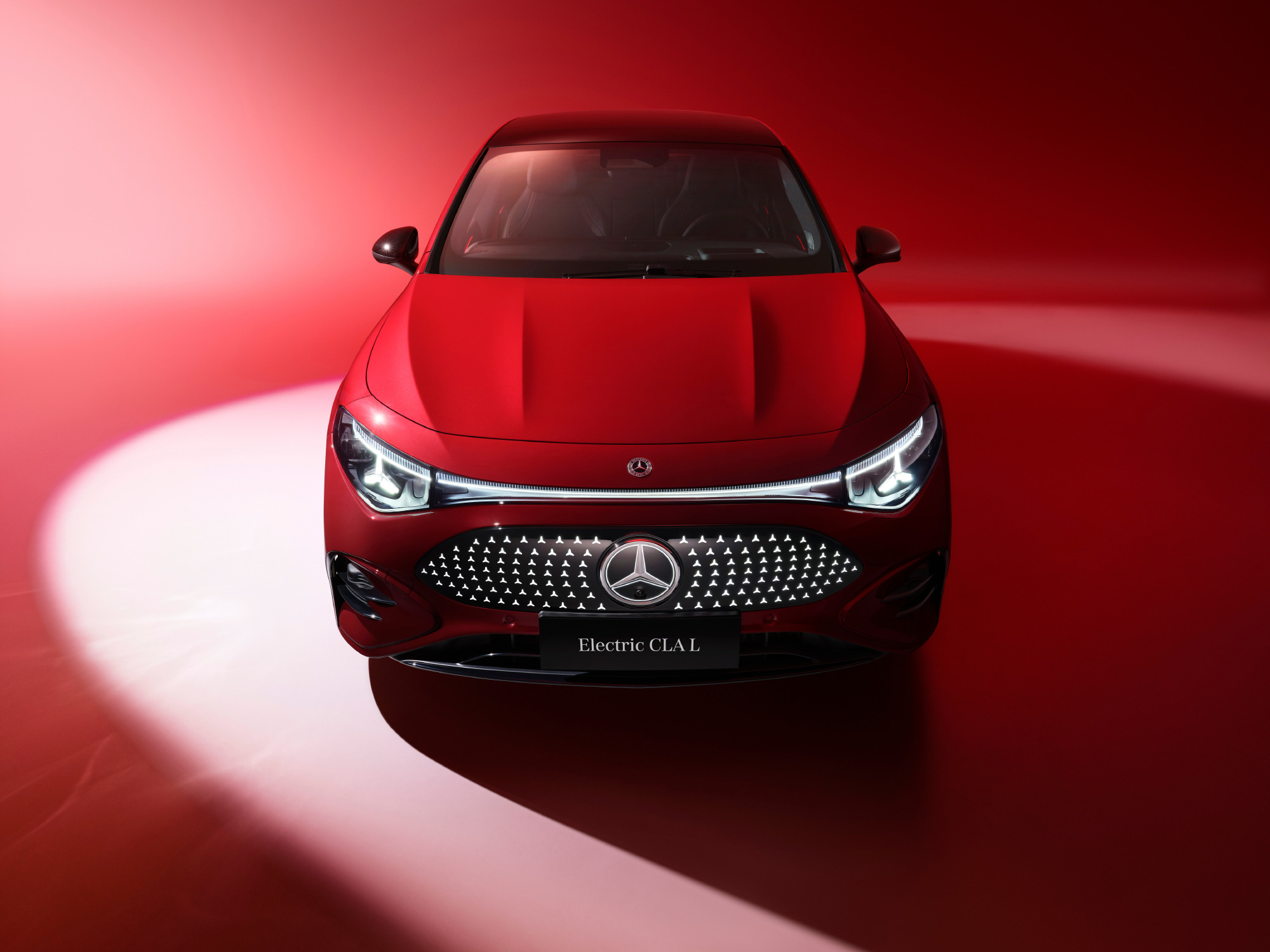
However, the poor sales of the Mercedes-Benz all-electric CLA have indeed sounded an alarm for joint venture automakers, indicating that car manufacturing should not only focus on self-improvement but also align with market demands to produce models that consumers are willing to buy.
(Image Source: Mercedes-Benz)
For example, the three leading Japanese brands—Toyota, Honda, and Nissan—have taken different approaches in the Chinese new energy market, leading to different outcomes.
Dongfeng Nissan, Nissan's joint venture brand in China, has leveraged Dongfeng's accumulated technologies in electrification and intelligence, combined with Nissan's expertise in ride comfort, to create three very Chinese-style new energy models: N6, N7, and NX8, achieving relatively good sales performance.
Even the Dongfeng Nissan N7 is planned to go overseas, using China's new energy technologies to compete in international markets.
On the other hand, GAC Toyota, one of Toyota's joint venture brands in China, directly used GAC's own platform and architecture to create the bZ3X and bZ7 models. Among them, the bZ3X even reached 7,895 units in June sales, ranking sixth in Toyota's sales in China.
In contrast, Honda has neither developed corresponding models relying on its Chinese joint venture partners nor created new energy vehicles from the perspective of Chinese market demand. As a result, its latest all-electric models, the P7 and S7, naturally have monthly sales in the hundreds.
Besides Toyota and Nissan mentioned earlier, many overseas brands are also creating 'special supply' models more suited to the Chinese market based on Chinese user and market demands.
For example, Audi, also part of the 'BBA' trio, has launched the 'AUDI' brand, utilizing SAIC's all-electric architecture to create the AUDI E5 and E7X models, which offer better cost-effectiveness compared to the traditional four-ring Audi logo.
Volkswagen Anhui, a joint venture between Volkswagen and JAC, utilizes Xiaopeng's vehicle architecture, three-electric technologies, intelligent cockpit, and intelligent driving technologies to create the ID. With the crowd 08 and 09 models.
Moreover, the new ID. series models from FAW-Volkswagen and SAIC Volkswagen are also 'special supply' models tailored to Chinese market demands.
In Dianchetong's (ID: dianchetong233) view, for overseas brands to continue thriving in the Chinese automotive market, they need to gain a deeper understanding of the Chinese market, meet user demands, and further enhance the competitiveness of their vehicles.
Furthermore, the current situation of the Mercedes-Benz all-electric CLA also serves as a reminder to BMW, which is about to launch the new i3 and iX3 in the Chinese market, on how to avoid repeating the mistakes of the Mercedes-Benz CLA.
Ultimately, the poor sales of the all-electric CLA are not because Mercedes-Benz cannot build good electric vehicles but because they have not truly understood the Chinese new energy market.
The current Chinese market is no longer a simple era where a three-pointed star emblem can command a premium. Even as the pioneer of the 140-year automotive industry, one must humble themselves and earnestly keep pace with the Chinese market.
After the setback of the all-electric CLA, what strategy will Mercedes-Benz adopt to cope with the increasingly fierce competition in the Chinese market? We shall wait and see.
On July 31, ChinaJoy 2026, themed 'Exploring with AI,' will make a grand debut.
A total of 900 pan-entertainment exhibitors, including Tencent, NetEase, Sony, Qualcomm, MC, and Qingxian, will jointly present a global entertainment feast.
With AI empowerment, how will hard tech brands in terminals, peripherals, robots, displays, and chips cross-over with the game content industry to present new entertainment experiences?
Led by founder and editor-in-chief Luo Chao, the Leikeji ChinaJoy 2026 reporting team is about to descend upon Shanghai to present a heavyweight coverage. Stay tuned.
Mercedes-Benz CLA New Energy Vehicle
Source: Leikeji
The images in this article are from the 123RF Authentic Library (123RF Royalty-Free Image Library) Source: Leikeji
-
![]()
JAC Motors Ascends to High-End Market, Leaves Individual Investors in the Lurch
-
Under the Spotlight, Baidu Dazi Faces ‘Three Major Challenges’
-
![]()
Final Verdict: Put an End to Circulating Baseless Assertions - Fewer Than 100 New Car Models Introduced in the First Half of the Year
-
Aliyun Defends Its Market Dominance, Huawei Cloud Targets Public Sector and Enterprises, Tencent Cloud Secures Key Scenarios, Baidu Cloud Stakes Its Future on AI: Strategic Moves of the Four Cloud Tit
-
![]()
Tesla’s Q2 Earnings: Impressive Revenue Growth, Yet Skyrocketing Costs—Is AI and Robotics an Inexhaustible Sinkhole?
-
Breaking Through the 'Monopoly Surcharge': Delving into the Business Rationale Behind Ctrip's Case
-
![]()
Tens of Billions Invested in Large Models: What Are Automakers Betting On?
-
Ctrip Reverts to Regulatory Scrutiny