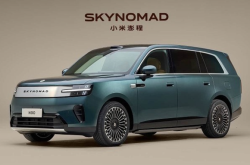
Pengcheng Debuts to Cheers, Yet Xiaomi’s Stock Tumbles 7.28%: Can Its Foray into Extended-Range Vehicles Spark a Second Growth Surge?
 08/03 2026
 414
414
No one could have foreseen that while Xiaomi’s Pengcheng generated significant buzz during its pre-sale, the company faced a frosty reception in the capital markets. On July 31st, Xiaomi Group’s stock price nosedived at the opening bell, with the maximum decline at one point surpassing 10%, reaching -10.57%. By the afternoon close, the stock had shed 7.28%. Notably, this marked Xiaomi’s steepest single-day decline since March 20th of this year.
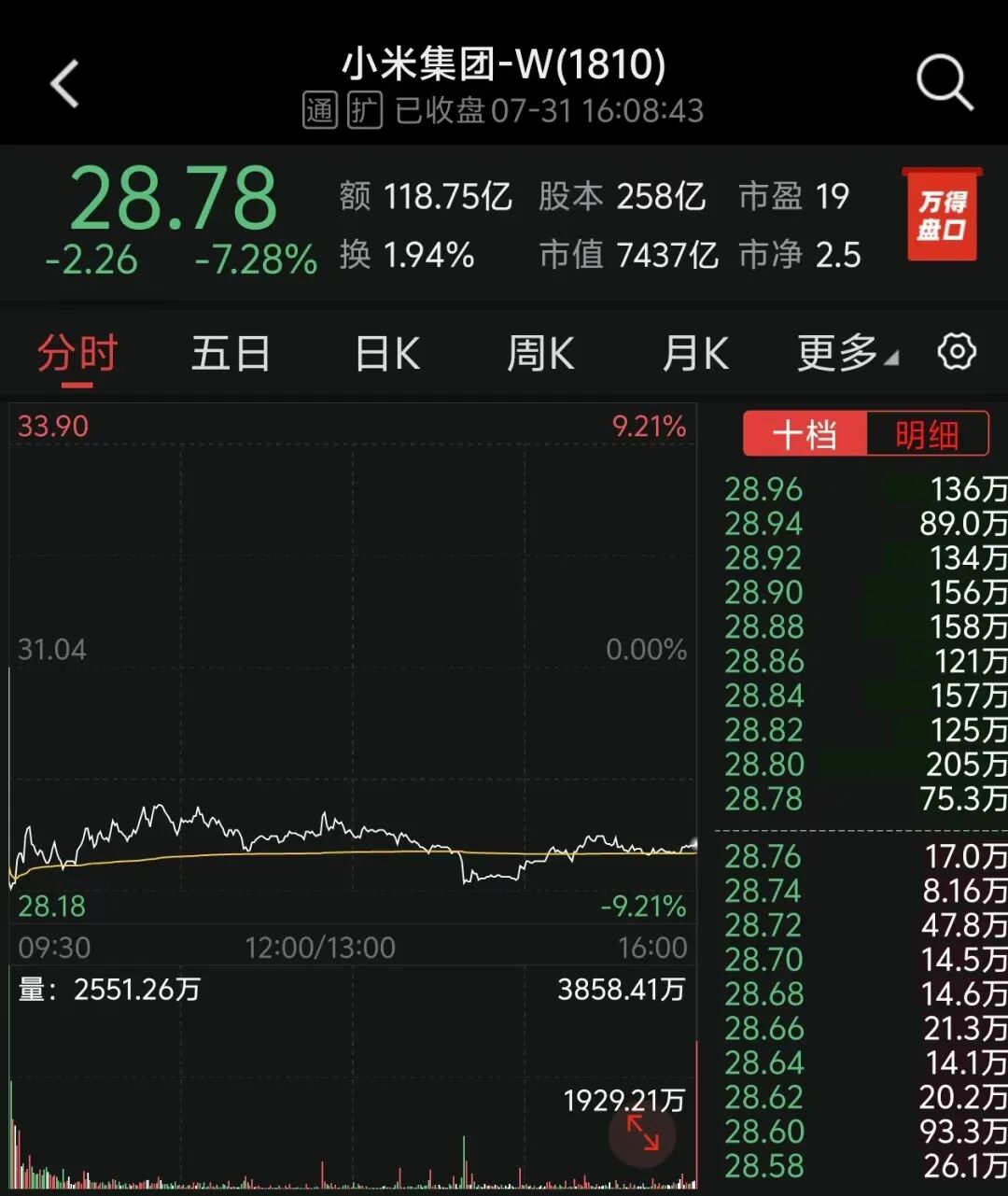
Logically, Xiaomi’s entry into the extended-range vehicle market should have been a boon for the company. So why did its stock price slump instead of soar?
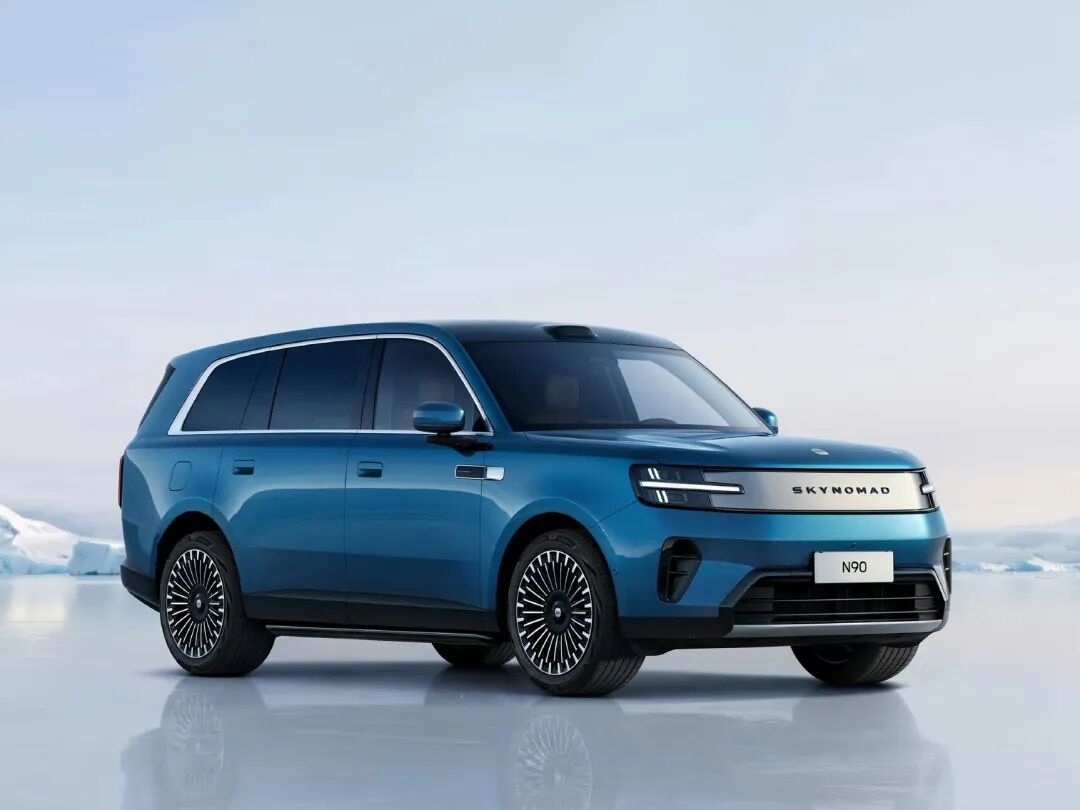
On the evening of July 30th, Xiaomi showcased its technological prowess in extended-range vehicles, highlighting three key components: the Kunlun platform, Kunlun super extended-range system, and Kunlun comprehensive safety. Pengcheng is the inaugural model under Xiaomi’s Kunlun architecture, available in two variants: the N70 (a large five-seater) and the N90 (a 2+2+3 large seven-seater). Positioned as a smart, variable-space, large-battery extended-range SUV, the pre-sale prices are set at 259,900 yuan for the N70 Max and 299,900 yuan for the N90 Max.
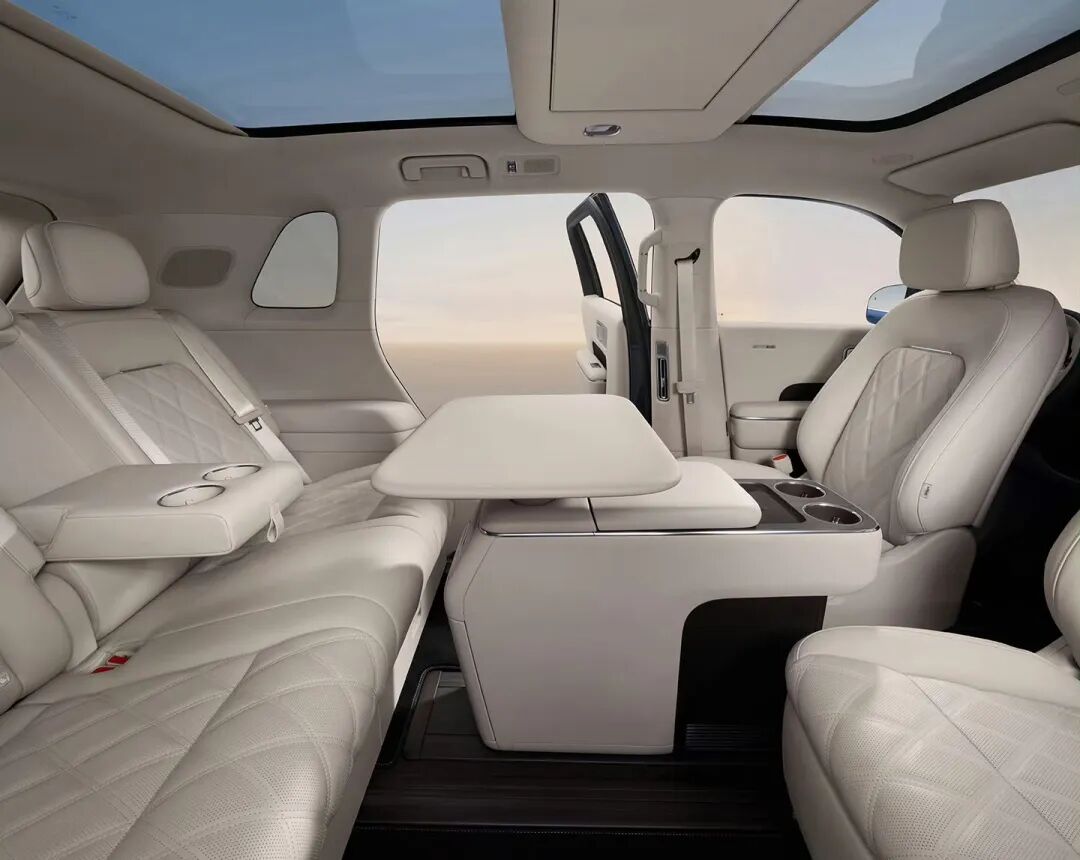
The standout feature of Pengcheng lies in its innovative use of space. Firstly, it boasts a completely flat floor in an extended-range vehicle—an industry first. Secondly, it offers variable space. Through a sliding rail design, the second and third rows can slide “extremely rearward,” with the maximum second-row seating space reaching 1.55 meters and the maximum storage space reaching 1,831 liters. The first-row seats can even rotate to create a living room-like layout. This flexible spatial arrangement gives the SUV an MPV-like feel. While not the first in the industry to offer such features, Xiaomi has taken them to the extreme, pushing the vehicle to new heights in terms of space utilization.
Additionally, Pengcheng continues Xiaomi’s approach of using a large battery for extended-range capabilities. The two models are equipped with either a 52kWh lithium iron phosphate battery or a 76kWh ternary lithium battery, specifically designed for extended-range use, offering pure electric ranges of 464km and 505km, respectively. These are the highest pure electric ranges currently available in hybrid vehicles. Secondly, regarding the range extender, although it uses the well-known Dongan 1.5T custom range extender, after in-depth customization, it achieves excellent thermal efficiency and supports 92 octane gasoline across all variants. Fuel consumption during battery depletion is well-controlled, with the N70 achieving a minimum of 5.7L/100km and the N90 achieving 6.26L/100km. In terms of maintenance, the vehicle requires servicing every 3 years or 30,000 kilometers after the initial service, with an 8-year or 160,000-kilometer warranty for the three-electric system.
From a product feature standpoint, Pengcheng’s highlights are already quite apparent. However, when viewed through the lens of niche market competition, its competitiveness may not be as robust as initially imagined. On July 30th, following the release of the two Pengcheng models, some bloggers pointed out that certain core product features were not showcased during the launch event. These include: the vehicle uses a 400V platform architecture and has abandoned previous battery suppliers CATL and BYD’s FinDreams Battery, opting instead for Sunwoda and CALB batteries, which are lower in cost. Notably, CALB has recently been embroiled in a quality controversy due to its battery supplies for Aion’s ride-hailing vehicles, which may cast a shadow over Pengcheng.
Furthermore, due to design constraints, configurations such as rear-wheel steering and zero-gravity seats—which are highly favored by consumers—were not included in this vehicle. This could potentially sway the choices of some consumers. After all, Pengcheng’s target user group differs significantly from Xiaomi’s initial user base. However, there are also two potential risk points: firstly, the large battery and comprehensive sliding rail mechanical structures result in a relatively high hardware BOM cost, which may squeeze the gross profit margin per vehicle; secondly, it is anticipated that after launch, Pengcheng’s price range may overlap with that of the Xiaomi YU7, posing a risk of internal brand cannibalization. In fact, such risks have previously existed between the YU7 and SU7.
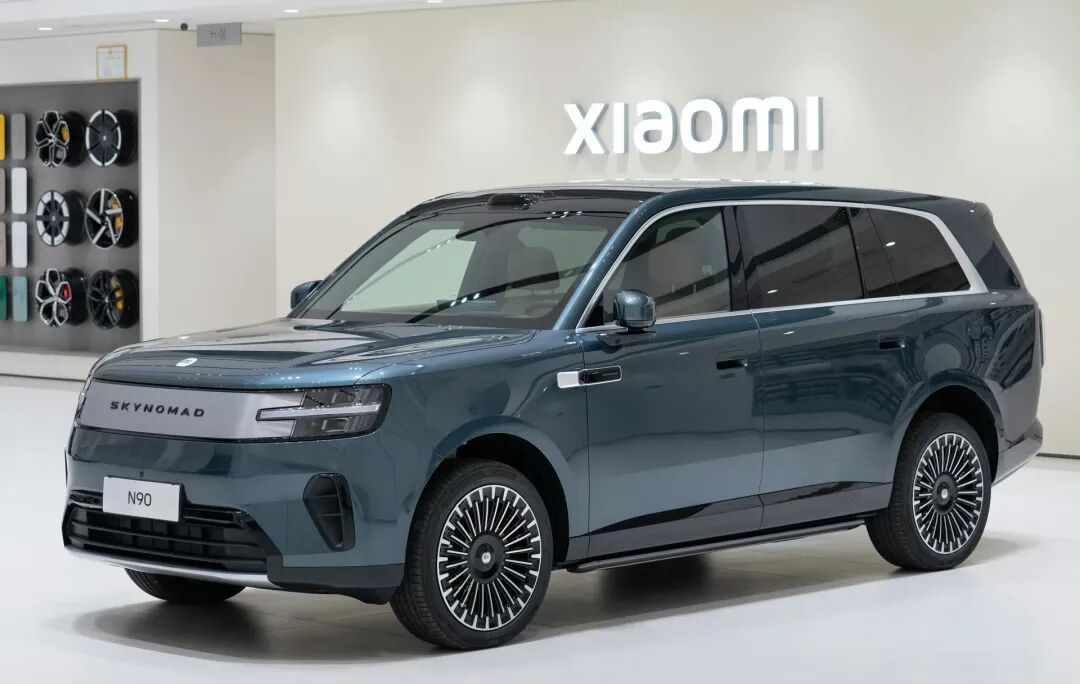
Clearly, Pengcheng has the potential to achieve impressive sales figures. However, the greater risk lies in its current entry into the cooling extended-range market against the prevailing trend. Whether this can become Xiaomi’s “second growth curve” for its automotive business and alleviate the overall profitability pressures of the group remains uncertain. At least judging by the stock price on that day, investors do not seem to have strong confidence.
In the extended-range market, the era of rapid expansion and bonus periods has ended, transitioning from an incremental market to fierce competition within the existing market. Since the second half of 2025, sales of extended-range vehicles have begun to fluctuate. In July 2025, sales of extended-range vehicles declined by 11.4% year-on-year, while sales of pure electric vehicles increased by 24.5% year-on-year during the same period. Cui Dongshu, Secretary-General of the China Passenger Car Association, pointed out that in November 2025, retail sales of extended-range vehicles decreased by 4.3% year-on-year. Among new energy vehicle startups, the structural ratio of pure electric to extended-range vehicles shifted from 57:43 in November 2024 to 73:27.
Entering 2026, the decline in sales of extended-range vehicles has become increasingly pronounced. Data from the China Passenger Car Association shows that in February of this year, wholesale sales of extended-range vehicles declined by 20.1% year-on-year; in March, they slightly recovered with a 7.7% year-on-year increase; however, in April, they declined again by 9.1% year-on-year. In the first half of 2026, retail sales of extended-range vehicles declined by nearly 20% year-on-year. In contrast, the pure electric vehicle market continued to recover, achieving positive growth for multiple consecutive months.
Industry analysts believe that the “range anxiety-free family essential bonus” that once propelled the rise of Li Auto and Seres is now waning. Similarly, the market is flooded with numerous large-battery extended-range vehicles, such as those from Leapmotor, Li Auto, Seres, IM Motors, and XPeng, all offering pure electric ranges exceeding 400KM. This year, the market is expected to witness the launch of dozens of new extended-range SUV models, with a large influx of new vehicles into a shrinking overall market.
Against this backdrop, Xiaomi’s Pengcheng series may gain market share but could ultimately face weakened profit margins. Consequently, Xiaomi’s automotive division faces a dilemma on both ends: firstly, in the first quarter of 2026, Xiaomi’s automotive division incurred an operating loss of 3.1 billion yuan, with only 180,000 vehicles delivered in the first half of the year, falling significantly short of the annual target of 550,000 vehicles. Now, Pengcheng is not only expected to boost sales volume but also contribute profits.
Secondly, judging by the current market landscape, Pengcheng is not targeting the high-end segment but is instead positioned in the 200,000-yuan range. This allows for some differentiation from Seres and Li Auto, but achieving significant sales volume will ultimately require price concessions. If sales do not meet expectations, the dilemma of higher sales volume leading to greater losses will persist. Moreover, after entering the extended-range market, Xiaomi will need to continue investing in the research and development of the Kunlun extended-range architecture, production line upgrades, and channel marketing, further increasing capital expenditures and delaying the profitability timeline. This situation is quite reminiscent of Li Auto’s circumstances when it entered the pure electric vehicle market.
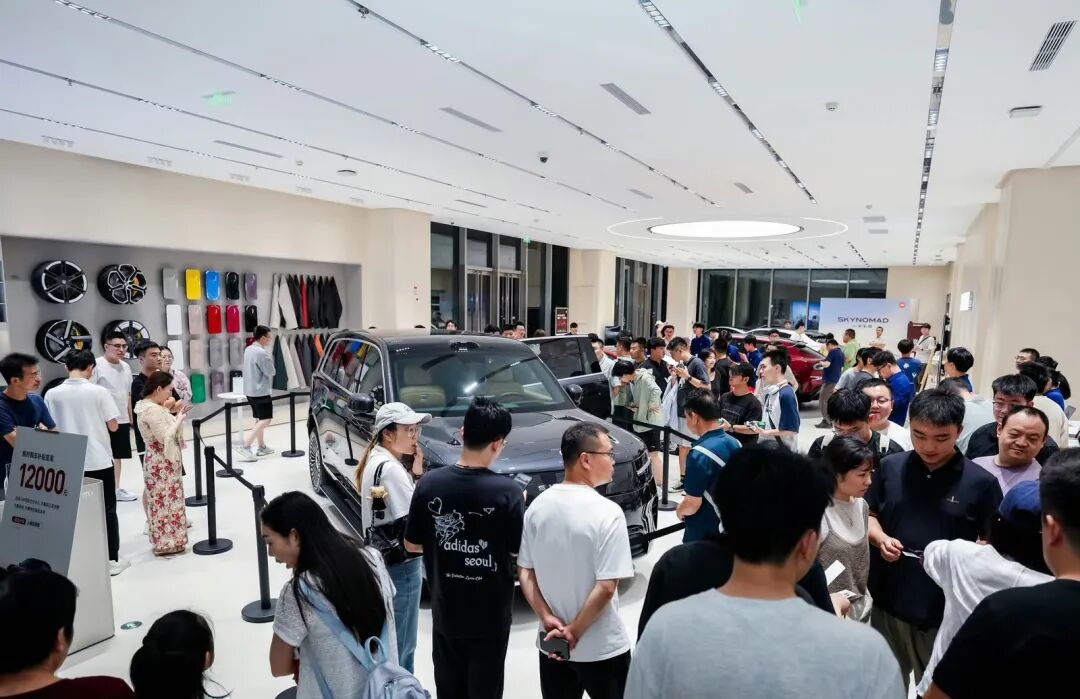
In the extended-range market, both Seres and Li Auto are currently grappling with challenges related to sales growth ceilings. As a latecomer, whether Pengcheng can support Xiaomi’s automotive division in achieving long-term stable annual sales exceeding 500,000 units remains highly uncertain.
On the flip side, Xiaomi clearly positioned itself in the high-performance pure electric vehicle segment during the early stages of its automotive venture, being one of the few automakers to persist with pure electric vehicles. Its valuation was built on the narrative of being a “pure electric technology automaker.” However, Xiaomi has shifted from publicly stating “no short-term plans for extended-range vehicles” to heavily investing in and launching the Pengcheng extended-range series. This change appears more like a strategic compromise to achieve sales targets, especially under current circumstances where it seems more like a fallback plan due to growth bottlenecks in pure electric vehicle sales.
Nevertheless, the arrival of Xiaomi’s Pengcheng has injected fresh inspiration into the automotive market, particularly in terms of demand exploration, offering considerable enlightenment. From this perspective, Xiaomi’s industry contribution is already evident.
-
Financing and IPO: Is Ant Group a Financial Giant or a Pioneer in Cutting-Edge Tech?
-
![]()
Revenue Soars Twofold in Three Years! Optical Firm Reignites Bid for Hong Kong Stock Exchange Listing
-
![]()
Jiangsu LEAD Microelectronics Successfully Hands Over Its Inaugural 12-Inch Wafer-Level Optical Magnetron Sputtering System!
-
![]()
Domestic Computing Power Hits Breakthrough: Super Nodes as the Pivotal Force
-
![]()
Tongze Kangwei Secures IPO Registration on GEM: Broadband Terminal Equipment Provider Set for Imminent Share Issuance
-
![]()
Transforming Car Manufacturing into a 'Smartphone Launch' Frenzy: 5 Tips to Avoid Pitfalls When Purchasing a New Car
-
![]()
The Three-Way Battle Among AI Office Software: A Decade of War Among BAT
-
![]()
The Three-Way Battle Among AI Office Software: A Decade-Long War Among BAT