The Era of 'Equal Rights for Fuel and Electric Vehicles' Dawns: New Energy Vehicles Bid Adieu to 'Tax-Free Days'
 08/03 2026
 477
477
Recently, a joint announcement was issued by the Ministry of Finance, the General Administration of Customs, and the State Taxation Administration, stating that starting from September 1, 2026, a 2% consumption tax will be imposed on mature battery products, such as lithium-ion batteries. This rate will rise to 4% from September 1, 2027. Prior to this, the Ministry of Finance, the State Taxation Administration, and the Ministry of Industry and Information Technology had already clarified that from January 1, 2027, tax reductions for energy-efficient vehicles and some new energy vehicles on vehicle and vessel tax will be discontinued.
From halving the purchase tax to revoking vehicle and vessel tax exemptions, and then to reinstating the battery consumption tax, the 'grace period' for tax incentives for new energy vehicles is being systematically phased out. The long-discussed concept of 'equal rights for fuel and electric vehicles' within the industry is now transitioning from mere rhetoric to tangible action at an unprecedented pace. The policy benefits that have persisted for over a decade are gradually diminishing, and new energy vehicles are poised to embark on a new journey towards marketization.
▍From 'Tax Exemption' to 'Tax Payment': The Rationale and Timeline of Policy Rollback
Let's first examine the specific timeline of this policy shift. In terms of purchases, the tax exemption for new energy vehicles has been adjusted from full exemption in 2024-2025 to a 50% reduction in 2026-2027 (at a 5% tax rate, with a maximum tax reduction of 15,000 yuan per vehicle), and is likely to revert to the full 10% tax rate from 2028.
Regarding usage, starting from January 1, 2027, the policy of halving the vehicle and vessel tax for energy-efficient vehicles will be abolished. Simultaneously, exemptions for vehicle and vessel tax on pure electric commercial vehicles, plug-in (including extended-range) hybrid vehicles, and fuel cell commercial vehicles will also be revoked. In terms of batteries, mature battery products, such as lithium-ion batteries, will be subject to a 2% consumption tax from September 2026, increasing to 4% a year later.
The pace of this policy rollback is not uniform. The battery consumption tax adopts a 'phased increase' approach, starting with a low rate of 2% for one year to allow companies time to adapt. Meanwhile, new-generation technology routes, such as sodium-ion batteries, solid-state batteries, and fuel cells, will continue to enjoy tax exemptions until the end of 2028.
So, why is there a push to accelerate 'equal rights for fuel and electric vehicles' at this juncture?
The most direct reason is that new energy vehicles have 'come of age.' Data from the China Passenger Car Association reveals that in the first half of 2026, cumulative retail sales of new energy vehicles reached 4.704 million units, with a penetration rate consistently exceeding 50%, dominating new vehicle sales. The penetration rate is expected to climb further to 64.5% in July, reaching a new historical high, as new energy vehicles transition from a 'niche market' to the cornerstone of the automotive industry.
As the market size of new energy vehicles continues to grow, the necessity of withdrawing industry-wide preferential tax incentives becomes increasingly evident, with the core debate centering on tax fairness. On the vehicle usage front, fuel vehicle owners bear the costs of road construction and environmental governance through the consumption tax on refined oil products, while also paying the full vehicle and vessel tax. However, new energy vehicles have long been exempt from the vehicle purchase tax, and plug-in hybrids, extended-range vehicles, and new energy commercial vehicles have previously enjoyed full vehicle and vessel tax exemptions.
On the production side, power batteries have also been exempt from the consumption tax for an extended period. Cui Dongshu, Secretary-General of the China Passenger Car Association, commented on the vehicle and vessel tax policy adjustment, stating that plug-in hybrids, extended-range vehicles, and new energy commercial vehicles have long enjoyed tax exemption benefits, creating a loophole where 'there are emissions, roads are used, and benefits are gained, but corresponding tax burdens are not shouldered.'
From a fiscal revenue perspective, national vehicle purchase tax revenue decreased by 18.8% year-on-year in 2025, which the market attributed to the rapid growth in new energy vehicle sales and the decline in taxable vehicle sales. As the proportion of new energy vehicle ownership steadily increased from 1.8% at the end of 2020 to 13.2% in June 2026, the tax gap is only expected to widen further.
From this vantage point, 'equal rights for fuel and electric vehicles' is not a policy regression but an inevitable step in the transition from policy-driven to market-driven growth.
The reinstatement of the battery consumption tax is the most significant policy within the 'equal rights for fuel and electric vehicles' framework. In terms of monetary impact, this tax burden is relatively modest; calculated at a 2% tax rate, the cost increase per pure electric vehicle is approximately 396 to 1,200 yuan, while for plug-in hybrids and extended-range vehicles, it is about 260 to 660 yuan. At a 4% tax rate, these figures increase to 2,400 yuan and 1,320 yuan, respectively. The cost increase from the consumption tax is less than 1% of the vehicle price. For a new energy vehicle priced at 200,000 yuan, a cost increase in the thousands seems negligible.
However, the issue lies in the fact that profit margins in the current vehicle manufacturing industry are already razor-thin. Data from the China Passenger Car Association shows that from January to June 2026, the automotive industry's revenue reached 5,189.3 billion yuan, up 1.8% year-on-year; costs were 4,610 billion yuan, up 2.8%; profits were 195.4 billion yuan, down 20% year-on-year; and the industry's profit margin was only 3.8%. The automotive industry's profit margin has been declining for three consecutive years—4.3% in 2024, 4.1% in 2025, and further down to 3.8% in the first half of 2026. In comparison, the average profit margin of downstream industrial enterprises is 6.5%, still significantly higher than that of the automotive industry.
Under such market conditions, a cost increase in the thousands is enough to worsen the profit statement. More critically, who will bear this consumption tax? The consumption tax is an indirect tax paid by production enterprises during the production, commission processing, and import stages. Battery manufacturers can pass on the tax burden to vehicle manufacturers, but can vehicle manufacturers pass it on to consumers?
Industry insiders tend to believe that 'automakers will likely absorb it themselves.' Given the fierce competition in the current market, no automaker can easily raise prices. In the first half of 2026, the average price reduction for fuel vehicles reached 14.9%, with some joint venture models offering discounts exceeding 20%; for new energy vehicles, the average price reduction was 30,000 yuan, about 12%. In such a price war quagmire, the decision to raise prices requires extra caution.
However, when facing this cost, the situations of different automakers vary greatly.
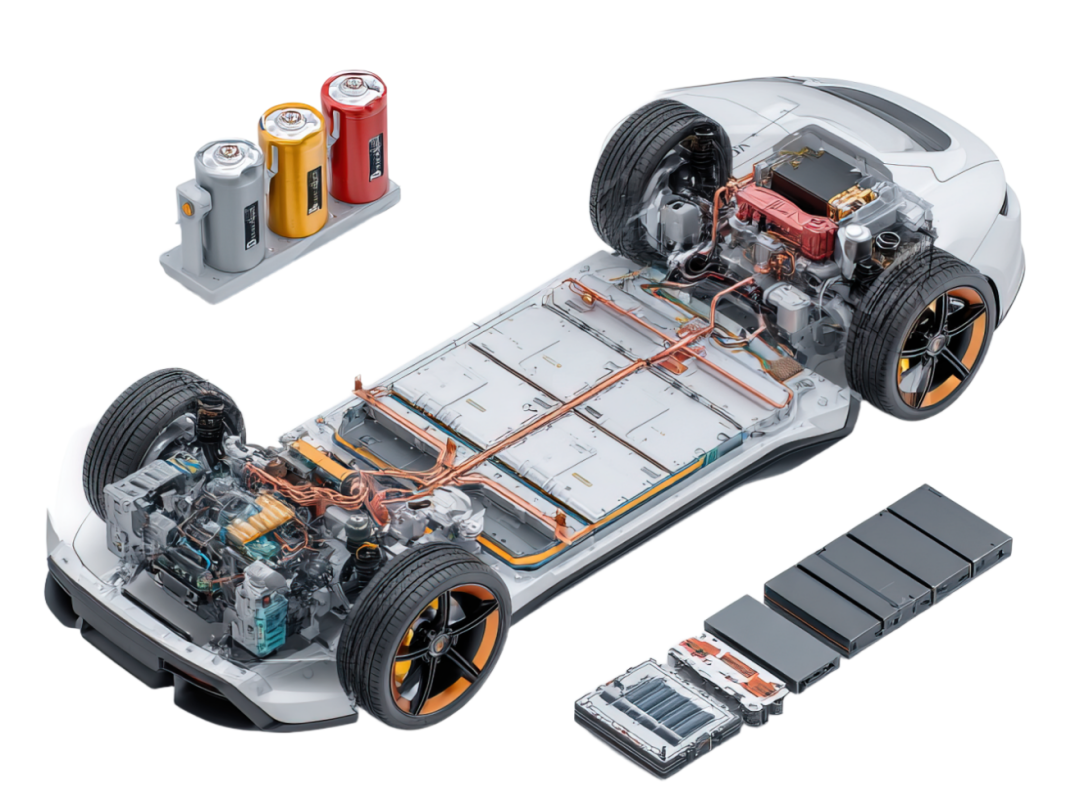
Automakers with complete in-house battery production capabilities are better equipped to adapt to the consumption tax system and have relative advantages in cash flow and cost control. According to current policies, taxpayers who use self-produced taxable battery products for continuous production of taxable battery products are exempt from the consumption tax. Taking BYD as an example, its subsidiary, FinDreams Battery, has a self-sufficiency rate of over 80% for power batteries. The process of producing battery cells and then continuously processing them into battery packs within the system meets the conditions for exemption from taxation for self-produced and self-used continuous production, reducing tax-related capital occupation in intermediate links and resulting in smoother tax burden transmission in the production process compared to companies reliant on externally procured battery cells.
Automakers that externally procure power batteries may face pressure from battery manufacturers to pass on consumption tax costs in the future. In 2025, CATL, the leading power battery manufacturer, reported a net profit attributable to shareholders of 72.201 billion yuan, which media calculations show exceeded the combined profits of 13 selected A-share listed automakers. In the first half of 2026, including BYD, Geely, Chery, SAIC, Great Wall, Changan, Seres, and GAC, the eight major mainstream vehicle groups reported a combined net profit attributable to shareholders of only 32.403 billion yuan, more than 10.8 billion yuan less than CATL's net profit for the same period. Currently, the average net profit margin in the domestic vehicle manufacturing sector is about 1.5%; leading power battery companies generally maintain net profit margins in the 17%-18% range, with a profit efficiency difference of about 12 times. Once the power battery consumption tax is implemented, it may further amplify the uneven profit distribution across the industry chain.
▍Where Will the Industry Head After 'Equal Rights for Fuel and Electric Vehicles'?
It is worth noting that 'equal rights' does not imply complete parity between new energy vehicles and fuel vehicles in all aspects—as Cui Dongshu said, equal rights for fuel and electric vehicles does not mean a 'one-size-fits-all' equalization but rather the establishment of a car tax system with matching rights and responsibilities and fair tax burdens based on technological attributes, emission characteristics, and usage scenarios.
From an industry perspective, policy withdrawal will have several impacts.
First, industry differentiation will further intensify. Automakers with in-house battery R&D and production capabilities and control over the complete industrial chain will gain structural advantages in cost; those reliant on external procurement of power batteries and lacking upstream core technologies will face greater cost pressures. Cui Dongshu made a tiered prediction for the industry's profitability inflection point: leading independent brands with complete self-developed supply chains and high-profit overseas increments are expected to restore their profit margins to above 4.5% by the end of the fourth quarter of 2026; joint venture automakers lacking core technologies and with a high proportion of fuel vehicle sales may extend their loss periods into the first quarter of 2027. The implementation of the power battery consumption tax may further amplify this differentiation trend.
Second, the process of cost restructuring for automakers may accelerate. Sustained profit pressure combined with the impact of industry price wars is forcing automakers to pursue deep-seated cost optimization: eliminating homogeneous and inefficient models, increasing in-house R&D of components, and promoting centralized procurement in the supply chain. Volkswagen plans to significantly streamline its product lineup, reducing nearly half of its models; Nissan also plans to reduce its product range from 61 to 45 models. Such product 'slimming' measures are typical choices for automakers to address cost challenges. The implementation of the power battery consumption tax may further accelerate the pace of cost reduction for automakers.
Third, technological innovation will still receive policy support. The battery consumption tax policy retains tax exemption spaces for new technologies such as sodium-ion batteries, solid-state batteries, and fuel cells. This indicates that the policy aims to shift limited tax incentive resources from mature technologies to cutting-edge technologies, transitioning from 'inclusive support' to 'precision support.'
From a broader perspective, advancing 'equal rights for fuel and electric vehicles' at the tax system level is seen as a symbolic milestone marking the maturity of China's new energy vehicle industry. No industry can rely on policy incentives for long-term development. The industry generally believes that once the market penetration rate of new energy vehicles exceeds 60% and the market size can support the industry's autonomous and sustainable development, the orderly adjustment of tax incentives and market competition driving industry development will be the general trend of industry evolution. In the future, the focus of industry competition will also return to core dimensions such as technology, cost, and product strength.
Layout 丨 Yang Shuo Image Source: Qianku.com
-
Financing and IPO: Is Ant Group a Financial Giant or a Pioneer in Cutting-Edge Tech?
-
![]()
Revenue Soars Twofold in Three Years! Optical Firm Reignites Bid for Hong Kong Stock Exchange Listing
-
![]()
Jiangsu LEAD Microelectronics Successfully Hands Over Its Inaugural 12-Inch Wafer-Level Optical Magnetron Sputtering System!
-
![]()
Domestic Computing Power Hits Breakthrough: Super Nodes as the Pivotal Force
-
![]()
Tongze Kangwei Secures IPO Registration on GEM: Broadband Terminal Equipment Provider Set for Imminent Share Issuance
-
![]()
Transforming Car Manufacturing into a 'Smartphone Launch' Frenzy: 5 Tips to Avoid Pitfalls When Purchasing a New Car
-
![]()
The Three-Way Battle Among AI Office Software: A Decade of War Among BAT
-
![]()
The Three-Way Battle Among AI Office Software: A Decade-Long War Among BAT