SAIC-GM Shows Confidence in Joint Venture Model: What Lies Ahead?
 08/10 2026
 352
352
Behind the 20-year extension of the partnership agreement, SAIC-GM is placing its bets on new potential for the joint venture model: Can the Chinese team transition from being technology recipients to becoming global product innovators? As Chinese capabilities expand internationally, this transformation offers both opportunities and crucial questions that demand answers.
Confidence outweighs contract length.
On August 5, SAIC Motor and General Motors officially signed a strategic renewal agreement, extending SAIC-GM's joint venture term by 20 years to 2047. At the signing ceremony, SAIC Motor Chairman Wang Xiaoqiu stated that the renewal reflects a shared assessment of the long-term value of the Chinese auto market: "Thirty years ago, the focus was on availability; now, it's on strength."
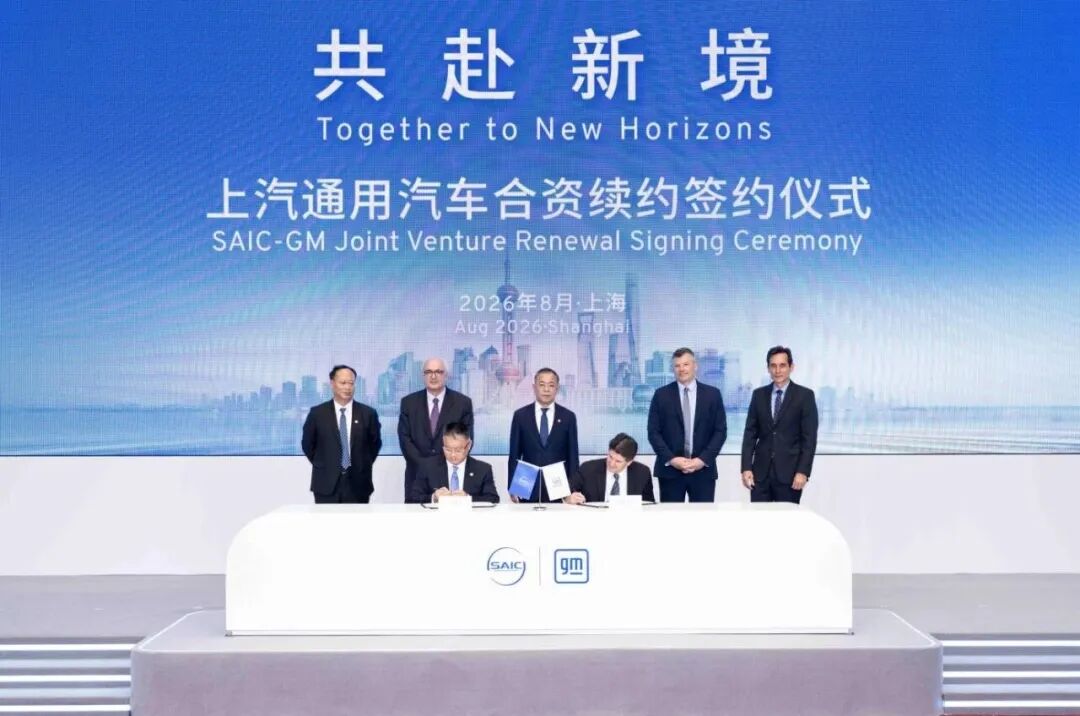
This statement reflects on the 30-year history of the joint venture, while the key question for SAIC-GM now is how to achieve this "strength" in the next 20 years.
Signals Behind the 20-Year Extension
The original joint venture agreement for SAIC-GM was signed on October 31, 1995, with the company formally established in June 1997. Initially set for a 30-year term, it was due to expire in June 2027. This renewal, finalized ahead of schedule, extends the partnership by 20 years.
From the strategic direction outlined in the agreement, SAIC-GM will further leverage the Chinese team's comprehensive strengths in user insights, product development, manufacturing systems, and supply chain efficiency to accelerate the global market entry of products defined, developed, and manufactured in China. The Chinese team's responsibilities within the joint venture are expanding: from primarily handling global model introduction and local adaptation to now participating in global market-oriented product development.
Correspondingly, SAIC-GM has unveiled its future product plans. From now until 2030, the company aims to launch at least 30 new energy models, further enhancing the new energy lineups of Buick and Cadillac.
Simultaneously, its global expansion has taken its first step. The Buick Electra E7 will be officially exported overseas in October this year, becoming SAIC-GM's first high-end new energy model to enter international markets. South Korea has been selected as the inaugural overseas market, with the first batch of vehicles expected to be shipped and launched in October, followed by gradual expansion into the Middle East, Africa, South America, Mexico, and the Asia-Pacific region. Notably, the North American market is excluded from this export plan.
Looking at the broader context, 2026 is emerging as a pivotal year for joint venture automakers to reconfirm their cooperation cycles, with SAIC-GM not being the only case.
On July 20, GAC Honda and Honda signed a strategic renewal agreement, maintaining their 50:50 equity structure and extending the cooperation term from its original 2028 expiration to 2038.
In recent years, like most traditional joint ventures, GAC Honda has faced transformational pressures due to shifting market shares. Its sales peaked at 805,800 units in 2020 but have declined for five consecutive years since, dropping to 351,900 units in 2025, a 25.22% year-on-year decrease; in the first half of 2026, sales further declined by 55.82% year-on-year.
SAIC-GM is also in an adjustment phase. As one of China's largest joint venture automakers, its sales have fallen from around 1.46 million units in 2020 to approximately 600,000 units in 2025, confronting both traditional fuel vehicle market contraction and new energy transition pressures.
Thus, the "votes of confidence" cast by both joint ventures within the same timeframe reflect a shared choice to seek new growth paths under common pressures.
GAC Honda's renewal reflects the willingness to continue deepening cooperation in the Chinese market, while SAIC-GM has further incorporated new energy transition, enhanced Chinese R&D capabilities, and global market expansion into its future plans. Although their paths differ, both demonstrate that amid changes in China's auto market environment, multinational automakers are reassessing the long-term value of joint venture systems and exploring new cooperation models.
A New Turn in the Joint Venture Model
The renewal signals more than just business confidence; the arrangements regarding local R&D, new energy transition, and global output reveal that the joint venture model is entering a new adjustment phase.
Over the past three decades, the fundamental logic of China's automotive joint venture system can be summarized as "market for technology": The Chinese side provided market access, manufacturing capabilities, and industrial support, while the foreign side contributed mature models, technology platforms, and global experience. The flow of technology and product resources was primarily from multinational headquarters to China.
This renewal explicitly proposes to "promote products defined, developed, and manufactured by the Chinese team to global markets." This signifies that the Chinese team's role is evolving from local adaptors to global product developers.
Take the Buick Electra E7 as an example. Its underlying "Xiaoyao Super Integration Architecture" was forward-developed by the Chinese team. From the project's inception, the model considered multinational regulations and global certification standards, adopting a development logic not traditionally focused on "first meeting Chinese market demands, then seeking overseas export opportunities" but rather on developing according to global product standards.
If this model can be consistently implemented, its significance will transcend single-model exports, lying instead in exploring a new joint venture path of "Chinese-defined, globally-oriented" products and altering the past product development logic centered on local adaptation.
For SAIC-GM, this change holds benchmark significance. As one of China's earliest and largest Sino-US joint venture automakers, if it can successfully implement the path of "Chinese team-led definition and global output of R&D results," it will provide a reference for other joint ventures exploring next-stage development models.
This also means the industry is entering a redefined "new era of joint ventures."
From July 21 to 23, 2026, the "2026 China Auto Forum," hosted by the China Association of Automobile Manufacturers (CAAM), was held in Jiading, Shanghai. This year's parallel forums included, for the first time, a dedicated session for joint venture brands titled "Brand Breakthrough Strategies in the New Era of Joint Ventures," marking the first focus on brand development for joint ventures in the six years of CAAM's "Brand Theme Forums."
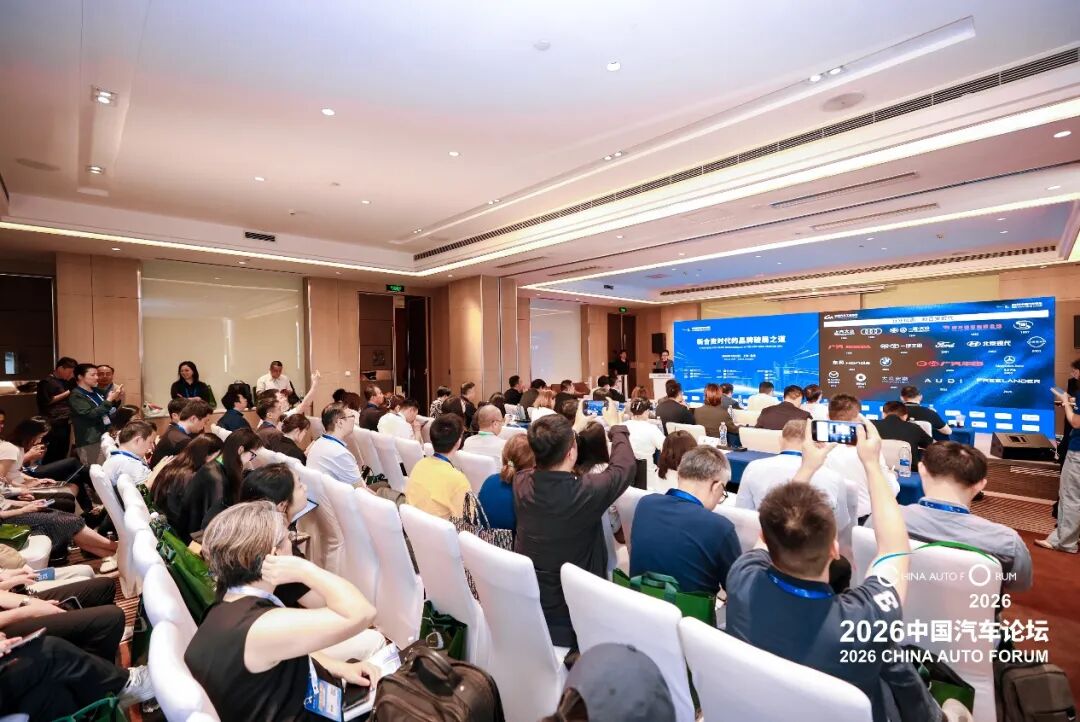
Wang Qian, Deputy General Manager of Dongfeng Nissan Sales Co., Ltd., cited data at the forum showing that joint venture and foreign brands' market share in China had dropped to 24.5% in June. CAAM statistics also indicate that in the first half of 2026, Chinese brand passenger vehicles further increased their market share to 71.8%. This reflects the growing competitive pressure on traditional joint venture and foreign brands in China's passenger vehicle market.
Liu Yan, the forum moderator and CAAM Deputy Secretary-General, believes joint venture automakers are at a stage where they must proactively break through. Over the past decade, some brands have exited the Chinese market, while new ones have entered, with more traditional joint ventures still seeking new growth approaches. The industry context has shifted accordingly. The early "global car, made in China" 1.0 era is evolving toward "made in China, global car"; corporate strategies are also progressing from "in China, for China" to further exploring "in China, for the world."
Zheng Yun, Global Senior Partner and Asia-Pacific Automotive Business Leader at Roland Berger, further stated at the forum that multinational automakers are not simply retrenching in China but are increasing investments because the technological capabilities and operational experience accumulated in the Chinese market are gaining value in reverse-empowering global markets. However, he also noted that the core challenge for joint venture systems lies in insufficient responsiveness, stemming from a structural mismatch between multinational headquarters' decision-making systems and the rapid changes in the Chinese market. Additionally, supply chain localization at some joint ventures remains at the "made in China" level, without truly entering deep collaborative R&D stages.
The transformation directions proposed by Zheng Yun's team align to some extent with signals released by SAIC-GM's renewal. However, whether directions can translate into results still depends on SAIC-GM's own practices. For SAIC-GM, the real uncertainty lies in whether this new joint venture logic can gain sufficient space within General Motors' global system and withstand sustained market competition in the future.
Quests in the "New Era of Joint Ventures"
While the renewal signals a directional shift, the value of the next 20 years will ultimately be proven by organizational capabilities and market results. In other words, the new joint venture model of "Chinese-defined, global output" needs to answer several more practical questions.
The first question points to a core issue: Is the Chinese team's role in the global product system undergoing substantive change?
General Motors' industrial layout in Asia has never been centered solely on China. South Korea has long been an important global engineering and export base for GM. The GM Korea Technical Center is GM's second-largest R&D center globally, with factories in Bupyeong and Changwon producing models like the Chevrolet Trax and Trailblazer, over 90% of whose output last year was for export, with about 85% sold in the U.S. market. In the past year, GM has made two separate investments totaling $300 million each for manufacturing upgrades in Korea, bringing cumulative investments to $600 million. This system possesses GM's most mature export channels and engineering capabilities for the U.S. market in the Asia-Pacific region and is a long-validated and authorized component of GM's global operations.
In contrast, the Chinese team's role in "defining, developing, and manufacturing products for global markets" currently represents more of a strategic direction. Its actual influence will need to be observed through subsequent product projects: whether models developed by the Chinese team can enter GM's global product system and gain recognition in different markets. Future model development and global introduction will serve as critical windows for observing this change.
The second question addresses practical challenges in global operations: How can multinational automakers balance regional market layout with geopolitical pressures?
In recent years, the U.S. has been using policies and legislation to reduce automotive supply chain dependence on China. The U.S. Senate Commerce Committee passed the "2026 Connected Vehicle Security Act" on July 22, proposing to restrict vehicles with network connectivity functions manufactured, imported, or sold in the U.S. by companies with more than 15% Chinese entity ownership. If implemented, this policy would directly impact the possibility of SAIC-GM's new energy models entering the U.S. market. This risk has clearly been factored into SAIC-GM's global planning. Its current overseas route excludes North America, prioritizing South Korea, the Middle East, Africa, South America, Mexico, and the Asia-Pacific region.
However, a new issue arises with another layer of risk: When GM promotes the "Chinese-defined, global output" route, could this trigger new industrial security controversies in the U.S.? If such perceptions widen, potential impacts may extend beyond single models or market access to include corporate-level pressures such as regulatory scrutiny, supply chain reviews, and even investor expectations.
This represents a new variable for GM. The renewal signifies continued deepened cooperation, but coordinating business layouts across global markets will become a long-term challenge in future operations.
The third question arises from the overseas expansion path itself: Can China's new energy capabilities, leveraging GM's global resources, truly translate into global market competitiveness?
According to plans, SAIC-GM will utilize GM's existing fuel vehicle dealership networks to introduce Chinese-developed and -manufactured new energy models to markets like the Middle East, Africa, and South America.
The internal question often raised is whether traditional dealership networks can accomplish the new energy transition and whether channel capabilities can match new product forms. However, more practical challenges come from external markets. Chinese brands like BYD, Chery, and Great Wall have already been present in these markets for years, gradually establishing channel networks, pricing systems, and brand recognition. When SAIC-GM enters these markets with the Buick brand in the future, it will not face an untapped new market but an existing battleground with Chinese brand competitors.
This poses a unique challenge for SAIC-GM's transformation: the need to address pressures from two directions simultaneously. On one hand, it must leverage China's automotive supply chain and new energy capabilities to expand globally; on the other, it must adapt to strategic constraints arising from GM's global business adjustments. GM's pace of electrification varies across regional markets, making SAIC-GM's future new energy overseas expansion dependent not only on its own product competitiveness but also on its collaborative capabilities within the global system.
Thus, what SAIC-GM must accomplish next is not merely an internal transformation but a global market competition head-on with Chinese brands.
After the Vote of Confidence, Delivery Matters Most
The renewal initiatives undertaken by SAIC-GM, which emphasize signals of local research and development (R&D), a transition to new energy, and an expansion of global output, suggest that the joint venture model is undergoing a transformation. This shift is moving away from the traditional 'technology import' approach and towards a model of 'local co-creation and global feedback.' As one of the most emblematic Sino-US joint ventures in China's automotive sector, SAIC-GM's exploratory efforts offer considerable value for industry observation.
Nevertheless, the success of this transformation hinges on several pragmatic considerations. Key among these are whether the R&D achievements led by the Chinese team can achieve global competitiveness, how General Motors (GM) can harmonize its global operations amidst geopolitical tensions, and whether SAIC-GM's new energy vehicles can carve out new competitive advantages in international markets.
These issues cannot be resolved preemptively through a mere renewal agreement. Instead, they necessitate verification over the forthcoming years via product introductions, strategic global deployments, and competitive market dynamics.
Recent modifications in cooperation cycles among various joint ventures indicate that foreign automakers are continuously reevaluating the enduring significance of the Chinese market and are seeking innovative cooperation frameworks. Previously, during the 'Brand Breakthrough Strategies in the New Era of Joint Ventures' session at the '2026 China Auto Forum,' Wang Qian posited that 'it is premature to write off joint ventures.' This assertion sparked extensive debate across social media platforms, earning endorsement from numerous industry experts while simultaneously revealing divergent viewpoints regarding the future trajectory of joint venture models.
For joint venture automakers, however, the ultimate viability of the model rests on tangible outcomes. SAIC-GM has already expressed this 'vote of confidence'; the true measure of its success will be whether SAIC-GM can demonstrate, through future competitive endeavors, that the new joint venture model is indeed effective.

Image: Sourced from the Internet
Article: Auto Review
Layout: Auto Review
-
![]()
The Ruthless B-Side of AliExpress's Global Expansion
-
![]()
BYD's Mass Production of Photovoltaic Sunroofs: A New Opportunity for PV?
-
New Business Models in the Era of AI Agents: A2A
-
![]()
Kejinming's IPO: Diminished Fundraising, Slashed Working Capital Project, Sluggish Growth of Core Products, and a Cooling North American Market
-
![]()
Tencent Secures a Crucial Victory in AI Office Arena, While Baidu Continues to Struggle
-
![]()
DeepSeek Raises Prices, Alibaba Takes a Cut: Will Major Clients Stay or Leave?
-
![]()
After Persistent Declines, Is This Joint Venture Automaker Considering an Exit? Here’s the Official Word
-
![]()
DeepSeek Raises Prices, Alibaba Takes a Cut: Will Big Clients Pay Up or Walk Away?