Zhu Mingming's Obsession with AI Pioneering: A Thorn in the Side of Rokid's Smart Glasses Privacy?
 06/12 2026
 579
579
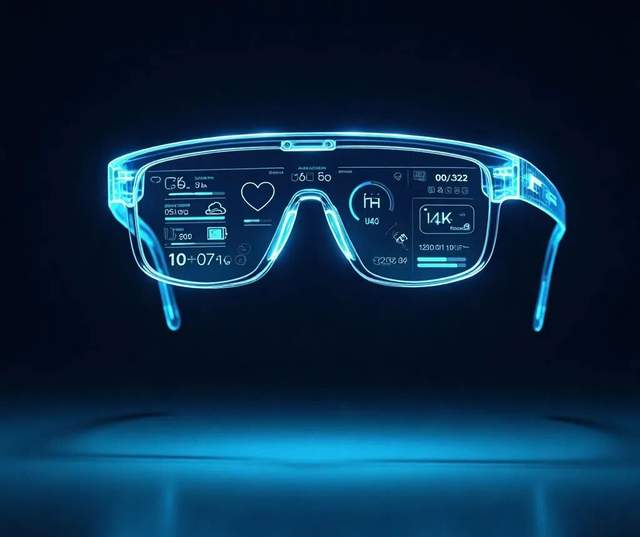
In June 2026, a seemingly “unintentional” secret photography incident propelled AI glasses star company Rokid into the public spotlight.
According to the Xiaoxiang Morning Post, a user wearing smart glasses posted an uncensored boarding video on Rokid's official community. The videographer, without consent, deliberately featured a flight attendant as the main subject, suspected of (potentially) infringing on privacy rights.
After more community content was exposed, many unsuspecting passersby in public places such as subways, parks, and shopping malls became “street photography subjects” due to Rokid AI glasses.
Currently, on e-commerce platforms, sales of “light-blocking stickers” for Rokid glasses exceed 5,000 units. These stickers, costing only a few dollars, can easily cover the AI glasses' recording indicator light.
Faced with overwhelming public sentiment, Rokid officially issued a rectification statement, and founder Zhu Mingming also responded publicly. However, whether the issue of “secret photography” can be resolved is not just a question for Rokid glasses; the entire AI wearable device industry needs to provide an answer.
Anti-Secret Photography Design: A 'Cat and Mouse Game'
AI wearable devices are designed for 'first-person perspective recording' to enhance immersion, but many criminals have also targeted this feature.
Take AI glasses, for example; they are natural-born 'assassins.'
With the camera integrated into the frame, the shooting perspective almost coincides with the line of sight. AI glasses do not require the user to raise the device and aim at the target like a phone, allowing for nearly 'unnoticeable recording.'
Because of this feature, if AI glasses are used for secret photography, it significantly lowers the psychological barrier and operational difficulty for the perpetrator. The subject is often unaware and becomes prey to the secret photographer.
However, AI glasses themselves are not at fault. Just as a kitchen knife can be used to harm or to cut vegetables, can you say the knife is guilty?
The core issue lies with 'people':
Manufacturers have not set a high enough threshold to make secret photographers pay a steep price.
For instance, Rokid did consider privacy concerns and equipped its AI glasses with recording indicator lights and beeps. However, this simple anti-secret photography design is too naive in the face of human malice.
For example, Xiaoxiang Morning Post reporters found through testing that due to the concealed position of the indicator light and the soft volume of the beep, a dedicated light-blocking sticker costing only a few dollars can easily bypass Rokid AI glasses' anti-secret photography design.
So the question arises: with today's advanced technology, why does secret photography with AI glasses persist despite repeated bans?
Between commercial interests and compliance costs, manufacturers' choices are clear.
After all, an AI glasses device that constantly emits recording reminders will not only embarrass the wearer but also deter many potential users. Perhaps due to concerns about sales, most AI wearable device manufacturers have not fully implemented compliance awareness.
Moderation Lapses: 'Secondary Harm' from Community Content
While hardware vulnerabilities in AI glasses can be dismissed as 'unintentional mistakes,' the governance lapses in Rokid's official community are a key reason for the proliferation of inappropriate content.
According to an investigation by the Xiaoxiang Morning Post, Rokid's official community contains a large amount of violation (non-compliant) content, and the moderation mechanism is lagging.
Many community posts feature unauthorized photography of passersby in public areas, with the secret photography of flight attendants being just one classic example. These community posts, under the guise of 'sharing life,' are a severe offense to the subjects, as secret photography is an extremely selfish act.
More importantly, the question arises: How did this content pass moderation?
The answer is clear: lagging and negligent moderation by the platform operator.
Due to the high volume of non-compliant content, the platform's automated moderation technology is objectively inadequate, and the manual review mechanism is also incomplete, preventing the operator from promptly screening and intercepting infringing content.
Subjectively, faced with traffic anxiety, community operators may have tacitly approved 'controversial content,' as negative attention is still attention.
Regardless of the reasons, the widespread dissemination of secret photography content has caused secondary harm to the victims and severely damaged brand credibility.
More frighteningly, this 'tolerance' has created a butterfly effect:
A gray industry chain around secret photography content has begun to take shape.
The Paper reported that several e-commerce platforms now offer light-blocking stickers for AI glasses that 'do not trigger alarms and do not affect photography,' with sales exceeding several thousand units. Secret photography videos may not be the work of individuals but organized criminal groups.
From this perspective, Rokid may face significant compliance risks due to secret photography videos and needs strict control.
The Helmsman's Reflection: Technological Idealism vs. Practical Governance
Zhu Mingming, founder of Rokid and former head of Alibaba's M Studio, is also one of the earliest evangelists in the AI glasses track (space) and a typical idealist.
Zhu is recognized as an excellent product manager who often mentions in public that Rokid aims to create the 'next-generation human-computer interaction platform.' The company's AI glasses do have many bright spots in functions such as translation, navigation, and payment.
Perhaps limited by 'product thinking,' Zhu Mingming underestimated the social attributes and public risks of smart wearable devices like AI glasses, leaving the company obvious (clearly) unprepared for this secret photography crisis.
For example, the founder's statements appeared somewhat awkward, exposing the company's communication weaknesses.
According to The Paper, Rokid founder Zhu Mingming stated that the company is learning to address challenges and that new species must collide with societal boundaries as they integrate.
This sincere statement could easily be misinterpreted as 'shifting blame to society,' lacking certain prudence, revealing Rokid's lagging status in public communication, user education, and compliance system construction during its rapid expansion.
Beyond short-term issues, this secret photography incident also serves as a long-term warning for Zhu Mingming:
The company's strategic focus must shift from 'functional innovation' to 'compliance bottom line.'
Rokid is at a critical stage of sprint ( sprint means ' sprint ( sprint )' in Chinese, but in this context, it likely refers to 'preparing for a capital market listing'). Its valuation narrative has long relied on 'functional innovation' and 'scenario disruption,' often treating compliance construction as a non-essential cost and neglecting it. This strategic prioritization has led to long-term (long-term) underinvestment in compliance and safety.
After this secret photography incident, Zhu Mingming needs to undertake a long-term task: addressing privacy and security shortcomings and establishing a comprehensive compliance system to gain long-term investor trust.
Breaking the Deadlock: Establishing Regulations Before Proliferation, Rebuilding Trust
Looking beyond, the issue of secret photography with smart wearable devices is not unique to China. Foreign AI glasses products like Google Glass and Snap Spectacles have also faced setbacks due to privacy concerns, with no effective solutions found abroad.
From another perspective, domestic smart wearable device manufacturers have an opportunity to leapfrog. Before AI glasses become widespread and the market is on the verge of explosion, Chinese companies can take the lead in setting privacy standards.
At the hardware level, rigid constraints and tamper-proof upgrades should be strengthened.
As mentioned in Rokid's rectification statement, the most direct and effective approach currently is to use technology to prevent secret photography. This includes mandatory installation of unblockable LED detection indicator lights, periodic independent voice broadcast functions, and optimizing the device's tamper-proof design. A series of rigid protection standards should be established to eliminate the possibility of secret photography from the hardware source.
At the platform level, a full-chain governance and moderation mechanism must be established.
E-commerce platforms should comprehensively ban the sale of violation (non-compliant) hacking accessories like light-blocking stickers, cutting off the gray industry chain at the channel end. Operators of brand communities should build a compliance system featuring proactive moderation, real-time screening, and rapid disposal, improving complaint response mechanisms, routinely clearing infringing content, and preventing the production and dissemination of secret photography content.
At the regulatory level, gaps in laws, regulations, and industry standards must be filled.
Current laws and regulations impose insufficient penalties for secret photography, failing to serve as a strong deterrent. Additionally, smart wearable devices are not traditionally considered 'covert photography' equipment, creating a regulatory blind spot.
This necessitates clarifying in legislation the norms for shooting content, data collection scope, and producer disclosure obligations for smart wearable devices. Industry standards can then follow, refining relevant management measures to make boundary-crossing behavior costly.
At the values level, technology for good cannot rely solely on consumer self-discipline.
Corporate values should align with public trust systems, prioritizing privacy protection over commercial interests. By adopting transparent rectification disclosures, strict violation disposals, and routine user compliance education, the industry can address chaos and rebuild public trust in AI wearable devices.
In conclusion, Zhu Mingming and his Rokid company must recognize one issue:
Whether smart glasses can truly become the next-generation computing platform depends not on how advanced their functions are but on whether they can find an ecological niche within the societal value system. They need to make every wearer understand that behind the lens is a dignified individual with privacy rights.
As for what Rokid will do next? We wait and see.
-
Financing and IPO: Is Ant Group a Financial Giant or a Pioneer in Cutting-Edge Tech?
-
![]()
Revenue Soars Twofold in Three Years! Optical Firm Reignites Bid for Hong Kong Stock Exchange Listing
-
![]()
Jiangsu LEAD Microelectronics Successfully Hands Over Its Inaugural 12-Inch Wafer-Level Optical Magnetron Sputtering System!
-
![]()
Domestic Computing Power Hits Breakthrough: Super Nodes as the Pivotal Force
-
![]()
Tongze Kangwei Secures IPO Registration on GEM: Broadband Terminal Equipment Provider Set for Imminent Share Issuance
-
![]()
Transforming Car Manufacturing into a 'Smartphone Launch' Frenzy: 5 Tips to Avoid Pitfalls When Purchasing a New Car
-
![]()
The Three-Way Battle Among AI Office Software: A Decade of War Among BAT
-
![]()
The Three-Way Battle Among AI Office Software: A Decade-Long War Among BAT