Why Does Wuhan Deserve the Title of 'Pioneer City for Autonomous Driving'?
 04/08 2026
 706
706
Produced by | Zhige Insights
Wuhan has recently earned a new moniker: the 'Pioneer City for Autonomous Driving'.
With the formal launch of the 'Action Plan for the Innovation Corridor of the Automotive Valley Industry', Wuhan has articulated a clear strategic vision aimed at achieving the goal of becoming the 'Pioneer City for Intelligent Driving'. This slogan has swiftly ignited widespread discussions within the technology and automotive sectors.
In the traditional view of the industry, Beijing, with its solid foundation in AI algorithms; Shanghai, attracting top automakers; and Shenzhen, leveraging the ecosystem of tech giants like Huawei, are considered China's undeniable top-tier cities for autonomous driving.
So, what gives Wuhan the confidence to boldly claim the title of 'Pioneer City'?
If we consider underlying technical validation as the core metric, Beijing undoubtedly stands as the undisputed leader. By the first half of 2024, Beijing's total autonomous driving test mileage had reached an astonishing 38.93 million kilometers, with a fleet of over 1,000 test vehicles, firmly securing its top position nationwide.
Wuhan does not have a historical advantage in this regard; instead, its confidence stems from aggressive commercial deployment and policy openness.
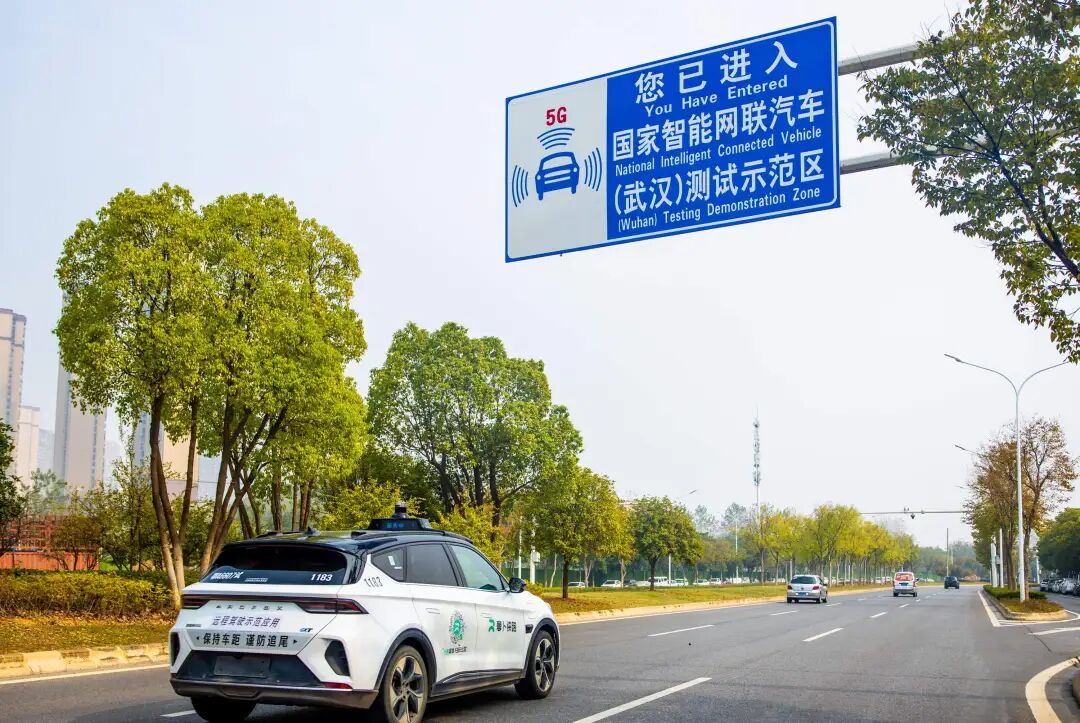
Currently, Wuhan boasts over 3,300 kilometers of one-way open testing roads and has expanded autonomous driving operation areas to all 12 administrative districts, making it the world's largest normalized operational service zone for autonomous driving.
The contrast between the two cities reflects an intense competition between closed testing validation and open commercial operation as two distinct paths for technological evolution.
1. Tracing the Origin of China's 'Pioneer City for Autonomous Driving'
The title 'Pioneer City for Autonomous Driving' did not originate from an official certification by national ministries such as the Ministry of Industry and Information Technology or the Ministry of Transport. Rather, it emerged from industry consensus and evolved into a local strategy.
As early as June 2024, during a seminar on digital economy development held at Wuhan University, experts proposed the idea of building 'China's Pioneer City for Autonomous Driving' based on Wuhan's breakthroughs in the commercial operation of fully driverless (Robotaxi) services.
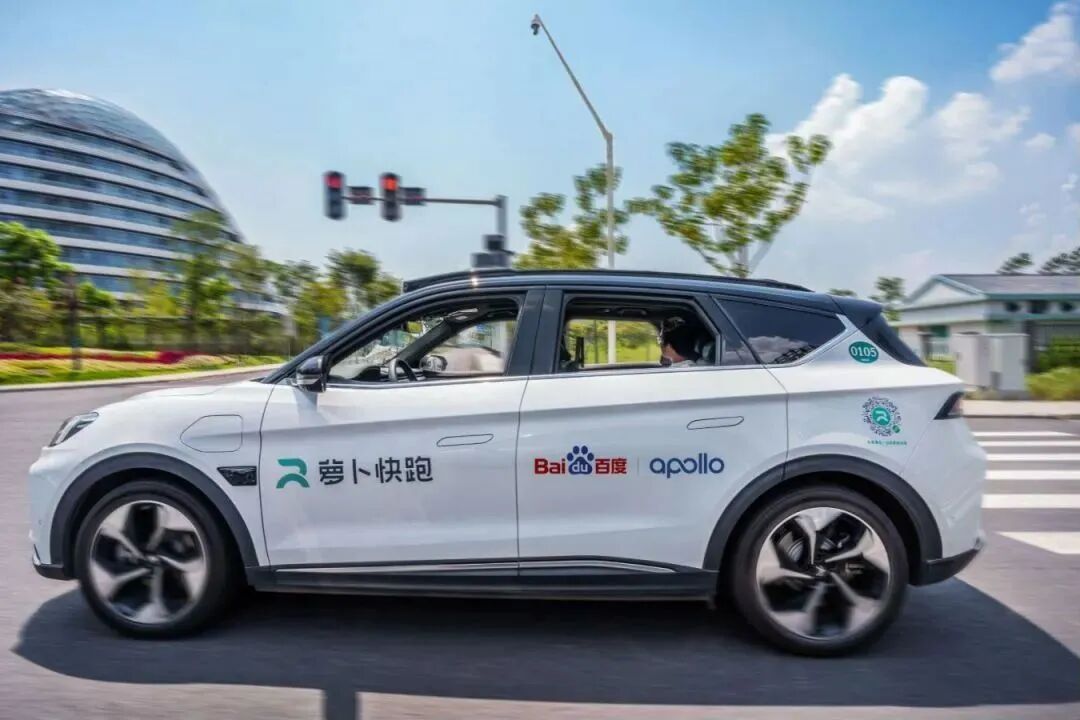
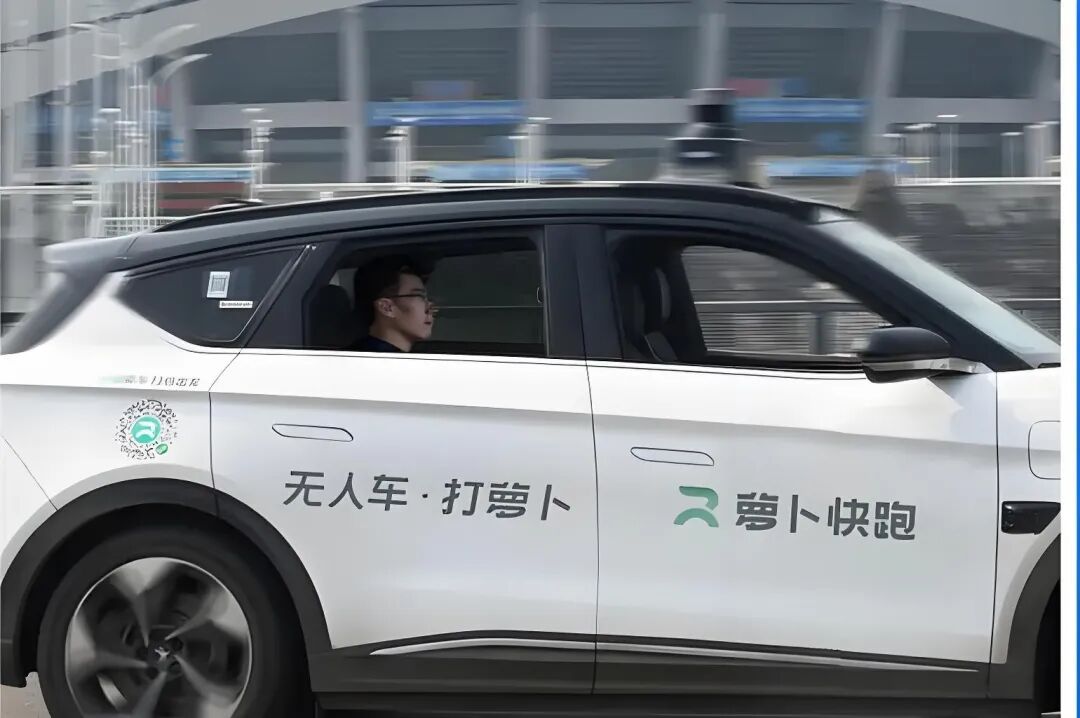
As Baidu's Luobo Kuaipao gradually expanded on a large scale in Wuhan, the concept was widely cited by the media and eventually formally included in Wuhan's official action plan in 2026.
In contrast, first-tier cities like Beijing, Shanghai, and Shenzhen have never made similar self-proclamations in official documents.
This difference does not stem from a lack of strength but rather from differing strategic priorities. If we establish a multidimensional evaluation model, the distinct advantages of each major city become apparent.
In terms of open road mileage and administrative district coverage, Wuhan stands out with over 3,000 kilometers of data and a policy of full-domain openness; whereas Beijing has built an extremely high barrier with nearly 40 million kilometers of total test mileage and algorithm training data thickness.
In terms of road access license issuance and cutting-edge legislation, Shenzhen leads with its 'Regulations on the Management of Intelligent Connected Vehicles'; while Shanghai secured the top spot nationwide in the 'Dual Intelligence' (collaborative development of smart city infrastructure and intelligent connected vehicles) pilot assessment.
Therefore, Wuhan's label as the 'Pioneer City' can be more accurately defined as the 'Pioneer City for Commercial Operation and Policy Openness in Autonomous Driving'.
2. Why Wuhan is Eager to Raise the Flag
Wuhan's urgency to establish a leading position in the field of intelligent connected vehicles is driven by the industrial transformation anxiety faced by traditional automotive strongholds.
As the headquarters of Dongfeng Motor, Wuhan failed to nurture benchmark new energy vehicle (NEV) enterprises like BYD in Shenzhen, XPeng in Guangzhou, or NIO in Hefei during the previous round of NEV competition.
As the NEV race enters its 'second half'—the intelligentization game—Wuhan aims to use the super IP of 'Pioneer City for Autonomous Driving' as a key lever for attracting investment and reshaping its automotive industry cluster.
This strategy has shown initial success, with Wuhan now gathering over 380 intelligent connected vehicle upstream and downstream enterprises.
Not only has it introduced Baidu's Luobo Kuaipao as the main force for commercial operations, but it has also attracted Huawei's R&D center, Xiaomi's testing team, and core component enterprises such as Semidrive (automotive-grade chips), Black Sesame Technologies (AI computing power platforms), and ECARX (smart cockpits) to settle in the city.
This industrial ecosystem, combining 'traditional automaker manufacturing base + tech giant algorithm empowerment', forms the tangible support for Wuhan's bold move to fully open up autonomous driving.
Wuhan's ability to achieve rapid commercial overtaking in a short period hinges on its nation's most aggressive open policies.
Comparing the driverless road access policies of six major domestic core cities horizontally, Wuhan not only took the lead in achieving full-domain openness across all 12 administrative districts but also streamlined the application process and compressed testing cycles to the extreme.
This full-domain openness means that autonomous vehicles in Wuhan can access full-scenario extreme corner cases (long-tail scenarios) ranging from bustling Optics Valley business districts to narrow old communities, and from the Yangtze River Bridge to river-crossing tunnels.
Under such policy dividends, Wuhan's commercial application scenarios have exploded. Taking Baidu's Luobo Kuaipao as an example, it has achieved cross-river and cross-district long-distance complex road condition operations in Wuhan, with annual service orders surpassing the million mark.
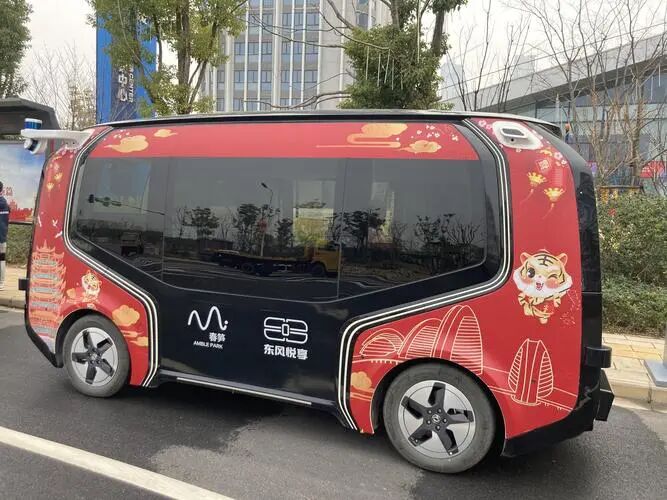
Besides Robotaxi services, Wuhan ranks among the top three nationwide in the scale of unmanned express delivery vehicles. Dongfeng Yuexiang's unmanned shuttle buses have opened dozens of fixed routes, and even launched the nation's first cross-city autonomous driving bus route from Optics Valley to Ezhou.
This multi-scenario, full-coverage commercial deployment represents an advantage that Beijing's current model, primarily focused on designated areas (such as the Yizhuang High-Level Autonomous Driving Demonstration Zone), lacks.
3. The Real Gap in Mileage Showdown
Despite Wuhan's lead in operational breadth, when placed in a deeper technical validation dimension, the gap between Wuhan and Beijing remains significant.
The iteration of autonomous driving algorithms highly relies on the accumulation of massive and high-quality test mileage.
Beijing, with a test fleet of over 1,000 vehicles and nearly 40 million kilometers of total test mileage, has accumulated the richest and deepest AI training samples in China.
Baidu Apollo's over 100 million kilometers of testing completed in Beijing has reduced its accident rate to one-fourteenth that of human drivers.
Although Wuhan has opened up a vast road network, its early test vehicle scale and total mileage still lag behind Beijing by an order of magnitude, meaning that the actual test utilization rate and data collection density of its vast road network still need improvement.
From the perspective of underlying technical schools, Beijing took the lead in validating the 'vehicle-road-cloud integration' collaborative solution, with its roadside perception system construction leading the nation; while Shenzhen, relying on Huawei ADS's advanced intelligent driving solution, possesses strong technological explosiveness in single-vehicle intelligence and mass-produced L3-level models.
Wuhan's current industrial cluster leans more toward commercial application ends and component support, still heavily reliant on external tech giants for core algorithm innovation input.
Epilogue
The competition for the title of 'Pioneer City for Autonomous Driving' is not essentially about vying for an empty title but rather about the different approaches taken by various cities as China's autonomous driving industry transitions from the 'technical validation phase' to the 'scaled commercial deployment phase'.
Beijing represents the ultimate exploration of underlying algorithms and vehicle-road collaboration safety boundaries; Shenzhen represents the strong output of core regulatory breakthroughs and mass-produced vehicle intelligent driving technologies; while Wuhan represents the courage to forcibly drive a vast commercial operation industrial chain with the most open administrative boldness.
Whether it's Beijing's dominance in test mileage or Wuhan's lead in full-domain open mileage, the ultimate beneficiaries of these competitions are China's overall position in the global intelligent connected vehicle race.
As Wuhan's Luobo Kuaipao shuttles across the Yangtze River Bridge and Beijing's driverless vehicles conduct vehicle-road collaboration at complex intersections in Yizhuang, China's autonomous driving is approaching the inflection point of full commercialization through different paths.
The crown of 'Pioneer City' may not be crucial; more importantly, in this race, China's automotive industry is reshaping the core rules of global mobility.
-
![]()
Net Profit Surges 13.65% Year-on-Year! Yutong Optics Reports RMB 1.782 Billion in H1 Revenue
-
![]()
Q2 Net Profit Slashes Losses by 80%! Has Costar Emerged from Its Darkest Hour?
-
AI Agents: The Paradigm Shift from 'Conversation' to 'Execution'
-
NVIDIA Takes Bold Strides to Lead in Both Hardware and Software Realms
-
![]()
It's Hard to Build Cars, Even Harder to Build Humans, and XPENG is Doing Both
-
![]()
Valuation Soars by $57 Billion: Three Entrepreneurs Born in the 1980s Forge an AI Unicorn Now Suddenly on the Market
-
![]()
How Can We Achieve the Goal of 100,000 Hydrogen Vehicles by 2030?
-
![]()
July Online Market for Consumer-Grade Sports Cameras: Robust Double-Digit Growth in Sales Volume and Value, Mid-Range Products Fuel Market Expansion