a16z Leads $90 Million Round in Agent Infrastructure Company Valued at $1 Billion
 11/26 2026
 526
AI agent infrastructure company Linq has announced the completion of a $90 million Series B financing at a $1 billion valuation, bringing its cumulative funding to over $120 million. The round comes less than ten months after its $20 million Series A.
The round was led by a16z, with continued participation from TQ Ventures, Mucker Capital, and Abstract, and new participation from Anthos and Left Lane Capital. In addition, a16z co-founder Ben Horowitz will join the board. The company disclosed that the latest financing will continue to be invested in Messaging while expanding its software and hardware infrastructure and establishing more partnerships.
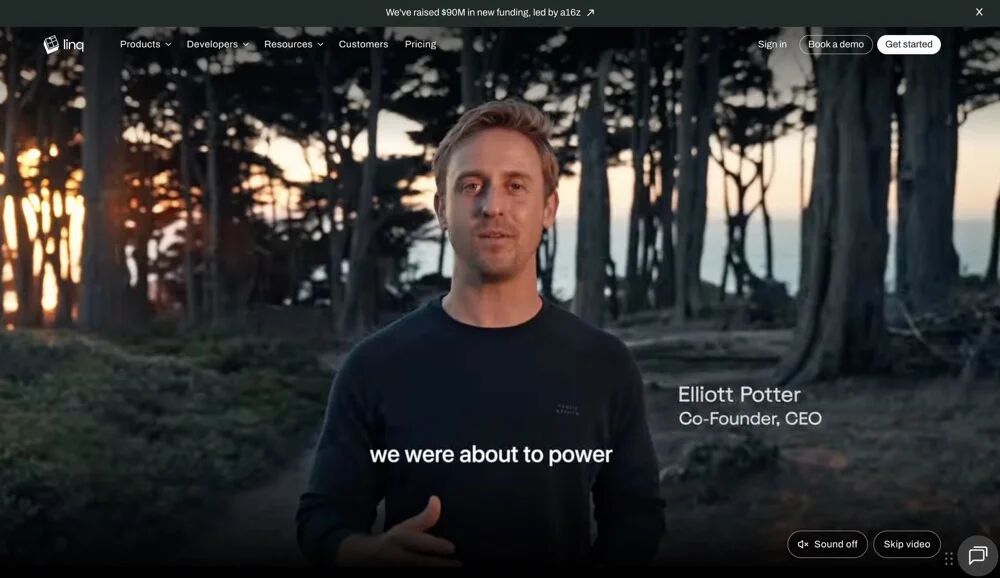
Linq was founded by Elliott Potter and builds a foundational platform that connects enterprises' existing communication channels with AI agents. The product is not positioned as another general-purpose large model, but rather as the connection layer between models and enterprise systems, customer service channels, and traditional software—allowing agents to be embedded directly into enterprises' existing operations.
Interestingly, Linq did not start out in this field. It went through several transformations—from digital business cards to sales software to AI sales agents—before eventually becoming the communication and execution infrastructure between agents and the real world.
In 2020, Linq was still based in Birmingham, Alabama, building digital business cards and sales lead tools. Over the following years, the team repeatedly explored sales software and AI sales agents, and only after launching an enterprise-facing iMessage API in February 2025 did it truly achieve product-market fit.
At first, customers valued only the convenience of sending messages to consumers through Linq. The turning point came after AI assistants such as Poke became popular—where should an agent without an app go to converse with users? So more and more AI companies came asking whether they could directly call Linq's Messaging API. Only then did Linq realize that rather than becoming a component of some AI application, it should become infrastructure that all agents can call.
At the time of its Series A financing in February 2026, the company disclosed that its customer count had grown 132% quarter over quarter, average account expansion per customer had reached 34%, platform AI agent monthly active users had reached 134,000, more than 30 million messages were being processed per month, net revenue retention was 295%, and there had been no customer churn. In less than ten months, message volume has exceeded 1 billion and is still increasing at a rate of more than 150 million per month. This shows that Linq has evolved from a communication API into infrastructure that truly carries agent traffic.
On November 9, Linq opened WhatsApp access, covering more than 3 billion users in over 180 countries and regions. On November 12, it launched HD Calling, allowing agents to answer and make calls through the same phone numbers used for Messaging. At the same time, it extended toward Computer Use, enabling agents to directly operate computer software, with browser automation company Kernel already an early customer.
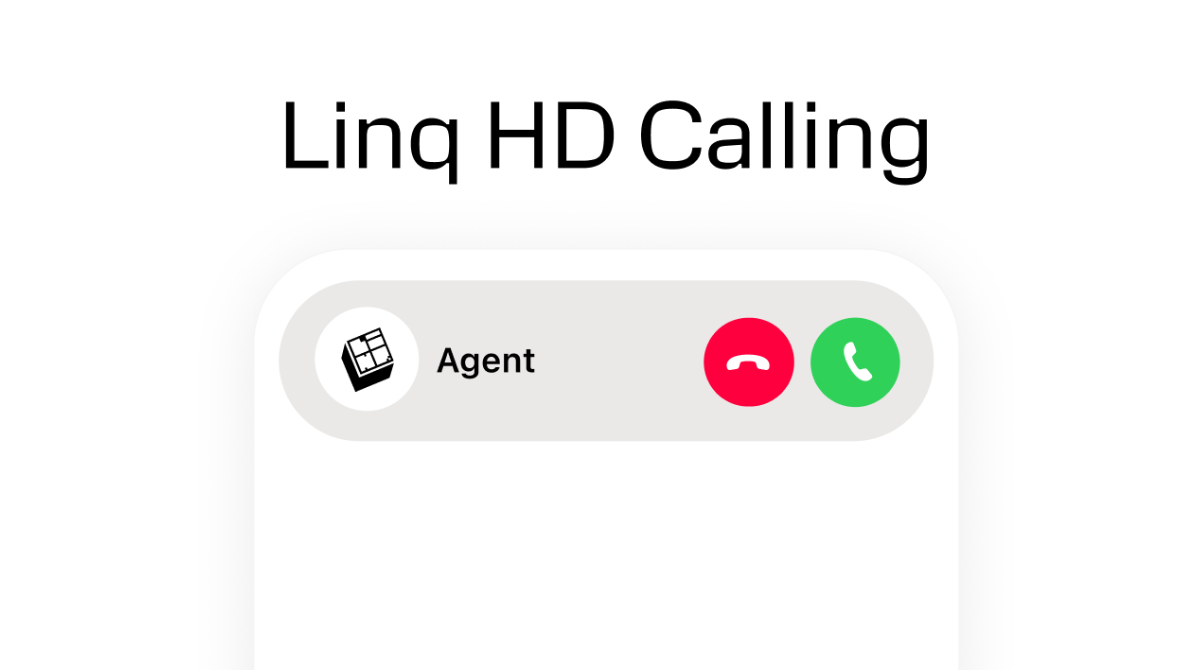
This means Messaging is the entry point rather than the endpoint; the real goal is to give agents a complete set of tools for interacting with the real world.
In terms of positioning, Linq is closer to where Twilio stands, but the customer base is changing: Twilio solves how internet companies send SMS, calls, and other communications to users, while Linq wants to solve how AI agents communicate with and execute tasks in the external world like real people.
The two overlap at the underlying technology level, but the complexity of demand is different. Traditional communication infrastructure only needs to ensure message delivery, while agent infrastructure also needs to consider identity, context, permissions, tool invocation, task status, and human-agent handoff. In other words, what Linq is really betting on is whether future software interaction will shift from "users operating software" to "users delegating agents to operate software."
However, Linq's early growth is closely tied to the Apple ecosystem, and its iMessage advantage is mainly concentrated in the United States. To reduce dependence on a single channel, the company is actively expanding WhatsApp, RCS, and Voice. Second, it is still unknown whether agents will really replace a large amount of app interaction. Letting an agent recommend a restaurant is one thing; handing over high-risk operations such as payments, healthcare, and finance is something users may not be willing to do.
In the past, internet infrastructure was built around "how to let more people access software"; in the agent era, the question may become "how to let more software complete things on people's behalf." This will clearly bring a whole new set of infrastructure demands, and Messaging, Voice, Computer Use, and Payment are only some of the layers that have already emerged.
Overall, Linq started with digital business cards, underwent several transformations, and ultimately it was customers actively coming to buy the capabilities hidden in its product that opened up a new market. In the future, if users no longer open apps one by one but instead delegate tasks to agents, then what will be scarce is not another agent application, but the layer of infrastructure that enables agents to find people, enter software, and get things done.
-
![]()
Wei Jianjun's Tone Has Softened
-
![]()
Politicized Channels: How Many Cards Does DJI Have Left to Play?
-
![]()
a16z Leads $90 Million Round in Agent Infrastructure Company Valued at $1 Billion
-
![]()
Deepal's October Domestic Retail Sales Hit 20,901 Units, with S05 Alone Accounting for 55%
-
![]()
MG October Domestic Sales: 32,059 Units, MG4 and 07 EV Account for 83%
-
![]()
Cars Enter the Era of Diseconomies of Scale
-
![]()
Breaking Down Xiaomi's Q3 Report: Higher Phone Prices, but Where Did the Profit Go?
-
Apple Is Very Proud: I Sold 710,000 Fewer Phones, Yet Revenue Increased by 55 Billion!