Cars Enter the Era of Diseconomies of Scale
 11/26 2026
 378
Source | Benyuan Finance
Author | Li Youshan
In the industrial era, one iron law was unbreakable: "Scale is profit."
For a century since Henry Ford created the first assembly line, the automotive industry has clung to this logic: the more you sell, the lower the per-vehicle share of factory, R&D, and channel costs—and the stronger your bargaining power in procurement. Expand scale tenfold, and profit may grow twentyfold or even a hundredfold. At last, wealth has leverage.
Toyota and Volkswagen relied on scale in the tens of millions of vehicles to wear out competitors in price wars and make their profits thicker and thicker. Economies of scale are a survival rule etched into the DNA of the automotive industry.
In 2026, rising prices of upstream raw materials and key components have opened clear cracks in this law on new energy assembly lines.
One Million Sales Are Not Economical
Take Leapmotor, which frequently reports sales results, as an example. In its third-quarter report, the market felt a sharp contrast.
The sales figures were dazzling. Global deliveries in the quarter reached 310,100 vehicles, up 78.3% year on year, standing firmly above the monthly sales threshold of 100,000 for four consecutive months and ranking first among new forces. In October, deliveries exceeded 106,100 units again, and the 2 millionth vehicle officially rolled off the line. Revenue also surged, with quarterly revenue of 31.7 billion yuan, up 63% year on year and a record high.
But when opening the income statement, the numbers took a sharp turn downward. Net profit attributable to shareholders in the period was only 40 million yuan, down 73.3% year on year and shrinking 93% from 600 million yuan in the second quarter.
Calculated, Leapmotor earned a net profit of 129 yuan for every vehicle sold—about the price of washing a car twice in the city.
Gross margin also narrowed to 10.9%, down 3.6 percentage points from the same period last year and down 1.7 percentage points from the second quarter. In the quarter, R&D, sales, and administrative expenses totaled 3.53 billion yuan, while total vehicle gross profit was about 3.46 billion yuan.
Gross profit from selling vehicles can no longer cover operating expenses. Positive book net profit is largely supported by other income such as carbon credits.

This is not a dilemma confined to Leapmotor.
XPeng, which released its financial report in the same period, delivered 118,400 vehicles in the third quarter and had revenue of 24.28 billion yuan, up 19.1% year on year. However, its net loss expanded from 380 million yuan in the same period last year to 870 million yuan, and overall gross margin fell from 20.1% to 18.9%. Although the MONA series drove sales growth, it also lowered the average product price and overall profitability.
Across the entire industry, this phenomenon of "revenue growth without profit growth" has become almost universal.
Data from the National Bureau of Statistics show that in the first three quarters of 2026, operating revenue of domestic automotive manufacturing enterprises above designated size increased 2.6% year on year, but total profit fell 22.8% year on year. The industry's operating revenue profit margin was only 3.3%, far below the average level of 5.68% for industries above designated size in the same period. New energy vehicle sales increased 11.1% year on year, but the decline in profit far exceeded sales growth.
NIO Chairman Li Bin pointed out this industry-wide problem in the second quarter: "diseconomies of scale."
In the past, the larger the procurement volume of an automaker, the lower the purchase price. Now, with tight supply of core components such as memory chips, additional procurement volumes instead require higher premiums. Scale has not diluted costs but has pushed up procurement unit prices.
The industry consensus that "annual sales of 500,000 vehicles are the survival line and 1 million enter the safety zone" is becoming invalid.
Why Economies of Scale Are Failing
Why has the scale formula that the automotive industry has run for a century suddenly stopped working in the new energy era?
Perhaps the answer must be found in four changes: cost structure, product structure, supply chain logic, and globalization path. Each is eroding the foundation of traditional economies of scale.
The most fundamental disruption comes from the pricing reversal in the upstream supply chain.
In the past, the scale bargaining power of the automotive industry was based on a buyer's market: the more you bought, the more willing suppliers were to concede. But this round of component price increases has been driven by cross-industry resource competition. Rapidly expanding AI data centers are competing with automakers for chips, memory, and storage resources.
NIO once estimated that rising prices of components such as memory chips alone increased per-vehicle cost in the second quarter by about 14,000 yuan compared with the end of 2025. NIO Chairman Li Bin expects per-vehicle cost to rise by another 2,000 to 3,000 yuan in the second half of the year.
Leapmotor encountered the same problem. In the first half, it hedged part of the price increase pressure by stocking up in advance at low prices. By the third quarter, low-priced inventory was gradually exhausted, and high procurement costs were concentrated in the current report, directly dragging down gross margin.
More paradoxical is that companies with larger procurement volumes are more passive. Small and medium-sized automakers have small order volumes and can rely on scattered supply in the spot market. Leading companies must lock in long-term, large-scale capacity, but instead have to pay higher premiums and even pay large deposits in advance. In the industrial era, "larger volume means better price"; in the current chip shortage, it has become "larger volume means higher markup."
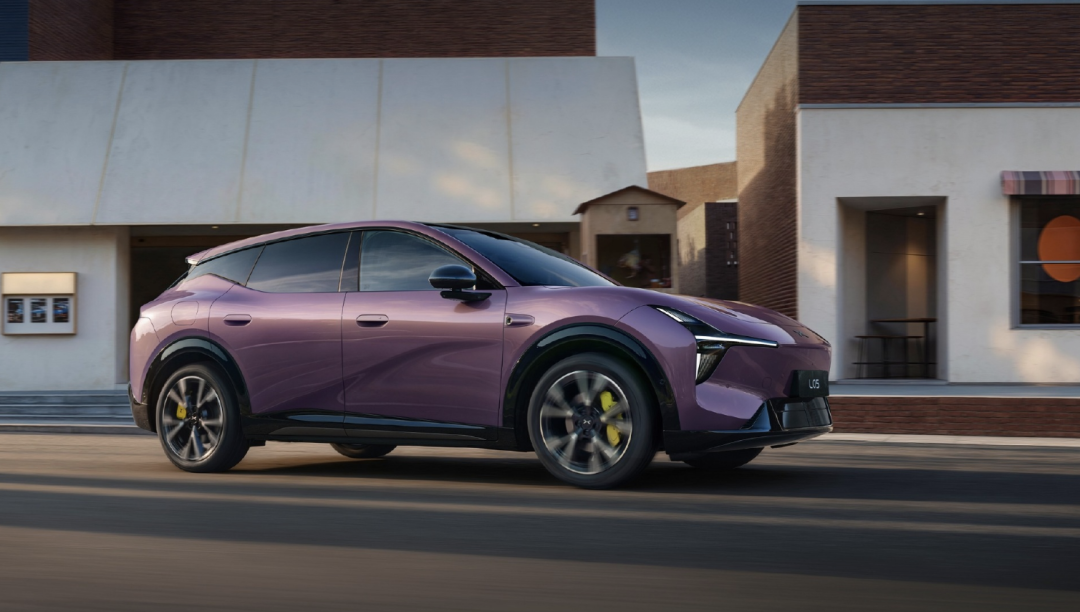
Sales scale has not translated into profit. The second important reason is that most of the incremental growth comes from low-margin, low-priced markets.
Leapmotor's sales explosion was created by entry-level models in the A series. The A10, with a starting price of 65,800 yuan, achieved its 100,000th unit off the line just 135 days after launch. Together with the A05, B01, and B10, three models under 100,000 yuan, the four low-priced cars sold a combined 148,100 units domestically in the third quarter, accounting for 60% of domestic sales in the period.
These models brought advanced intelligent driving and LiDAR to below 100,000 yuan. While maximizing value for money, they also naturally capped gross margin space. Leapmotor CFO Li Tengfei acknowledged that the absolute gross profit per vehicle of the A series is lower than that of the B, C, and D series, and an increased share directly lowered the overall gross margin level.
The same is true for XPeng. After the MONA series launched, the sales center of gravity continued to shift downward. The M03 and L03 together accounted for nearly 50% of cumulative sales, and per-vehicle sales revenue fell from 237,600 yuan in the first half of 2024 to 169,000 yuan in the first half of 2026. Although flagship models such as the GX and G9L were later launched, the product structure of low-priced volume models has firmly pressed the overall average price to a low level.
In other words, the scale expansion of many companies is not about grabbing share in high-profit markets, but about trading lower price bands for sales. The larger the scale, the more the product structure shifts downward, and the lower the gross margin becomes.
In addition, overseas markets should have been an outlet for absorbing capacity and improving profits, but now they have become a new cost burden.
Leapmotor exported 63,300 vehicles in the third quarter, up 263.7% year on year, accounting for 20.4% of total deliveries. But behind the sales growth is a sharp rise in shipping costs. Freight rates on long routes to Europe, South America, and other regions have soared, while overseas markets are in a critical period of seizing share. Companies dare not easily raise prices and can only absorb the added transportation costs themselves, directly causing a marked decline in gross margin for overseas models.
More pressure is ahead. Starting in April 2027, the export tax rebate for domestic new energy vehicles will be reduced from 13% to 9%, and the EU is also considering import quotas for plug-in hybrid models. The path of relying on exports to drive scale is facing a double squeeze from policy and costs.
More critically, most automakers' overseas expansion is still at the stage of losing money just to gain attention. Leapmotor entered Europe through Stellantis channels, but the joint venture is 51% controlled by the other side. Leapmotor can only share manufacturing-side profits, while most of the premium in the sales process remains with the channel party. Localized production has just started, and the Spanish factory has only begun mass production. Economies of scale have not yet appeared, and short-term costs are instead higher.
The fourth pressure falls on rigid R&D. Intelligent investment in new energy vehicles is not diluted by scale. In traditional automobiles, R&D investment is mostly one-time mold and platform development costs. The higher the sales, the lower the per-vehicle R&D cost. But in the new energy era, intelligent R&D is a rigid curve that keeps rising. Take Leapmotor as an example. Its third-quarter R&D expenses were 1.48 billion yuan, up 22.3% year on year. The LEAP 5.0 architecture, the Four-Leaf Clover central domain control, and the LWM world model intelligent driving all require continuous spending with each technology iteration. XPeng's investment in intelligent driving and humanoid robots is likewise only increasing. Management has clearly stated that future gross margins from AI and robotics businesses will be higher than those of high-end vehicles. This is an arms race without an endpoint. You have to invest in intelligent driving whether you sell 100,000 vehicles or 1 million vehicles, and the intensity of investment will only grow. The traditional manufacturing rule that scale dilutes fixed costs is failing in the era of software-defined vehicles. Hardware costs can fall with scale, but investment in software and algorithms is always incremental.
Under the superposition of these four pressures, an absurd result has emerged: automakers desperately chase scale, but scale does not bring profit. Instead, it drags them into a cycle of low-price volume chasing and declining gross margins.
Breakthrough: From Selling Vehicles to Selling Technology
Automakers trapped in the scale trap are all looking for a second growth curve. Since selling vehicles alone cannot make money, they turn technology itself into a commodity.
Leapmotor has moved most decisively. It first won a joint vehicle development project with FAW Hongqi, monetizing through platform licensing and technical services. In November, it announced it would provide engineering development services to Stellantis' Opel. The two sides will jointly develop a new C-segment SUV model and will subsequently supply core components as well.
For Leapmotor, this is a more cost-effective business than selling complete vehicles. The marginal cost of technology licensing and development services is extremely low, and gross margin is far higher than vehicle sales. The full-domain in-house technology stack has finally turned from a cost-reduction tool into a monetizable asset.
XPeng laid out its plans earlier. Models jointly developed with Volkswagen have been launched one after another, and technology export has already been converted into actual revenue. At the same time, it has extended its reach into humanoid robots, planning to publicly release IRON in the second quarter of 2027, with the goal of achieving higher profit returns from AI and robotics businesses than from high-end vehicles.
Everyone is doing the same thing: breaking out of the old model of "selling cars to earn margins" and turning the technological capabilities accumulated through R&D investment into commodities that can be reused externally. When the cost of full-domain in-house development can be shared with more external customers, economies of scale will truly emerge.
This is very similar to the transformation of the mobile phone industry back then. Hardware profits were squeezed to the extreme by price wars, and companies that monetized chips, systems, and ecosystems through external licensing ultimately achieved higher valuations.
The old scale formula cannot calculate the new cost accounts. Diseconomies of scale are an unavoidable path in the switch between old and new paradigms.
This also explains why Leapmotor and others would rather endure profit declines than desperately chase scale. Scale is no longer the ultimate goal but a basic ticket. Only with a sufficiently large installed base can intelligent driving data iteration be supported, the early-stage investment in full-domain in-house development be diluted, and technology external supply be sufficiently convincing.
But this road is destined to be difficult. Once the low-price label is attached, moving the brand upward is extremely hard; the volume of technology export cannot fill the vehicle profit gap in the short term; and uncertainties in the supply chain and overseas expansion may hit the brakes again at any time.
The migratory birds of the industrial era have migrated along the trajectory of scale for a century. Now the wind has changed, the old route is failing, and the new route is still in the fog.
Whoever finds the new scale code first will be able to fly to the front of the flock in the next era.
Operations/Yu Shuya Design/Yan Wei'er
*Copyright reserved. Reproduction without authorization is prohibited.
end
-
![]()
Wei Jianjun's Tone Has Softened
-
![]()
Politicized Channels: How Many Cards Does DJI Have Left to Play?
-
![]()
a16z Leads $90 Million Round in Agent Infrastructure Company Valued at $1 Billion
-
![]()
Deepal's October Domestic Retail Sales Hit 20,901 Units, with S05 Alone Accounting for 55%
-
![]()
MG October Domestic Sales: 32,059 Units, MG4 and 07 EV Account for 83%
-
![]()
Cars Enter the Era of Diseconomies of Scale
-
![]()
Breaking Down Xiaomi's Q3 Report: Higher Phone Prices, but Where Did the Profit Go?
-
Apple Is Very Proud: I Sold 710,000 Fewer Phones, Yet Revenue Increased by 55 Billion!