Why is Baidu's AI large model rarely mentioned anymore?
 10/08 2026
 387
387
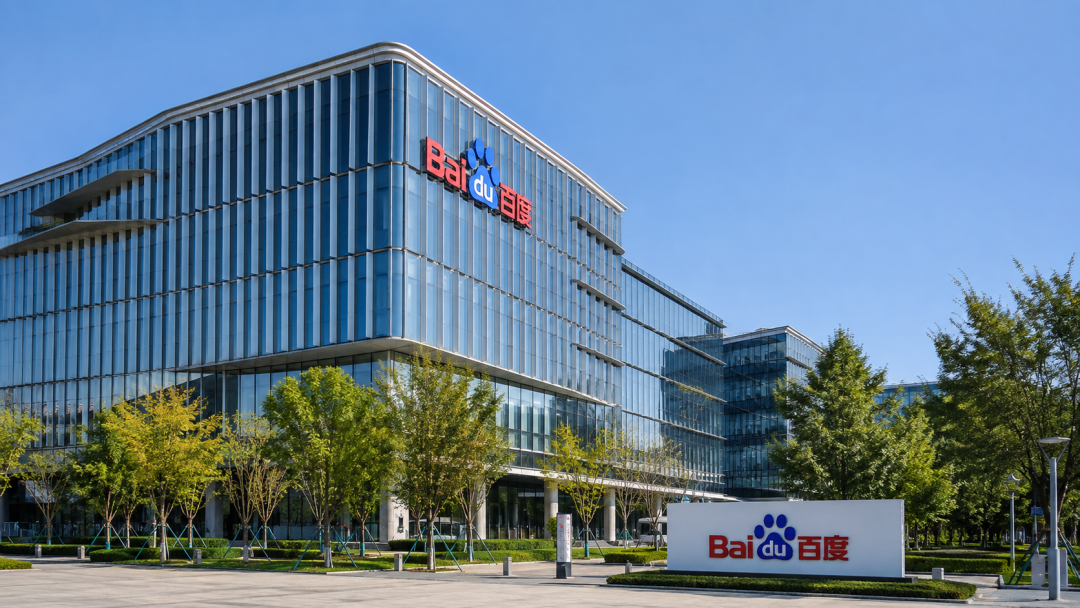

Always a Step Behind
Image source | Internet (Please contact for deletion if infringing) Partially generated by AI
Just after the 2026 Spring Festival, a media friend posted a screenshot in a group chat: QuestMobile's ranking of AI-native apps by monthly active users.
ByteDance's Doubao with 345 million, Alibaba's QianWen with 166 million, and DeepSeek with 127 million—the top three combined have nearly 640 million.
Someone casually asked, 'Where does ERNIE Bot rank?'
The group fell silent for a dozen seconds before someone replied, 'It seems to have fallen out of the top ten.'
If you experienced the AI craze sparked by ChatGPT two or three years ago, this scene is hard to imagine.
In March 2023, ERNIE Bot, the first domestic large model product to rival ChatGPT, was released. On its first day of full access, the system received over 33.42 million questions, averaging nearly 400 requests per second.
By mid-2024, ERNIE Bot had accumulated over 200 million users, with 500 million daily calls. Baidu Intelligent Cloud secured a 24.6% share of China's AI public cloud market, ranking first for six consecutive years.
At that time, Baidu was synonymous with AI in China.
But now, if you open your phone's app store and check the download rankings for AI apps, you might have to scroll through several pages to find ERNIE. It's not that ERNIE Bot has gotten worse—it's that its voice has disappeared.
What happened in between?

A 'Great Migration of Attention'
To understand Baidu AI's situation, we must first see what the entire industry experienced from 2024 to 2026.
2023 was the first year of the 'Hundred Models War,' with nearly all major companies rushing into the large model race. But by 2025, the focus of competition suddenly shifted from 'who has the largest model parameters' to 'who has the most users.'
ByteDance's Doubao quickly gained traction through Douyin's traffic ecosystem, Alibaba's QianWen rapidly penetrated through DingTalk and Taobao's transaction scenarios, and DeepSeek topped the charts in no time through open-source strategies and free offerings.
The cruelty of this 'Great Migration of Attention' lies in the fact that users won't stay just because you were the first. They will only go where the best experience is.
Baidu did respond. According to its Q1 2026 earnings report, Baidu's AI business revenue reached 13.6 billion yuan, accounting for 52% of general business revenue—surpassing 50% for the first time.
After the official launch of ERNIE Large Model 5.1, it achieved leading baseline performance at about 6% of the pre-training cost of similarly sized models in the industry, topping the LMArena search rankings domestically. AI cloud revenue grew 79% year-on-year, and GPU cloud revenue grew 184%.
The numbers look good, but the problem is: these gains mainly came from the B2B government and enterprise market, while the consumer-facing ERNIE App has fallen out of the top ten.
In other words, Baidu has done well in 'selling AI' but has been left behind in 'getting users to use AI.'

Five Years Ahead of Peers
At this point, it would be unfair to say Baidu has simply 'fallen behind.' In terms of AI, Baidu's foresight is undeniable.
In 2013, Baidu established the Institute of Deep Learning, becoming the first major domestic internet company to systematically bet on AI.
In 2017, Robin Li proposed 'All in AI' at the Developer Conference, elevating AI to the core of the company's strategy.
In March 2019, Baidu released China's first officially open pre-trained model, ERNIE Large Model 1.0, more than three years before ChatGPT's debut.
This head start wasn't limited to large models. Baidu launched PaddlePaddle at the deep learning framework level, now the top domestic deep learning framework by market share, serving over 8 million developers. Half of domestic enterprise large model deployments are built on PaddlePaddle.
At the chip level, Kunlunxin has completed three generations of AI chip R&D and commercialization, with products compatible with multiple mainstream domestic large models. A fully domestic cluster even trained ERNIE Large Model 5.1.
In autonomous driving, Apollo Go has deployed in 27 cities globally, with over 220 million kilometers of fully driverless mileage.
Baidu may be the only domestic company with a full-stack AI layout, covering chips, frameworks, models, and applications.
But this very 'versatility' has become a problem.
Baidu is often summarized as 'early to rise, late to arrive.' This phrase became popular because it captures the core contradiction in Baidu's AI narrative: its sense of direction isn't poor, but its delivery always falls short.
The most typical case is Jiyue Auto. In 2021, Baidu entered the car-making arena as a vehicle manufacturer, partnering with Geely to form Jidu. Baidu contributed Apollo's intelligent driving technology and AI large models, while Geely provided vehicle manufacturing capabilities.
In 2023, the Jiyue 01 was launched as the first 'large model-powered' smart car. But by the end of 2024, Jiyue's funding dried up, and the company halted operations, marking a substantive failure in Baidu's attempt to build cars itself.
Meanwhile, BYD switched its default map for Tian Shen Zhi Jia models from Baidu to AutoNavi, costing Baidu its most significant B2B benchmark client.
More disappointingly, Baidu was the first to propose 'large models in cars' but missed the real boom.
At the 2026 Beijing Auto Show, Volcano Engine announced that over 7 million smart cars were powered by Doubao's large models, covering more than 50 brands. Alibaba's QianWen secured partnerships with ten automakers, including Changan, Dongfeng, BYD, and Geely.
Meanwhile, Baidu ERNIE has seen almost no follow-up collaborations in the passenger vehicle market since Jiyue.
Baidu has long bet on autonomous driving and Robotaxi but missed the explosion of large model interactions in cabin scenarios.
This isn't a technical issue but a strategic misjudgment. Baidu chose a 'harder' path, but the market ran faster in another direction.
Another example is the open-source vs. closed-source debate. In 2024, Baidu publicly declared that 'open-source models are a tax on IQ,' insisting on a closed-source route.
This judgment wasn't entirely unreasonable commercially, but when DeepSeek reshaped the industry landscape with open-source models in record time, Baidu took months to adjust its strategy. By then, user mindshare had already been redistributed.
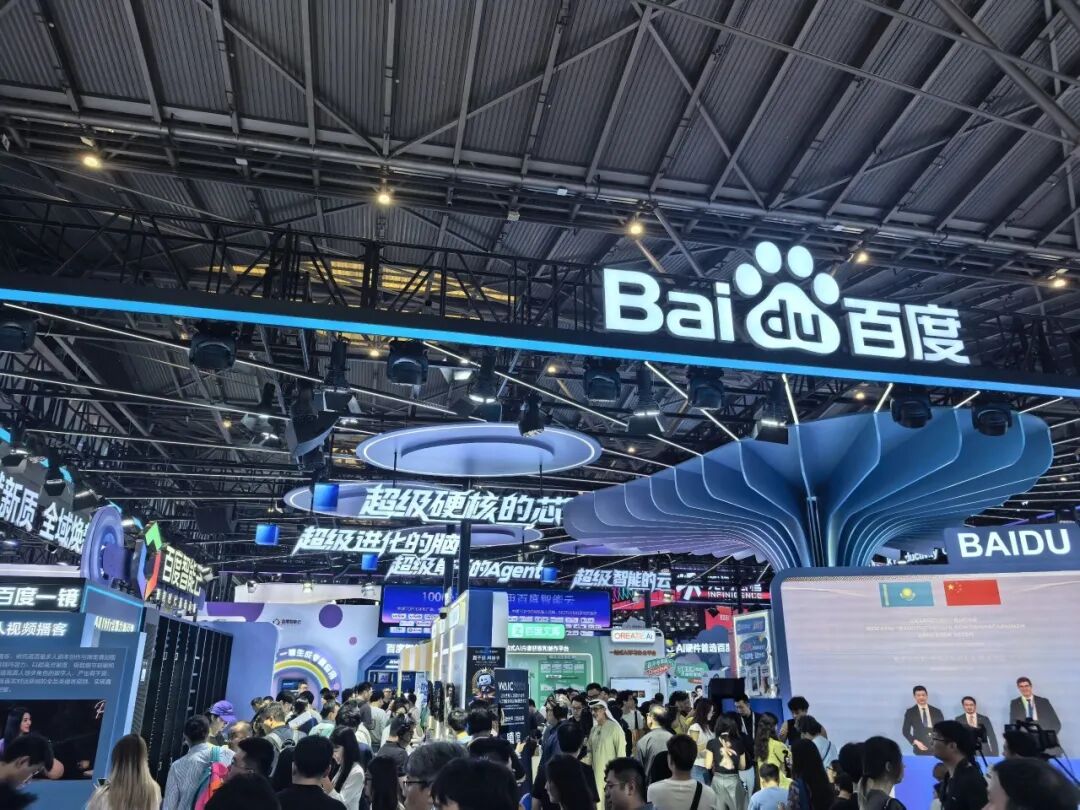

Organizational 'Speed Bumps'
More insidious and fatal than strategic wobbles are the issues within the organization itself.
Multiple Baidu employees have told the media that when the AI business team proposes rapid new feature launches, the plans must go through three levels of approval: TL, department head, and technical committee. By the time approval comes, competitors have already beaten them to market.
AI iterates weekly, but Baidu's internal decision-making still operates on a monthly schedule. This rhythmic mismatch is nearly fatal in competition.
Deeper still is the imbalance in talent structure. According to public reports, Baidu's turnover rate for P9 and above executives is about 38%, with Alibaba and ByteDance poaching large numbers of AI core talent with doubled salaries.
Interestingly, many technical leaders at domestic AI companies have Baidu backgrounds. For example, business leaders at ByteDance's Seed and Alibaba's Tongyi QianWen often come from Baidu, and Baidu alumni dominate the autonomous driving startup scene.
Baidu has trained many AI talents but failed to retain them.
Internal product infighting is also severe. An industry insider close to Baidu described the company's product planning as overly complex, with multiple parallel products like ERNIE App, Wenxiaoyan, and ERNIE Yuge. 'Every department has its own roadmap, and it often feels like everyone is crashing into each other. Products are highly similar, resources are scattered, and the user experience is fragmented.'
Since 2026, Baidu has made a series of organizational adjustments, replacing its twenty-year-old T/P/E job level system with a 5-to-12 digital grading system and establishing a foundational model R&D department reporting directly to the CEO.
These moves are in the right direction, but whether they can take effect before the competitive window closes is another question.

If you review Baidu's every step in AI, you'll notice a strange pattern: Robin Li's judgments on tech trends often precede peers by two to three years.
In 2013, when Baidu established the Institute of Deep Learning, most internet companies were busy with O2O and mobile payments. In 2017, when Li proposed 'All in AI,' AI was still just a concept to most. In 2019, when Baidu released ERNIE Large Model 1.0, hardly anyone in China mentioned large models.
Even in 2026, he proposed a new concept called DAA (Daily Active Agents), attempting to redefine the AI industry's metrics by 'how many Agents are working for humans.'
But the problem is, a company's ability to stand firm in the AI era doesn't depend on how far ahead the CEO sees but on whether the organization can turn those insights into deliverable products.
Baidu has full-stack technology, patent accumulations, and first-mover advantages. But when ERNIE Bot's consumer-side stickiness declines, when the large model-powered car market is carved up by Doubao and QianWen, and when core talent continues to drain away, the advantages of technical reserves are offset by the shortcomings of organizational efficiency.
Baidu's Q1 2026 earnings report presents a clear dividing line: AI business revenue surpassed 50% of the total for the first time, while traditional search ad revenue fell 22% year-on-year, and net profit attributable to shareholders dropped more than 55%.
This means Baidu is undergoing a company's most painful transition period: the old engine is slowing down, and the new engine is still climbing.
For Baidu, AI isn't a 'new business' that can be developed slowly but a 'survival battle' that cannot be lost.
Search's moat is being redefined by AI. If Baidu can't win back users with AI, it will lose not just market share in AI applications but dominance over the entire information gateway.
In terms of 'who truly believes in AI,' Baidu may be the most serious among domestic majors.
But when technical faith meets organizational inertia, and when strategic vision clashes with execution efficiency, what Baidu needs to solve has never been just a model parameter issue.
'Rising early' is a skill; 'arriving late' is the result.
The journey in between is what truly determines success or failure.
-
Second-Generation Doubao Phone Falls Short in Resolving Previous Limitations
-
![]()
"Dark Side of the Moon" Completes Final Pre-IPO Funding Round with Valuation of Approximately $50 Billion, Kimi Set to List in Hong Kong!
-
![]()
Apple Imposes Mandatory Adaptation Directive for iPhone Duo, Marking Unprecedented Assertiveness
-
![]()
Huawei's Xu Zhijun: The Real Challenge of Super Nodes Transcends Technology
-
The Long-Standing Foldable Adaptation Challenge: Solved by Apple, Eluding Huawei, Xiaomi, and Samsung for Years
-
![]()
Impressive Annual Output: 1 Million Pieces! Zhongteng Huasheng's Ultra-Precision High-Performance Optical Film Project Commences Trial Production
-
![]()
Tens of Millions in Funding Secured! Can Yuanxi Photonics Surmount the Mass Production Hurdle for Metasurface Optics?
-
AMD Invests Massively in Physical AI? Acquires World Labs for $8.2 Billion