"Dark Side of the Moon" Completes Final Pre-IPO Funding Round with Valuation of Approximately $50 Billion, Kimi Set to List in Hong Kong!
 10/08 2026
 408
408
Embodied Intelligence I Humanoid Robots I Embodied Intelligence Funding I Robots 
While the domestic large model industry is still debating commercialization paths, Dark Side of the Moon has already reached the doorstep of a Hong Kong IPO.
Latest news indicates that this AI company, known for its Kimi large model, has completed its final pre-IPO private funding round with a valuation of $50 billion. It plans to proceed with a Hong Kong listing in the first quarter of 2027, with preliminary discussions with investors potentially starting as soon as this month. However, the entire listing process remains subject to change.
From laboratory papers to the capital market bell, this company's growth trajectory in just over three years has become a highly representative case study in China's domestic large model industry.
01 Why Did the Valuation Soar So Rapidly in Six Months?
Reviewing Dark Side of the Moon's 2026 funding history, the heat of the sector is palpable. In December of this year, the company secured three consecutive funding rounds, with its valuation rising from $10 billion to $18 billion. Subsequently, Series D, E, and F rounds followed, completing a multi-fold valuation increase within six months and accumulating six funding rounds for the year. Such a dense funding pace is rare among hard tech startups.
Behind the capital frenzy lies the technological breakthrough brought by Kimi K3. Officially released in July this year, Kimi K3's servers were overwhelmed by user requests within two days of launch. Just half an hour after release, it topped Hugging Face's global trending list, causing quite a stir in Silicon Valley's tech circles.
This technological momentum directly translated into commercial data. In June, the company's ARR (Annual Recurring Revenue) surpassed $300 million, with enterprise revenue multiplying again after K3's launch. According to Embodied Emergence observations, the primary market's willingness to assign high valuations stems from witnessing the realization of B-end API business revenue and the desire not to miss the limited investment opportunities in China's leading open-source large models.
However, behind the excitement lie practical challenges. The high cost of large model inference computing remains persistent, and high revenue does not equate to high profits. This commercialization report card will ultimately be tested by the secondary market.
02 Why the Shift from "No Rush to List" to a Sprint?
Few noticed that just over half a year ago, Dark Side of the Moon internally signaled "not listing as the goal." Why has the company's stance changed so noticeably?
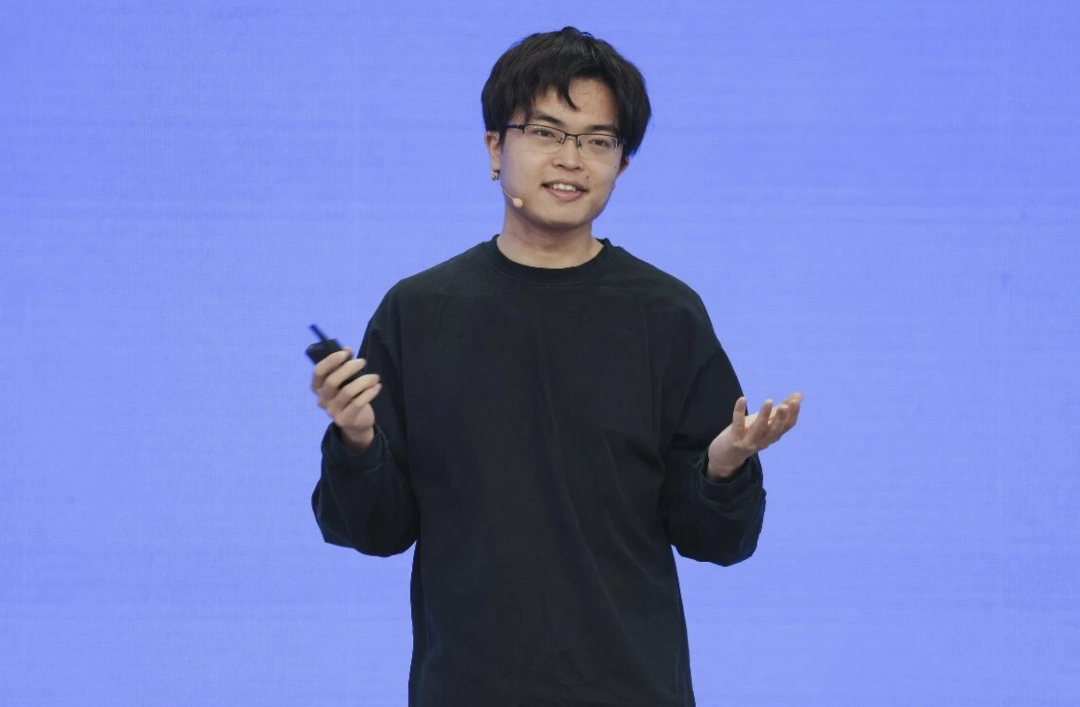
Founder Yang Zhilin's background offers insight into the company's essence. Born in 1992, this entrepreneur graduated with a computer science degree from Tsinghua University and participated in cutting-edge model research at Google Brain and Meta AI. Holding multiple highly cited AI papers, he returned to China in 2023 to found Dark Side of the Moon. Just two months after establishment, the company secured nearly $200 million in angel round funding, far surpassing most startup projects.
According to Embodied Emergence, the accelerated IPO does not indicate a shift in the founding team's original intentions but rather reflects changes in the industry cycle. While massive primary market funding can support short-term R&D, the AI sector's continuous cash-burning nature necessitates capital exit channels. Meanwhile, with domestic large model peers successively listing in Hong Kong, the market window will not remain open indefinitely.
Additionally, the company has completed its shareholding restructuring, transforming from a limited liability company to a joint-stock company. This share reform process itself signifies preparatory steps for listing, indicating the company's readiness to enter the public market.
03 Will the Industry Competition Landscape Be Rewritten?
Dark Side of the Moon's rise cannot be separated from the fiercely competitive domestic large model landscape. Zhipu and MiniMax have already taken the lead in listing in Hong Kong, while DeepSeek is aggressively catching up in technology and funding. With model iterations occurring monthly, no company can maintain a permanent lead.
Industry opinions are divided. Optimists believe Kimi K3 proves that domestic open-source large models can gain global attention, and the cultivation of overseas developer ecosystems opens new growth paths for Chinese AI. More pragmatic voices note that while Kimi K3 performs well on certain benchmarks, its overall capabilities still lag behind global top-tier closed-source models. A single technological breakthrough does not equate to victory across the entire value chain.
The race among competitors has long transcended mere benchmark comparisons. Computing power reserves, customer adoption, cost control, and talent pipelines all determine a company's endurance. The high valuations assigned by capital markets essentially bet on the future rather than current achievements.
04 What Does the Listing of Domestic AI Really Signify?
Dark Side of the Moon's Hong Kong IPO attempt holds three unignorable industry implications beyond a single company's story.
First, it marks the formal completion of China's domestic large model industry's journey from technological R&D and product launch to commercialization validation and finally to public capital market entry. Previously labeled as money-burning ventures with difficult monetization, Dark Side of the Moon's rapidly growing ARR proves that foundational large models can generate scalable enterprise revenue, providing a reference model for the entire sector. However, Embodied Emergence cautions that revenue viability does not equal profitability, as computing costs will continue to squeeze profit margins—a pain point shared by all large model companies. Listing merely signifies a new stage's beginning, not entrepreneurial success.
Second, it offers a case study for balancing capital and technology in domestic AI. AI technological iteration requires continuous funding, and Hong Kong's tech-focused listing sector provides a pathway for unprofitable hard tech companies to access global capital for R&D support. However, high valuations bring pressure, as public markets demand higher growth expectations. Once growth falls short, valuation correction risks emerge, requiring technical teams to balance long-term R&D ideals with capital market realities.
Third, this development signals China's AI industry's participation in global competition. When domestic large model products gain recognition from overseas developers and connect with global capital through Hong Kong listings, Chinese AI companies gain opportunities to export their technological influence. However, establishing long-term advantages requires more than a single model release's buzz—continuous iteration capabilities and complete industrial ecosystems form the foundation for global competitiveness.
The bell for Dark Side of the Moon has not yet rung, and the IPO timeline remains fluid. For this rapidly growing AI unicorn, the capital market merely represents a major examination. The real challenges lie ahead after the listing bell sounds.
Disclaimer: This article is compiled, translated, and edited based on public media content for reader reference only. The views and content herein do not constitute any guidance and offer no project recommendations or commitments to readers! If this article inadvertently infringes upon your rights, please contact us for prompt resolution.
Image Source: Internet
This article does not constitute investment advice
-
![]()
The Price of a Single Smartphone Could Outfit Your Home with Appliances: Navigating the Rising Costs of Smartphones
-
![]()
AI Movies Turn Profitable: Recouping Costs in a Week with 8 Million Yuan in Revenue
-
![]()
Thirst for Computing Might! Tencent Secures $7 Billion Worth of Computing Resources from Oracle
-
![]()
After a model evaluation, I began to re-understand WorkBuddy
-
[Shanhu Talks] The Diverse Lives Unfolding in the AI Era: A Ten-Month Journey
-
【Tibetan Fox Talks】These Ten Months in 2026: People and Me Amidst AI Anxiety
-
Second-Gen Doubao Phone Falls Short in Resolving Previous Flaws
-
Second-Generation Doubao Phone Falls Short in Resolving Previous Limitations