Why Has NVIDIA Become the Biggest Winner in the AI Computing Power Race?
 10/08 2026
 544
544

A Trend and an Opportunity
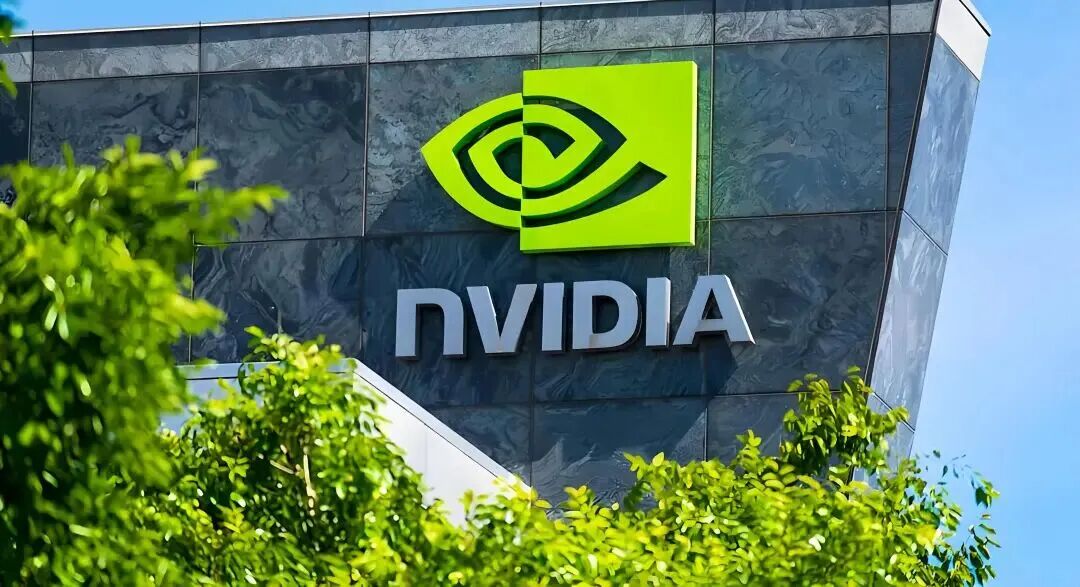
Image source | Internet (Please contact us for deletion if infringement occurs). Partially generated by AI.
By 2026, global AI infrastructure spending will reach $450 billion, with inference computing power accounting for over 70% for the first time.
This means that for every $100 spent globally on AI, $70 goes toward making models "run."
In this unprecedented computing power arms race, one company is positioned squarely in the path of nearly all that cash.
Its latest quarterly revenue hit $68.1 billion, up 73% year-on-year; data center business alone generated $62.3 billion, a 75% surge. Annual revenue reached $215.9 billion with a net profit of $120 billion.
This figure exceeds the total annual fiscal revenue of most countries.
What about market cap? $5.7 trillion—the first company in human history to reach this milestone.
That company is NVIDIA.

It's No Longer Just a "Graphics Card Seller"
If your impression of NVIDIA stops at "gaming graphics card manufacturer," you're severely underestimating it.
As of now, NVIDIA's 2026 financial report shows data center business revenue hitting $193.7 billion, contributing nearly 90% of total company income.
The once-iconic RTX gaming graphics card business now accounts for a negligible portion of annual revenue.
But the real story isn't the numbers themselves—it's the fundamental shift in how the company makes money.
In the past, NVIDIA sold individual GPUs, with a B200 priced around $40,000 each.
Now, it sells entire rack systems—the GB200 NVL72 rack-level solution—priced between $2 million to $3 million per unit.
From selling "parts" to selling "factories," the average customer spend has increased over 50-fold.
Behind this is a complete logical upgrade. NVIDIA is no longer just a chip supplier; it packages GPUs, CPUs, network chips, interconnect technologies, and software stacks into a "plug-and-play" AI supercomputing unit.
Customers can run large models immediately without custom adaptation or optimization.
Jensen Huang has named this "AI Factory."
This repositioning represents NVIDIA's shift from selling "chips" to selling "computing capacity." Just as you don't assemble your own generator—you simply buy electricity.
Moreover, once customers adapt to this system, migration costs become prohibitively high.
This isn't just about swapping one chip for another—it requires rebuilding entire data center architectures, software development processes, and operational systems.

An "Ecosystem Web" Built Through Acquisitions
In December 2025, NVIDIA shook the industry by spending $20 billion to acquire core technologies and talent from AI chip startup Groq.
This marks NVIDIA's largest deal in its 32-year history, far surpassing its $7 billion acquisition of Mellanox in 2019.
The deal's brilliance lies in its structure. NVIDIA didn't fully acquire Groq—instead, it obtained Groq's inference chip technology through a "non-exclusive technology licensing agreement" while bringing Groq founder Jonathan Ross and his core team in-house.
Groq continues operating independently, but its most valuable technology and talent now belong to NVIDIA.
Ross was a founding member of Google's TPU team. In essence, NVIDIA spent $20 billion to turn a former competitor into an ally.
The strategic intent is crystal clear: extending from training to inference.
For years, NVIDIA's core narrative was "training"—massive models requiring massive (vast numbers of) GPUs for training, NVIDIA's absolute stronghold.
But as models mature, the market focus is shifting from training to inference. According to SEMI data, inference computing power accounted for over 70% of global AI infrastructure spending in 2026.
The inference market operates under completely different rules than training. Training prioritizes raw computing power; inference demands low latency, low cost, and high energy efficiency. Groq's LPU chips excel precisely in these areas.
NVIDIA's market share in inference chips has climbed from 66% to 74%, but competition here is far fiercer than in training.
Google TPU, Amazon Trainium, and various ASIC chips are all vying for position. Acquiring Groq establishes an early defensive line in this new battlefield.
Yet Groq represents just one piece of NVIDIA's investment puzzle.
Examining NVIDIA's investment portfolio over the past two years reveals a far more systematic strategy than mere "buying sprees."
It has invested in AI cloud service providers like CoreWeave, Nebius, Crusoe, and Lambda; AI model developers like Cohere; and even injected $5 billion into Intel.
These investments share a common trait: all involve major buyers of NVIDIA GPUs.
Take CoreWeave as an example. NVIDIA holds about 7% of its shares, and CoreWeave was among the first to fully deploy NVIDIA's Blackwell platform.
NVIDIA provides priority supply, technical support, and even customer referrals. When CoreWeave went public, its market cap briefly exceeded $37 billion, with NVIDIA's stake worth about $2 billion.
This is essentially a demand-side locking strategy. Traditional cloud giants Amazon, Microsoft, and Google contribute over half of NVIDIA's data center revenue, but all are developing their own chips.
Google's TPU is now available for lease, Amazon's Trainium is being massively adopted by Anthropic, and Microsoft's Maia accelerators continue evolving.
NVIDIA's response has been clever: supporting competitors to these traditional cloud giants. Through investments in "new cloud players" like CoreWeave and Nebius, NVIDIA has established its own distribution channels and customer networks beyond traditional cloud providers.
Looking deeper, its networking business has become another "killer app." In fiscal 2026, NVIDIA's networking revenue surpassed $31 billion, up over 140% year-on-year.
NVLink, Spectrum-X Ethernet, and InfiniBand technologies all saw explosive growth. Fourth-quarter networking revenue soared 263% year-on-year.
This highlights a practical reality: customers aren't just buying NVIDIA's GPUs—they're buying its switches, network cards, and interconnect solutions.
The entire data center, from computing to communications, now falls under NVIDIA's technological umbrella. This "full-stack binding" creates far stronger customer loyalty than chip sales alone.

From Moat to Profit Space
When discussing NVIDIA's competitive moat, nearly all analysts mention CUDA.
CUDA is NVIDIA's software platform that lets developers directly harness GPU computing power using Python, C++, and other languages.
By 2025, NVIDIA's Developer Program had attracted 6 million developers, with the CUDA ecosystem encompassing over 400 libraries, 600 AI models, and 3,700 GPU-accelerated applications.
Over 95% of global AI developers use CUDA, with all major frameworks like PyTorch and TensorFlow deeply integrated.
This ecosystem wasn't built overnight. It took nearly two decades to strengthen through a virtuous cycle: more NVIDIA GPU users led to more CUDA-based applications, which in turn made new users less likely to choose alternative platforms.
In 2025, NVIDIA held about 97% market share in server GPUs—a figure that makes all competitors seem insignificant.
But moats aren't impenetrable.
Inference workloads are becoming the primary consumers of computing power, and inference relies far less on the CUDA ecosystem than training.
In large-scale inference deployments, ASIC chips can offer 40-65% lower total cost of ownership compared to general-purpose GPUs.
Google's TPU has trained Gemini 3 and is now available commercially, Amazon's Trainium is being massively deployed, and AMD's MI300X has secured major orders from OpenAI and Oracle.
NVIDIA's response has been to widen the technological gap. In Q4, Blackwell architecture products advanced smoothly, with the Blackwell series expected to account for 71% of NVIDIA's high-end GPU shipments in 2026.
The next-gen Rubin platform is scheduled for mass production in H2 2026, reducing GPU requirements for training Mixture of Experts models by 75% and cutting inference token costs by up to 10x.
In other words, NVIDIA's strategy isn't defense—it's outpacing competitors through faster innovation.
From these acquisitions, we can see what NVIDIA has gained from the AI boom:
First, astronomical revenue and profits. Fiscal 2026 revenue hit $215.9 billion with $120 billion net profit and 71% gross margin.
For comparison, TSMC—the world's largest semiconductor foundry—had about $90 billion revenue in 2024. NVIDIA now surpasses most leading companies across nearly all semiconductor supply chain segments.
Second, unprecedented customer loyalty. The eight major cloud service providers' total capital expenditures in 2026 are expected to exceed $520 billion, with a substantial portion going directly to NVIDIA's GPU rack solutions.
Amazon even signed an agreement with NVIDIA to purchase an additional 2 million GPUs between 2027-2028, worth at least tens of billions of dollars.
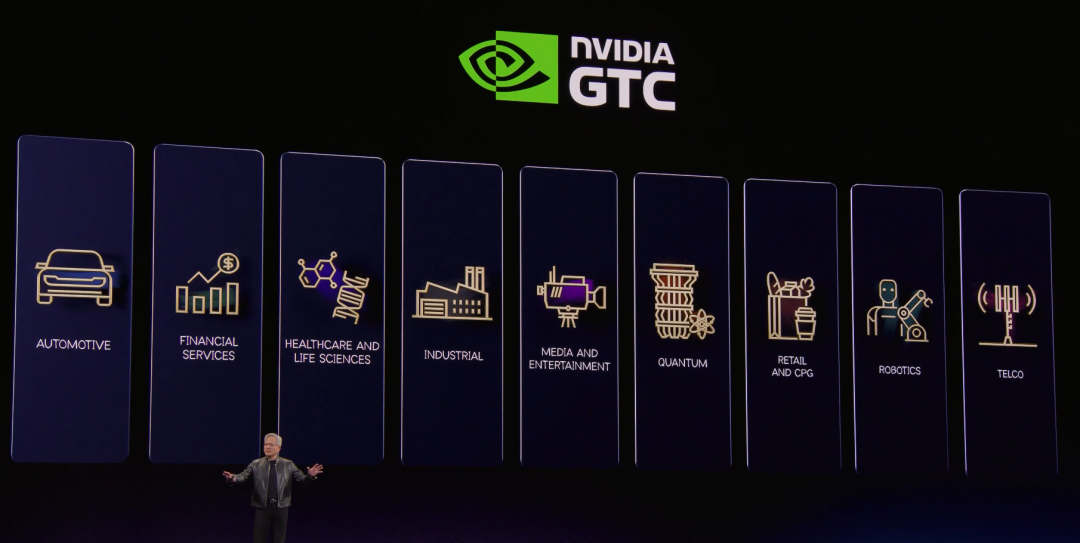
Third, transformation from "supplier" to "infrastructure provider." NVIDIA is evolving from a hardware vendor into an AI industry infrastructure provider. At GTC 2026, Jensen Huang revealed that Blackwell and Rubin series are expected to generate at least $1 trillion in revenue by 2027.
Fourth, global market expansion. In the Middle East, Saudi Arabia's sovereign AI company Humain plans to purchase 600,000 NVIDIA AI chips; in the U.S., Microsoft is collaborating with NVIDIA to build "AI superfactories"; in Europe and Asia, government-led "sovereign AI" projects are also massively adopting NVIDIA solutions.
These orders form a massive revenue reservoir capable of sustaining NVIDIA's growth expectations for years.

NVIDIA's success fundamentally stems from aligning with a structural shift in computing paradigms.
As computing shifted from CPU-based general-purpose computing to GPU-based accelerated computing, NVIDIA's two-decade-early investment in the CUDA ecosystem became the only infrastructure at this turning point.
This wasn't luck—it was the result of long-termism.
But real challenges remain. The rise of inference markets is reshaping chip competition, major customers' self-developed chips are inevitable, and geopolitical factors are altering global market distributions.
NVIDIA must prove it can dominate not just the training era but also the inference era.
Judging by current moves—the $20 billion Groq acquisition, full-stack AI factory solutions, multi-billion-dollar investment portfolio, and annual technological iterations—
NVIDIA's answer is clear: it doesn't just want to benefit from the AI wave—it aims to become the water and electricity powering the AI wave itself.
This game is far from over, but so far, the biggest winner at the table still wears that iconic leather jacket.
-
Second-Generation Doubao Phone Falls Short in Resolving Previous Limitations
-
![]()
"Dark Side of the Moon" Completes Final Pre-IPO Funding Round with Valuation of Approximately $50 Billion, Kimi Set to List in Hong Kong!
-
![]()
Apple Imposes Mandatory Adaptation Directive for iPhone Duo, Marking Unprecedented Assertiveness
-
![]()
Huawei's Xu Zhijun: The Real Challenge of Super Nodes Transcends Technology
-
The Long-Standing Foldable Adaptation Challenge: Solved by Apple, Eluding Huawei, Xiaomi, and Samsung for Years
-
![]()
Impressive Annual Output: 1 Million Pieces! Zhongteng Huasheng's Ultra-Precision High-Performance Optical Film Project Commences Trial Production
-
![]()
Tens of Millions in Funding Secured! Can Yuanxi Photonics Surmount the Mass Production Hurdle for Metasurface Optics?
-
AMD Invests Massively in Physical AI? Acquires World Labs for $8.2 Billion