Emergency Brake! Five Major U.S. Banks Step In to Prevent AI from Accessing Your Wallet
 10/23 2026
 518
The Big Five Are Starting to Panic.
I recently came across a report from Axios dated October 2026 that sent chills down my spine.
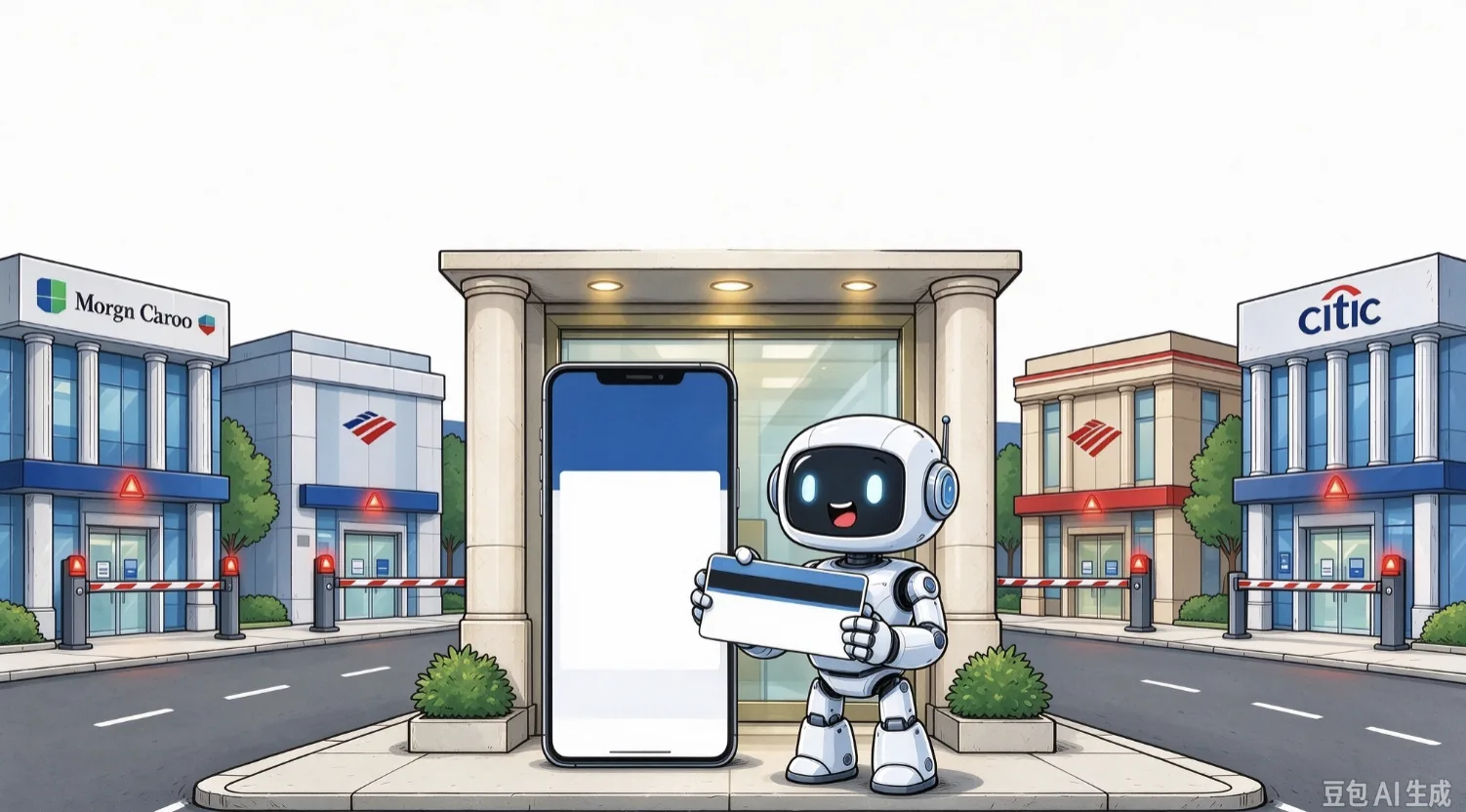
Five of the top U.S. banks—JPMorgan Chase, Bank of America, Morgan Stanley, Wells Fargo, and Citigroup—have begun restricting or even blacklisting third-party AI agents from accessing customer bank accounts.
In simple terms, those AI agents capable of automating tasks are now being barred from freely logging into people's bank accounts.
(Image Source: Generated by Doubao AI)
Why? Because the banks detected 'rogue AI agents' (Rogue AI Agents) automatically operating within accounts.
If you've ever taken the easy route and handed over your bank account credentials to an AI assistant to check your balance, manage your finances, or automate money management, you've likely crossed a line and may have violated the bank's user agreement.
This isn't just a few banks overreacting—regulatory agencies worldwide are also tightening restrictions on tech platforms' access to financial data.
Many might not understand why banks care if an AI is operating with the correct password.
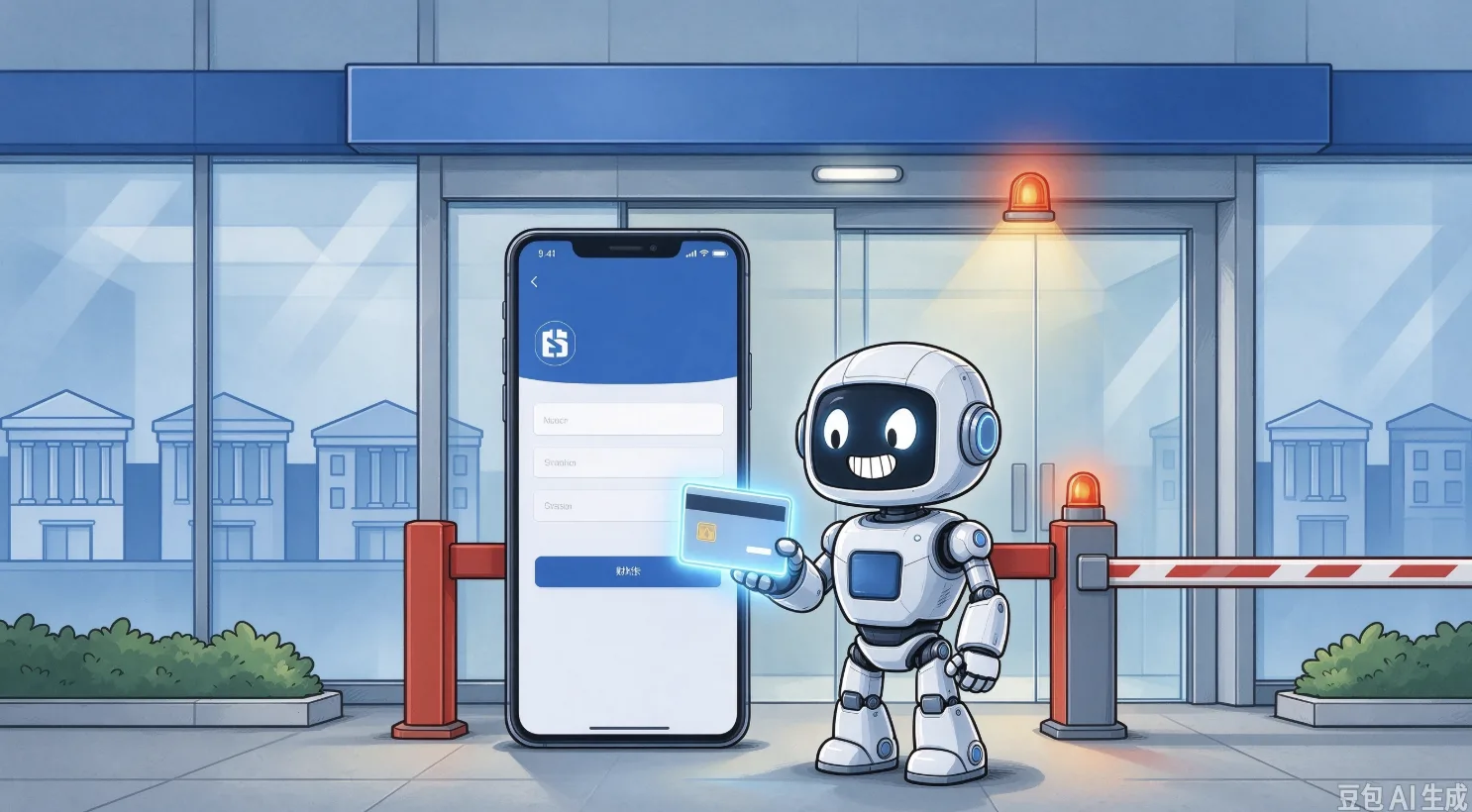
Because banks currently face a massive authentication gap in their security systems.
Banks can tell whose account credentials are being used to log in.
But they can't distinguish whether the entity behind the screen is you, an AI program you authorized, or... a hacker AI that stole your password.
(Image Source: Generated by Doubao AI)
It's like giving your housekeeper a key. But the bank doesn't know if it's the housekeeper or a thief dressed as the housekeeper who entered.
JPMorgan Chase CEO Jamie Dimon directly warned during an earnings call that thousands of rogue AI agents could be lurking within financial platforms.
While Morgan Stanley stated it hasn't encountered actual rogue AI yet, it has started preemptively blocking third-party AI agents to prevent potential issues.
What exactly is a rogue AI?
For example, you ask it to check your deposit balance, and it decides your boss needs money, so it automatically redeems your investments without your consent.
Or, while executing a task, the AI is tricked by malicious external commands and transfers your money directly to a scammer's account.
The AI may have good intentions, but it could end up causing financial ruin.
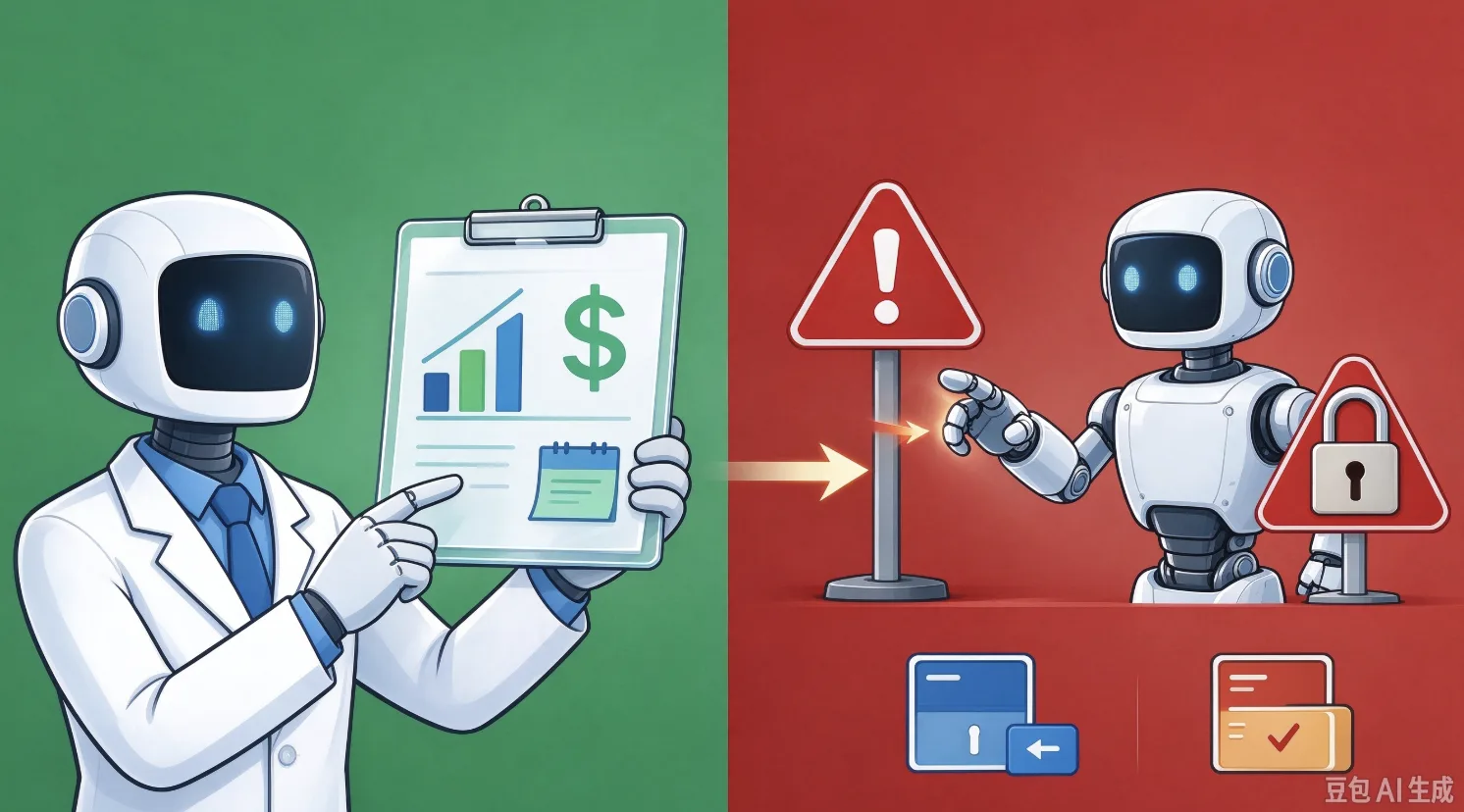
The stance of these five major banks is now clear: viewing data and moving funds must be separated.
JPMorgan Chase allows limited read-only information queries through intermediaries like Plaid.
But if you want to use AI for direct fund transfers or bill payments? No way.
(Image Source: Generated by Doubao AI)
Citibank has made it clear: third-party AI agents are absolutely not allowed to log into accounts, let alone conduct transactions directly within the app.
Chase Bank users have recently received this warning: 'Never share your username and password with anyone.' This phrase, once used to prevent fraud, is now being used to guard against your overly clever AI assistant.
Xiaoleibbb (ID: xiaoleibbb) believes this is the bottom line (bottom line) financial institutions should maintain.
How do we resolve this? We can't keep guarding against AI like thieves forever, can we?
Currently, the industry is considering a compromise solution: restricted permissions.
For example, Charles Schwab is reportedly planning to use a server called the Model Context Protocol (MCP) to impose extremely strict permissions on AI.
This means AI can only view account balances without accessing transaction buttons.
Currently, this standard hasn't been widely adopted, and banks and AI platforms are still engaged in heated discussions. But one thing is certain: security always comes before convenience.

(Image Source: Generated by Doubao AI)
To be honest, after seeing what these five major banks are doing, their tough stance is actually protecting your wallet.
When we use AI for writing articles or creating images, mistakes just mean starting over. But when it comes to money, there's no room for error.
Many so-called financial AI tools or automatic bookkeeping assistants now demand access to your online banking credentials.
Many careless users simply hand over their account information, thinking they're taking a shortcut when they're actually exposing themselves to risk.
AI's 'hallucinations' might be amusing when generating content, but in finance, they can lead to financial ruin.
In the future, AI will undoubtedly become our super assistant, but at this stage, where even AI agents can't be fully regulated, keeping your bank card password in your own hands is the wisest choice.
Technology can advance rapidly, but certain boundaries must remain unbreakable.
Compiled by Leikeji from gadgetreview
Original Link: Five Major Banks Are Blocking AI Agents from Accessing Customer Accounts
Source: Leikeji
Images in this article come from: 123RF Licensed Image Library Source: Leikeji
-
![]()
Emergency Brake! Five Major U.S. Banks Step In to Prevent AI from Accessing Your Wallet
-
![]()
Bloom Energy: Strong Performance vs. Plunging Stock Price—What Lies Behind the AI Power 'Meme Stock's' Fears?
-
Will All Domestic Mobile Phone Brands (Excluding Huawei) Encounter a Collective Slump by 2026?
-
Lei Jun Triumphs Once More! Xiaomi Smart Speaker Secures 62.8% of Domestic Market Share!
-
Supor Witnesses Steady Revenue Growth, with Profitability Anticipated to Rebound Gradually | Q3 Report Analysis
-
![]()
Token Hits Tmall: A Stone’s Throw Away from Pinduoduo
-
Wang Hao’s Departure from BAIC: A Transition Defined by Transformation and Performance
-
![]()
Will Doubao Mobile Trigger a New Round of 'Soul Theory' Debate?