Meta: Core Business Breathes a Sigh of Relief, but Muse's Financial Details Remain Pending?
 10/26 2026
 404
Hello everyone, I'm Dolphin Research!
Compared to the disappointing results last quarter, Meta delivered a report card this time that has eased investor concerns: revenue from core operations, profit after excluding one-time expenses, and Q4 guidance all surpassed expectations. There were no exaggerated spending forecasts for Muse in the near term.
However, the company provided limited quantitative details regarding the highly anticipated 2027 guidance, which the market is keenly interested in. Additionally, expectations for equity financing may keep optimistic investors cautious.
Meta typically holds a follow-up call after earnings, and Dolphin Research will check for any incremental updates and share the key takeaways. If you're interested, follow our community updates.
Key highlights:
1. Core business fundamentals solidified: Q3 total revenue increased by 26%, slightly exceeding expectations. Q4 guidance is set at $73-76 billion, with the midpoint meeting buyer expectations.
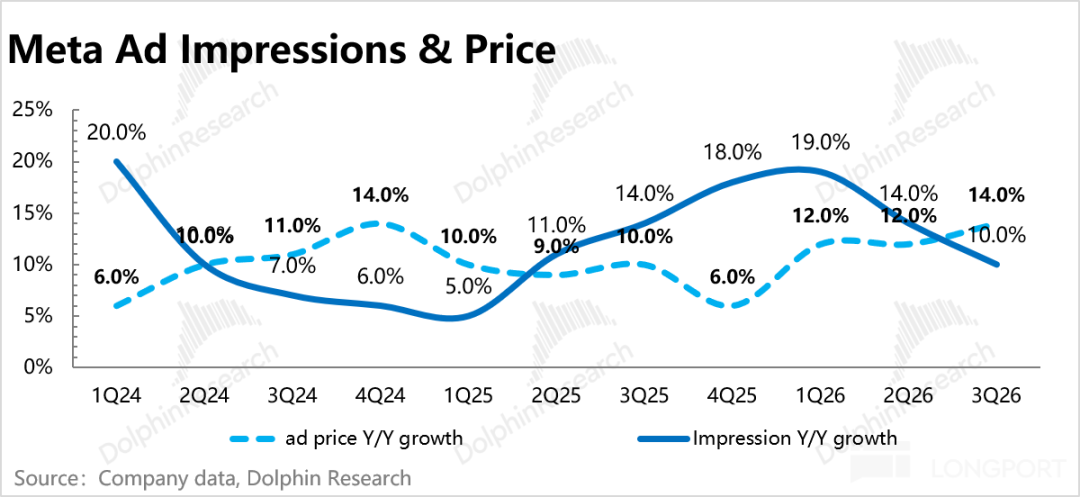
Growth was primarily driven by higher advertising prices (+14%), marking the third consecutive quarter of acceleration. Recommendation and advertising models such as GEM, Andromeda, and generative recall demonstrated quantifiable improvements in conversion rates, further supporting Meta's narrative of AI-driven advertising returns.
The overall advertising industry performed well in Q3, boosted by events like the World Cup and political ads. Meta's performance reflects the stability of its core competitive advantages.
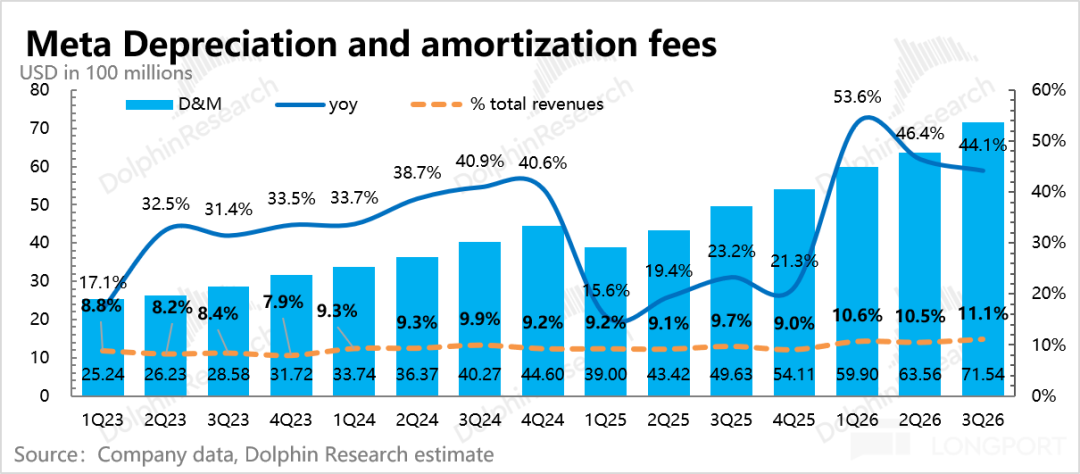
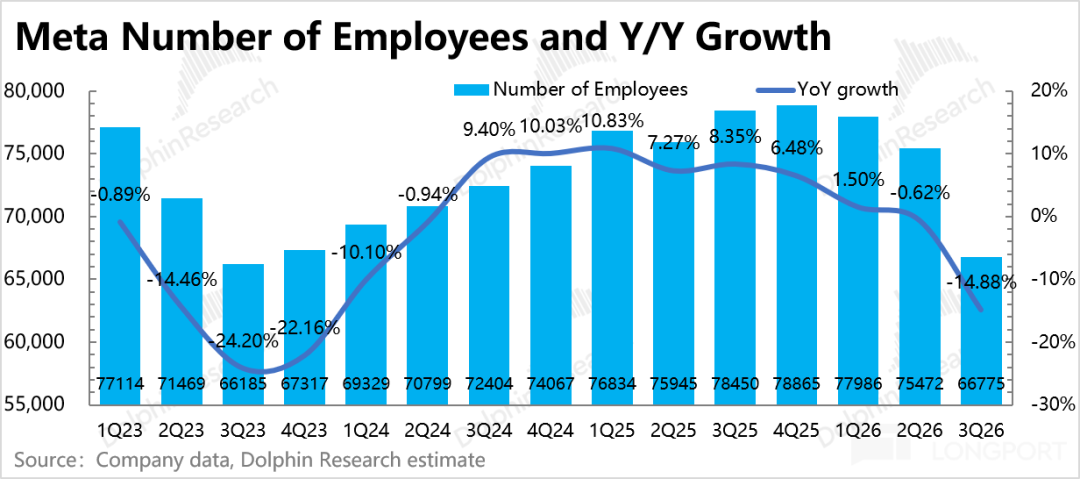
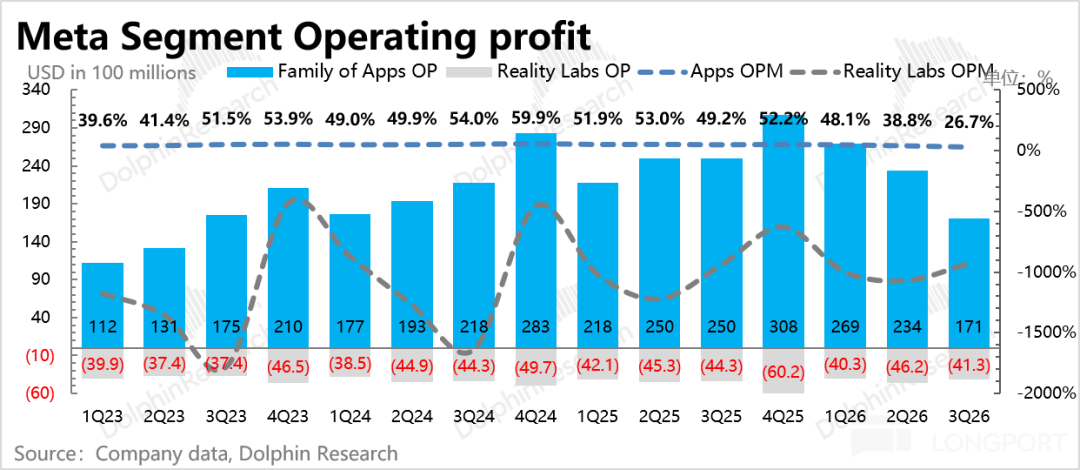
2. Layoffs and efficiency gains offset AI investment depreciation: Q3 operating profit margin stood at 35% after excluding $9.9 billion in multi-state settlement fees (related to lawsuits over youth social media addiction and children's privacy), showing a sequential improvement. This seems to contradict the trend of rising depreciation costs due to AI investments, but it was achieved through a 15% reduction in headcount, which boosted efficiency and offset the depreciation increase.
Full-year Opex guidance only increased due to settlement fees, with no other upward revisions. The implied Q4 operating profit margin midpoint is 33%, slightly weaker than Q3, indicating that AI investments continue to pressure profits.
Management did not provide 2027 Opex guidance, but with the launch of Muse and cloud leasing operations, along with Meta's own computing power deployment plans, the next two years will be peak investment periods. Given Muse's slow monetization ramp-up, Dolphin Research expects meaningful growth only by 2028. Therefore, depreciation's erosion of profits will continue to amplify.
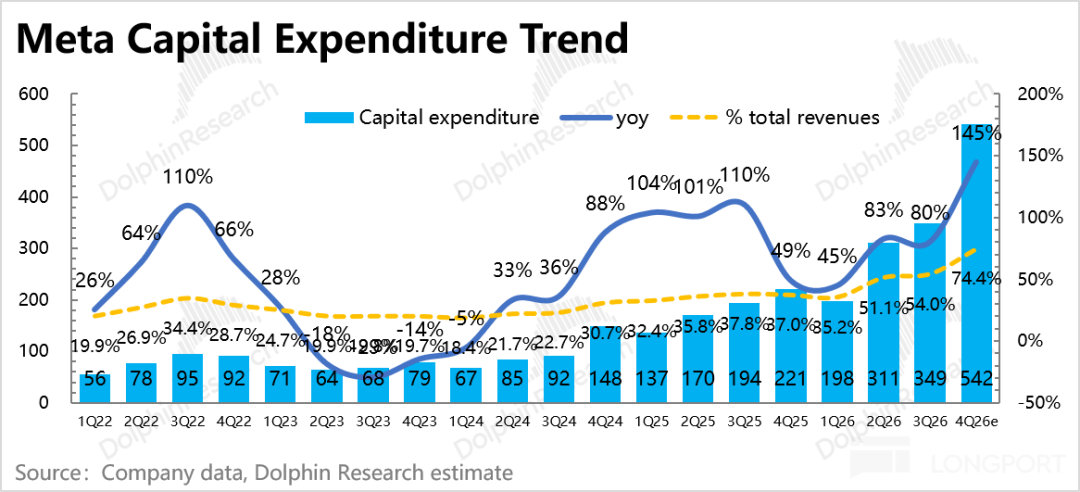
3. Capex to annualize at $200 billion in Q4: Q3 Capex was $34.9 billion, below expectations, but Q4 will make up for it. The full-year guidance lower bound was slightly raised, implying a Q4 Capex midpoint of $54 billion. Annualizing the quarterly figure suggests over $210 billion in Capex for the coming year, aligning with most institutional expectations, though some are more aggressive, forecasting $230-250 billion.
Management stated that 2027 budgets are still being finalized but will remain aggressive to support core businesses and new AI projects. They also mentioned that existing and under-construction capacity can be flexibly allocated among model training, core business growth, and new products. Zuckerberg emphasized the need to build computing power capable of serving over 1 billion users in the coming years.
The market is divided on whether Muse's computing power demands will be included in the existing framework (14GW next year) or require additional short-term capacity.
Dolphin Research believes most demands will fit within the existing framework, but if Muse continues to exceed expectations, additional capacity will be needed:
Muse is not a sudden inspiration but part of Zuckerberg's AI narrative, which has been in development for over two years and received top-tier resource allocation internally. Before media reports in mid-year about cloud leasing operations and the planned 14GW computing power supply by the end of next year, there were already rumors about delays in the personal AI assistant launch. We now know this was due to targeted optimizations for user authorization security ahead of Muse's release.
As Muse's user penetration increases, there is no need to significantly raise Capex expectations. However, Muse may crowd out (crowd out) computing power needed for cloud leasing, affecting short-term 2027 ROI metrics for unit computing power (leased computing power generates higher returns).
If Muse continues to explode in popularity, with MAU surpassing 2 billion (DAU over 500 million), Meta's computing power reserves for the next two years will be nearly exhausted. Zuckerberg mentioned planning for 1 billion MAU capacity, but if usage exceeds management's expectations, Meta's current computing power construction plans will be insufficient.
Thus, next year's Capex expectation of $220 billion may rise, depending on whether Muse "overperforms" and whether Meta remains committed to cloud leasing.
4. Muse delivers its first report card: Muse has been live for about six weeks, with over 10 million users in the U.S. and Canada combined. Around 25% of users engage with Muse daily.
Shopping is Muse's top use case, with over 25% of weekly active users making purchases via Muse, averaging over $200 per transaction. Management expects computing power cost efficiency to improve 10-fold within a year and plans to monetize earlier than the traditional "grow first, monetize later" approach.
Compared to Dolphin Research's prior assumptions—30% MAU shopping penetration + $500 average annual spending per user (review here)—Muse's actual performance exceeded expectations. However, true monetization potential depends on future user penetration, i.e., MAU growth. The difference in monetization value between 100 million and 1 billion users far exceeds a 10-fold gap.
5. Financing plans outlined but lack details: Continuing at the current pace, Meta's cash flow will turn negative next year. Its net cash position (cash + short-term investments - long-term debt) is also concerning, fueling market expectations for financing.
However, the market needs details on financing arrangements. The disclosed information primarily confirms future financing methods (current year's financing: off-balance-sheet joint ventures $30 billion, corporate bonds $25 billion). Instead of issuing more debt, Meta will create non-voting Class C shares for future equity offerings (rising financing costs post-rate hikes and deteriorating balance sheet health have reduced debt's appeal).
Class C share dividends will be distributed as a stock dividend ("1 Class A or B share receives 1 Class C share") to all shareholders.
This dividend effectively splits shares 2-for-1. Theoretically, the equity structure remains unchanged after Class C shares begin trading on January 19, 2027. However, Meta acknowledges that Class C shares may trade at a discount to Class A shares. Subsequent equity offerings could dilute existing shareholders more due to both issuance dilution and the need to issue more shares for the same financing amount.
The company has no immediate financing plans. Class C shares will primarily be used for fundraising, employee compensation, and M&A while preserving Zuckerberg's voting rights. Due to Zuckerberg's control, Meta could theoretically raise up to $700 billion in equity before his voting power falls below 50%, indicating the potential financing ceiling.
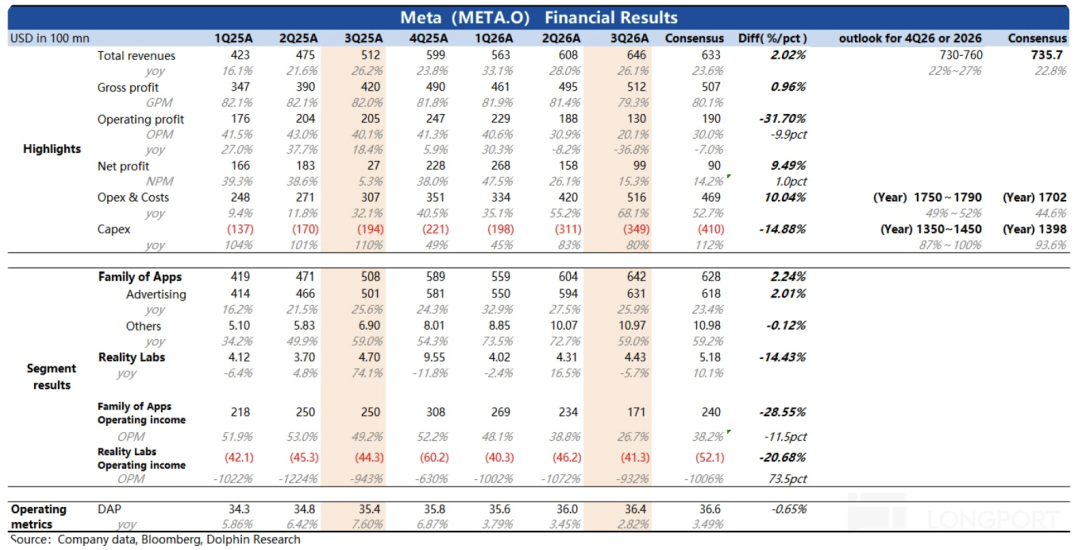
6. Performance metrics overview
Dolphin Research's View
Q3 in one sentence: The core advertising business remains strong, expense control exceeded expectations, and Muse signaled a clear path to monetization. However, details on 2027 ROI remain unresolved, which some bullish investors may criticize.
Last quarter, Dolphin Research said investors most wanted to see "clarity on AI investment returns." This quarter, beyond the stable core advertising business reinforcing AI's role in driving ad performance and leveraging surplus computing power for cloud leasing, Meta further clarified AI ROI trajectories through two key areas: ToC monetization and expense control.
1) Muse provided a monetization path. Management emphasized the importance of shopping scenarios and confirmed that "charging merchants based on facilitated transactions" will be the primary model, to be implemented as soon as possible. This aligns with Dolphin Research's view in early September when Muse launched—subscription revenue will be limited, and per-user costs are high, so true monetization must rely on transaction commissions.
2) Expense control exceeded expectations, directly reflected in a 15% headcount reduction. Q3 total expenses, excluding one-time items, grew at a significantly slower pace than the market feared.
Additionally, regarding whether Muse requires computing power beyond planned capacity, Q3 earnings provided an answer—full-year Capex was not significantly raised. While 2027 remains uncertain, this suggests that, at least in the short term, Muse's computing power needs are within the planned framework. However, both this year and next will be peak investment years.
If Muse exceeds expectations, such as surpassing management's envisioned 1 billion users, additional computing power capacity will be needed beyond current plans. The creation of Class C shares essentially prepares a financing channel for this potential investment. Periodic equity offerings will also temper excessive bullish sentiment.
Below are the details
1. Solid core business fundamentals support AI return narrative
Total revenue in Q3 was $64.6 billion, up 26% YoY, beating Bloomberg consensus by 2% and exceeding the upper bound of company guidance ($64 billion).
Advertising revenue was $63.1 billion (+26%, same in constant currency), with volume and price breakdown as follows: ad impressions +10% (~2 ppts below expectations), average price per ad +14% (~3 ppts above expectations).
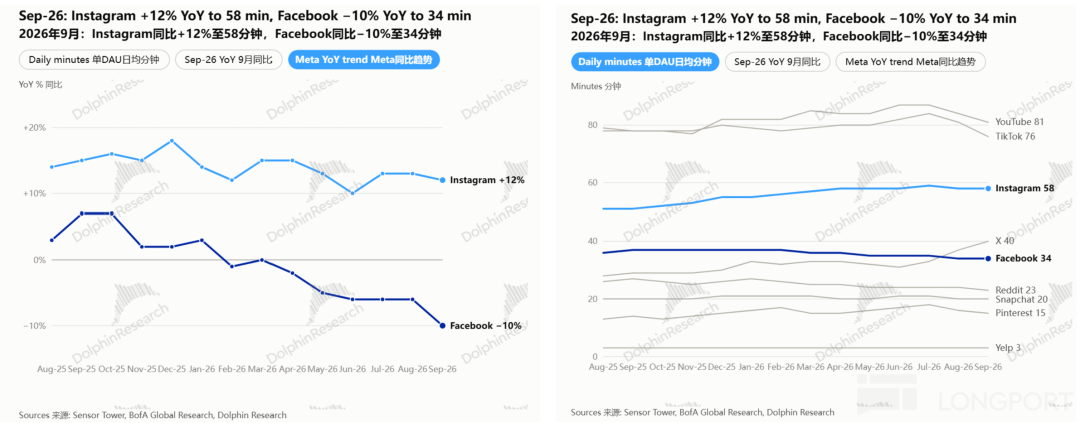
Volume growth slowed (user traffic up only 3%, Facebook time spent declined), while pricing accelerated, reflecting Meta's stronger pricing power amid decent industry momentum, driven by AI-enhanced recommendation and ad targeting efficiency.
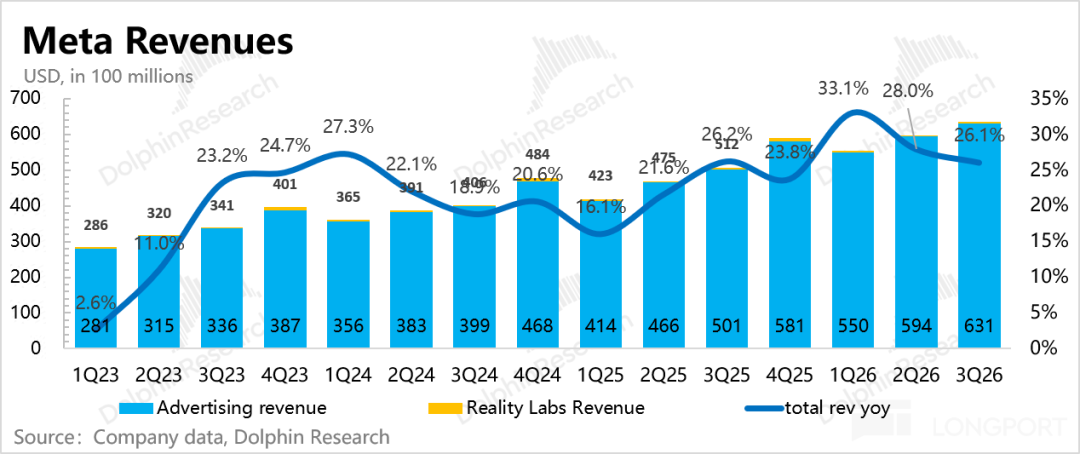
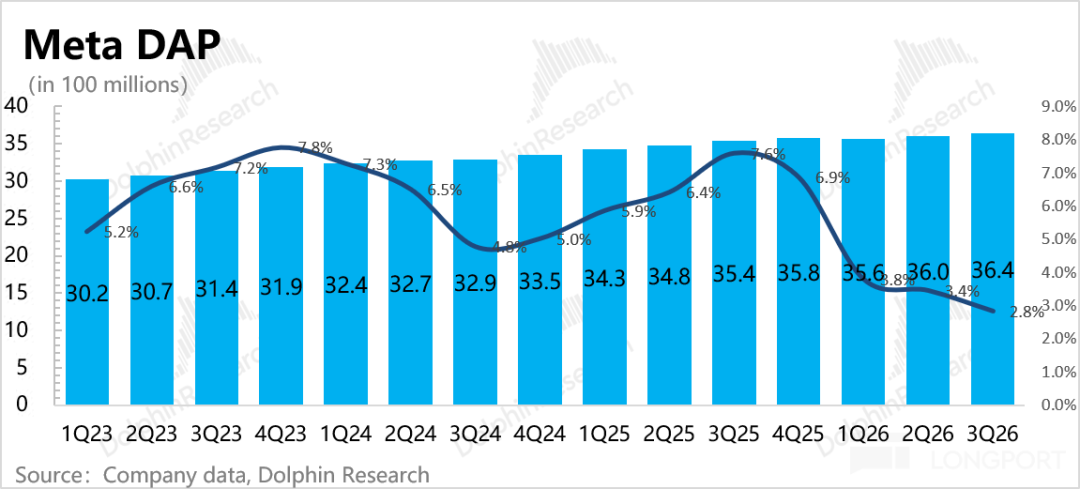
Q4 guidance exceeds buyer expectations: Revenue guidance is $73-76 billion, with a midpoint of $74.5 billion, up 24% YoY and 1.3% above consensus. The upper bound of $76 billion surpasses the pre-earnings buyer consensus of $74-74.5 billion. This was the most reassuring part of the earnings—core business momentum did not significantly slow after the World Cup boost in Q4 (research suggests a total 4 ppt acceleration from the event).
2. Layoffs and efficiency gains offset AI investment depreciation
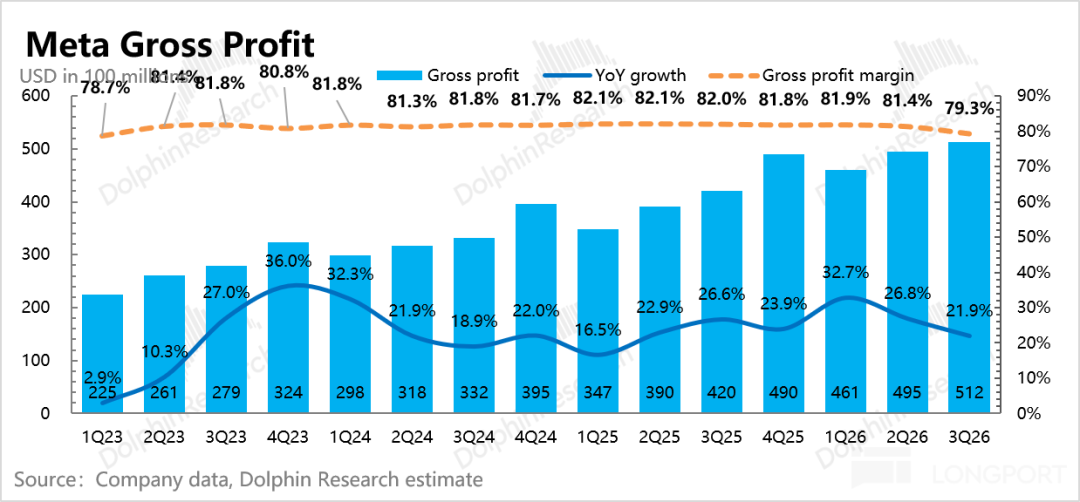
After excluding $10 billion in settlement fees, Q3 operating profit margin stood at 35%, 3 ppts above consensus but nearly 5 ppts below the 40% margin a year ago. Q4 implied margin is 33%, also down sequentially, indicating that AI investments continue to erode profits.
Breaking it down, core business operating expenses declined in absolute terms and as a percentage of revenue due to layoffs, offsetting the 44% YoY and 11% QoQ increase in depreciation costs.
Q3 capital expenditures were $34.9 billion, well below expectations, but this was due to timing. The full-year guidance lower bound was raised by $5 billion, narrowing the range to $135-145 billion. This implies Q4 Capex of $49.2-59.2 billion, or over $210 billion annualized, aligning with current market expectations for 2027 Capex. Some analysts forecast $230-250 billion.
Q3 free cash flow was -$2.1 billion, the first negative figure in years. Negative cash flow is expected to persist in 2027, necessitating additional financing.
III. Muse Submits Its First 'Report Card,' Sets Commission-Based Monetization as Primary Goal
Muse has accumulated over 10 million users in the United States and Canada within approximately six weeks of its launch, with around 25% of users engaging with the platform daily.
According to third-party data from Sensor Tower, Muse has 2.5 million DAU (Daily Active Users) in the United States, with 300,000 daily downloads. Dolphin Research believes that the DAU figure is easily inflated due to traffic generation (user traffic generation can be translated as "user acquisition" or "user referral" from WhatsApp and Instagram).
Therefore, retention performance is more critical. The real challenge lies in transforming users' curiosity into habitual usage of 3-5 times per week: Currently, platform monitoring shows that Muse's 14-day retention rate is approximately 20%, slightly lower than that of ChatGPT. Dolphin Research considers this performance relatively average.
Shopping is the top usage scenario for users, with over 25% of weekly active users utilizing Muse for shopping, averaging over $200 per transaction. Management expects a more than tenfold improvement in computational cost efficiency within a year and has indicated that monetization will be pursued earlier than the previous strategy of "prioritizing growth over monetization."
However, 2027 will still primarily focus on cost investment. Besides inference computational power, Muse's costs also include CPU sandboxing. The specific hardware architecture and incremental cost calculations have been previously discussed by Dolphin Research (see Changqiao App).
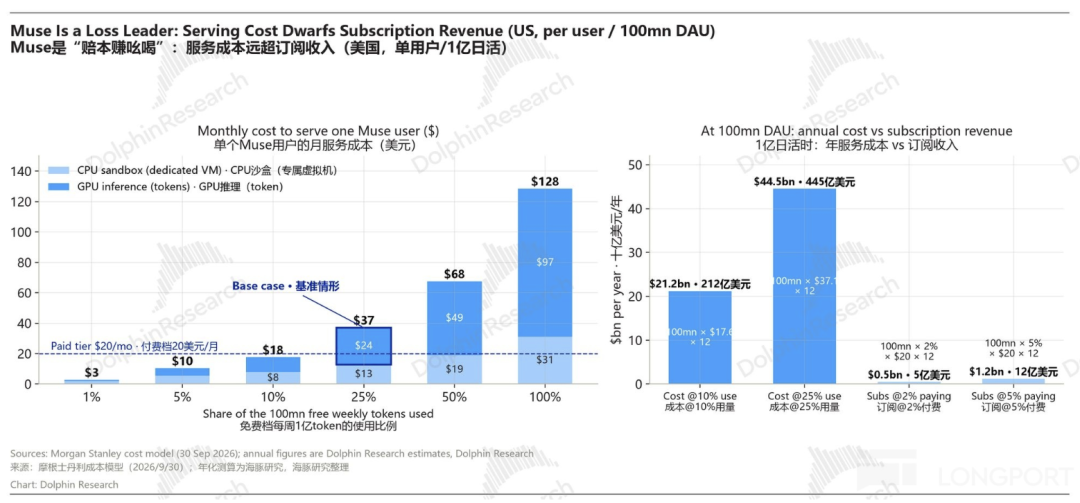
Currently, institutional estimates suggest that, assuming 25% usage capacity, the operating cost per user for Muse is approximately $30/month. Full capacity usage would be exaggerated, exceeding $120. However, considering that Meta sources a significant portion of its CPUs through self-construction or negotiated leasing, actual costs will be lower. Therefore, combining research information, a neutral and reasonable estimate would be $50/month per user.
Yet, this cost still exceeds the $20 subscription package price for regular users, making subscriptions not the primary means of direct monetization; commissions are.
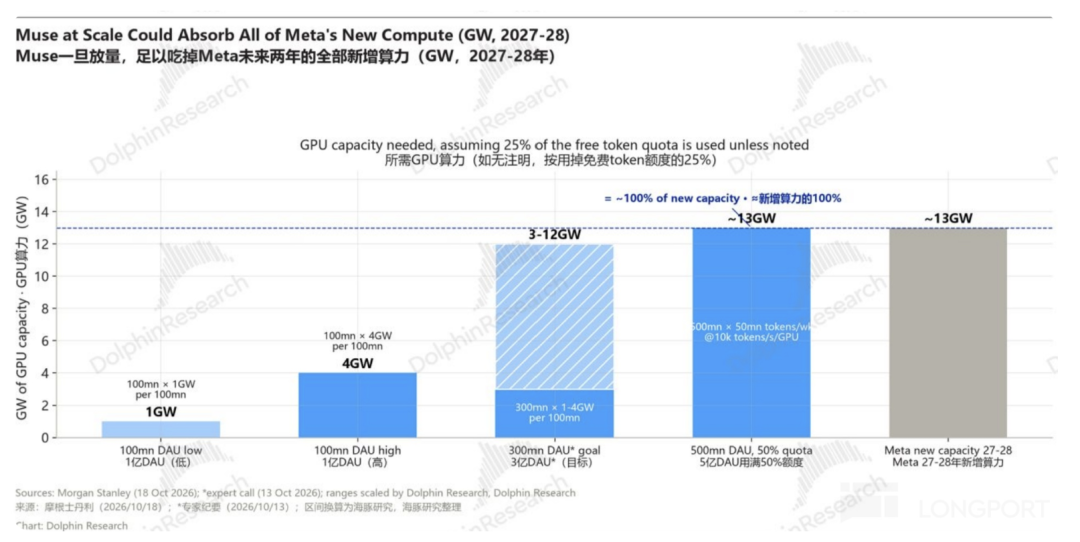
On the other side of Muse's financial equation is the upfront investment in computational Capex. Although Muse's computational demand will likely fall within Meta's framework of 14GW of cumulative computational supply by the end of next year, it will directly squeeze the computational supply available for cloud leasing.
Assuming 25% usage capacity, institutions estimate that approximately 1-4GW of GPU computational power will be required annually for every 100 million Muse DAU. If extrapolated to 500 million DAU, with each user increasing weekly usage to consume 50 million tokens (50% of the free quota), approximately 13GW would be needed—equivalent to fully utilizing Meta's planned new computational capacity (self-built and leased) for 2027-2028.
However, for an ecosystem company like Meta, the internal accounting for Muse may not be calculated in this manner.
Dolphin Research believes that Muse's significance in the short term (1-2 years) lies not in monetization but in safeguarding ecosystem traffic and advertising moats—Muse records users' shopping, travel, subscription, and other intentions, data that can enrich ad recommendations in the future and prevent new entry points like ChatGPT from capturing users' attention and consumption intentions.
- END -
// Reprint Authorization
This article is an original work by Dolphin Research. Reprinting is prohibited without authorization.
// Disclaimer and General Disclosure
This report is intended solely for general comprehensive data purposes, designed for general viewing and data reference by users of Dolphin Research and its affiliated entities. It does not consider the specific investment objectives, investment product preferences, risk tolerance, financial status, or special needs of any individual receiving this report. Investors must consult with independent professional advisors before making investment decisions based on this report. Any person making investment decisions using or referring to the content or information in this report assumes all risks. Dolphin Research shall not be liable for any direct or indirect responsibilities or losses that may arise from the use of the data contained in this report. The information and data in this report are based on publicly available sources and are for reference purposes only. Dolphin Research strives to ensure but does not guarantee the reliability, accuracy, or completeness of the relevant information and data.
The information or opinions mentioned in this report shall not, under any jurisdiction, be considered or construed as an offer to sell securities or an invitation to buy or sell securities, nor shall they constitute advice, inquiries, or recommendations regarding relevant securities or related financial instruments. The information, tools, and materials in this report are not intended for or intended to be distributed to jurisdictions where such distribution, publication, provision, or use of the information, tools, and materials conflicts with applicable laws or regulations or would subject Dolphin Research and/or its subsidiaries or affiliated companies to any registration or licensing requirements in such jurisdictions, nor to citizens or residents of such jurisdictions.
This report merely reflects the personal views, insights, and analytical methods of the relevant contributors and does not represent the stance of Dolphin Research and/or its affiliated entities.
This report is produced by Dolphin Research, with copyright solely owned by Dolphin Research. Without prior written consent from Dolphin Research, no institution or individual may (i) produce, copy, duplicate, reproduce, forward, or create any form of copies or reproductions in any manner, and/or (ii) directly or indirectly redistribute or transfer to other unauthorized persons. Dolphin Research reserves all relevant rights.
-
![]()
Annual Production Capacity in Phase I to Hit 50,000 Units! Weijing Optics Unveils Mudanjiang Production Base
-
![]()
Net Profit Loss Shrinks by 35.52% in First Three Quarters of 2026, Yet Costar’s Stability Remains Elusive
-
![]()
Massive Exchange Losses! Lens Technology’s Profits Plummet in First Three Quarters—Will the iPhone Duo Mark a New Turning Point?
-
![]()
2026 World Intelligent Connected Vehicles Conference: Transitioning from Spec Benchmarking to Safety Benchmarking, the Industry Steps into a New Era of Regulatory Oversight
-
![]()
Hundreds of Billions Fully Invested in AI, Yet No Returns in Sight
-
![]()
ByteDance's Automotive Ambitions Come to the Fore
-
![]()
$12.9 Billion: Nvidia Buys an 'Insurance Policy'
-
![]()
iPhone Duo: Is It a Thorn in Ternus's Side?