$12.9 Billion: Nvidia Buys an 'Insurance Policy'
 10/26 2026
 387
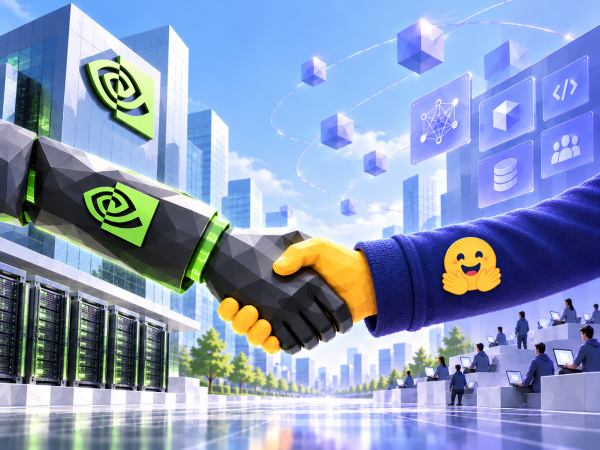
Hugging Face turned down this acquisition offer once last year.
On September 3, Nvidia announced the acquisition of Hugging Face for $12.93 billion, one of its largest deals ever. For Hugging Face, the figure is even more staggering—its annual revenue is around $150 million, making the acquisition price nearly 90 times its revenue.
Image source: Nvidia's official website
On the surface, this deal is not hard to understand. Hugging Face is the world's most important AI open-source platform, with over 18 million developers, 3 million models, 500,000 datasets, and 1 million applications. More than 200,000 companies use it to discover, evaluate, customize, and deploy AI.
But Hugging Face's greatest strength lies in allowing developers to use models, clouds, and chips from different companies. Nvidia has specifically promised that Hugging Face will not be forced to use Nvidia's computing resources in the future. Why would a company selling computing power pay nearly 90 times revenue for a platform not strongly tied to computing power?
The answer lies not in the deal itself but in Nvidia's AI ecosystem built over the past two years. This acquisition completes a key piece of that puzzle.
What Does $12.9 Billion Buy?
Hugging Face's value depends on how you measure it.
If you only look at the number of models hosted or datasets available, $12.9 billion seems exorbitant. But Nvidia values the developer habits Hugging Face has cultivated. Hugging Face integrates inference services from different vendors into a single portal, allowing developers to search, compare, and test models on one platform before deciding whose computing power and services to use. Once this habit is formed, it’s hard to break. Switching platforms means leaving behind Hugging Face's over 3 million open AI models, 500,000 datasets, and 1 million AI applications—with no current rival matching its scale. More importantly, the data matters. Records of millions of developers downloading, fine-tuning, and deploying models reveal where resources are being invested, theoretically signaling Nvidia's next round of computing demand.
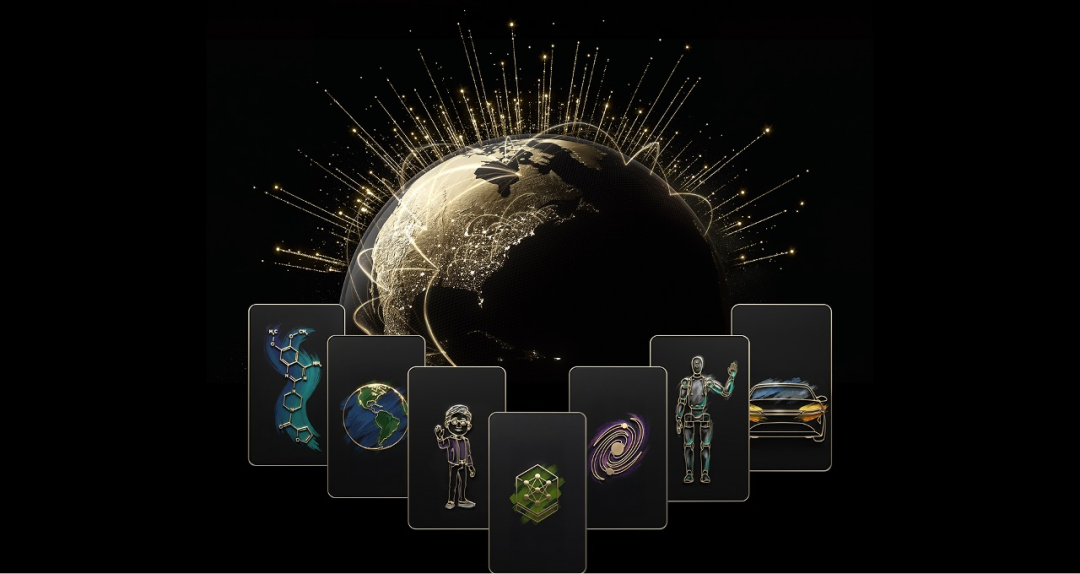
Image source: Nvidia's official website
There’s also a practical consideration. Reports say Nvidia previously proposed investing $500 million at a $7 billion valuation but was rejected by Hugging Face, which didn’t want a single investor to gain too much influence. Additionally, Microsoft was rumored to have approached Hugging Face. For Nvidia, an increasingly important developer gateway, if left within reach of competitors, represents uncertainty. Better to buy it outright than take the risk.
This is no impulsive acquisition. Over the past two years, Nvidia has systematically invested in open-source AI: Nemotron for agents, Isaac GR00T for robots, Cosmos for physical AI, and Alpamayo for autonomous driving. Some models were deployed on Hugging Face before this acquisition, along with access to trillion-scale training datasets. Nvidia also co-founded alliances with multiple companies to jointly develop cutting-edge open models. With this acquisition, their original partnership upgrades to ownership.
Another key factor: Nvidia’s largest customers are reportedly developing their own chips. OpenAI’s Jalapeo inference chip taped out in June; Anthropic confirmed an internal chip team in August; Google, Amazon, and Microsoft have all deployed self-developed chips. The larger the customer, the more capital and technical capability they have to pursue self-reliance, potentially reducing dependence on Nvidia. In contrast, countless small-to-medium developers and enterprises lack self-developed chip capabilities and rely more heavily on Nvidia’s computing power. These users are also vital to the open-model ecosystem. Every additional open-source demand could translate into more demand for Nvidia’s GPUs, and Hugging Face is one of the most important gateways to this market. Thus, some media describe this acquisition as Nvidia buying a $12.9 billion 'insurance policy.'
From Selling GPUs to Securing Every Link
Viewing this acquisition within Nvidia’s recent overall strategy makes the logic clearer.
In recent years, Nvidia has been investing across the AI supply chain, expanding computing supply and growing AI demand simultaneously. Since 2023, Nvidia has deepened ties with cloud providers like CoreWeave that rent computing power. Meanwhile, it continues to invest in model companies and AI startups. In August 2026, it further entered AI infrastructure by partnering with SoftBank’s SB Energy to become the exclusive AI computing infrastructure provider for its Ohio data center project. Markets call this 'circular financing': Nvidia helps clients expand capital expenditures through investments, guarantees, and long-term procurement arrangements, and these expanded clients continue buying Nvidia’s products. Previous investments focused on computing supply, model companies, and data center infrastructure. What was missing was the link closest to developers—the piece Hugging Face now fills: model distribution and developer tools.
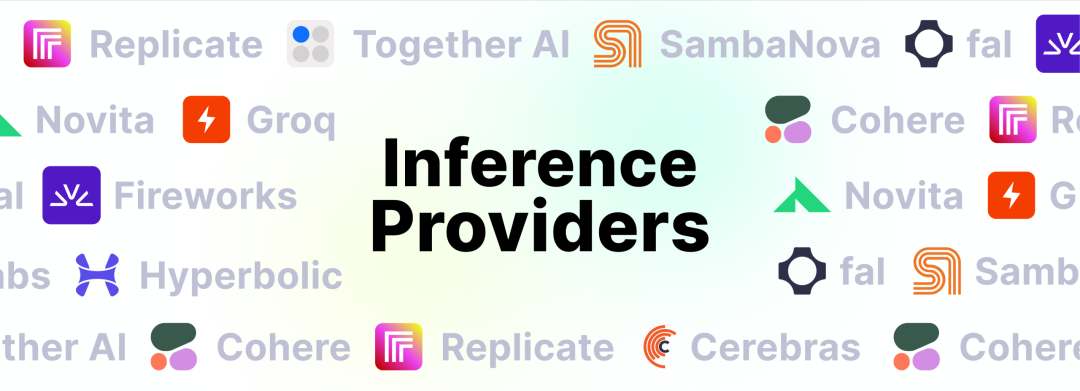
Image source: Hugging Face's official website
Hugging Face changes the starting point of this cycle. Previously, Nvidia amplified existing computing demand through third parties like cloud vendors and model companies, then benefited. Now, with Hugging Face, Nvidia can directly connect with end developers. The moment developers select models and deploy them, demand begins flowing toward Nvidia’s own products.
This doesn’t require sacrificing platform neutrality. Nvidia has promised Hugging Face will remain neutral and not force the use of its hardware. But if the platform and Nvidia’s infrastructure offer the smoothest integration and fastest response, developers may naturally gravitate toward Nvidia’s product ecosystem for efficiency. This is the trickiest part of the deal. The core value of $12.9 billion lies in Hugging Face’s neutrality. If Nvidia and Hugging Face become too closely tied, Hugging Face’s credibility as a neutral platform could be questioned. But if their connection is too loose, the $12.9 billion may fail to deliver strategic value. Meanwhile, the deal’s scale and Nvidia’s position in the AI supply chain will likely trigger antitrust scrutiny, with the review timeline and outcome still unknown.
Hugging Face offers another layer of value. Nvidia previously launched its own cloud business, DGX Cloud, but reports in 2025 suggested Nvidia began scaling back DGX Cloud for external enterprise clients, redirecting more computing power to internal R&D. Some media argued that if DGX Cloud expanded further as a public cloud, it would directly compete with clients like AWS and Azure. By leveraging Hugging Face’s existing model deployment and inference services, Nvidia can re-enter the cloud computing arena without directly competing with its clients.
Overall, the strategic intent of this acquisition is clear: to complete Nvidia’s AI ecosystem by securing the developer link. Whether this $12.9 billion investment can smoothly convert the developer gateway into a new growth curve—or falter due to neutrality concerns or regulatory resistance—remains to be seen.
-
![]()
Annual Production Capacity in Phase I to Hit 50,000 Units! Weijing Optics Unveils Mudanjiang Production Base
-
![]()
Net Profit Loss Shrinks by 35.52% in First Three Quarters of 2026, Yet Costar’s Stability Remains Elusive
-
![]()
Massive Exchange Losses! Lens Technology’s Profits Plummet in First Three Quarters—Will the iPhone Duo Mark a New Turning Point?
-
![]()
2026 World Intelligent Connected Vehicles Conference: Transitioning from Spec Benchmarking to Safety Benchmarking, the Industry Steps into a New Era of Regulatory Oversight
-
![]()
Hundreds of Billions Fully Invested in AI, Yet No Returns in Sight
-
![]()
ByteDance's Automotive Ambitions Come to the Fore
-
![]()
$12.9 Billion: Nvidia Buys an 'Insurance Policy'
-
![]()
iPhone Duo: Is It a Thorn in Ternus's Side?